
Leave Your Message
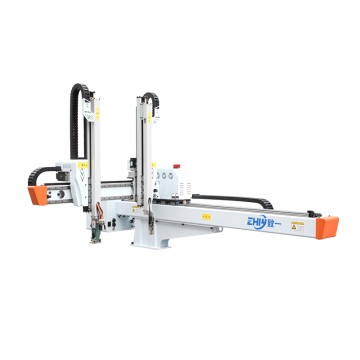
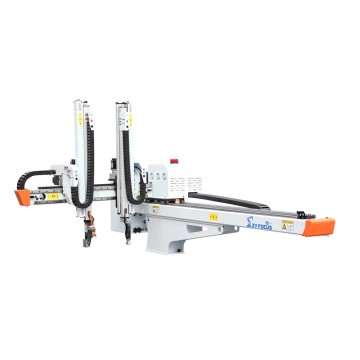
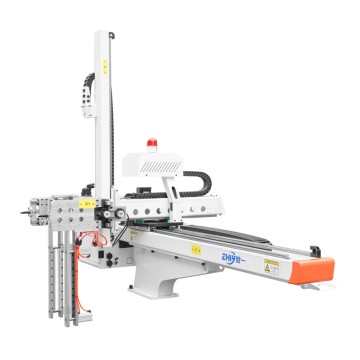
How to choose the appropriate three-axis servo manipulator for different industry applications
How to Choose the Right Three-Axis Servo Robot for Different Industry Applications
Three-Axis Servo Robot Selection Guide: Core Logic and Practical Solutions for Different Industries
In the wave of automated production, three-axis servo robots, with their high precision, high stability, and strong adaptability, have become the backbone of production in industries such as electronics manufacturing, automotive parts, packaging logistics, and medical devices. However, production environments, processing objects, and precision requirements vary significantly across industries. Blindly selecting a suitable robot not only leads to low equipment utilization but also increases production costs and impacts efficiency. This article will analyze the key selection criteria for three-axis servo robots based on industry needs, providing precise selection strategies and practical references for companies in various industries.
I. Core Prerequisites Must Be Clarified Before Selection: Industry Needs Analysis
Selecting a three-axis servo robot is essentially a matter of "matching needs." Before focusing on equipment parameters, it's important to clearly understand the core requirements of the industry. The differing needs of the following four typical industries directly determine the selection process:
(I) Electronics Manufacturing: Prioritizing Precision, Balancing Lightweight and High Speed
Electronics manufacturing focuses on applications such as mobile phone components, chip packaging, and PCB processing. These processes often involve products of minute dimensions (millimeter or even micron scale) and fragile materials (such as ceramics and plastics). Therefore, industry demands focus on "high precision + high-speed response + lightweight": Assembly processes require robots to achieve positioning accuracy of 0.01mm to prevent component damage; inspection processes require a gripping frequency of more than three times per second to match the production line cycle; and the robot's weight must be kept below 50kg to minimize load on the workbench.
(II) Automotive Parts: Heavy-duty operation prioritizes stability and durability
Automotive parts production encompasses applications such as stamping handling, engine assembly, and tire gripping. The majority of the workpieces processed are metal parts weighing from a few kilograms to hundreds of kilograms. The core industry requirements are **"high load + strong stability + long life"**: the stamping process requires the robot to carry a 50-200kg workpiece and withstand the vibration and impact of the stamping machine; the assembly process must work continuously for more than 16 hours without failure, and the mean time between failures (MTBF) must reach more than 10,000 hours; at the same time, it must adapt to complex environments such as oil pollution and dust in the workshop.
(III) Packaging and Logistics Industry: Efficiency-Oriented, Emphasizing Travel and Compatibility
Core scenarios in the packaging and logistics industry include carton palletizing, express delivery sorting, and product packaging. Requirements focus on "long travel + high compatibility + easy integration": Palletizing requires robots with a horizontal travel of 2-3 meters and a vertical travel of 1.5-2 meters to accommodate multi-layer stacking. Sorting requires robots to accommodate goods of varying sizes (10cm-100cm) and weights (0.1kg-50kg), and the gripper must be able to quickly change. Furthermore, the Robot Must seamlessly integrate with the MES system and sorting conveyors for automated scheduling.
(IV) Medical Device Industry: Cleanliness First, Strict Control of Precision and Safety
Medical device production involves syringe assembly, surgical instrument polishing, and drug filling, placing stringent requirements on production environment cleanliness (typically Class 100-Class 1000), equipment precision, and safety. Core industry requirements are "cleanroom design + high precision + regulatory compliance." The robot must feature a stainless steel body and food-grade lubricant to prevent dust contamination. Positioning accuracy during the filling process must be within 0.02mm, ensuring a dosage error of ≤0.5%. Furthermore, it must pass FDA, CE, and other industry certifications to meet medical device production standards.
II. Core Selection Dimensions: Precise Matching from Parameters to Scenario
After clarifying industry requirements, a targeted selection process should be conducted based on the core parameters of a three-axis servo robot. The following five dimensions are key considerations for selection:
(I) Load Capacity: Matching the Workpiece Weight and Reserving Safety Redundancy
Load capacity is the most fundamental selection criterion for A Robot. It must be calculated based on the actual workpiece weight plus the gripper weight, and a 10%-30% safety margin must be reserved to prevent overload, which could damage the device or reduce accuracy.
Electronics Manufacturing: Workpiece weights typically range from 0.1-5kg, requiring lightweight grippers (0.5-2kg). A robot with a 5-10kg payload capacity, such as the Yamaha YK300R series, is recommended.
Automotive Parts: Heavy workpieces (50-200kg) require rigid grippers (5-15kg), requiring heavy-duty robots with a 60-250kg payload capacity, such as the ABB IRB 4600 series.
Packaging and Logistics: Medium-weight goods (5-50kg) require adjustable grippers (2-8kg), requiring robots with a 50-100kg payload capacity, such as the KUKA KR 100 R3100 prime series.
Medical Devices: Lightweight precision workpieces (0.05-2kg) require cleanroom grippers (0.3-1kg), making cleanroom-grade robots with a 3-5kg payload capacity suitable, such as the Fanuc LR Mate 200iD/7L.
(II) Positioning Accuracy: Focus on repeatability error while aligning with machining accuracy.
Positioning accuracy is divided into "absolute positioning accuracy" (the deviation between the actual and target positions) and "repeatability accuracy" (the deviation between repeated executions of the same action). The latter has a greater impact on production stability and deserves priority attention.
Electronic Manufacturing: Chip packaging and component soldering require repeatability accuracy of ≤±0.01mm. High-precision machines equipped with a ball screw and servo motor are recommended.
Automotive Parts: Stamping, handling, and rough assembly require repeatability accuracy of ≤±0.1mm. A rack and pinion drive can meet this requirement.
Packaging Logistics: Palletizing and sorting require repeatability accuracy of ≤±0.5mm. Synchronous belt drives offer greater cost-effectiveness.
Medical Devices: Pharmaceutical filling and surgical instrument assembly require repeatability accuracy of ≤±0.02mm. A high-precision linear encoder feedback system is recommended.
(III) Travel Range: Covering the Workspace and Optimizing the Motion Path
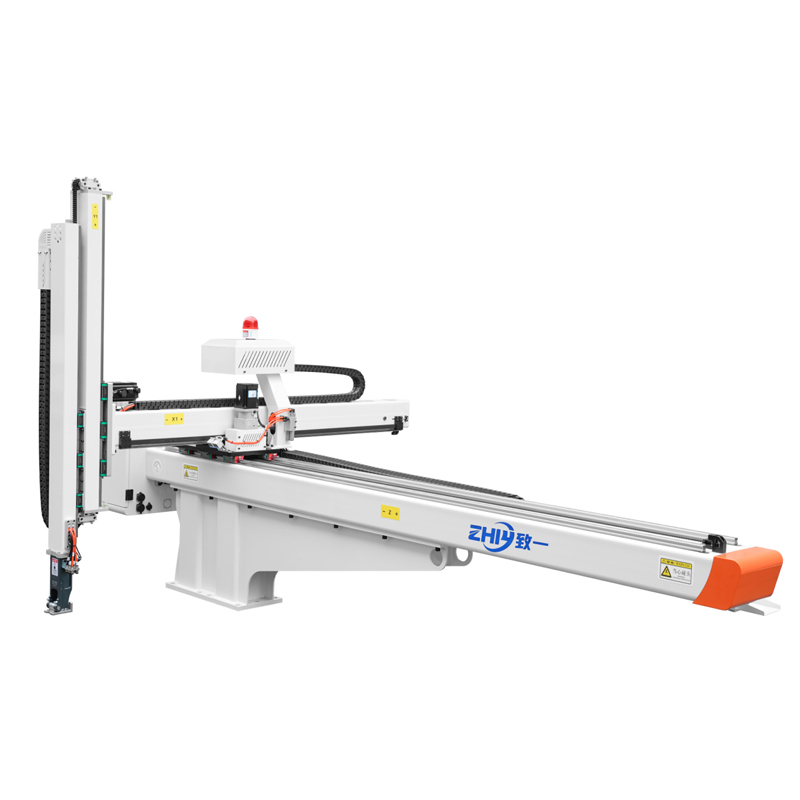
The travel range of a three-axis servo robot includes the X-axis (horizontal), Y-axis (front and back), and Z-axis (vertical). This range must be determined based on the worktable size, workpiece handling distance, and equipment layout to ensure coverage of the entire work area while avoiding response delays caused by excessive travel.
Electronic Manufacturing: Workbench sizes are typically 1-2 meters. Recommended X-axis travels are 1.2-2 meters, Y-axis travels are 0.5-1 meters, and Z-axis travels are 0.3-0.8 meters, such as the Estun ER10-1600.
Automotive Parts: Press line spacing is 2-3 meters. Recommended X-axis travels are 2.5-3.5 meters, Y-axis travels are 1-1.5 meters, and Z-axis travels are 1-1.8 meters, such as the Yaskawa MPL160.
Packaging Logistics: Palletizing heights are 1.5-2 meters. Recommended X-axis travels are 2-3 meters, Y-axis travels are 0.8-1.2 meters, and Z-axis travels are 1.5-2.2 meters, such as the Delta DRV90L series.
Medical Devices: Clean bench sizes are 0.8-1.5 meters. Recommended X-axis travels are 1-1.8 meters, Y-axis travels are 0.4-0.8 meters, and Z-axis travels are 0.2-0.6 meters, such as the Kollmorgen AKM Series.
(IV) Motion Speed: Adapting to Production Cycles, Balancing Efficiency and Precision
Motion speed includes maximum speed and acceleration and deceleration. The required minimum speed must be calculated based on the production cycle. Keep in mind the inverse relationship between speed and precision—the faster the speed, the more difficult it is to maintain precision. Finding a balance between the two is crucial.
Electronic Manufacturing: The assembly line cycle is 0.3-1 seconds per piece, requiring a maximum robot speed of 1.5-2 m/s on the X-axis and 1-1.5 m/s on the Z-axis, with acceleration and deceleration times ≤ 0.1 seconds.
Automotive Parts: The stamping cycle is 2-5 seconds per piece, with a maximum speed of 1-1.5 m/s on the X-axis and 0.8-1.2 m/s on the Z-axis, and acceleration and deceleration times ≤ 0.2 seconds.
Packaging Logistics: The palletizing cycle is 10-20 pieces/minute, with a maximum speed of 2-3 m/s on the X-axis and 1.5-2 m/s on the Z-axis, and acceleration and deceleration times ≤ 0.15 seconds.
Medical Devices: The filling cycle is 1-3 seconds per piece, with a maximum speed of 0.8-1.2 m/s on the X-axis and 0.5-1 m/s on the Z-axis, and acceleration and deceleration times ≤ 0.1 seconds. seconds (accuracy is prioritized).
(V) Environmental Adaptability: Coping with Special Scenarios and Ensuring Equipment Lifespan
Production environments vary significantly across industries. The protection level and material selection of the robot arm directly impact the equipment's stability and service life. Key considerations include IP rating and temperature range.
Electronics Manufacturing: Cleanrooms (dust- and oil-free) require an IP rating of IP54 or higher, with aluminum alloy housings to prevent static electricity accumulation.
Automotive Parts: Oily and dusty workshops require an IP rating of IP67 or higher, with sealed key areas and an automatic lubrication system.
Packaging Logistics: Room temperature and dry environments require an IP rating of IP54 or higher, with the housing treated for rust.
Medical Devices: Cleanrooms require an IP rating of IP65 or higher, a zero-dead-angle design, and support for high-temperature sterilization (some models can withstand 121°C).
III. Selection Pitfall Avoidance Guide: These Details Determine Selection Success
In addition to core parameters, the following easily overlooked details are often the most common source of selection errors and should be avoided:
(I) Ignoring Gripper Compatibility: Matching Workpiece Shape to Avoid Secondary Modifications
The gripper is the component that directly contacts the workpiece. If the gripper and workpiece shape are mismatched, even if the robot meets the specifications, it will not function properly. For example, chips in the electronics industry require vacuum grippers, metal parts in the automotive industry require pneumatic grippers, and cartons in the packaging industry require multi-claw grippers. When selecting a robot, ask the manufacturer to provide a comprehensive "robot + gripper" solution to avoid the added cost of later modifications.
(II) Ignoring Integration Difficulty: Integrating with Existing Systems to Reduce Adaptation Costs
Some companies focus solely on the robot's performance when selecting a robot, overlooking its integration and compatibility with existing production lines. It's important to clarify in advance: Does the robot support mainstream communication protocols such as Modbus and Profinet? Can it be integrated with ERP and MES systems? Does it fit the existing workbench's installation dimensions? It's recommended to choose a manufacturer that offers customized integration services to avoid production line downtime due to interface mismatches.
(III) Underestimating After-Sales Service: Focus on Response Speed to Ensure Production Continuity
Three-axis servo robots are high-precision equipment, requiring high technical skills for ongoing maintenance and troubleshooting. When selecting a model, consider the manufacturer's after-sales service capabilities: Does it have service locations in the target market? Is the response time for troubleshooting ≤ 4 hours? Does it provide spare parts inventory and regular maintenance services? Especially for foreign trade companies, overseas after-sales service capabilities directly impact the normal operation of the equipment and require special evaluation.
(IV) Blindly Pursuing "High Parameters": Select models based on needs and control procurement costs
Some companies mistakenly believe that "higher parameters are better," resulting in excessive equipment performance and increased procurement costs. For example, in the packaging industry, sorting only requires a repeatability of ±0.5mm. Choosing a high-precision model with ±0.01mm accuracy would increase procurement costs by over 30%, while actual utilization would be less than 50%. When selecting a robot, the principle should be "meeting core requirements." Allowing for reasonable margins in parameters like accuracy and speed is sufficient, and there's no need to blindly pursue top-tier specifications.
IV. Industry Selection Case Studies: From Theory to Practice
(I) Case 1: Electronics Manufacturing - Mobile Phone Camera Module Assembly Line
Requirements: Grasp 0.2kg camera modules and assemble them on a 1.5m-long workbench with a positioning accuracy of ±0.01mm and a cycle time of 0.5 seconds per unit, in a cleanroom environment.
Selection Plan: Choose a three-axis servo robot with a payload capacity of 5kg and repeatability of ±0.008mm (such as the Estun ER5-1200), paired with a lightweight vacuum gripper (weighing 0.8kg). The robot has an X-axis travel of 1.5m, a Y-axis of 0.8m, and a Z-axis of 0.6m. Maximum speeds are 2m/s on the X-axis and 1.5m/s on the Z-axis, and IP54 protection. Implementation Results: The equipment operates an average of 16 hours per day, with a failure rate of ≤0.1%. The assembly yield rate has increased from 95% (manual production) to 99.5%, resulting in a 40% increase in production efficiency.
(II) Case 2: Automotive Parts - Engine Block Handling Line
Requirements: Handle an 80kg engine block between 3-meter-long press lines with a positioning accuracy of ±0.1mm. Operate 20 hours per day in an oily workshop environment.
Solution: Select a heavy-duty three-axis robot (such as the ABB IRB 6700) with a 120kg payload and a repeatability of ±0.08mm, paired with a pneumatic gripper (weighing 12kg). The robot has an X-axis travel of 3.5m, a Y-axis of 1.2m, and a Z-axis of 1.8m. Maximum speeds are 1.2m/s (X-axis) and 1m/s (Z-axis). The robot meets IP67 protection and is equipped with an automatic lubrication system. Implementation Results: The equipment's MTBF reached 12,000 hours, increasing handling efficiency from 15 pieces/hour (manually required) to 60 pieces/hour, eliminating eight operators and saving approximately 600,000 yuan in annual labor costs.
(III) Case 3: Packaging Logistics - E-commerce Express Sorting Line
Requirements: Sorting of express parcels weighing 0.5-30kg, covering a 2.5-meter-long sorting conveyor belt, with a positioning accuracy of ±0.5mm, a cycle time of 15 pieces/minute, and a room temperature, dry environment.
Model Selection: Choose a three-axis robot (such as the KUKA KR 60 R2800) with a 50kg payload and ±0.3mm repeatability, paired with an adjustable multi-claw gripper (weighing 5kg). It features an X-axis travel of 2.5m, a Y-axis of 1m, and a Z-axis of 2m, a maximum speed of 2.5m/s on the X-axis and 2m/s on the Z-axis, IP54 protection, and support for Profinet communication.
Results: Sorting accuracy reached 99.8%, increasing daily sorting capacity from 5,000 manually to 20,000 items, reducing sorting errors by 80%, and enabling real-time data synchronization with the logistics management system.
V. Summary: The core logic of model selection is "demand-based, parameter-driven."
Selecting a three-axis servo robot isn't a simple matter of comparing parameters. Instead, it's centered around industry needs. By analyzing production scenarios, matching key parameters, and avoiding selection pitfalls, we can achieve a precise match between equipment performance and production needs. Electronics manufacturing pursues "high precision + high speed," automotive parts emphasize "heavy loads + durability," packaging logistics focuses on "long travel + efficiency," and medical devices emphasize "cleanliness + compliance"—the core demands of different industries determine the different approaches to model selection.