
Leave Your Message
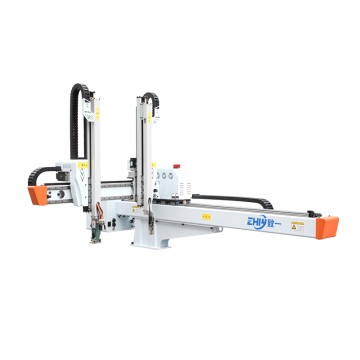
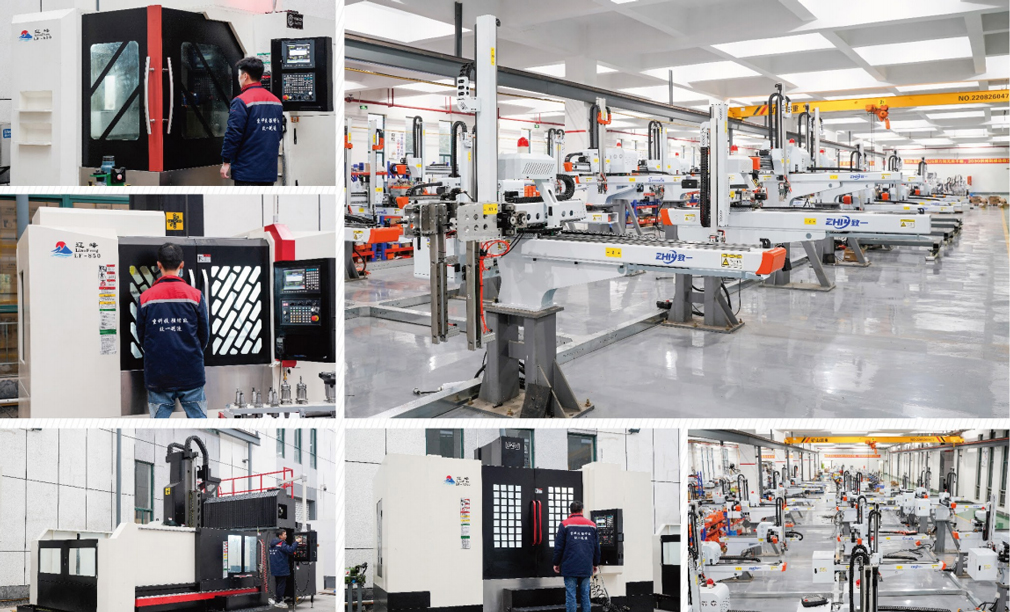
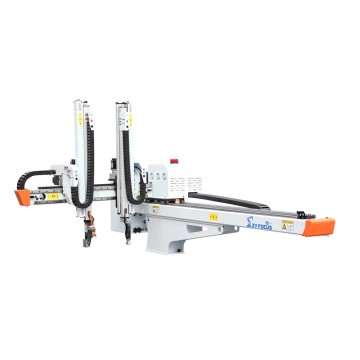
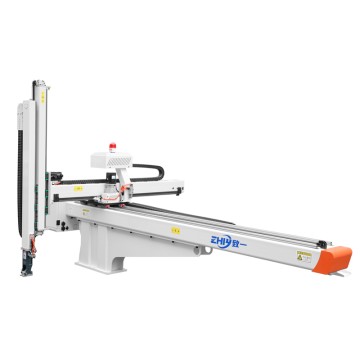
How to Select Servo Robot Based on Production Line
How to Select a Servo Robot Based on Your Production Line
A Practical Guide for Procurement Managers and Plant Engineers
Introduction
In today’s industrial landscape, automation is no longer optional—it is essential for manufacturers seeking efficiency, precision, and scalability. Among the most critical components in modern automated systems is the servo robot, a versatile robotic solution powered by servo motors that offers precise control over movement, speed, and positioning.
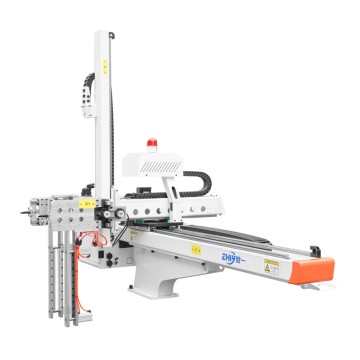
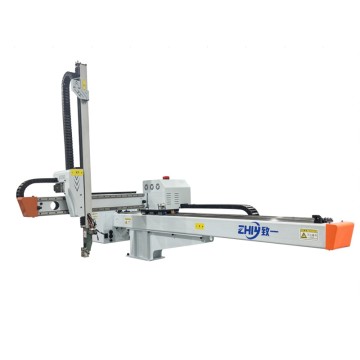
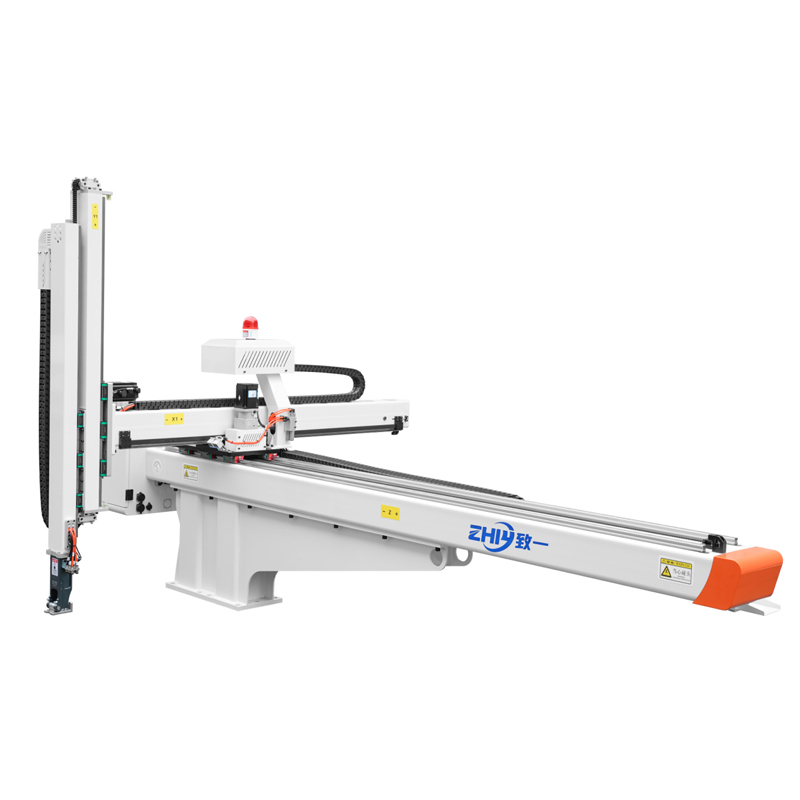
Unlike traditional pneumatic systems, Servo Manipulators provide high precision and repeatability, programmable multi-axis control, smooth and flexible motion, and superior energy efficiency. These advantages make them ideal for applications ranging from injection molding and material handling to assembly, welding, and packaging.
However, selecting the wrong servo Robot Can result in reduced productivity, higher maintenance costs, and poor return on investment. The right choice, on the other hand, can significantly improve cycle time, product consistency, labor cost savings, and overall ROI.
This guide is designed to help procurement managers, engineers, and production planners make informed decisions when selecting a servo robot for their specific production line. Whether you are upgrading an existing line or building a new automated facility, the following framework will walk you through the key considerations.
Step 1: Define Your Application Requirements
The first and most important step is to clearly define what the robot will actually do. This is the foundation of the entire selection process.
Start by asking:
-
What materials or products will be handled? The nature of the workpiece—its size, shape, weight, and material—directly influences the type of robot you need.
-
What is the required payload capacity? This is the maximum weight the robot arm must accommodate, including not just the part itself but also the weight of tooling such as grippers, pneumatic devices, and cables.
-
What is the required cycle time? How many parts do you need per minute or per hour? High-volume production demands faster cycle times.
-
What level of precision is needed? Identify the tightest fit for the parts in your process and add a buffer to determine the precision requirement.
For example, injection molding automation requires fast extraction speeds and high repeatability, while assembly tasks demand accuracy and flexibility. A clear understanding of your application will guide every subsequent decision.
Step 2: Determine the Number of Axes
Servo robots typically come in 3-axis, 5-axis, or 6-axis configurations:
-
3-axis robots are suitable for basic pick-and-place operations where simple linear movements are sufficient.
-
5-axis robots offer more flexibility and rotation, making them ideal for applications that require reaching around obstacles or positioning parts at angles.
-
6-axis robots provide full articulation and are necessary for complex tasks that demand dexterity, such as welding, assembly, or machine tending.
Choosing the right axis configuration depends on the complexity of your process. For most injection molding applications, a 3-axis or 5-axis manipulator is sufficient. However, if your production line involves intricate movements or multi-plane operations, a 6-axis robot may be justified.
Step 3: Calculate Payload Capacity Accurately
Payload is one of the most critical specifications in robot selection. A common mistake is to assume that payload is determined solely by the weight of the part being handled. In reality, the robot must also support:
-
The weight of the end-of-arm tooling (grippers, suction cups, welding guns, etc.)
-
The weight of any cables or hoses attached to the arm
-
The weight of the part itself
Always select a manipulator with a payload capacity slightly higher than your actual requirement. This ensures stable operation, longer service life, and reduced wear and tear. If the application involves high-speed movements or long reaches, the effective payload may be reduced due to dynamic forces, so an additional margin of safety is advisable.
Step 4: Evaluate Speed and Cycle Time
In high-volume production, speed is critical. Faster cycle times directly translate to increased productivity.
Consider the following:
-
Maximum operating speed: How fast does the robot need to move?
-
Acceleration and deceleration time: How quickly can the robot start and stop? This directly affects the peak torque required from the servo motors.
-
Cycle time: What is the total time from the beginning to the end of each operation?
It is important to note that speed and precision often involve trade-offs. A robot that moves extremely fast may sacrifice accuracy, while a highly precise robot may operate more slowly. Understanding your production priorities will help you strike the right balance.
Step 5: Assess Precision and Repeatability
Servo robots are known for their precision, but specifications vary significantly between models. Two key metrics to evaluate are:
-
Positioning accuracy: How close does the robot get to the commanded position?
-
Repeatability: How consistently does the robot return to the same position over multiple cycles?
Precision and repeatability are often identified as the most important factors in robot selection. For applications that demand tight tolerances—such as electronic assembly, precision machining, or quality inspection—higher repeatability is non-negotiable.
When evaluating specifications, ensure the system offers the level of precision required for your specific parts and processes. Industrial robots can achieve repeatability as fine as ±0.02 mm or better, but not every application requires that level of accuracy.
Step 6: Consider Workspace and Reach
The physical layout of your production line plays a major role in robot selection. Consider:
-
What are the dimensions and constraints of your existing equipment?
Every robot architecture has a natural workspace. SCARA robots excel in cylindrical, planar assembly tasks. Delta robots dominate dome-shaped, top-down picking. Gantry systems provide rectangular, deterministic motion. Articulated arms offer dexterity but introduce singularities that can affect performance.
If the task requires reaching into machines, avoiding fixtures, or maintaining vertical rigidity, workspace geometry often eliminates many candidate architectures before dynamic performance is even discussed.
Step 7: Evaluate the Operating Environment
Once the payload and workspace are understood, the next question is whether the robot can survive its operating environment. Factors to consider include:
-
Temperature and humidity: Is the robot operating in extreme conditions?
-
Dust, oil, and debris: Does the environment require specific IP ratings for protection?
-
Washdown requirements: Will the robot need to withstand cleaning with water or chemicals?
-
Vibration and shock: Will the equipment be subjected to strong vibration or impact?
A robot that performs well in a controlled lab environment may fail on a food-processing line or in a machining cell. Environmental compatibility is not a secondary filter—it is a primary design constraint.
Step 8: Consider Collaborative vs. Traditional Operation
An increasingly important decision is whether the robot must operate collaboratively with human workers. This is not simply a safety question, but a design choice that affects speed, stiffness, payload, and long-term reliability.
-
Collaborative robots (cobots) intentionally limit force, acceleration, and structural rigidity to ensure safe interaction. They are well-suited for light assembly, machine tending, and ergonomic assistance, but less appropriate for high-throughput or high-inertia tasks.
-
Traditional industrial robots assume physical separation from people and therefore operate with higher stiffness, greater acceleration, and more demanding duty cycles.
The decision ultimately comes down to workflow design: whether the human and robot share the same workspace, work simultaneously, or operate in separate zones.
Step 9: Check Compatibility with Existing Equipment
Ensure the servo robot is compatible with your current machinery. Key considerations include:
-
Communication protocols: Does the robot support the required fieldbus? Common options include EtherCAT, PROFINET, CANopen, and Modbus TCP/IP.
-
Physical integration: Can the robot be mounted to your existing production line equipment? For example, injection molding applications require robots designed specifically for seamless integration with injection molding machines.
-
Control system compatibility: Will the robot work with your existing PLC, motion controller, or PC-based control system?
Step 10: Plan for Peripheral Equipment
Once you have identified the core robot requirements, consider the peripheral components that will be necessary. These may include:
-
Parts feeders (bowl feeders, flexible feeders, etc.)
-
Vision systems for part inspection or guidance
-
End-of-arm tooling (EOAT)
-
Safety equipment and guarding
-
Robot bases or mounting structures
These peripherals can significantly impact the total cost and complexity of the automation project, so they should be planned for early in the selection process.
Step 11: Work with Industry Experts
Robot vendors, system integrators, and in-house engineering resources can all help determine the right robot for your application. Many vendors and integrators offer proof of concept, feasibility studies, or cycle time studies before you commit to purchasing a robot.
Engaging with experts early can help you avoid costly mistakes and ensure that the selected robot meets both your technical requirements and your production goals.
Summary Checklist
Before making a final decision, review this checklist:
| Consideration | Key Questions |
|---|---|
| Application | What exactly will the robot do? |
| Axes | How many axes does the task require? |
| Payload | What is the total weight (part + tooling)? |
| Speed | What cycle time is needed? |
| Precision | What tolerances must be maintained? |
| Reach | What is the required working envelope? |
| Environment | Will the robot survive the factory conditions? |
| Collaboration | Will it work alongside people? |
| Compatibility | Does it integrate with existing equipment? |
| Peripherals | What additional components are needed? |
Final Thoughts
Selecting the right servo robot for your production line is a systematic process that requires careful evaluation of technical parameters, operational requirements, and environmental factors. There is no "best" robot—only the one that is most suitable for your specific application.
The key is to start with a clear understanding of what you need the robot to do, then work through each consideration methodically. By taking the time to evaluate payload, speed, precision, reach, environment, and compatibility, you will be well-positioned to make an investment that delivers measurable improvements in productivity, quality, and return on investment.