
Leave Your Message
0102030405
Robot selection: How to choose between three-axis or five-axis robots based on product type?
2026-06-24
Robot Selection: How to Choose Between Three-Axis or Five-Axis Robots Based on Product Type
Introduction
When upgrading production lines or launching new automated workflows, one core decision determines your long-term throughput, part quality and operational cost: picking a three-axis or five-axis industrial robot. Many procurement teams default to higher-axis equipment without evaluating their actual product portfolio, leading to overspending, unnecessary programming complexity and wasted floor space. Others opt for budget three-axis units only to face production bottlenecks when handling complex-shaped parts.
This guide breaks down selection logic centered entirely on your product characteristics, matching Robot Motion capabilities to part geometry, handling paths and post-processing requirements. It delivers a clear, buyer-focused framework to help you calculate ROI, avoid over-specification and lock in automation that fits your product mix long-term.
1. Core Motion Difference: What Separates Three-Axis and Five-Axis Robots
Before matching robots to your products, clarify their fundamental movement ranges, the root of all application gaps.
Three-Axis Robot Core Motion
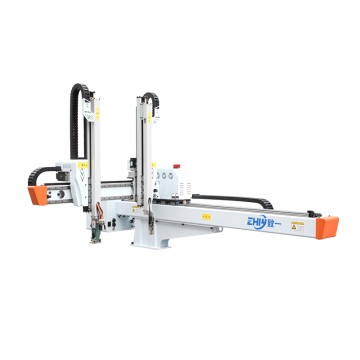
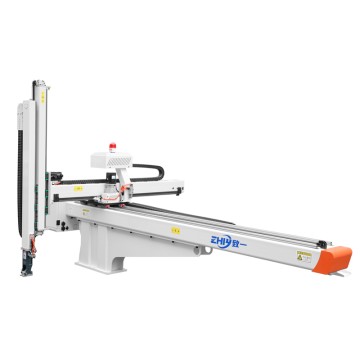
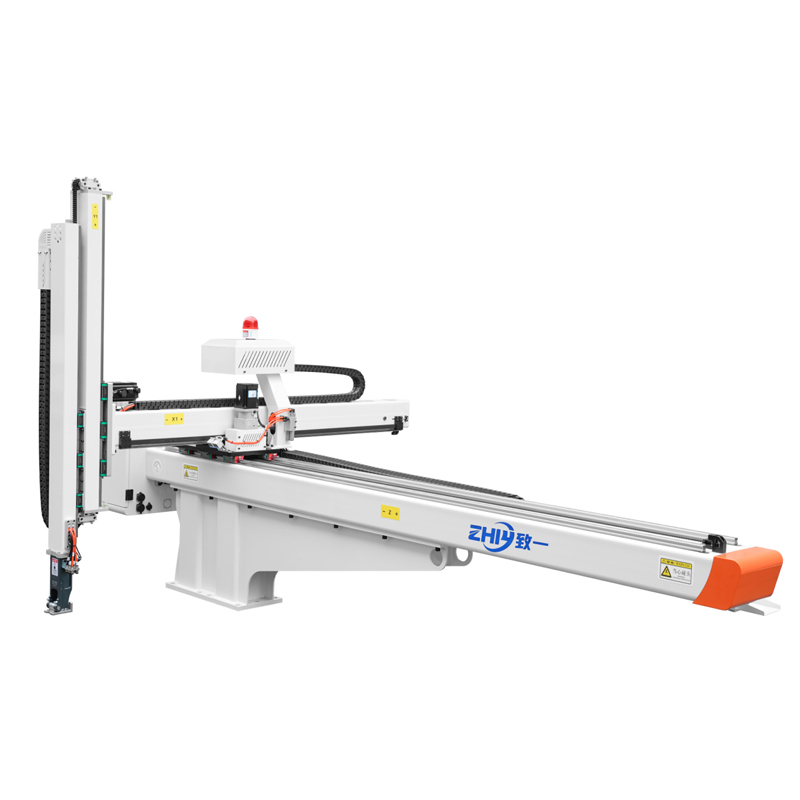
Three-axis linear robots operate along three orthogonal linear axes: vertical lift (Z), horizontal forward/backward (X), and horizontal left/right travel (Y). All movements are straight-line translations with no built-in rotational or tilting joints on the end effector.
- Strengths: Fixed linear paths, ultra-high repeatability on flat horizontal planes, simplified programming, low maintenance wear
- Limitations: Cannot rotate, flip or angle gripped parts; only able to approach workpieces from straight vertical or horizontal directions
Five-Axis Robot Core Motion
Five-axis robots retain full three-axis linear travel, plus two independent rotational axes at the gripper head: wrist rotation and pitch tilt. The end effector can spin 360° and tilt at variable angles during movement.
- Strengths: Multi-angle part access, in-line flipping, sideways extraction from deep molds, flexible post-handling processes
- Limitations: Longer programming cycles, higher component wear, larger upfront capital expenditure
2. Which Product Types Are Perfect Matches for Three-Axis Robots?
Choose three-axis automation if 90%+ of your production runs feature parts with simple, uniform geometry and uncomplicated handling trajectories. Below are the most common product categories with real production scenarios for procurement reference.
Flat, Prismatic Single-Plane Parts
Products with flat top/bottom surfaces, no undercuts, curved sides or deep cavities only need vertical and horizontal linear movement.
- Typical products: Thin electronic protective shells, flat plastic trays, rigid packaging blisters, aluminum sheet panels, rectangular plastic lids
- Handling logic: The robot descends vertically to grip the flat surface, moves horizontally to conveyors or storage bins, then releases without rotating the part. No angular adjustment required to avoid collisions with molds, jigs or surrounding tooling.
- Production benefit: Fast cycle times; three-axis units deliver consistent high-speed linear movement ideal for mass production of uniform flat goods.
Lightweight Standard Block & Cylindrical Components
Small, low-weight regular geometry parts with simple extraction paths work seamlessly on three-axis systems. Recommended payload range: 0.5kg to 5kg.
- Typical products: Standard bottle caps, small cosmetic jars, solid plastic blocks, simple battery casings, uncurved pipe fittings
- Key advantage: Single straight-line extraction from mold cavities; parts can be placed directly onto stacking pallets without flipping or repositioning. Operators require minimal training to adjust programs for size variations of these standard shapes.
Single-Step Pick-and-Place Without Secondary Operations
If your workflow only requires picking finished parts and placing them directly into packaging or outgoing conveyors—no trimming, inspection, deburring or orientation checks—three-axis robots eliminate redundant rotational functionality.
- Industry examples: Disposable tableware molding, flat consumer electronics accessory manufacturing, simple food packaging automation
Key Procurement Notes for Three-Axis Robot Projects
- Lower initial investment, reduced spare part inventory costs and shorter equipment delivery lead times
- Simplified controller programming; entry-level technicians can complete routine program edits
- Lower power consumption during continuous multi-shift operation, cutting long-term utility expenses
- Ideal for factories running stable, unchanging product lines with minimal part design updates
3. Which Product Types Require Five-Axis Robots as a Mandatory Solution?
Five-axis flexibility becomes non-negotiable when your parts feature complex geometry, restricted extraction angles or multi-stage post-handling workflows. Below are product categories where three-axis robots create consistent production limitations.
Parts with Deep Cavities, Undercuts and Internal Mold Features
Deep-drawn housings, components with internal hooks, snap-fit undercuts or recessed side walls cannot be extracted vertically without scraping the mold or damaging finished surfaces. The robot gripper must tilt sideways to clear protruding mold sections.
- Typical products: Large home appliance inner shells, thick plastic tumblers, toy figurine bodies, automotive interior trim pieces, medical storage containers
- Production pain point with three-axis units: Operators must manually tilt parts post-extraction, adding labor cost and inconsistent cycle times; high scrap rates from surface scratches during forced vertical removal.
Multi-Curved, Irregular Contoured Components
Organic curved surfaces, asymmetrical casings and complex ergonomic parts demand variable gripper angles during extraction and placement.
- Typical products: Wireless earphone housings, sports equipment plastic frames, automotive dashboard components, custom medical device enclosures
- Five-axis advantage: The wrist tilt function aligns the gripper parallel to curved surfaces during picking, evenly distributing clamping force to prevent deformation or cosmetic blemishes on high-value finished goods.
Products Requiring In-Line Flipping, Rotation or Multi-Angle Inspection
Any production sequence combining pick-and-place with secondary automated steps eliminates manual re-fixturing only with five-axis rotation capability.
- Typical downstream tasks integrated with robot handling: Gate trimming, surface visual inspection, label alignment, two-sided assembly, oil coating, dimensional scanning
- Real-world scenario: After extracting a plastic housing from the mold, the five-axis robot rotates the part 180° to present the inner surface to a laser trimming station, then tilts 90° to stack vertically into transport crates—all within one continuous robot cycle.
Mixed High-Volume Product Lines with Frequent Design Revisions
Manufacturers running short runs of multiple complex parts benefit most from five-axis flexibility. When product shapes update quarterly or monthly, the rotational axes remove the need to redesign fixed jigs and reconfigure entire automation cells.
- Target industries: Custom consumer electronics, automotive Tier 1 component suppliers, precision medical parts manufacturers, mold injection job shops with diverse client orders
4. Side-by-Side Decision Matrix: Match Your Product to Robot Axis Count
This comparison table streamlines procurement evaluation by centering criteria on product attributes rather than robot technical specs alone.
| Evaluation Criterion (Product-Focused) | Best Choice: Three-Axis Robot | Best Choice: Five-Axis Robot |
|---|---|---|
| Part Geometry | Flat, block-shaped, uniform single-plane surfaces | Curved, deep-cavity, undercut, asymmetrical organic shapes |
| Extraction Path | Straight vertical/horizontal only; no side obstructions | Restricted mold access requiring tilt/rotation to clear barriers |
| Post-Handling Steps | Single-step pick & place only; no secondary processing | Flipping, trimming, inspection, multi-angle assembly required |
| Product Mix Stability | Long-term fixed product lines with minimal design changes | Frequent part redesigns, mixed complex SKUs, custom order batches |
| Allowable Scrap Tolerance | Low cosmetic risk; minor surface marks acceptable | High-value finished goods requiring zero surface abrasion |
| Payload Range | Lightweight parts ≤5kg, uniform weight distribution | Variable payloads, irregular weight balance on contoured parts |
| Long-Term TCO Target | Maximize cost savings for stable mass production | Reduce labor/jig rework costs on complex mixed production |
5. Step-by-Step Procurement Workflow to Finalize Your Robot Selection
Follow this buyer-focused process to avoid over-investment or under-specification, validated by automation procurement teams across automotive, electronics and medical manufacturing sectors.
Step 1: Audit Your Full Product Portfolio
Compile CAD drawings, physical samples and production volumes for every active SKU. Split parts into two buckets: simple flat/block geometry and complex curved/cavity geometry. Calculate the production volume percentage of each category.
- Rule of thumb: If complex parts exceed 30% of total output, five-axis robots deliver superior long-term ROI. If complex parts make up less than 10%, three-axis systems remain the economical primary solution.
Step 2: Map End-to-End Handling Trajectories
Simulate extraction and placement paths for core products without robot rotational movement. Document collision risks, required manual repositioning steps and scrap incidents that would occur with three-axis-only motion. These pain points quantify the tangible value of five-axis functionality.
Step 3: Calculate Total Cost of Ownership (TCO) Over 5 Years
Avoid deciding solely based on upfront purchase price. Include these recurring operational costs in your comparison:
- Programming labor time for new product launches
- Fixture redesign costs for updated part geometries
- Scrap loss expenses from surface damage during handling
- Operator training hours and technician skill requirements
- Spare part replacement frequency for rotating wrist joints For stable simple product lines, three-axis TCO is consistently 20–35% lower over five years. For complex mixed production, five-axis systems cut labor and scrap costs enough to offset higher initial investment within 2–3 years.
Step 4: Request Vendor Process Simulation Tests
Share your representative product samples with robot suppliers and request offline motion simulation. Verify if three-axis units can complete full handling workflows without manual intervention, or if five-axis rotational axes eliminate bottlenecks entirely. Use simulation reports as formal comparison data for internal budget approval.
6. Common Procurement Mistakes to Avoid When Selecting Axis Count
- Over-specifying five-axis robots for 100% simple flat part production Unnecessary rotational joints increase equipment price, maintenance downtime and cycle time on linear handling tasks, eroding profit margins on high-volume low-margin goods.
- Deploying three-axis robots on complex undercut parts to cut initial costs Short-term capital savings are erased by elevated scrap rates, extra manual labor and longer production cycles, creating persistent line bottlenecks.
- Ignoring future product pipeline during robot evaluation If your R&D roadmap includes new curved, multi-feature parts within 2–3 years, a three-axis automation cell will require full retrofitting, adding costly downtime and re-investment. Factor mid-term product development into your axis count decision.
- Judging robot capability solely by payload and reach Axis motion flexibility matters more than maximum load capacity for most molding, assembly and packaging workflows. Even low-weight complex parts demand five-axis rotation to avoid surface damage.
Conclusion
The optimal robot axis configuration always traces back to your product’s geometric complexity and production workflow requirements, not generic industry recommendations or budget pressure alone. Three-axis robots deliver unmatched cost efficiency, speed and simplicity for standardized flat, block-shaped products with single-step handling. Five-axis robots become an essential asset for manufacturers producing deep-cavity, curved, undercut components or running mixed lines with integrated secondary processing steps.
For procurement teams balancing upfront spend and long-term production flexibility, the most strategic approach is segmenting production cells: deploy three-axis units for stable simple SKU mass production, and allocate five-axis robots to dedicated lines handling complex, high-value parts. This hybrid layout balances capital expenditure, throughput and scrap reduction for the broadest product portfolio coverage.
Frequently Asked Questions for Manufacturing Buyers
Q1: Can I upgrade a three-axis robot to five-axis later if I launch complex new products?
Most three-axis linear robot frames cannot be retrofitted with rotational wrist joints. Upgrading requires full robot replacement, including controller reconfiguration and cell safety revalidation. Factories expecting complex product launches within three years should evaluate five-axis models from the initial planning phase.
Q2: Does five-axis robot programming require specialized senior technicians?
Basic pick-and-place rotation logic uses standardized programming templates. Mid-level automation operators can master routine edits after 1–2 weeks of training. Advanced multi-angle continuous motion for precision inspection requires limited specialist support, which most robot suppliers include with equipment delivery.
Q3: Are five-axis robots only suitable for high-volume production?
No. Job shops with small-batch custom complex parts often see faster ROI on five-axis units. The ability to reorient parts without custom jigs cuts fixture manufacturing costs for low-run SKUs, offsetting higher robot purchase pricing.
Q4: What payload threshold shifts the recommendation from three-axis to five-axis?
Payload weight is a secondary factor to part geometry. Even 1kg curved medical housings need five-axis rotation, while 6kg flat aluminum panels run efficiently on three-axis systems. Always prioritize part shape analysis before evaluating load capacity.