
Leave Your Message
0102030405
What Is Injection Robot Arm Used For?
2026-06-16
What Is Injection Robot Arm Used For?
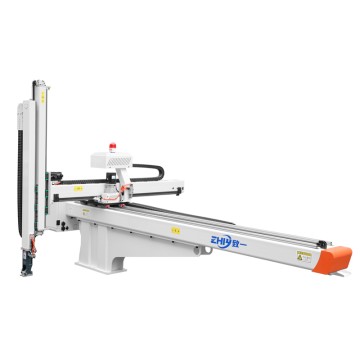
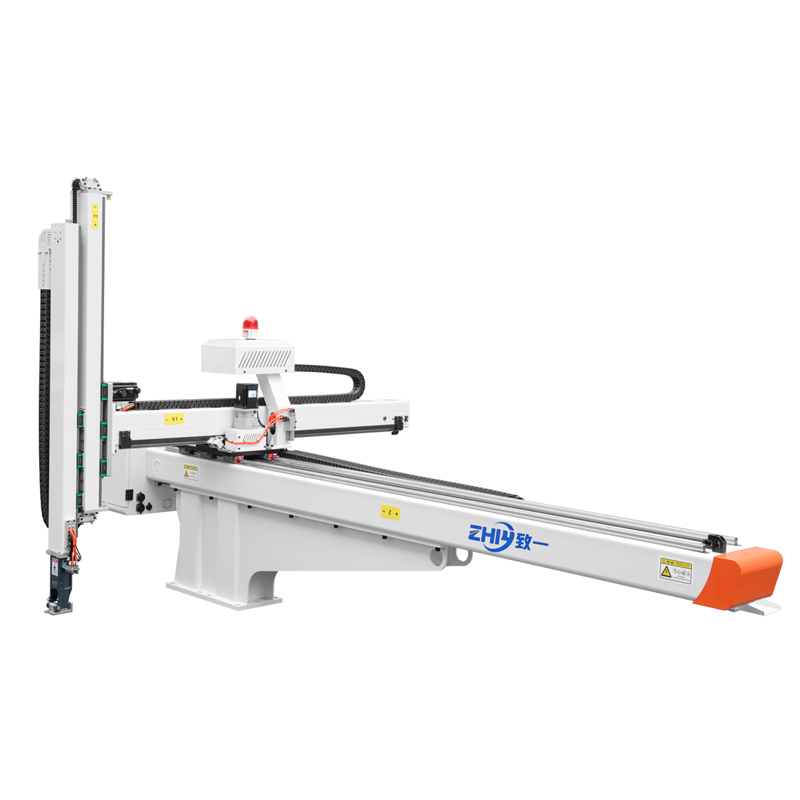
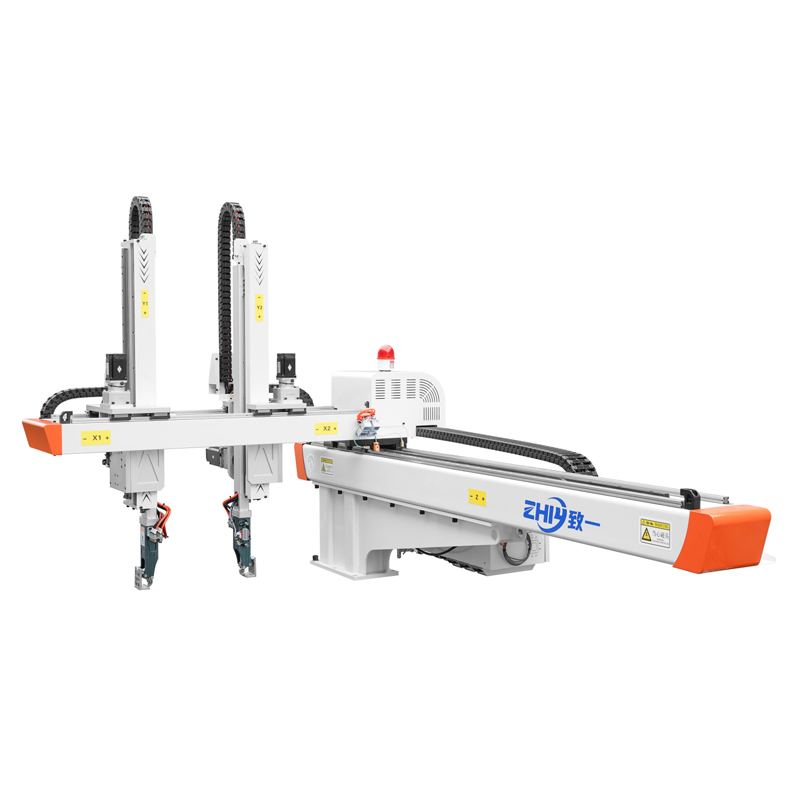
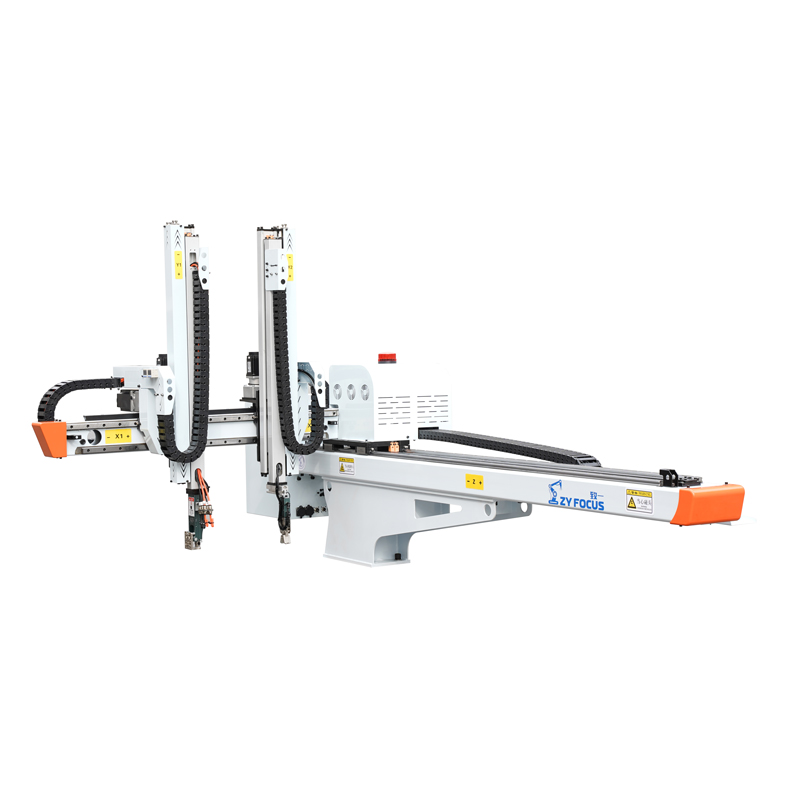
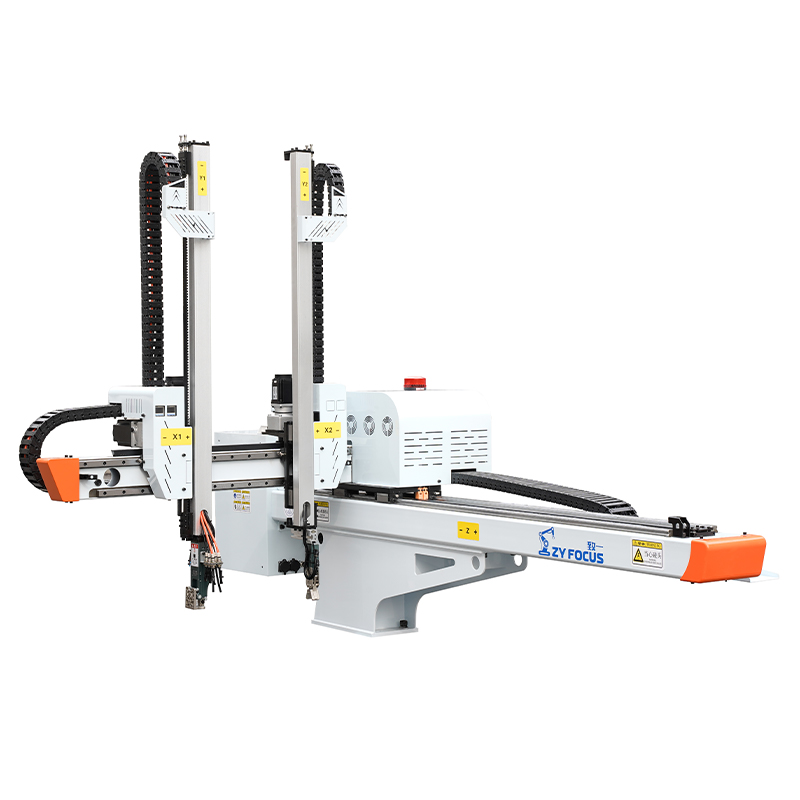
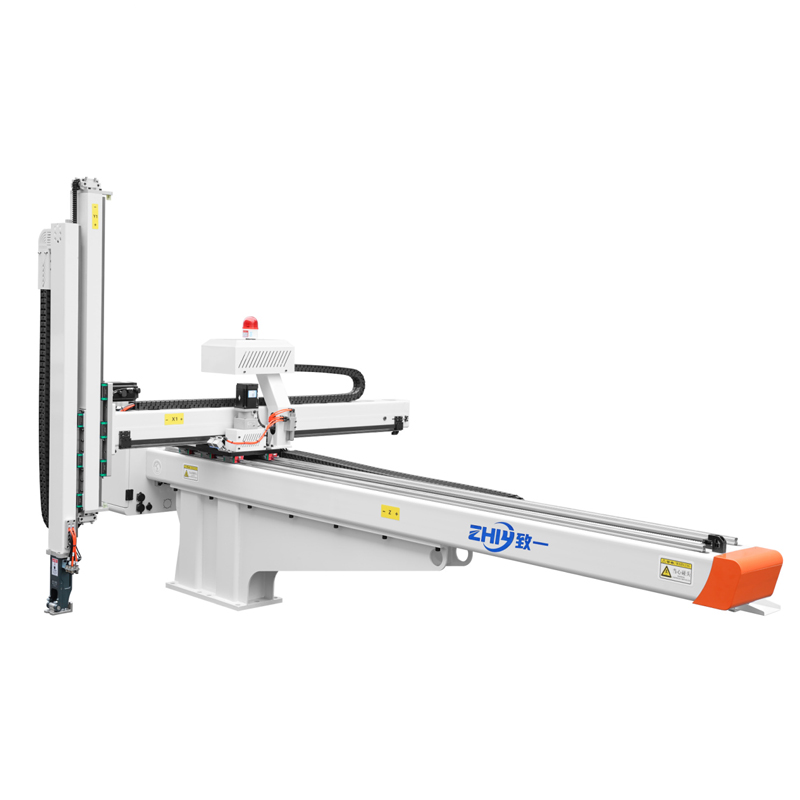
If you operate a manufacturing plant, run a production line, or source industrial automation equipment for global factories, you have likely come across injection robot armsin modern production workshops. As a core piece of automated equipment tailored for injection molding and related processing lines, this type of Robotic Arm has evolved from an optional auxiliary tool to a standard configuration for high-efficiency, high-quality production across multiple industries. This guide breaks down its core functions, typical application scenarios, extended operational capabilities, key value for production lines, and applicable equipment types, helping professional buyers fully understand its practical uses and match it to production demands.
Core Basic Functions of Injection Robot Arms
At its core, the injection robot arm is designed to work in sync with injection molding machines, replacing manual labor to complete repetitive, high-precision, and high-cycle tasks. Its most fundamental functions focus on material and product handling throughout the molding process.
The primary basic task is automatic part extraction. Right after the injection mold opens, the robot arm swiftly enters the mold area, picks up finished plastic parts, finished products, and sprue runners, then moves them to designated areas such as conveyor belts, material frames, or temporary storage platforms. Unlike manual operation, the robot arm can keep consistent speed and position accuracy for a long time, avoiding delays, position deviations, or part scratches caused by human fatigue or operational errors. For small and miniature parts, its delicate gripping also prevents damage to finished products, which is critical for improving the yield rate.
Loading and pre-placement of embedded parts is another essential basic function. In insert molding processes, many products require metal nuts, conductive sheets, and other embedded components to be placed into the mold in advance. The injection robot arm can accurately position these small parts into preset positions inside the mold with a repeat positioning accuracy as low as ±0.05mm. This ensures that the embedded parts will not shift during the molten material injection process, effectively avoiding defective products caused by offset inserts.
In addition, basic material handling covers raw material transfer. It can automatically transport raw material particles, auxiliary materials, or semi-finished products to the feeding area of the injection molding machine, and collect waste materials such as leftover materials and excess trimming materials generated during production. This forms a fully automated closed-loop for material transportation and reduces manual participation in the production link.
Main Industrial Application Scenarios
Thanks to its strong stability, precision and adaptability, injection robot arms are widely used in dozens of mainstream manufacturing industries, and the functional focus varies slightly according to the production characteristics of different industries.
Automotive Manufacturing
The automotive industry is one of the largest application markets for injection robot arms. A large number of plastic parts are used in automobiles, including interior decorations such as door panels, instrument panels and armrests, as well as functional parts such as lamp housings, wiring harness connectors and battery casings. These parts have strict requirements on dimensional accuracy and surface quality. Injection robot arms are responsible for extracting various large, medium and small automotive plastic parts from molds, and can cooperate with assembly lines to complete preliminary sorting and stacking. For precision automotive electronic connectors and sealing parts, the high-precision positioning of the robot arm also guarantees the pass rate of finished products. Moreover, automotive production lines usually run continuously for a long time, and the 24-hour uninterrupted working capability of the robot arm perfectly matches the high-volume production rhythm of the automotive industry.
Electronics and Electrical Appliances Production
Consumer electronics, home appliances and communication equipment produce a huge number of tiny and compact injection-molded parts, such as mobile phone casings, charger shells, circuit board brackets and keyboard accessories. Such parts are small in size, complex in structure and easy to be damaged by collision. The injection robot arm with lightweight fixtures can achieve ultra-stable pick-and-place, effectively preventing surface scratches and structural damage to precision electronic parts. Many electronic production workshops have high requirements for dust control. Automated operation by robot arms reduces human contact, lowers the risk of dust and sweat polluting products, and meets the clean production standards of the electronics industry. It can also be connected with subsequent testing and packaging equipment to realize the whole-process automation from molding to finished product output.
Medical Device and Pharmaceutical Industry
The medical industry puts forward extremely strict requirements on hygiene, precision and safety for production equipment. Injection robot arms are widely used in the production of disposable medical supplies, medical equipment shells, drug packaging accessories and other products. In a sterile production environment, manual operation is easy to bring bacteria and pollutants, while fully enclosed automated robot arms can maintain a high-clean production state all the time. In the production of precision medical injection parts such as syringe accessories and instrument housings, the robot arm completes part extraction and sorting with stable movements to ensure that the dimensions of each batch of products are consistent and comply with medical production specifications. Some customized models can also cooperate with injection equipment to complete the quantitative injection of medical reagents and auxiliary materials, realizing multi-process integration operations.
Daily Consumer Goods and Packaging Industry
Daily necessities, toys, cosmetic packaging, food containers and other products are characterized by large output, diverse styles and relatively simple structures. Injection robot arms are the standard equipment for mass production in this field. It efficiently extracts various plastic daily necessities from injection molds, and quickly completes classified stacking and box packing. For thin-walled packaging containers such as plastic bottles and box bodies, the flexible clamping design of the robot arm will not squeeze and deform the products. Faced with frequent product replacement on consumer goods production lines, most injection robot arms support simple program switching, which can quickly adapt to molds of different specifications and meet the flexible production needs of multiple varieties and small batches.
Special Processing Industries
In addition to mainstream industries, injection robot arms also play an important role in food processing and plastic deep processing. In the food industry, special food-grade robot arms can cooperate with injection and filling equipment to inject sauces, fillings and liquids into food containers, with accurate measurement and no cross-contamination. In the plastic deep processing industry, it assists in the production of plastic pipes, profiles and industrial plastic accessories to complete mold opening and picking, as well as handling of semi-finished products.
Extended Secondary Processing Capabilities
Modern injection robot arms are no longer limited to single pick-and-place work. Most models can be combined with different fixtures and peripheral equipment to expand secondary processing functions, integrating multiple processes into one to further streamline the production line.
Trimming and deburring is a common extended function. After the injection molding is completed, there will be flashes and excess leftover materials on the edges of most parts. The robot arm can be equipped with cutting tools or abrasive tools to complete automatic trimming and deburring while transferring the parts, eliminating the separate manual trimming process and saving production sites and labor costs.
Automatic sorting and classification suit production lines with mixed product output. Through simple programming or matching with visual recognition systems, the robot arm can distinguish products of different specifications, sizes and qualified states, and transport them to different material areas respectively. Qualified products enter the next process, while defective products are separately recycled, realizing automatic screening of finished products.
Assembly and combination are widely used for combined plastic parts. For products composed of multiple injection-molded components, the robot arm can complete the assembly work of multiple parts after picking up the components from the mold, such as clamping, sleeving and simple bonding. This realizes the integration of molding and assembly, shortens the overall production cycle, and reduces the turnover links of semi-finished products.
Stacking and palletizing are mainly for large-batch finished products. The robot arm regularly stacks the extracted parts on pallets or material frames according to the set rules, which is convenient for subsequent overall handling and warehouse storage. The neat stacking mode also optimizes the utilization rate of production space.
Core Values of Injection Robot Arms for Production Lines
For production enterprises and procurement buyers, understanding the practical value brought by injection robot arms is as important as clarifying their functions. These values cover production efficiency, product quality, operational safety and long-term cost control, and are also the key reasons why more and more factories choose to deploy automated robotic arms.
First of all, it greatly improves production efficiency and stabilizes the production cycle. Manual part taking is restricted by reaction speed and physical endurance, and the operation cycle fluctuates greatly. The injection robot arm runs at a constant speed all the time, and can seamlessly dock with the action rhythm of the injection molding machine. It effectively shortens the single molding cycle. According to actual production data, compared with manual operation, the robot arm can reduce the part taking time by 30% to 62%, and the overall production capacity of the production line is significantly increased. It can work continuously for 24 hours without interruption, making the operating rate of expensive injection molding equipment reach the maximum level.
Secondly, it realizes consistent product quality and reduces the defective rate. The robot arm has ultra-high repeated motion accuracy, and the force, position and speed of each operation remain unchanged. It avoids product deformation, scratches and dimensional deviations caused by uneven manual force and irregular operation. For industries with strict quality requirements such as electronics and medical treatment, this stability directly reduces the number of defective products and rework links, and cuts down the loss of raw materials.
In terms of production safety, injection molding workshops have potential safety hazards such as high temperature molds, mechanical clamping and residual molten materials. Manual operation for a long time is prone to safety accidents such as clamping injury and scalding. The injection robot arm works instead of humans in high-risk areas, completely isolating operators from dangerous links and reducing the safety accident rate of the workshop. At the same time, its precise and synchronous action can also effectively prevent mold damage accidents caused by misoperation during manual part taking, and protect the high-cost injection molds.
In terms of cost control, although the initial procurement investment of the robot arm is required, the long-term return is obvious. It replaces multiple repetitive posts, reduces long-term labor costs such as wages and benefits. The reduction of defective products and material waste also continuously saves production costs. Under normal operating conditions, most production lines can recover the equipment investment within 12 to 18 months. In addition, modern energy-saving robot arm designs can also reduce the overall energy consumption of the production line and optimize operating costs in an all-round way.
Common Types of Injection Robot Arms and Their Applicable Scenarios
According to structural forms, driving modes and load capacity, injection robot arms are divided into multiple types, and different types correspond to different production needs, which is convenient for buyers to select supporting models according to their own equipment and products.
Cartesian robot arms are the most widely used basic models, with a simple structure and easy programming and maintenance. They are mostly single-arm or dual-arm structures, suitable for standard pick-and-place of conventional injection parts, sprue separation and other simple tasks. They match injection molding machines of 100 to 500 tons, and are the preferred choice for large-scale standardized product production such as daily necessities and ordinary plastic parts. The cost is moderate, and the later maintenance difficulty is low, which is suitable for factories with budget control and single product types.
Articulated robot arms, which simulate the structure of human arms, have multiple rotating joints and extremely high motion flexibility. They can realize complex spatial trajectory movements, with a large load range. In addition to basic part taking, they are more suitable for complex secondary operations such as multi-part assembly, angle conversion and multi-station handling. They are often used in automotive parts, high-end electronic products and other production scenarios with complex processes. The disadvantage is that the procurement cost is higher, and the programming and operation are relatively professional, which is suitable for medium and high-end production lines with complex processes.
According to the driving mode, it can be divided into pneumatic robot arms and servo robot arms. Pneumatic models rely on compressed air for driving, with low cost and simple structure. They are suitable for production lines with long molding cycles, simple product structures and limited budgets, and are mostly used for small injection molding machines below 300 tons. Servo robot arms are driven by servo motors, with higher operating speed, higher positioning accuracy and stronger programmability. They support multi-axis independent adjustment, and are the mainstream choice for high-precision, high-efficiency and multi-process composite production lines.
Conclusion
The injection robot arm is a multi-functional automated device integrating handling, positioning and auxiliary processing, and its application runs through the whole process of injection molding production. From the most basic mold opening and part taking to extended secondary processing such as trimming, assembly and sorting, from ordinary daily consumer goods to high-precision medical and automotive parts, it can provide stable and efficient automated solutions for different industries and different production scales.
For global procurement buyers, when selecting injection robot arms, you can first clarify your own product types, production batch size, molding machine specifications and process requirements, and then match the corresponding arm type, driving mode and load model. A reasonably matched injection robot arm can not only significantly improve the automation level of the production line, stabilize product quality and production efficiency, but also realize long-term cost reduction and efficiency increase, bringing lasting competitive advantages to production enterprises. With the continuous development of automation technology, injection robot arms integrated with vision systems and intelligent management systems will also have richer functions and broader application space in the future.