
Leave Your Message
What Is a 5-Axis Servo Robot Used For?
What Is a 5-Axis Servo Robot Used For?
In today‘s rapidly evolving manufacturing landscape, automation has become the cornerstone of operational efficiency and product quality. Among the various automation technologies available, the 5-axis servo Robot Stands out as one of the most versatile and capable solutions for modern production environments. But what exactly is a 5-axis servo robot used for? This article explores the applications, benefits, and practical considerations of this technology for manufacturing professionals.
Understanding the 5-Axis Servo Robot
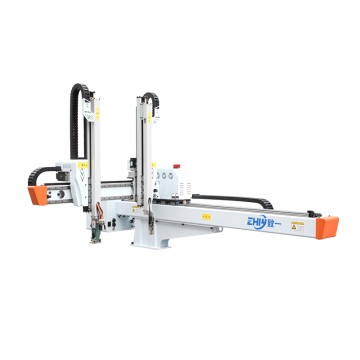
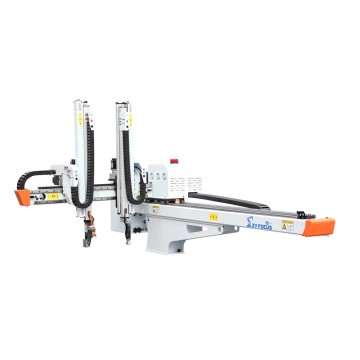
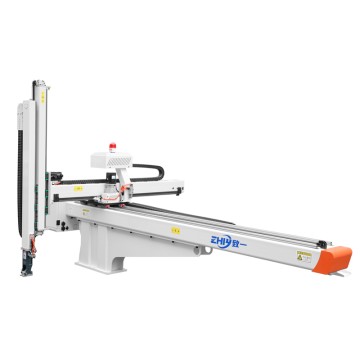
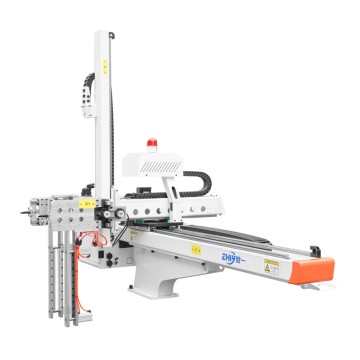
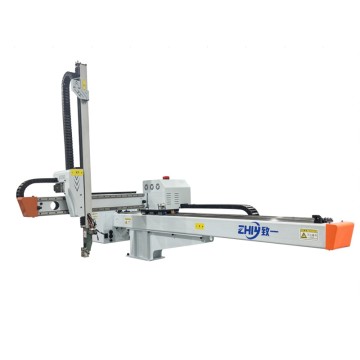
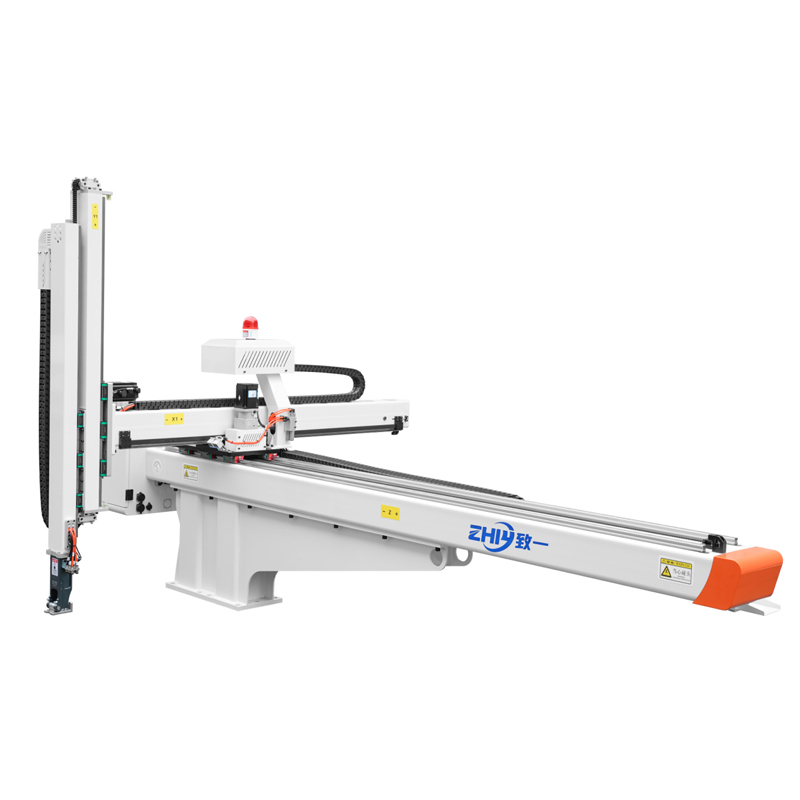
A 5-axis servo robot is an advanced industrial automation device capable of performing complex, multi-directional movements with high precision. Unlike simpler 3-Axis Robots that move only along the X, Y, and Z linear axes, a 5-axis robot adds two rotational movements—typically referred to as pitch and yaw—providing significantly greater flexibility and precision.
These robots are typically Cartesian or linear robots in design, featuring three linear axes (traverse, crosswise, and vertical) combined with a 2-axis servo wrist. The servo-driven wrist is a key differentiator: unlike pneumatic wrists, servo wrists can grip parts at any angle and perform multiple motions in synchronization with other robot movements.
The robot is controlled by a computer that sends signals to each servo motor individually, directing how fast and in which direction each axis should turn. This level of control enables precise, repeatable operations essential for high-quality manufacturing.
Key Industries and Applications
Injection Molding
The injection molding industry represents one of the primary application areas for 5-axis servo robots. These robots are extensively used with horizontal plastic injection machines ranging from 50 to 850 tons of clamping force, and in some cases up to 3,000 tons. They are designed for rapid and precise removal of finished products and sprues, particularly when strict demands are placed on product appearance.
For large injection molded parts such as automotive bumpers and appliance housings, 5-axis robots can stably handle payloads from 5 to 500 kg. Their long-stroke design allows them to cover the entire process of part removal, inspection, and palletizing—replacing what traditionally required multi-machine collaboration and reducing equipment footprint by 30%.
In the cosmetics packaging industry, manufacturers have adopted 5-axis robots for fully automatic injection molding, achieving stable and efficient operation with consistent output and improved quality. The servo wrist‘s clean operation also makes these robots suitable for medical and other applications that cannot tolerate particulates from drive-belt wear or lubricant contamination.
Automotive Manufacturing
The automotive sector accounts for approximately 35% of 5-axis robot consumption, making it the largest application area. These robots are used across a range of automotive processes including welding, painting, and assembly.
One particularly innovative application involves 5-axis manufacturing robots that embed electrical wiring directly into product structures, eliminating conventional wiring harnesses. This patented process produces parts on demand and significantly increases productivity. In the automotive industry, this technology could reduce wiring costs by up to $200 per compact vehicle while strengthening supply chain resilience.
5-axis welding robots also offer the flexibility to weld complex shapes, enabling manufacturers to enhance production capabilities while maintaining high quality standards.
Aerospace
The aerospace industry has also embraced 5-axis robotics, particularly for complex component manufacturing. These robots are used to add 3D polymeric features to metal, ceramic, or polymer surfaces with complex shapes, and to add bare or insulated wires and conductive tracks.
Precision 5-axis robots with interchangeable tools can perform additive manufacturing operations on complex-shaped components. They have also demonstrated the ability to produce test parts using laser sintering.
For aerospace applications, 5-axis robotic solutions are essential for manufacturing structural components, turbine blades, and other parts with spatial freeform surfaces.
Electronics and 3C Manufacturing
The electronics and electrical sector accounts for about 25% of 5-axis robot applications. These robots are used for precision dispensing, assembly, and material handling across multiple planes.
Emerging applications include 5-axis robotic tools that can add conductors, place surface-mounted components, and modify structures using integrated 5-axis 3D printing heads—creating a multifunctional platform that unites mechanical and electronic manufacturing in a single environment.
Five-axis laser systems built on robotic cell architecture combine multi-axis motion control with precision lasers to form metal traces directly on substrate surfaces, enabling the manufacturing of antennas, RF shielding, capacitive touch interfaces, and sensors.
Healthcare and Medical Devices
The medical device industry requires precision manufacturing that 5-axis robots can deliver. These robots are used for micro-technical workpiece applications including medical devices. Their ability to operate cleanly—without particulates from belt wear or lubricant contamination—makes them suitable for cleanroom environments.
In cleanroom automation, 5-axis robots are often the preferred choice as they require significantly less space than linear handling systems. They can place parts on conveyor belts, carry out quality checks, and detect and sort out faulty parts.
Advantages Over Other Robot Types
Compared to 3-Axis Robots
3-axis robots move only in linear directions (X, Y, Z). By adding two rotational movements, 5-axis robots provide more flexibility and precision, making them ideal for tasks that require parts to be oriented in a specific way before placement. Traditional 3-axis equipment often requires multi-machine collaboration for complex operations; 5-axis robots can cover the entire process in a single unit, reducing equipment footprint.
Compared to 6-Axis Robots
While 6-axis articulated robots offer the greatest freedom of movement, 5-axis Cartesian robots have distinct advantages. They offer faster intervention into the mold space for shorter cycle times while still delivering the flexibility inside and outside the mold associated with articulated units.
For injection molding applications, the 5-axis design can handle many complex part-manipulation tasks historically assigned to 6-axis robots, but with simpler setup and operation. Programming is also generally less complicated than with 6-axis articulated robots.
Operational Benefits
Efficiency and Productivity
Through 24/7 uninterrupted operation, 5-axis robots can improve production line efficiency by 40% and help companies reduce labor costs by up to 65%. For small- to medium-batch customized production, the multi-axis linkage allows for rapid switching of work trajectories, reducing mold changeover time to one-third that of traditional equipment.
Precision and Quality
Positional sensors in servo motors allow the robot to know exactly where the wrist and gripper are positioned at all times. This enables the robot to complete complicated motions and extract complex parts with minimal clearance. High accuracy and repeatability are afforded by servo wrist operation with positional encoders that recognize exactly where the drive shaft is at any moment.
Simplified Tooling
Because the servo wrist more easily compensates for minor misalignments, it becomes possible to use simpler end-of-arm tooling. The servo wrist can handle many complex part-manipulation tasks that have historically required more sophisticated tooling solutions.
Flexibility
The five-axis design provides the flexibility to reach into confined spaces, access multiple angles, and perform complex tasks with precision. This makes these robots adaptable to a wide range of applications across diverse industries.
Common Questions About 5-Axis Servo Robots
Q: What industries commonly use 5-axis servo robots?
A: The primary industries include automotive (35% of consumption), electronics and electrical (25%), aerospace, healthcare, and plastics manufacturing. They are also used in packaging, cosmetics, and general manufacturing.
Q: How do 5-axis robots differ from 6-axis robots?
A: 5-axis robots combine three linear axes with two rotational axes, while 6-axis robots add a third rotational axis for full articulation. 5-axis Cartesian robots typically offer faster cycle times and simpler programming than 6-axis articulated robots.
Q: What are the main benefits of servo-driven wrists?
A: Servo wrists can grip parts at any angle, perform multiple motions in synchronization with other robot movements, operate cleanly without particulates, and provide high accuracy through positional feedback.
Q: Can 5-axis robots handle heavy payloads?
A: Yes, 5-axis robots can handle payloads ranging from 5 to 500 kg, making them suitable for both small precision parts and large automotive components.
Q: How much can 5-axis robots improve productivity?
A: Through 24/7 operation, 5-axis robots can improve production line efficiency by approximately 40% and reduce labor costs by up to 65%.
Q: Are 5-axis robots suitable for cleanroom environments?
A: Yes, 5-axis robots are often the preferred choice for cleanroom automation due to their clean operation and smaller space requirements compared to linear handling systems.
Q: What is the typical return on investment for 5-axis robots?
A: ROI varies by application, but benefits include reduced labor costs (up to 65%), improved efficiency (up to 40%), reduced floor space (up to 30%), and faster changeover times (reduced to one-third of traditional equipment).
Conclusion
The 5-axis servo robot has established itself as a versatile and essential tool across multiple manufacturing industries. From injection molding and automotive assembly to aerospace components and medical devices, these robots deliver the precision, flexibility, and efficiency that modern production demands.
For manufacturing professionals evaluating automation solutions, the 5-axis servo robot offers a compelling balance of capability and practicality. It provides the enhanced flexibility needed for complex tasks while maintaining the speed and simplicity that make it accessible for a wide range of applications. As manufacturing continues to evolve toward greater automation and flexibility, the role of the 5-axis servo robot will only become more significant.