
Leave Your Message
How to Select 3 axis Robot for Automotive Industry
How to Select a 3 Axis Robot for Automotive Industry
The automotive industry is under constant pressure to improve productivity, maintain consistent quality, and reduce manufacturing costs. As vehicle manufacturers increasingly adopt lightweight materials, high-precision plastic components, and automated assembly systems, robotic automation has become an essential part of modern automotive production.
Among various automation solutions, 3-Axis Robots have gained widespread acceptance in automotive injection molding and component handling applications. They provide an ideal balance between speed, precision, reliability, and investment cost, making them particularly suitable for high-volume production environments.
However, selecting the right 3-axis robot requires more than comparing specifications. Buyers need to evaluate production requirements, part characteristics, machine compatibility, and long-term operational efficiency.
This guide explains how automotive manufacturers, Tier 1 suppliers, and injection molding facilities can select the most suitable 3-axis robot for their applications.
Why Are 3 Axis Robots Widely Used in Automotive Manufacturing?
Automotive production lines emphasize three critical objectives:
- Stable product quality
- Short cycle times
- Continuous production capability
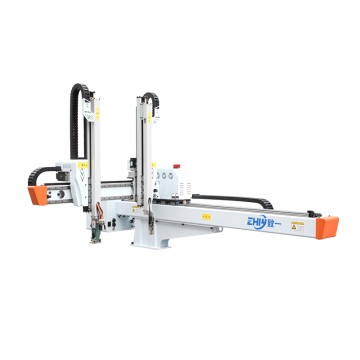
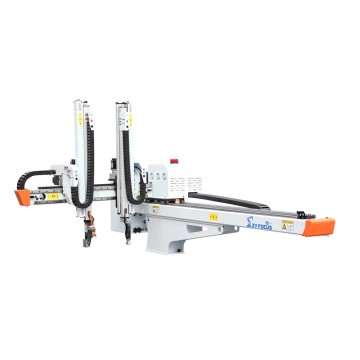
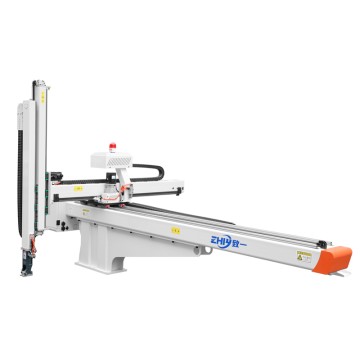
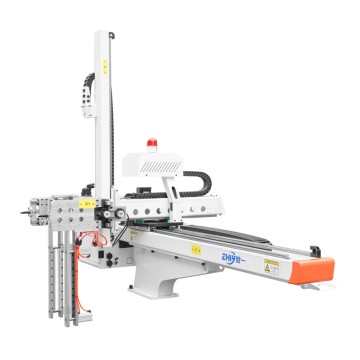
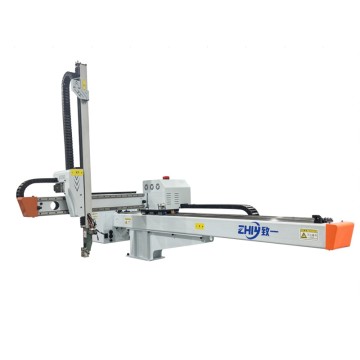
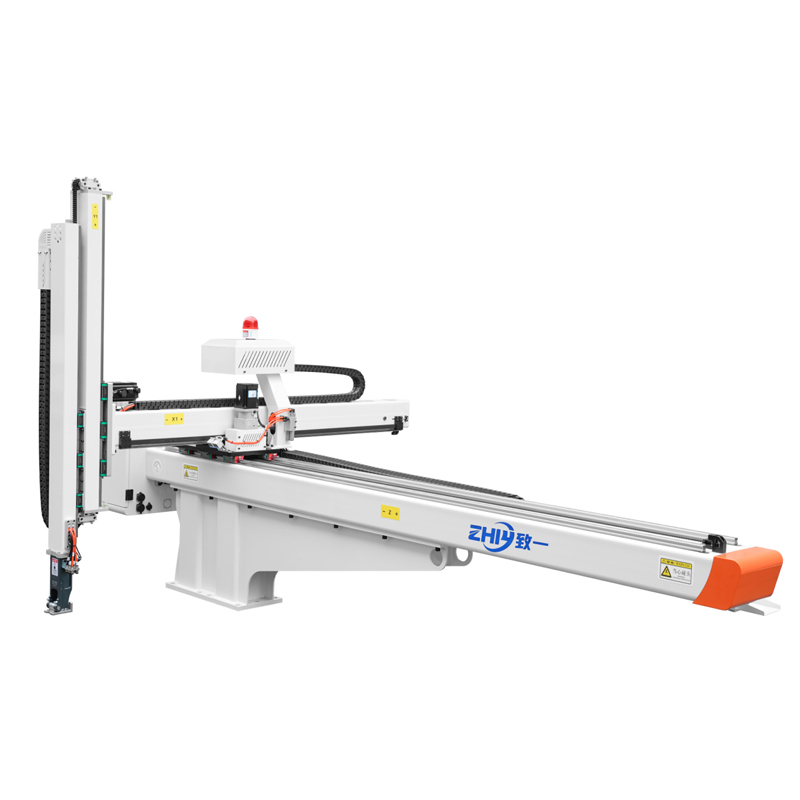
A 3-axis servo robot performs linear movements along the X, Y, and Z directions, allowing it to execute repetitive tasks with high repeatability and minimal variation.
Common automotive applications include:
- Injection molded interior trim removal
- Dashboard component handling
- Door panel extraction
- Plastic housing transfer
- Runner separation
- Part stacking
- Conveyor loading
- Packaging automation
- Secondary process feeding
Compared with manual operations, robotic automation helps manufacturers achieve more consistent production while minimizing damage to delicate molded components. Servo-controlled systems also provide highly repeatable positioning, which is particularly valuable for automotive suppliers operating under strict quality management standards.
Understanding Automotive Production Requirements Before Selection
The first step in Robot Selection is identifying the actual production scenario.
Different automotive components demand different robotic capabilities.
Small Precision Components
Examples include:
- Sensor housings
- Electrical connectors
- Switch covers
- Battery module accessories
Important considerations:
- High-speed extraction
- Lightweight end-of-arm tooling
- Short cycle times
- Excellent positioning repeatability
Medium-Sized Interior Components
Examples include:
- Air vent assemblies
- Instrument panel parts
- Console trims
- Decorative moldings
Selection priorities include:
- Stable gripping
- Adequate stroke length
- Gentle handling
- Flexible placement positions
Large Automotive Plastic Components
Examples include:
- Door panels
- Pillar trims
- Spoilers
- Wheel arch liners
These applications usually require:
- Higher payload capacity
- Increased beam rigidity
- Longer traverse strokes
- Enhanced vibration control
Clearly defining component characteristics significantly reduces the risk of over-specifying or under-sizing automation equipment.
Five Key Factors to Consider When Selecting a 3 Axis Robot
1. Payload Capacity
Payload is one of the most important selection criteria.
Many buyers only consider product weight, but actual payload calculations should include:
Product weight
Gripper weight
Vacuum cups
Pneumatic accessories
Cable drag chain loads
Safety factors should also be considered.
Industry practice often recommends selecting robots with approximately 20–30% additional payload capacity to maintain long-term stability.
For example:
If a molded automotive component weighs 6 kg and the EOAT weighs 2 kg, selecting a robot with at least a 10 kg payload capability provides a suitable operating margin.
2. Stroke Requirements
Stroke determines whether the robot can complete the entire handling process.
Several dimensions need evaluation:
Vertical Stroke
Must allow safe access inside the mold.
Crosswise Stroke
Should cover unloading stations.
Traverse Stroke
Needs to reach conveyors, inspection systems, or stacking positions.
Insufficient stroke length can limit future production flexibility.
Oversized robots, however, increase costs unnecessarily.
Stroke calculations should always account for:
- Mold dimensions
- Injection machine size
- Product release position
- Downstream equipment layout
3. Positioning Accuracy
Automotive suppliers operate under increasingly strict dimensional standards.
Precision requirements vary by application.
Typical requirements include:
| Application | Suggested Repeatability |
|---|---|
| General handling | ±0.10 mm |
| Interior trim positioning | ±0.05 mm |
| Precision assembly support | ±0.02 mm |
Servo-driven robots typically offer significantly higher positioning consistency compared with pneumatic systems.
Repeatability becomes especially important when robots interact with vision systems, inspection stations, or assembly fixtures.
4. Cycle Time Capability
Automotive production lines often run continuously.
Even small time reductions can create substantial annual savings.
Questions buyers should ask include:
How quickly can the robot enter the mold?
What is the extraction speed?
How long does the idle cycle take?
Can acceleration profiles be optimized?
High-speed servo robots can reduce extraction times to only a few seconds, helping manufacturers maximize machine utilization.
5. Structural Rigidity
Large automotive parts may deform if robotic movement is unstable.
Robots with stronger beam structures generally provide:
Better vibration resistance
Higher repeatability
Reduced maintenance
Longer service life
Rigid mechanical designs become particularly valuable for:
Large injection machines
Long-stroke applications
Heavy automotive components
Matching Robot Specifications to Injection Molding Machines
Robot selection should always be aligned with machine tonnage.
General recommendations include:
Machines Below 200 Tons
Suitable for:
Small electronic automotive parts
Connectors
Switch housings
Recommended features:
High-speed lightweight robot
Compact footprint
Low energy consumption
Machines Between 200–600 Tons
Common automotive applications:
Dashboard accessories
Vent assemblies
Trim panels
Preferred robot characteristics:
Servo-driven design
Medium payload
Flexible stroke combinations
Machines Above 600 Tons
Often used for:
Door panels
Bumper supports
Large decorative parts
Selection priorities:
Heavy-duty beams
Extended traverse lengths
High-rigidity frames
Enhanced stability
Evaluating End-of-Arm Tooling Compatibility
EOAT design directly affects robot performance.
Automotive manufacturers frequently use:
Vacuum Grippers
Ideal for smooth plastic surfaces.
Advantages:
Fast gripping
Lightweight design
Simple maintenance
Mechanical Grippers
Suitable for textured or irregular parts.
Benefits:
Strong holding force
Reliable positioning
Hybrid Systems
Combine vacuum and clamping methods.
Useful for:
Complex interior assemblies
Multi-component handling
Buyers should verify whether the robot controller supports:
Vacuum sensors
Additional pneumatic outputs
Quick tooling change systems
Consider Future Production Flexibility
Automotive production programs rarely remain unchanged.
New vehicle platforms frequently introduce:
Different molds
Modified part geometries
Shorter product life cycles
Future-proofing considerations include:
Expandable I/O interfaces
Software upgrades
Vision integration capability
Conveyor synchronization
MES connectivity
Remote diagnostics
Investing in scalable automation often reduces total ownership costs over the robot's operational lifespan.
When Is a 3 Axis Robot the Right Choice?
A 3-axis robot is generally the best option when manufacturers require:
High-speed molded part extraction
Stable repetitive movements
Cost-effective automation
Simple pick-and-place operations
Reliable 24/7 production
However, some automotive applications may demand greater flexibility.
Examples include:
Insert molding
Complex assembly
Multi-machine tending
Part flipping
Multi-angle processing
These tasks may be better suited to five-axis or six-axis robotic systems. Industry experts note that articulated robots provide additional freedom for complicated insert-loading and over-molding processes, while three-axis systems remain highly competitive for standard extraction and transfer operations.
Questions Buyers Should Ask Potential Suppliers
Before making a final investment decision, procurement teams should evaluate suppliers based on the following questions:
- What automotive applications have already been completed successfully?
- What repeatability can be guaranteed?
- Can the robot accommodate future tooling upgrades?
- How quickly can spare parts be supplied?
- What preventive maintenance intervals are recommended?
- Does the supplier provide simulation support?
- Can cycle times be optimized during commissioning?
Final Thoughts
Selecting a 3-axis robot for automotive manufacturing is not simply a matter of choosing the fastest or most powerful model. The ideal solution is one that aligns with production goals, part specifications, machine configurations, and future expansion plans.
By carefully evaluating payload requirements, stroke dimensions, precision levels, cycle times, structural rigidity, and tooling compatibility, automotive manufacturers can implement automation systems that deliver consistent quality, increased productivity, and long-term operational efficiency.
For automotive suppliers focused on injection molding automation, a properly selected 3-axis servo robot remains one of the most practical and cost-effective investments for achieving reliable, high-volume production.