Leave Your Message
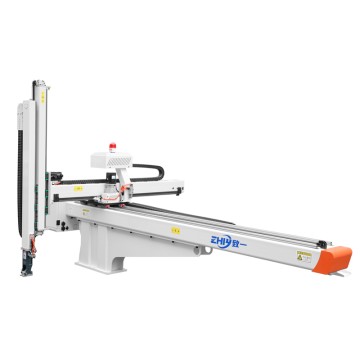
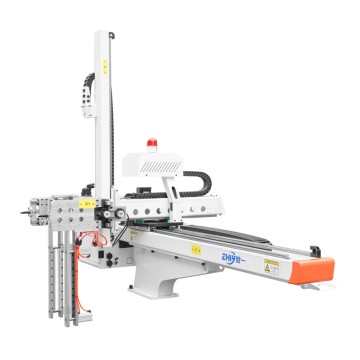
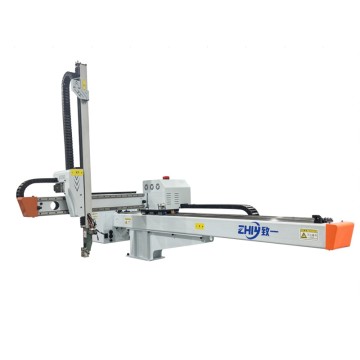
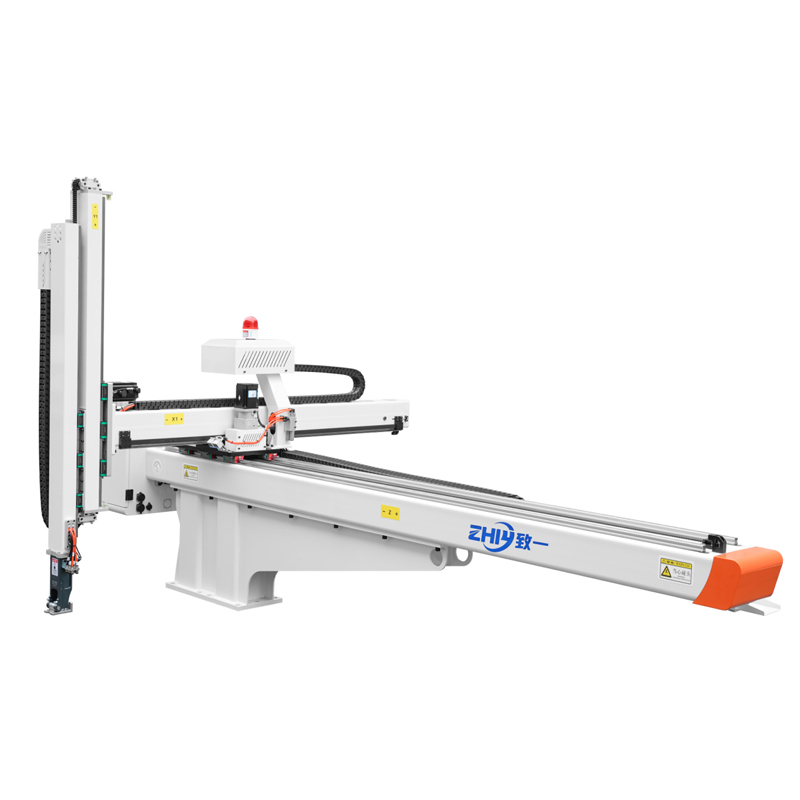
How to choose a supplier of servo robotic arms for injection molding machines?
How to choose a supplier of servo robotic arms for Injection Molding Machines?
In the wave of intelligent transformation in the injection molding industry, servo robots have become core equipment for improving production efficiency and ensuring product consistency. However, the market is flooded with suppliers of varying quality, from multinational giants to small local factories. A careless choice can lead to problems such as equipment and process mismatches, delayed after-sales service, and increased hidden costs. A truly reliable supplier is not simply a seller of equipment, but a long-term partner who can deeply understand and meet production needs. This article will break down the scientific selection logic from four dimensions: technical compatibility, service guarantee, corporate strength, and practical verification.
I. Technical Dimension: Precise Matching is Key, Rejecting "One-Size-Fits-All" Solutions
The core value of servo robots lies in "precision and efficiency," but different injection molding scenarios have vastly different technical requirements for the equipment. The first step in choosing a supplier is to verify whether their technical solution can precisely match your production needs, rather than blindly pursuing parameter stacking.
1. Rigid Matching of Core Parameters and Process Scenarios
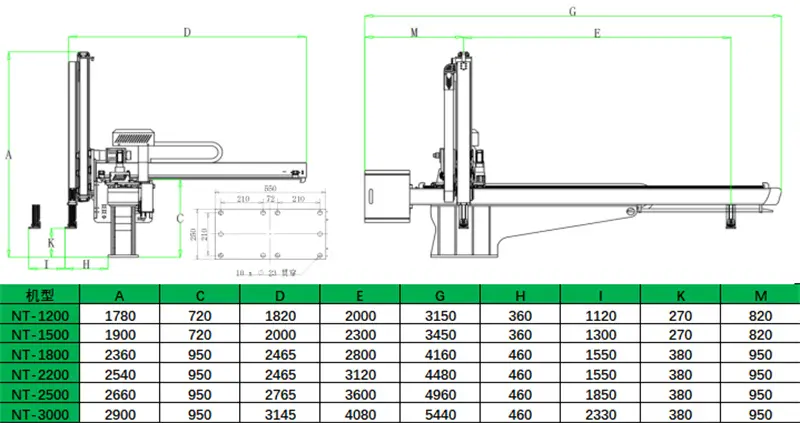
The adaptability of key technical parameters directly determines production efficiency and product quality. First, you need to clarify your core needs: If you are producing miniature electronic components such as mobile phone charging connectors, you need to focus on repeatability accuracy (should be within ±0.02mm) and high-speed pick-and-place capabilities (pick-and-place cycle ≤ 0.3 seconds). In such scenarios, models equipped with original European servo systems can better guarantee stability; if you are producing large plastic parts such as car bumpers, you need to consider the robot's load capacity (usually 10-20kg) and arm reach to ensure that the equipment can maintain stable operation even when carrying heavy objects.
It is worth noting that some suppliers use "general-purpose" solutions to reduce costs, but this may lead to equipment being undersized or oversized for the task. For example, a car electronics insert company once experienced a 0.05mm placement error and a defect rate of 4.2% due to using a Standard Robot, resulting in monthly losses exceeding 200,000 RMB. After switching to a precisely matched model, the error was controlled within 0.01mm, and the defect rate dropped to 0.3%.
2. Reliability of Core Components and System Integration
80% of the service life and failure rate of a robot depend on the quality of its core components. High-quality suppliers usually use servo motors, guide rails, and controllers from established brands, rather than generic parts. For example, the difference in guide rail lifespan, ranging from 3 million to 5 million cycles, directly leads to significant differences in equipment maintenance cycles and replacement costs.
More importantly, system integration capabilities are crucial. Suppliers with independently developed control systems have a 42% lower equipment failure rate than those using generic solutions. These suppliers can optimize motion control algorithms based on your production rhythm, such as using inertia compensation technology to suppress end-effector vibration during high-speed operation, or achieving memory storage for over 100 types of mold data to meet the needs of multi-variety production switching.
3. Flexibility of Customization Capabilities
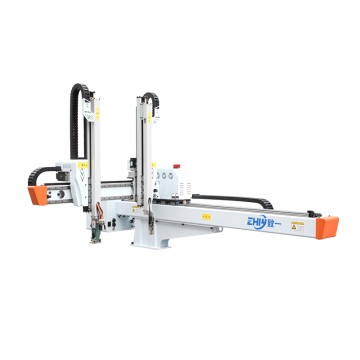
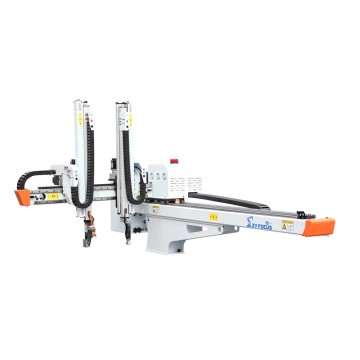
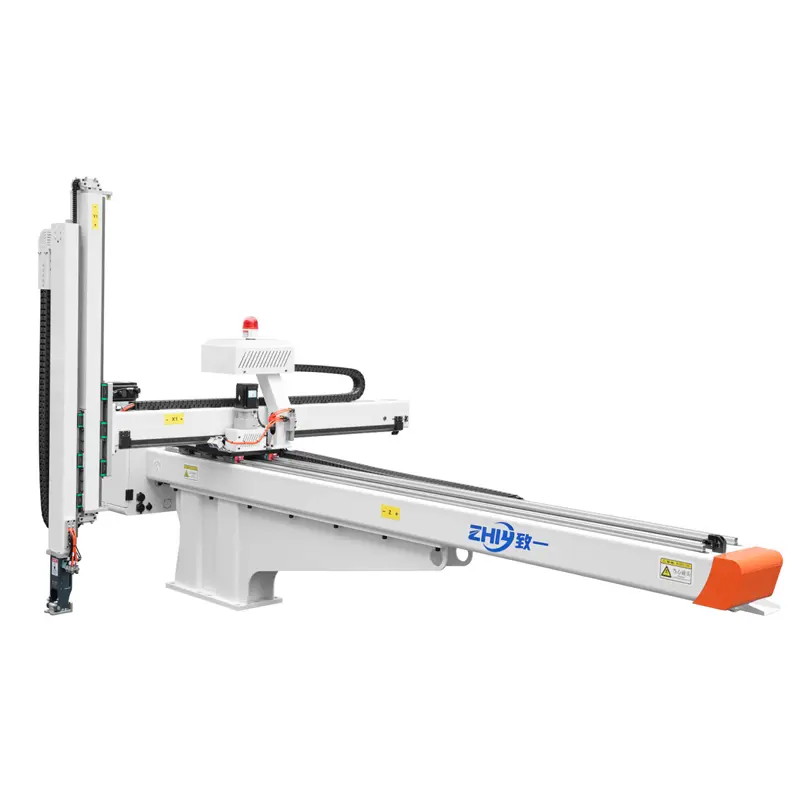
In injection molding production, mold structure, workshop layout, and finished product handling methods often have personalized requirements, making it difficult for standardized equipment to fully adapt. Reliable suppliers will provide customized services from solution design to detail optimization: from customizing end-effector fixtures based on product shape (such as a combination of elastic suction cups and mechanical claws) to adjusting arm specifications based on injection molding machine tonnage (90-320T) and installation dimensions, and even integrating complex functions such as in-mold labeling and metal insert embedding. Suppliers who only promote standardized products and refuse personalized adjustments often struggle to cope with complex production scenarios.
II. Service Dimension: Full Lifecycle Support, Reducing Downtime Risks
The cost of downtime in injection molding production lines is often calculated in minutes. High-quality service guarantees can minimize losses caused by equipment failures. When choosing a supplier, you should focus on the coverage and response efficiency of their service network, rather than simply focusing on pre-sales promises.
1. Pre-sales: In-depth Research, Not Blind Selling
Professional suppliers will thoroughly understand your production details before quoting: injection molding machine model, mold size, product weight, production cycle requirements, and even workshop safety door height and receiving platform location. They will use this data to match the optimal solution. Conversely, if a supplier quotes a low price without any research, there is likely a hidden risk of equipment mismatch with the production environment.
2. During Sales: Full-Process Implementation Support
Installation and commissioning after equipment delivery is a critical step. Reliable suppliers will provide "turnkey project" services, including on-site installation, equipment calibration, and operator training, ensuring rapid equipment commissioning. For example, some suppliers explicitly promise delivery of standard models within 48 hours of payment, with on-site installation and training provided by factory engineers, avoiding responsibility disputes caused by third-party services.
3. After-Sales Service: Fast Response and Long-Term Guarantee
The core of after-sales service capabilities lies in "response speed" and "spare parts guarantee." An ideal supplier should establish a 24/7 response mechanism, with service points within a 300-kilometer radius, enabling on-site support within 4 hours. At the same time, clear after-sales guarantee terms are necessary: whether a free warranty period is provided (such as a limited number of on-site services within two years), lifetime technical support, and global spare parts allocation capabilities. A fast-moving consumer goods company once experienced a sudden malfunction of a robotic arm; the supplier completed spare parts allocation and repair within 12 hours, limiting downtime losses to less than 10,000 RMB. This is a testament to the value of high-quality after-sales service.
III. Strength Dimension: Penetrating Surface Information and Verifying the Company's Hard Strength
A supplier's corporate strength directly determines its ability to fulfill contracts and provide long-term service. When choosing a supplier, it's crucial to look beyond superficial information such as "low price" and "big brand," and verify their capabilities from three aspects: qualifications, R&D, and reputation.
1. Qualification Certification: The Basic Threshold of Compliance
Basic quality management system certification (ISO9001) and product safety certification (CE) are essential, ensuring that equipment production processes are standardized and comply with globally accepted standards. For high-end fields such as medical and automotive industries, it's also necessary to consider whether the supplier possesses industry-specific certifications. Furthermore, qualifications such as National High-Tech Enterprise and Specialized and Innovative Enterprise can serve as important indicators of R&D capabilities.
2. R&D and Innovation: Guaranteeing Equipment Upgrades
Injection molding automation technology is rapidly evolving, with features such as vision guidance and IoT integration becoming new trends. Choosing a supplier with high R&D investment ensures that the equipment has long-term upgrade potential. Key areas to focus on include their patent portfolio (such as the number of invention patents and utility model patents), whether they have established a dedicated R&D center, and whether they can regularly update motion control algorithms, unlocking the equipment's potential like smartphone system upgrades. For example, one supplier integrated robotic arms with an MES system, enabling real-time production data traceability, helping companies reduce defective product troubleshooting time from 8 hours to 15 minutes – a direct reflection of their R&D capabilities.
3. Industry Reputation: Verification through Real-World Cases
Third-party evaluations are more credible than a company's self-promotion. Feedback can be collected through industry exhibitions and professional forums, or by requesting case studies from suppliers in the same industry: for example, high-speed pick-and-place case studies from electronic component manufacturers, or heavy-load stable operation case studies from automotive parts manufacturers. Focus on the specific data in the case studies—the percentage increase in production capacity, the reduction in defect rate, and the return on investment period—as these directly reflect the actual value of the equipment.
IV. Verification Dimensions: On-site Inspection + Prototype Testing to Mitigate Decision Risks
No matter how perfect a supplier's promises are, on-site verification is essential. A dual verification method of "inspection + testing" is recommended to ensure that the equipment performance matches the claims.
1. On-site Inspection: Observing Production and Management Details
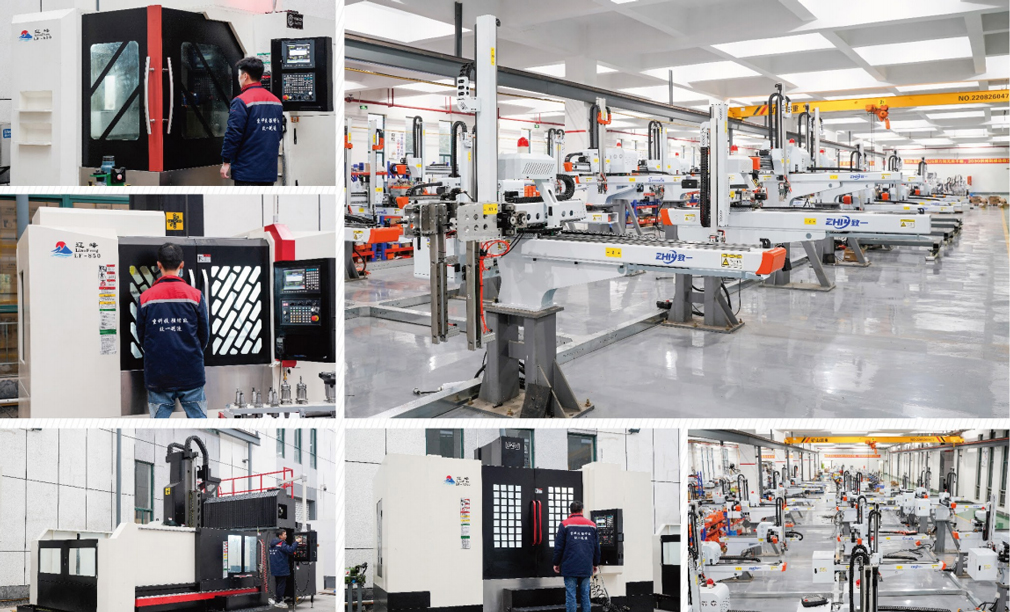
When visiting the supplier's production base, focus on two key aspects: firstly, the precision of the production equipment, such as whether it is equipped with CNC machine tools and 2D inspection equipment, which directly affects the precision of parts processing; secondly, the quality management process, such as whether torque data for the assembly process is accessible via the cloud, ensuring that every screw is installed according to standards. A chaotic production workshop and a lack of quality control processes often indicate potential problems with equipment quality.
2. Prototype Testing: Simulating Real Production Scenarios
The best verification method is to bring your molds and raw materials to the supplier's site for real-world production scenario testing. Key testing points include: whether the pick-and-place speed meets the promised value, the stability of continuous operation for 72 hours, whether the finished products show scratches or positioning deviations, and the ease of use of the control system (e.g., whether it supports multi-language switching and automatic fault alarm recording). One 3C company discovered through prototype testing that a supplier's robotic arm pick-and-place cycle was 0.05 seconds slower than promised. Although seemingly small, this would affect over 100,000 units of production annually, ultimately preventing a wrong decision.
Conclusion: Choosing a Supplier is Choosing a Production Partner
The purchase of injection molding machine servo robots is not a one-time equipment transaction, but an investment in the efficiency and stability of the production line for the next 3-5 years. When choosing, abandon the short-sighted thinking of "only looking at price," and comprehensively evaluate from four dimensions: technical compatibility, service guarantee capabilities, corporate strength, and on-site verification. A truly reliable supplier will provide solutions from your production perspective, meeting current needs while leaving room for future upgrades. Remember: the right supplier will ultimately become a solid partner on your path to cost reduction and efficiency improvement.
Threeaxis Servo Robot Arm#Five Axis Injection Molding Machine#5 Axis Robot#Three Axis Servo Driven Robot#Five-Axis Servo Driven Robot#3axis Servo Driven Robot
Website:https://www.zhiyirobotics.com/
Email:sales@zhiyirobotics.com