
Leave Your Message
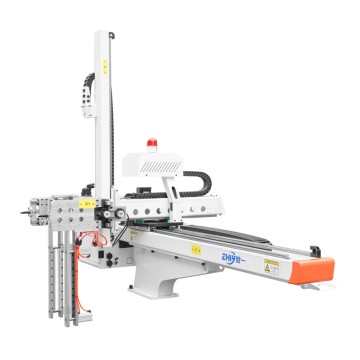
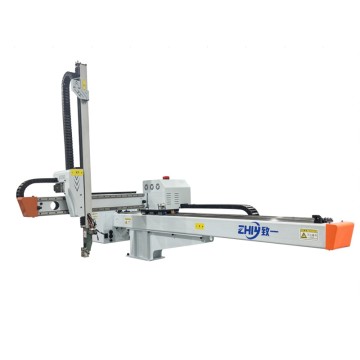
How can servo robotic arms solve accuracy problems?
How Can Servo Robotic Arms Solve Accuracy Problems in Injection Molding?
In the high-stakes world of injection molding, precision isn’t just a goal—it’s a necessity. Even the smallest deviation can lead to defective parts, wasted materials, increased downtime, and ultimately, lost revenue. For manufacturers producing everything from medical devices to automotive components, the pressure to maintain consistent accuracy has never been higher.
Enter servo robotic arms. Designed with advanced motor technology and intelligent control systems, these automated solutions are revolutionizing how injection molders tackle precision challenges. Whether you’re using a 3-axis or 5-axis servo robotic arm, their ability to deliver repeatable, micron-level accuracy is transforming production lines worldwide. Let’s explore how servo technology addresses the most critical accuracy pain points in injection molding.
The Root of Accuracy Problems in Injection Molding
Before diving into solutions, it’s essential to understand the common culprits behind accuracy issues:
Mechanical Limitations: Traditional pneumatic or hydraulic arms rely on fluid pressure, which is prone to fluctuations from temperature changes, wear, or inconsistent supply. This leads to imprecise movements, especially in tasks like part extraction or insert loading.
Environmental Variables: Shop floor conditions—vibration, temperature shifts, or even minor tooling wear—can throw off manual or basic automated processes, resulting in misalignment with molds.
Human Error: Manual handling of parts, even by skilled operators, introduces variability. Fatigue, inconsistency in movement, or misjudgment can compromise part quality, particularly with small or complex components.
Complex Geometries: Modern injection molding demands parts with intricate designs (e.g., micro-molded medical components or precision electronics). Basic automation struggles to navigate these complexities with the required precision.
How Servo Robotic Arms Deliver Unmatched Accuracy
Servo robotic arms—powered by servo motors and advanced control systems—address these challenges through a combination of real-time feedback, precise motion control, and adaptability. Here’s how they solve accuracy problems at every stage of the injection molding process:
1. Closed-Loop Feedback: Constantly Correcting for Perfection
At the heart of servo technology is a closed-loop control system. Unlike open-loop systems (which rely on pre-programmed movements without verification), servo arms use sensors and encoders to continuously monitor their position, speed, and torque.
Real-Time Adjustments: As the arm moves, encoders send data to a controller, which compares the actual position to the intended path. If there’s a discrepancy—even as small as a few microns—the system instantly adjusts the motor output to correct it.
Resistance to External Factors: Whether dealing with vibration from nearby machinery, temperature-induced expansion of tooling, or slight variations in part weight, the closed-loop system compensates on the fly. This ensures consistent performance, even in unstable environments.
2. High-Resolution Motion Control for Micro-Level Precision
Servo motors are engineered for fine-tuned movement, making them ideal for tasks requiring pinpoint accuracy:
Micron-Scale Positioning: Servo systems often feature high-resolution encoders (up to 1 million pulses per revolution) that allow for movements as precise as 0.01mm. This is critical for applications like placing micro inserts into molds or extracting delicate parts without damage.
Smooth Velocity Control: Unlike pneumatic arms, which often jerk or overshoot due to pressure spikes, servo arms maintain steady, controlled speed. This is essential for tasks like trimming flash from parts or stacking components with tight tolerances.
3. Dynamic Response: Adapting to Changing Conditions
Injection molding is rarely static. Part weights, mold temperatures, and cycle times can vary slightly between runs. Servo robotic arms excel in dynamic environments:
Rapid Adjustment to Load Changes: When handling parts of varying weights (e.g., different batch sizes), servo motors adjust torque instantly to maintain consistent movement. This prevents sagging or overshooting, which are common with hydraulic systems.
Quick Reaction to Process Shifts: If a mold heats up faster than expected or a part sticks slightly, the servo system detects the change in resistance and modifies its movement to avoid errors—all within milliseconds.
4. Multi-Axis Coordination for Complex Tasks
3-axis and 5-axis servo robotic arms take accuracy a step further by enabling multi-dimensional precision:
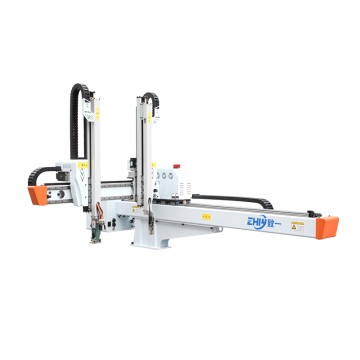
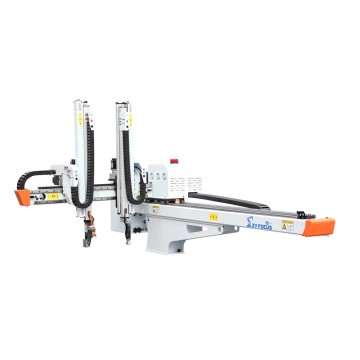
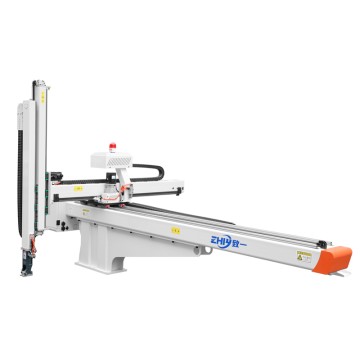
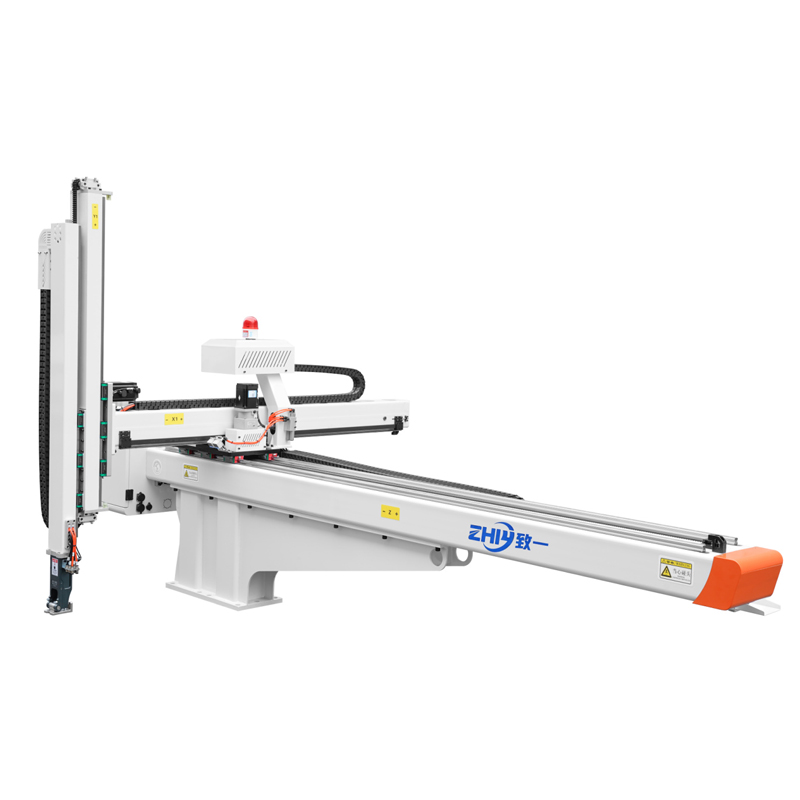
3-Axis Arms: Perfect for straightforward tasks like part extraction, degating, or placing parts onto conveyors. Their X, Y, and Z-axis coordination ensures parts are moved vertically and horizontally with exact alignment to molds or packaging.
5-Axis Arms: For complex operations—such as inserting multiple components into a mold, trimming 3D-shaped parts, or stacking asymmetric components—5-axis systems add rotational axes (A and B). This allows the arm to approach the mold from any angle, eliminating blind spots and ensuring every movement is optimized for the part’s geometry.
In both cases, servo technology synchronizes axis movements to avoid collisions and maintain precision across all dimensions—a game-changer for high-complexity production runs.
5. Programming Flexibility for Consistent Repeatability
Even the most advanced hardware is useless without reliable programming. Servo robotic arms shine here, too:
Precise Path Programming: Operators can program exact movement paths using intuitive software, ensuring every cycle replicates the first with minimal deviation. This is critical for batch production, where consistency across thousands of parts is non-negotiable.
Stored Recipes: For manufacturers running multiple part types, servo systems store “recipes” for each job—including speed, position, and torque settings. Switching between products takes minutes, not hours, while maintaining accuracy.
Integration with Molding Machines: Modern servo arms sync seamlessly with Injection Molding Machines via Industry 4.0 protocols (e.g., OPC UA). This allows real-time data sharing—such as mold opening/closing timing—to optimize movement and reduce cycle times without sacrificing precision.
Real-World Results: How Servo Arms Improve Bottom Lines
The proof is in the performance. Manufacturers switching to servo robotic arms report:
Reduced Scrap Rates: By minimizing misalignment and errors, scrap rates drop by 30-50% in many cases—critical for high-cost materials like medical-grade plastics.
Longer Tool Life: Gentle, precise movements reduce wear on molds and end-effectors, extending their lifespan by up to 20%.
Faster Cycle Times: Servo arms’ dynamic response and coordinated movement cut cycle times by 10-15%, boosting overall throughput.
Expanded Capabilities: With 5-axis servo systems, manufacturers can take on complex jobs (e.g., micro-molding, multi-material inserts) that were previously too risky with traditional automation.
Choosing the Right Servo Robotic Arm for Your Needs
Not all servo systems are created equal. When selecting a 3-axis or 5-axis servo robotic arm for injection molding, consider:
Payload Capacity: Ensure the arm can handle your part weights while maintaining precision.
Reach and Work Envelope: Match the arm’s range to your mold size and production layout.
Software Compatibility: Look for user-friendly programming interfaces that integrate with your existing machinery.
Reliability: Opt for systems with robust build quality (e.g., hardened steel gears, IP65-rated enclosures) to withstand harsh factory environments.
Conclusion: Precision That Drives Profitability
Injection molding’s accuracy challenges are real, but they’re not insurmountable. Servo robotic arms—with their closed-loop feedback, high-resolution control, and multi-axis coordination—deliver the precision modern manufacturers need to stay competitive.