
Leave Your Message
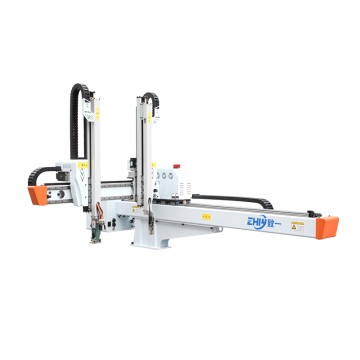
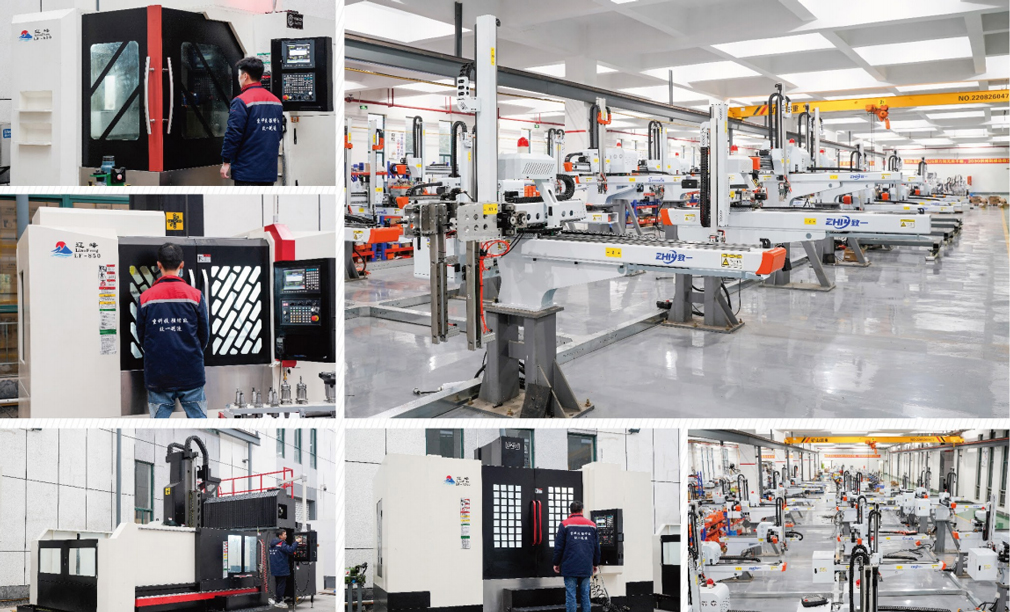
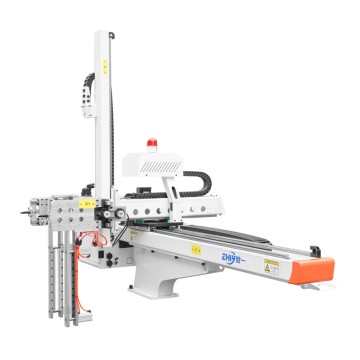
Budget Planning Guide for International B-to-B Purchases of Three-Axis Servo Robots
Budget Planning Guide for International B-to-B Purchases of Three-Axis Servo Robots: From Cost Analysis to Maximizing ROI
For buyers, budget planning for three-axis servo robots is more than a simple "compare and haggle" process; it involves a systematic process encompassing technical adaptation, cross-border costs, and full lifecycle expenditures. Incorrect budget estimates can lead to initial investment overspending of over 30% or subsequent operational losses due to missed hidden costs. This article will provide a practical budget planning framework, covering requirements definition, cost analysis, optimization strategies, and ROI calculation, to help buyers achieve the goals of "accurate budgeting, compliant procurement, and maximized benefits."
I. Pre-Budget Planning: Clarifying Requirements is the Core Prerequisite for Cost Control
The accuracy of a procurement budget begins with clarity of requirements. International B-to-B buyers must first complete a "demand profile" to avoid cost waste or performance deficiencies caused by parameter mismatches.
1. Core Technical Parameters
Price differences for three-axis servo robots are essentially differences in performance parameters. Key indicators should be identified based on the application scenario:
Load and Accuracy: Basic three-axis truss robots (load capacity up to 50kg, repeatability of ±0.05mm) are suitable for precision operations such as machine tool clamping, with a unit price of approximately 388,000 RMB. Mid-range gantry models (load capacity 50-500kg, accuracy of ±0.1mm) are priced between 64,600 and 300,000 RMB and can meet palletizing and handling needs. Blindly pursuing high accuracy (e.g., ±0.02mm) will increase costs by over 40%. However, the actual requirements for most injection molding and auto parts industries are ±0.05-0.1mm. Functional Adaptability: For complex processes like in-mold labeling and insert placement, vision systems and pressure sensors are required. This adds 15,000-30,000 RMB to the unit cost, but can reduce the defective rate from 7% to below 1%, saving over 1 million RMB in scrap costs annually. Fixed-path handling requires magnetic stripe navigation (35,000-60,000 RMB), while complex dynamic environments require laser SLAM models (90,000-250,000 RMB), with a price difference of up to four times.
Environmental and Compliance Requirements: Special operating conditions such as high temperatures and dust require customized protective structures, increasing costs by 12%-20%. Exports to the EU require CE certification (adding 8%-12%), while the North American market requires UL certification. Failure to plan ahead can lead to retesting and rework costs.
2. Procurement Scale and Cycle Planning
Batch Factor Impact: Single-unit purchases offer little room for negotiation, but bulk purchases of 10 or more units offer a 15%-20% price discount and reduce unit shipping and installation costs. An automotive parts company, through a bulk purchase of 20 units, not only received an 18% discount but also secured a free spare parts package (valued at approximately 5% of the total equipment price).
Leadership costs: Standard models have a delivery time of 4-6 weeks. Expedited orders (delivery within 2 weeks) incur a 10%-15% expedited fee. This simplification of the production process may also affect quality inspection. It is recommended to allocate a reasonable lead time based on production planning to avoid expedited costs.
II. Total Cost Analysis: Considering Both Explicit and Implicit Costs
The procurement cost of a three-axis servo robot exhibits an "iceberg model": explicit costs (such as the equipment itself) account for only 60%-70%, while implicit costs (such as cross-border fees and operations and maintenance) often become budget "black holes." International buyers need to establish a full cost accounting framework.
1. Explicit Costs: Quantifying and Optimizing Core Expenses
Explicit costs are directly calculable expenditures. Their composition and influencing factors are shown in the following table:
Cost Category Percentage Key Influencing Factors Optimization Points
Equipment Cost: 50%-65% Brand (international first-tier brands are 30%-50% higher than domestic brands), Load (500kg vs. 100kg: 40%-60% higher), Configuration (Vision System: 15%-25% higher). High-quality domestic brands can replace imports, reduce costs by 20%, and meet the needs of most scenarios; avoid "excessive precision"; non-precision operations do not require laser navigation.
Core Component Cost: 35% (of the equipment itself) Servo Motor + Reducer Brand (Japanese brands are 25% higher than domestic brands), Material (carbon fiber is 30% higher than steel but has a lifespan five times longer). Request individual quotes for core components when purchasing in bulk, and prioritize suppliers that offer domestic spare parts production services.
Customization Fee: 10%-25% Customized gripping mechanisms, cross-device integration, and specialized protective designs. Modular customization replaces fully customized designs, reducing customization costs by 30%.
2. Special Costs of Cross-Border Procurement: International Expenses That Cannot Be Neglected
International procurement requires additional accounting for various cross-border costs, and fluctuations can cause overall costs to vary by more than 20%.
Tariffs and Taxes: In 2025, import tariffs on Industrial Robots will follow a graduated scale: "8% + 13% VAT for standard equipment" and "12% + 15% VAT for customized equipment." The calculation formula is: Tax Payable = (CIF Price + Royalties) × Tariff Rate × (1 + VAT Rate). Failure to apply for a Certificate of Origin such as FORM E may result in a loss of 21% in tariff benefits.
Logistics and Packaging: Full container load (FCL) shipping costs are 18% lower than LCL, but minimum cubic capacity requirements must be met. Precision equipment requires temperature-controlled, shock-resistant packaging, costing an additional 2,000-5,000 RMB per unit. Urgent air freight carries a surcharge of up to 4.5 EUR/kg.
Agency and Compliance Costs: These include document processing (800-1,500 RMB per document), pre-classification of tariff numbers (2,000-5,000 RMB per item), and 3C certification (3,500-6,000 EUR). If a classification dispute arises, the customs bond freeze period can be extended to 45 days, incurring additional capital costs.
3. Hidden Costs: The "Invisible Killer" That Determines Long-Term Budgets
Hidden costs account for 30%-50% of total lifecycle expenses, yet are often overlooked in budget planning:
Energy Consumption: Traditional models have standby power consumption of approximately 500W. New-generation rare earth permanent magnet synchronous motors can reduce this to under 200W. The electricity savings from operating a cluster of 200 units for a year can cover the cost of equipment upgrades.
Operation and Maintenance and Spare Parts: Models without self-lubricating bearing technology have annual maintenance costs 120,000 yuan higher than those with this technology. Spare parts inventory costs for non-modular models are 70% higher than those for modular models.
Adaptation and Modification Costs: A processing plant was forced to dismantle a ventilation system worth 60,000 yuan due to a failure to account for the rotation radius of the robot arm's column. Inconsistent interface protocols resulted in modification costs for each Injection Molding Machine reaching 20,000 yuan.
Software Costs: Some control systems charge annual license renewal fees of 20,000-30,000 yuan. Failure to include a "lifetime free upgrade" clause in the contract will result in ongoing expenses.
III. Budget Optimization Strategy: Achieving Cost Control While Maintaining Compliance
Budget optimization isn't simply about pursuing a low price; it's about reducing overall costs through strategic design based on meeting technical and compliance requirements.
1. Brand and Configuration Optimization: Balancing Performance and Price
Brand Selection Gradient: International first-tier brands (such as Fanuc) are 30%-50% more expensive than premium domestic brands, but offer significant stability advantages in precision manufacturing applications (such as consumer electronics). For general applications like auto parts and home appliances, domestic models can achieve comparable performance at a 20% lower cost.
Configuration Subtraction Principle: For non-precision gripping applications, the vision system can be omitted (saving 15,000-30,000 RMB); for fixed-load applications, an adjustable-load model is unnecessary (reducing costs by 10%); and for short-term projects, redundant expansion interfaces can be eliminated. By eliminating non-essential features, one sheet metal manufacturer reduced the procurement cost per unit by 30% without compromising production efficiency.
2. Optimizing Procurement Models and Terms
Bulk and Package Purchasing: In addition to bulk purchases of single products, group purchases can be made with suppliers in the same region, or by combining purchases with peripheral products such as end effectors and spare parts to secure "package discounts" from suppliers (typically 12%-18% of the total price).
Trade Terms: DDP (Delivery Duty Paid) offers a 14.7% overall cost savings compared to the traditional CIF model, as suppliers can reduce cross-border fees through centralized customs clearance and bulk tax payment.
Payment and Warranty Terms: Adopting a "30% advance payment + 60% on delivery + 10% warranty deposit" model avoids the need for full prepayment. Extending the warranty period from one to two years can reduce first-year maintenance costs by over 80%.
3. Cross-border Cost Optimization Techniques
Logistics Solution Design: For European sourcing, a "consolidation in Germany + rail transportation + customs clearance at the destination" model can reduce logistics costs by 60% compared to full air freight. For Southeast Asian sourcing, prioritize delivery to the nearest production base (e.g., South China → Vietnam).
Tariff Compliance Planning: Separating the equipment from the commissioning fee (commissioning fees are not included in the tariff base) resulted in one company saving 260,000 yuan in VAT. Applying for a tariff advance ruling in advance can avoid additional taxes and fees due to classification disputes.
Certification Cost Control: Choosing suppliers with multi-regional certifications (CE/UL/ISO) can reduce the cost of repeated certifications. Batch certification reduces the cost of single-unit certification by 40%.
4. Cost Reduction through Alternative Solutions: Flexibly Addressing Budgetary Pressures
Used Modification: A used three-axis servo robot less than one year old costs only 40% of a new one. Adding a new gripper module can meet 90% of the requirements. Lease Trial Model: If there are concerns about process compatibility, a three-month lease (approximately 12,000 RMB per month) can be selected to verify suitability before purchasing, avoiding blind investment and the resulting loss of idle equipment.
IV. ROI Calculation: The Ultimate Verification of Budget Reasonability
The core requirement for B-end procurement is return on investment. Most three-axis servo robots can achieve a payback period within two years. Accurate calculations provide a key basis for budget approval.
1. Core Calculation Formula and Dimensions
ROI Payback Period = Total Investment Cost ÷ Annual Net Benefit
Total Investment Cost: Equipment + Cross-border Fees + Installation and Commissioning + Initial Training (see the full cost breakdown in the second section of this article).
Annual Net Benefit: Includes direct benefits (labor replacement costs, reduced scrap rates) and indirect benefits (increased production capacity, reduced quality claims). Take a Zhejiang auto parts company's procurement case as an example (bulk purchase of 10 mid-range three-axis servo robots):
Total investment cost: Equipment (2.2 million RMB) + Cross-border shipping and installation (350,000 RMB) + Training (50,000 RMB) = 2.6 million RMB.
Annual net benefit: Replacement of 20 workers (saving 1.2 million RMB) + Reduction of defective rate from 7% to 0.8% (saving 1.2 million RMB) + 40% increase in production capacity (increased revenue 800,000 RMB) = 3.2 million RMB.
ROI payback period: 260 ÷ 320 = 0.8 years (9.6 months).
2. Key KPI Monitoring and Optimization
Cycle time: A robot can complete a single operation 15%-50% faster than a human operator, so this should be factored into the calculation (e.g., 15 seconds per part for a human operator vs. 8 seconds per part for a robot). Equipment Utilization: Increasing utilization from 60% to 85% through an AI-powered monitoring system can increase annual net profit by over 40%.
Energy Efficiency: Selecting new models with 40% lower energy consumption can offset the cost of equipment upgrades through annual electricity savings for a cluster of 200 units.
Buyers can request an "ROI Calculation Data Package" from suppliers, which includes key data such as equipment energy consumption curves, downtime rates, and maintenance cost cycle tables. These can be customized based on their own production parameters.
V. Budget Risk Prevention and Control: Six Key Points to Avoid Budget Out-of-Control
Supplier Qualification Verification: Prioritize suppliers with ISO9001 certification and a track record of at least three similar projects in the past three years to avoid rework costs caused by equipment quality issues.
Parameter Conformity Verification: Suppliers are required to provide third-party test reports (such as repeatable positioning accuracy testing) and include a clear contractual clause stating "return of goods with a 10% penalty if parameter non-conformance occurs." Hidden Cost Protection: Reserve a 10%-15% "contingency reserve" in your budget to cover unexpected expenses such as logistics delays and certification changes.
Exchange Rate Risk Locking: Long-term procurement contracts can stipulate a fixed exchange rate to avoid increased cross-border payment costs due to exchange rate fluctuations.
Post-Sales Cost Constraints: Clearly define after-sales terms and conditions, including "24-hour response + 48-hour on-site service," to avoid production losses due to downtime (average daily losses can reach 1%-2% of the equipment value).
Compliance Risk Mitigation: Confirm that the equipment meets the environmental and safety standards of the procurement destination (such as the EU REACH regulation) to avoid customs clearance delays and resulting demurrage fees (average 2,000-5,000 RMB per day).
Conclusion: From Budget Planning to Value-Based Procurement
Budget planning for international B-side procurement of three-axis servo robots is essentially a dynamic balance between "technical requirements - cost structure - return on investment." Buyers need to move beyond the misconception of "only looking at initial quotes." They should achieve budget control and maximize profitability by accurately defining requirements, analyzing full lifecycle costs, and optimizing procurement strategies.
As a three-axis servo robot supplier specializing in global wholesale procurement services, we offer:
Customized budget calculation templates (including cross-border cost and ROI calculators);
Multi-regional compliance solutions (covering CE/UL/ISO certifications);
Full-lifecycle TCO (total cost of ownership) optimization solutions.