
Leave Your Message
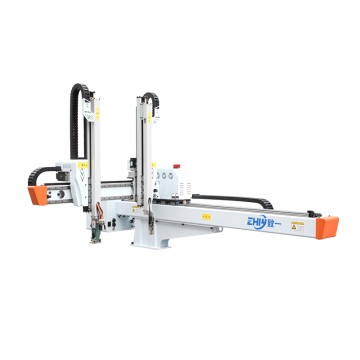
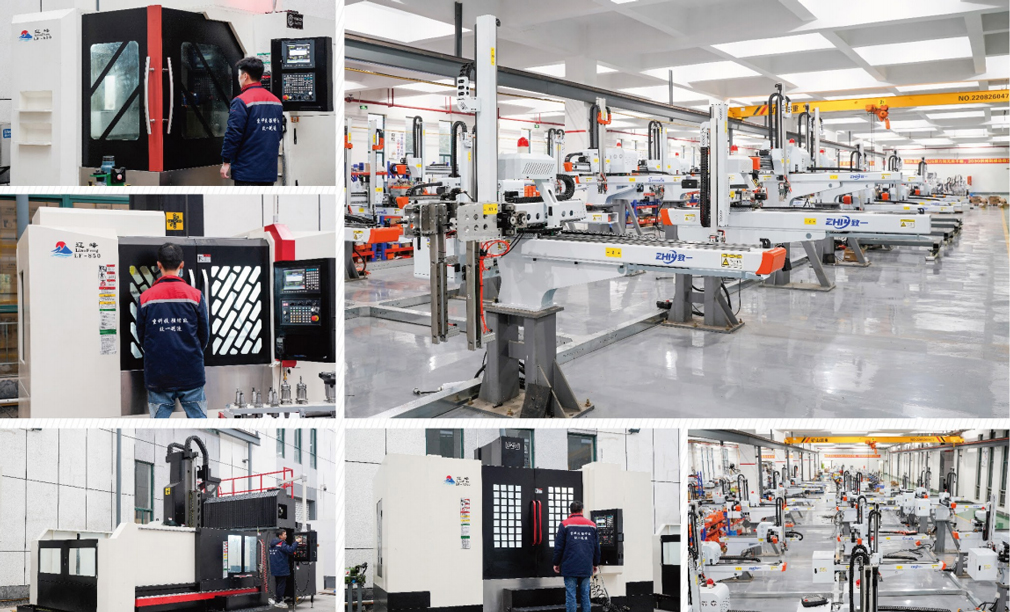
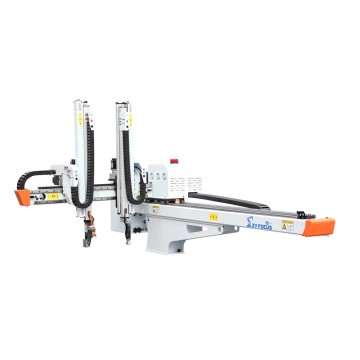
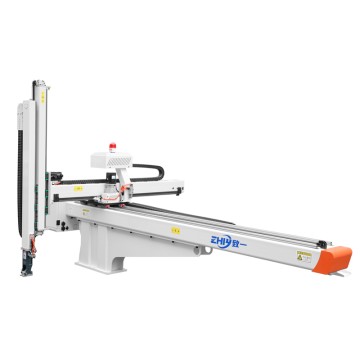
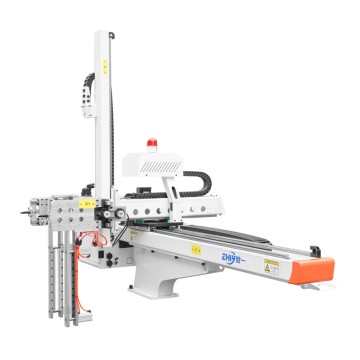
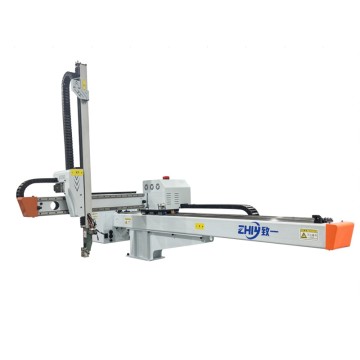
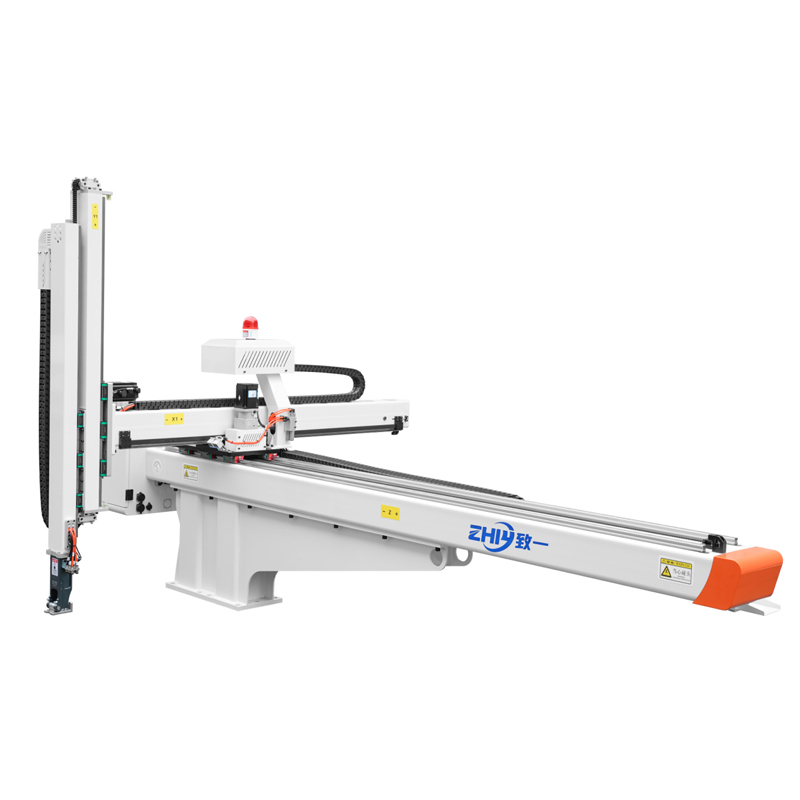
Why Do Plastics Manufacturers Prefer a Servo-Driven 3-Axis Robot?
Why Do Plastics Manufacturers Prefer a Servo-Driven 3-Axis Robot?
Introduction
In the highly competitive plastics manufacturing industry, precision, efficiency, and reliability are paramount. As manufacturers strive to enhance productivity, reduce costs, and improve product quality, the servo-driven 3-axis robot has emerged as a transformative solution.
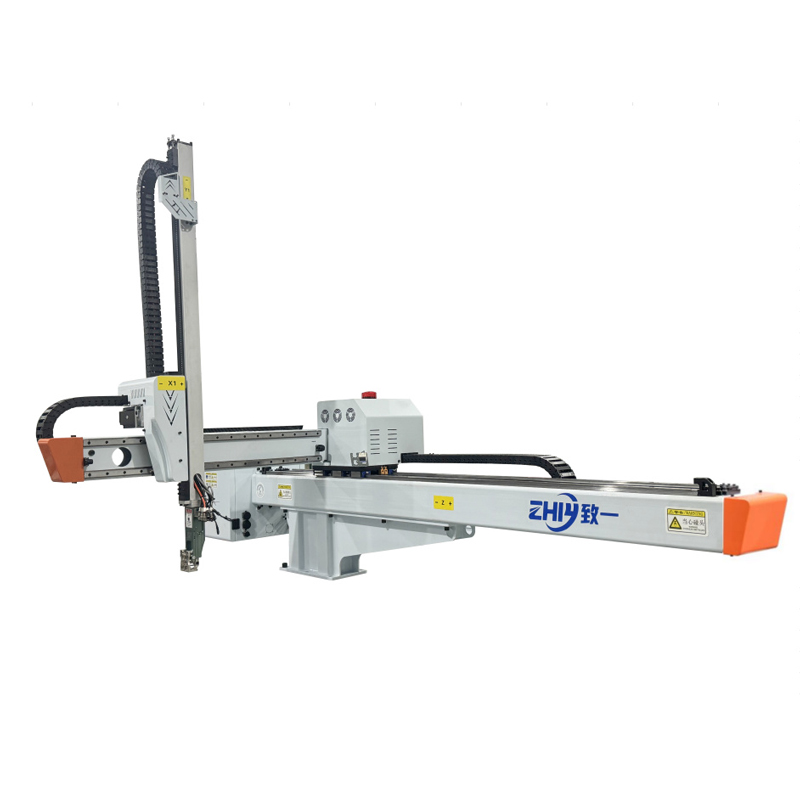
Precision and Repeatability: The Cornerstones of Quality
Precision and repeatability are the bedrock of injection molding. Servo-driven 3-Axis Robots, controlled by high-resolution encoders and closed-loop feedback systems, offer unparalleled positioning accuracy. These robots can maintain a path accuracy of ±0.05 mm even at high speeds. This level of precision is crucial for applications such as micro-molding, thin-wall packaging components, and medical device housings, where even the slightest deviation can lead to defective parts.
Moreover, the repeatability of servo-driven robots ensures that every part is treated identically, resulting in uniform quality. This consistency reduces the need for rework and minimizes inspection costs. By integrating with vision systems and force sensors, servo-driven robots can perform adaptive pick-and-place operations and in-line quality verification, further reducing the number of defective parts and increasing overall yield.
Advanced Motion Control and Complex Trajectories
Servo drives support complex motion trajectories, which are essential for high-speed injection molding processes. Unlike pneumatic or hydraulic robots that are susceptible to compressibility, heat, and operating noise, servo-driven 3-axis robots provide clean, quiet, and highly repeatable motion with tight and precise speed control. This allows manufacturers to handle precision-molded parts more effectively, reduce scrap, and increase overall production efficiency.
The ability to execute complex motion trajectories also simplifies workflow integration. Servo-driven robots can seamlessly complete tasks such as insert embedding, post-molding pick-up, tray placement, and boxing, all with high precision and speed. This versatility makes servo-driven 3-axis robots an ideal choice for plastics manufacturers looking to streamline their operations.
Five-in-One Servo Drive Architecture: Compact and Efficient
One of the standout features of the servo-driven 3-axis robot is its “five-in-one servo drive” architecture. This innovative design integrates the control of five servo motors into a compact drive unit. By consolidating multiple axes into one powerful drive, the robot achieves truly synchronous multi-axis motion without delay. This enables precise coordination of auxiliary tasks such as mold opening, part extraction, and transfer.
The benefits of this architecture extend beyond motion control. Manufacturers benefit from reduced production space, simpler power wiring, and less spare parts management. The integrated drive communicates via a high-speed fieldbus, providing real-time diagnostics for current, speed, and position across all five channels. This facilitates predictive maintenance and rapid troubleshooting, minimizing downtime and maximizing productivity.
High Power Output and Stable Torque
Injection molding demands dynamic performance, and servo-driven 3-axis robots are designed to meet these needs. These robots are rated for up to 750 W of continuous torque per axis and higher peak torque. This powerful output ensures consistent torque under varying payloads, enabling the robot to handle everything from lightweight micro-molded connectors to larger housings and components.
The high power density of servo-driven robots also translates to faster cycle times. These robots can accelerate and decelerate quickly without sacrificing position accuracy or generating mechanical clearance. This capability is crucial for increasing productivity, optimizing mold cycle sequences, and reducing reliance on secondary manual operations.
Energy Efficiency and Cost Savings
Energy efficiency is a critical consideration for modern manufacturing operations. Servo-driven 3-axis robots adopt a multi-axis common DC bus architecture, which can achieve up to 20% energy savings. When one axis decelerates, its regenerative energy is fed back to the shared DC bus and immediately provided to other axes that need to accelerate. This reduces the total power consumption of the facility grid and lowers operating energy costs.
Additionally, servo-driven robots are equipped with an automatic shutdown function that cuts off power to the servo motor during long periods of idleness. This feature can save up to 10% of electricity in a typical production shift, further reducing operational costs.
Enhanced Integration and Control Flexibility
Servo-driven 3-axis robots offer seamless integration with modern injection molding systems. The integrated drive architecture minimizes electromagnetic interference and simplifies the integration of the entire injection molding system. This allows engineers to deploy advanced motion trajectories and safety interlocks with fewer components, enhancing system reliability and reducing the total cost of ownership.
The robots also support a range of communication protocols, facilitating real-time data exchange, remote diagnostics, and firmware updates. This flexibility enables manufacturers to adapt quickly to changing production requirements and integrate the robot with other systems, such as enterprise-level MES systems.
Real-World Applications and Case Studies
The benefits of servo-driven 3-axis robots are not just theoretical. Numerous plastics manufacturers have reported significant improvements in productivity, quality, and efficiency after adopting these robots. For example, a leading automotive parts manufacturer was able to reduce cycle times by 20-30% and improve overall equipment efficiency (OEE) by integrating servo-driven robots into their injection molding lines.
Another case study involves a medical device manufacturer that leveraged the precision and repeatability of servo-driven robots to achieve zero-defect production. The manufacturer reported a 30% reduction in rework and inspection costs, thanks to the robot’s ability to maintain high precision and consistency.
Conclusion
The servo-driven 3-axis robot represents a significant leap forward in plastics manufacturing. Its precision, repeatability, advanced motion control, energy efficiency, and integration capabilities make it an ideal solution for manufacturers seeking to enhance productivity, reduce costs, and improve product quality. As the industry continues to embrace automation and advanced technologies, the servo-driven 3-axis robot will undoubtedly play a crucial role in shaping the future of plastics manufacturing.