
Leave Your Message
Which Injection Molding Processes Require Five-Axis Robots?
Which Injection Molding Processes Require Five-Axis Robots?
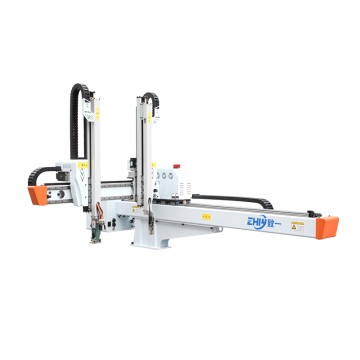
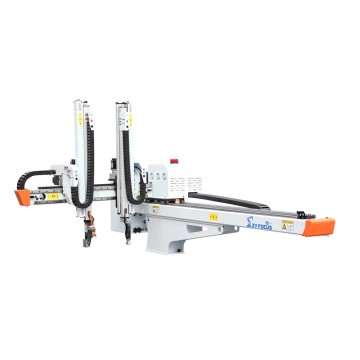
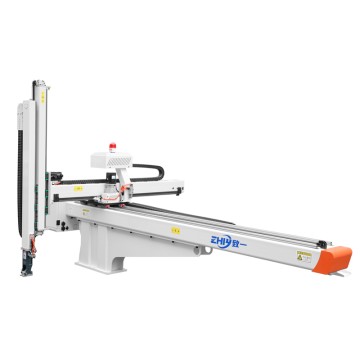
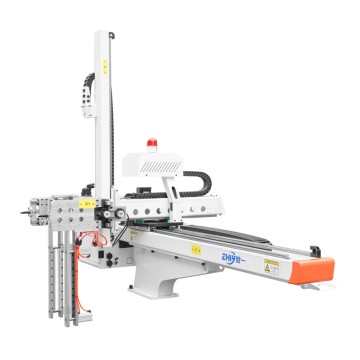
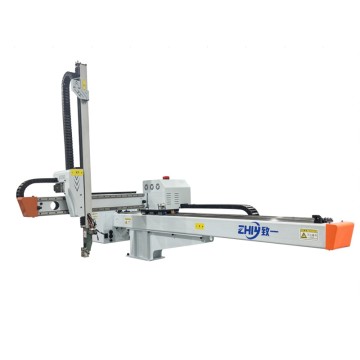
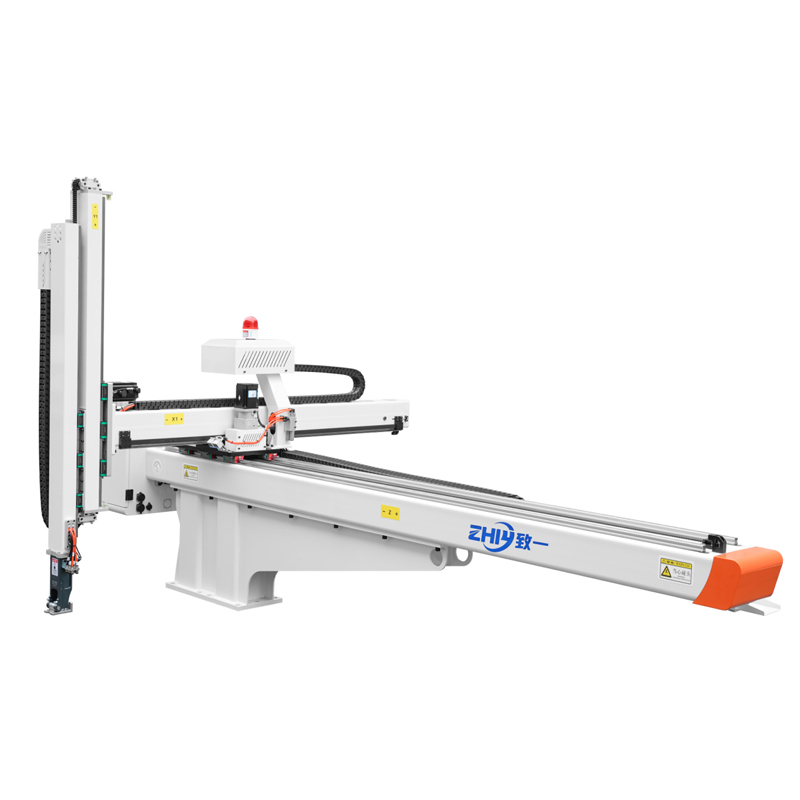
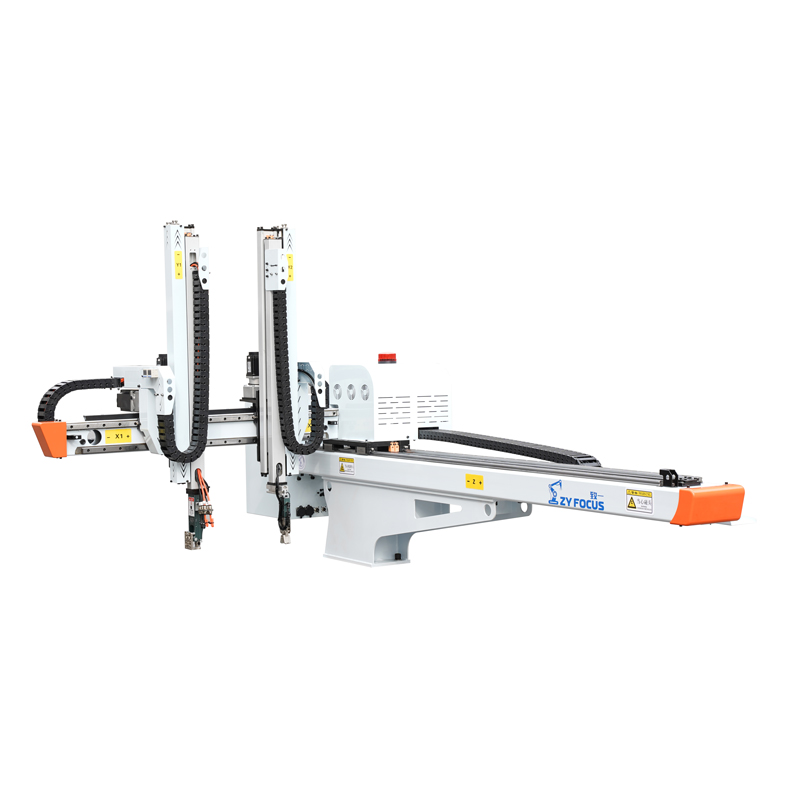
In the context of the global injection molding manufacturing industry's transformation towards precision and automation, robots have become core equipment on injection molding production lines. Among them, five-axis servo robots, with their advantages of multi-degree-of-freedom movement and high positioning accuracy, have become "essential equipment" for some complex injection molding processes. Compared to three-axis robots that can only achieve linear motion, five-axis robots, through the coordination of X/Y/Z linear axes and A/B rotational axes, can solve problems such as "difficult posture adjustment, precise insert positioning, and risky complex part removal." This article will focus on four injection molding processes that require five-axis robots, and, combined with the technical characteristics of ZHIYI (Zhiyi Intelligent) five-axis servo robots, will analyze the selection logic and practical benefits for global buyers.
I. In-Mold Insert Molding Process: High-Precision Insert Placement, One Missing Axis Leads to Soaring Scrap Rates
In-mold insert molding is a process where metal inserts, electronic components, etc., are pre-placed in the mold cavity, and then plastic is injected to form an integrated product. This process is widely used in products such as automotive sensors, mobile phone chargers, and medical connectors. The core requirements for robots in this type of process are "precise insert positioning + interference-free insertion," which three-axis robots are completely unable to meet.
Why are five-axis robots necessary? Posture adjustment is indispensable: Inserts often need to be tilted or rotated during insertion (for example, the metal pins of automotive sensors need to be at a 30° angle to the mold cavity). Three-axis robots can only move along fixed linear paths and cannot adjust the angle of the inserts. Manual insertion is not only inefficient (production rate of only about 90 pieces per hour), but also prone to high scrap rates of up to 6% due to positioning errors (data source: In-Mold Insertion Injection Molding Industry White Paper);
Micron-level precision is a necessity: The positioning error of electronic components and miniature metal inserts needs to be controlled within ±0.02mm. The ZHIYI five-axis servo Robot Uses imported servo motors and precision guide rails, achieving a repeatability accuracy of ±0.01mm, far exceeding the ±0.1~0.2mm of three-axis robots, and can reduce the insert scrap rate to below 1.2%;
Adaptability to small spaces: In-mold insertion injection molding often uses small injection molding machines. The single-section arm design of the ZHIYI five-axis Robot Shortens the body length, avoiding interference with the mold and tie rods, and the installation and commissioning cycle is 30% shorter than the industry average.
ZHIYI Solution Highlights:
Supports signal interfacing with mainstream injection molding machines worldwide, such as Haitian, Chen Hsong, and Yizumi, allowing for quick deployment without modifying existing equipment; provides customized insert positioning fixtures, coupled with 24-hour after-sales technical support, ensuring the stability of insert insertion (MTBF average mean time between failures exceeds 20000 hours).
II. Two-Color/Multi-Color Injection Molding Process: Part Flipping and Multi-Station Transfer, Three-Axis Robots are Incapable
Two-color/multi-color injection molding achieves integrated molding of different colors and materials of plastic through two sets of molds or a rotating mold frame. Typical applications include mobile phone casings (gradient colors), home appliance panels (soft rubber encapsulation), and automotive interior parts (two-color textures). The core difficulty of this process is "the posture switching of the plastic part between different mold cavities," which must rely on the rotating axis function of a five-axis robot.
Why is a five-axis robot necessary? Cross-cavity posture flipping: Two-color injection molding requires removing the first molded part from mold A, rotating it 90° to 180°, and then placing it into mold B for the second injection. Three-axis robots can only perform linear transfers and cannot complete the flipping action. Forcing this would lead to part scratching or mold cavity collision;
Multi-station collaborative requirements: Some multi-color injection molding production lines require simultaneous completion of "part removal + gate cutting + visual inspection." The ZHIYI five-axis robot can achieve 360° rotation inspection of the molded part through the A-axis (rotation around the Z-axis) and precise gate cutting through the B-axis (rotation around the X-axis), eliminating the need for additional dedicated equipment;
High-speed adaptability: The molding cycle of two-color injection molding machines is usually shorter than 15 seconds. The ZHIYI five-axis robot's servo system response speed is 50% faster than that of a three-axis robot, matching the rotation rhythm of high-speed mold frames and avoiding production line downtime.
Key points for buyers:
Choose a five-axis robot that supports "linear axis + rotary axis linkage debugging." ZHIYI provides laser positioning calibration services to ensure that the rotary axis and mold frame movements are synchronized. The number of mold trials can be reduced from the industry average of 15 times to within 8 times, significantly reducing mold trial costs.
III. Injection Molding Process for Complex Shaped Parts: Multi-directional Part Removal and Scratch Prevention, Five-axis is the "Safety Baseline"
Complex shaped part molding includes products such as automotive bumpers (curved structures), medical catheters (thin-walled and irregularly shaped), and aerospace lightweight parts (hollow designs). The mold cavity structure of these parts is complex, and the part removal path must avoid concave and convex structures and prevent surface scratching (such as the paint surface of automotive bumpers). The "fixed linear path" of a three-axis robot is completely inadequate.
Why is a five-axis robot necessary? Flexible Part Removal Path Planning: Irregularly shaped parts often require "tilting and rotating to avoid obstacles" when removed from the mold (e.g., medical catheters need to be removed at a 45° angle to prevent tube wall deformation). ZHIYI's five-axis robot can simulate "manual part removal trajectories" through multi-axis coordination, avoiding collisions with protruding parts of the mold cavity;
Balancing High Load Capacity and High Precision: Large, irregularly shaped parts such as car bumpers can weigh 10-20kg. ZHIYI's five-axis robots (such as the WKG series) have a maximum load capacity of 50kg while maintaining a positioning accuracy of ±0.05mm, solving the industry problem of "heavy loads being prone to shaking and high precision requiring insufficient load capacity";
Surface Protection Requirements: The surface of some irregularly shaped parts (such as transparent medical catheters) cannot have scratches. ZHIYI's five-axis robot, equipped with a customized vacuum suction cup (made of soft silicone material), can adjust the suction cup's contact angle through the rotating axis, ensuring even pressure during part removal.
Industry Application Case:
After a European automotive parts manufacturer adopted ZHIYI's five-axis robot, the scratch rate of car bumpers during part removal decreased from 12% to 0.5%, daily production capacity increased by 40%, and labor costs decreased by 30% (consistent with ZHIYI's core advantage of "30% cost reduction through automation").
IV. High-Speed Precision Injection Molding Process: Fast Part Removal and Quality Control for Thin-Walled Parts, Five-Axis is the "Key to Efficiency"
High-speed precision injection molding mainly produces products such as thin-walled food containers, disposable syringes, and electronic connectors. Its characteristics are "short molding cycle (5-10 seconds), thin plastic parts (0.1-0.5mm), and large batch sizes," requiring extremely high "speed + precision + stability" from the robot. Three-axis robots do not meet the requirements for response speed and positioning accuracy.
Why is a five-axis robot necessary? Ultra-Short Cycle Time Adaptation: The injection molding cycle for thin-walled food containers is only 6 seconds. The linear motion speed of a three-axis robot cannot match the mold opening and closing rhythm, easily leading to "part removal delay → production line shutdown"; ZHIYI's five-axis robot's servo motor has a maximum speed of 3000 rpm, and its part removal speed is 60% faster than a three-axis robot, enabling "part removal immediately upon mold opening";
Thin-Walled Part Anti-Deformation: Removing thin-walled parts (such as disposable syringe barrels) with a thickness of 0.1mm requires precise control of force and angle. The "hard contact part removal" of a three-axis robot easily leads to plastic part deformation. ZHIYI's five-axis robot adjusts the part removal angle through a rotating axis and monitors the force in real time with a pressure sensor, reducing the deformation rate to below 0.3%;
Online Quality Inspection: High-speed production requires simultaneous detection of plastic part dimensions. ZHIYI's five-axis robot can be equipped with a vision inspection system, using the rotating axis to rotate the plastic part 360°, achieving integrated "part removal + inspection + sorting," eliminating the need for additional inspection stations and saving workshop space.
Energy Saving and Compliance Advantages:
ZHIYI's five-axis robot complies with ISO9001 and CE certification. The servo system uses energy recovery technology, saving 30% to 50% more energy than traditional three-axis robots, meeting the environmental regulations of the EU, North America, and other regions, and suitable for the compliance production needs of global buyers.
Summary: Five-axis robots are not an "upgrade option," but rather the "entry requirement" for these processes.
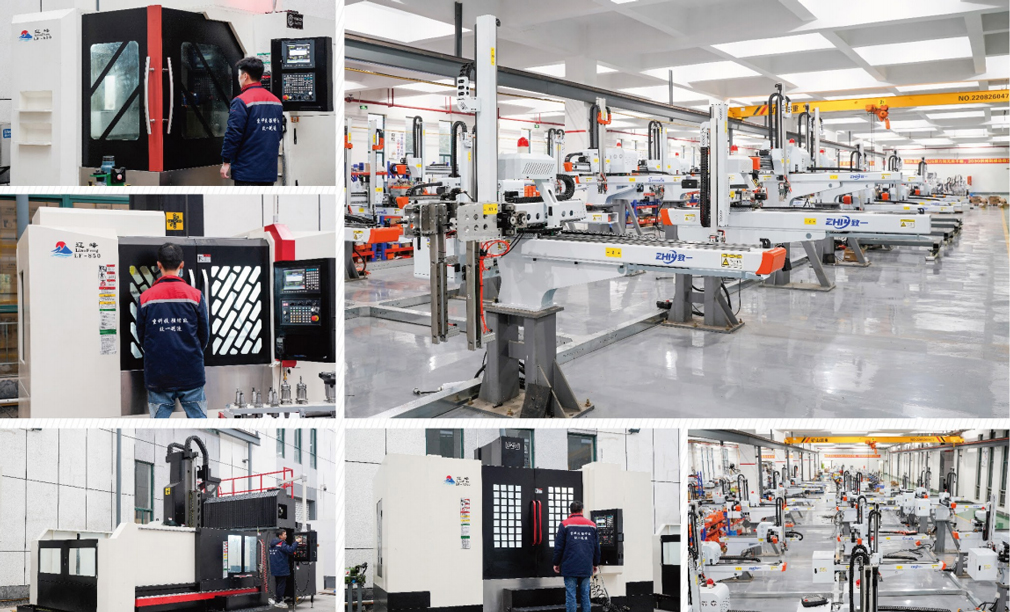
For the four major injection molding processes—in-mold labeling, two-color/multi-color molding, complex irregular parts, and high-speed precision molding—a five-axis servo robot is not an "optional equipment," but a "necessary tool" to ensure production efficiency, product quality, and controllable costs. Compared to three-axis robots, although the initial investment in five-axis equipment is slightly higher, the cost can be recovered within 6-12 months through "reduced scrap rate (1.2% vs 6%), labor savings (2-3 people/line), and increased production capacity (40%+)." ZHIYI (Zhiyi Intelligent) is a global provider of injection molding automation solutions, holding 13 utility model patents and boasting over 500 global project cases. Their five-axis servo robotic arms can provide customized solutions based on customer process requirements (such as insert type and plastic part size), workshop space (such as injection molding machine layout), and production capacity targets. They also offer factory demonstrations, operational training, and global after-sales support.