
Leave Your Message
What is a five-axis injection molding machine robot
What is a five-axis Injection Molding Machine robot: Technological innovation promotes the automation of the injection molding industry
1. Introduction
In the context of the rapid development of the global manufacturing industry today, the injection molding industry, as an important part of it, is also constantly seeking technological innovation and improvement of production efficiency. As an advanced automation equipment, the five-axis injection molding machine robot has gradually become an indispensable production tool in the injection molding industry with its high efficiency, precision and multi-function characteristics.
2. Definition of the five-axis injection molding machine robot
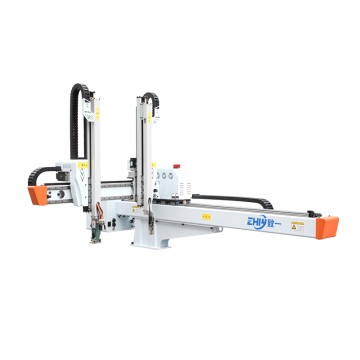
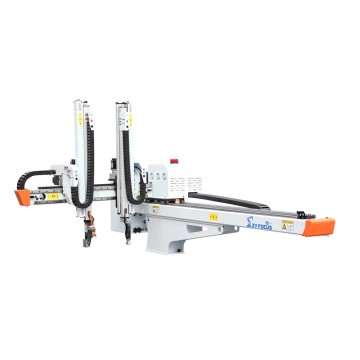
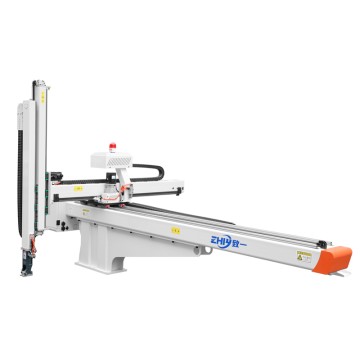
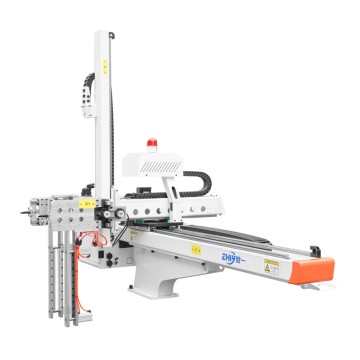
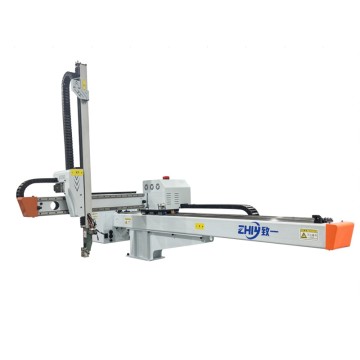
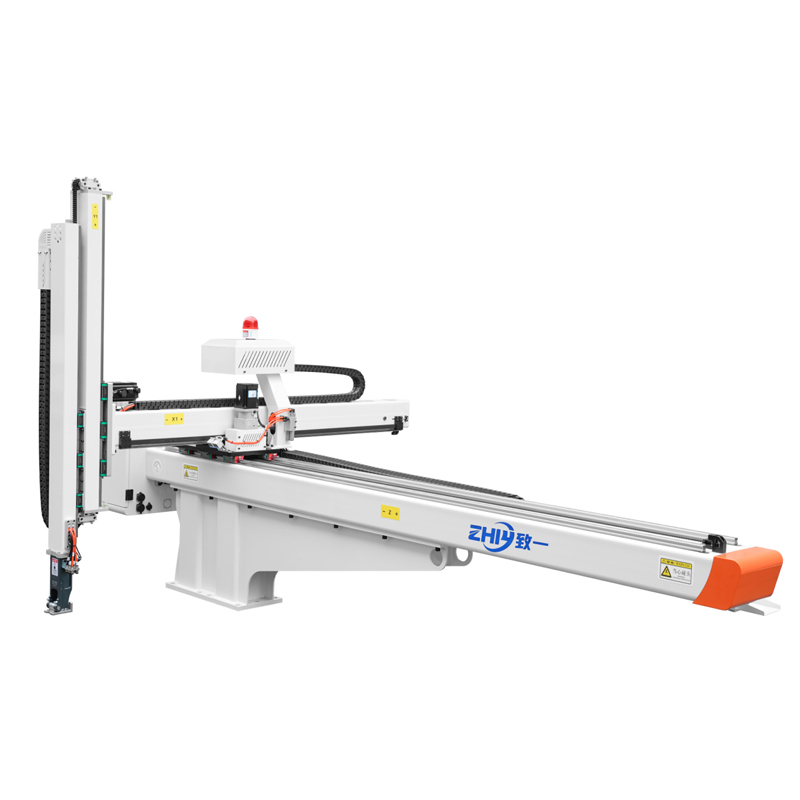
The five-axis injection molding machine robot is a device specially used for injection molding production automation. It can simulate some functions of the upper limbs of the human body, and convey products or use tools for production operations according to predetermined requirements. It is a full-servo robot. The movement of the five axes is driven by servo motors, while the action components such as suction and clamping are controlled by pneumatic components. The main function of this robot is to realize the automated removal, placement and related auxiliary operations of injection molding products, thereby improving production efficiency, stabilizing product quality, and reducing scrap rate and production costs.
3. The structure of the five-axis injection molding machine robot
The five-axis injection molding machine robot is mainly composed of a mechanical structure part and a control system. The following is a detailed introduction to its main components:
(I) Mechanical structure
Robot Base: This is the base of the robot. All mechanisms are installed on the base to support and fix it.
Travel mechanism: Enables the robot to move its position and can move arbitrarily on the guide rail according to the needs of the operation. In the five-axis injection molding machine robot system, the horizontal axis transmission method is usually synchronous belt transmission.
Robot arm: It includes the main arm and the auxiliary arm. The main arm and the auxiliary arm have their own pull-out axis and upper and lower axes respectively. The robot arm can realize functions such as sucking products, clamping material heads, embedding inserts, and taking partitions when packing according to needs. For example, in the production of some complex injection molding products, the robot arm can accurately remove the product from the mold and place it in the designated position for subsequent processing.
(II) Control system
Hand controller: It is used by the operator to manually control the movement and operation of the robot, which is convenient for direct control of the robot during debugging and special circumstances.
Main controller: It is the core of the entire robot control system, responsible for coordinating the movement and operation of each axis to ensure that the robot works according to the preset procedures and requirements.
Servo control system: Each axis is equipped with an AC servo system, which can achieve precise movement of the robot by precisely controlling the direction, speed and distance of the servo motor. This servo control system makes the robot move faster and more accurately, and can meet the needs of complex production tasks.
4. Advantages of five-axis injection molding machine manipulators
Compared with traditional manual operation and ordinary injection molding machine manipulators, five-axis injection molding machine manipulators have many significant advantages, which make them popular in the international market.
(I) Improve production efficiency
Fast movement speed: Due to the use of servo motor drive, the movement speed of the five-axis injection molding machine manipulator is extremely fast. For example, the removal time of some high-performance five-axis injection molding machine manipulators can reach 0.48 seconds, and the full cycle time is within 4.8 seconds. This high-speed movement ability enables the manipulator to complete more production tasks in a short time, greatly improving production efficiency.
Continuous working ability: Compared with manual operation, the manipulator will not get tired and can work 24 hours a day without interruption. Especially in night shift production, the manipulator can operate continuously and stably, ensuring the continuity of production and further improving overall production efficiency.
(II) Improve product quality
High-precision positioning: The positioning accuracy of the five-axis injection molding machine manipulator is very high, and the reproducibility can reach ±0.15mm. This high-precision positioning capability ensures the accuracy of the robot when taking out and placing products, avoiding product damage or deformation caused by improper operation. For example, in the production of some high-precision injection molding products, such as electronic component housings, the robot can accurately take the product out of the mold and place it in the specified position to ensure the appearance and dimensional accuracy of the product.
Stable production process: The robot can operate stably according to the preset procedures and parameters without interference from human factors. This makes the quality of the product more stable and reduces the scrap rate caused by inconsistent operation. For example, in large-scale production, the robot can always maintain the same operating force and speed to ensure that the quality of each product meets the standards.
(III) Reduce production costs
Reduce labor costs: The robot can replace manual labor for repetitive and high-intensity labor. In the eyes of international wholesale buyers, this means that it can reduce dependence on labor and reduce labor costs. Especially in some countries and regions with high labor costs, the use of five-axis injection molding machine robots can significantly reduce production costs.
Reduce scrap rate: Due to the high precision and stability of the robot, the scrap rate of the product is greatly reduced. This not only reduces the waste of raw materials, but also reduces the additional costs caused by waste disposal. For example, in injection molding production, the reduction of scrap rate means that more products can meet the qualified standards, thereby improving the overall production efficiency.
(IV) Enhance enterprise competitiveness
Improve production efficiency and quality: The use of five-axis injection molding machine manipulators can significantly improve production efficiency and product quality. This enables enterprises to respond to customer needs more quickly and provide high-quality products in market competition. For example, for international wholesale buyers, they are more willing to cooperate with suppliers who can quickly produce and deliver high-quality products.
Achieve automated production: The automated operation of the manipulator reduces dependence on manual labor. This enables enterprises to more easily achieve large-scale production and standardized production. In the international market, this standardized and automated production capacity can enhance the competitiveness of enterprises. For example, enterprises can achieve 24-hour uninterrupted production through manipulators to meet the needs of a large number of orders.
(V) High safety performance
Safety protection system: The five-axis injection molding machine manipulator is equipped with a complete safety protection system. This can effectively prevent employees from being accidentally injured during operation. For example, within the range of motion of the manipulator, safety sensors and emergency stop buttons are set. Once an abnormality is detected, the robot will stop running immediately. This improvement in safety performance not only protects the personal safety of employees, but also reduces production interruptions caused by safety accidents.
Reduce manual intervention: Since the robot can automatically complete most production operations. This reduces the direct contact of employees with dangerous equipment and environments. For example, in the high temperature and high pressure environment of the injection molding machine. The robot can replace manual product removal and placement operations. Thereby reducing the risk of employees working in these dangerous environments.
(VI) Wide range of applications
Multiple industry applications: Five-axis injection molding machine robots are widely used in multiple industries. For example, in the automotive industry. Robots can be used for injection molding production of automotive parts. Such as engine hoods, bumpers, etc. In the electronics industry. Robots can be used for the production of electronic product shells and parts. Such as mobile phone shells, computer keyboards, etc. In addition. In the home appliance industry. Robots can be used for injection molding production of home appliance products. Such as refrigerator doors, washing machine shells, etc. This wide range of applications enables five-axis injection molding machine robots to meet the needs of different industries.
Adaptability to complex production tasks: Five-axis injection molding machine robots can adapt to complex production tasks. For example, in some productions that require complex operations such as embedding inserts and stacking mold removal, the manipulator can accurately complete these tasks through the coordinated movement of its multiple axes. This adaptability enables enterprises to adjust production plans more flexibly when facing complex production needs.
5. Application of five-axis injection molding machine manipulators
Five-axis injection molding machine manipulators are widely used in the injection molding industry, covering multiple links from product removal to subsequent processing. The following is a detailed introduction to its main application areas:
(I) Product removal
Removal of complex products: The five-axis injection molding machine manipulator can easily remove products with complex shapes and large sizes. For example, in the injection molding production of automotive parts, some large car bumpers or engine hoods and other products. Due to their complex shapes and heavy weight, manual removal may cause product damage or deformation. The five-axis injection molding machine manipulator can accurately remove the product from the mold through the coordinated movement of its multiple axes and place it in the specified position.
Quick removal: The manipulator's fast movement capability enables it to complete the product removal operation in a short time. For example, on some high-efficiency injection molding production lines. The robot's removal time can reach 0.48 seconds. This fast removal capability can ensure the smoothness of the production process and reduce production stagnation caused by long product removal time.
(II) Subsequent processing
Product placement: The robot can place the removed product on the designated conveyor belt or workbench. For example, in some large-scale injection molding production, the robot can place the product on the conveyor belt. Then the product is transported to the subsequent processing steps through the conveyor belt. Such as painting, assembly, etc. This automated placement operation not only improves production efficiency, but also reduces the error of manual operation.
Auxiliary operation: The five-axis injection molding machine robot can perform some auxiliary operations, such as removing the material head and embedding the inserts. For example, in the production of some electronic product shells, the robot can automatically remove the material head after the product is taken out and place it in the designated position. This auxiliary operation can reduce manual intervention and improve the degree of automation of the production process.
(III) Special application
Stack mold removal: In the production of stack molds, the five-axis injection molding machine robot can realize the automatic removal of products. For example, in some large injection molds, there may be multiple layers of molds being produced simultaneously. The robot can accurately take out the products in each layer of the mold through the coordinated movement of its multiple axes and place them in the designated position. This special application gives the five-axis injection molding machine robot a unique advantage in the production of complex molds.
Hot runner mold application: The five-axis injection molding machine robot can be used in conjunction with the hot runner mold to achieve automatic removal and placement of products. For example, in the production of some high-precision injection molding products, the hot runner mold can ensure the molding quality of the product, while the five-axis injection molding machine robot can achieve automatic removal and placement of the product. This combination can improve production efficiency and product quality.
6. Selection and configuration of five-axis injection molding machine manipulator
Choosing a suitable five-axis injection molding machine manipulator is crucial for the smooth progress of injection molding production. The following are several key factors to consider when selecting and configuring:
(i) Specifications and models of injection molding machines
The tonnage of the injection molding machine: The tonnage of the injection molding machine determines the load capacity of the manipulator. For example, for a small injection molding machine, only a manipulator with a smaller load capacity may be required. For a large injection molding machine, a manipulator with a larger load capacity is required. When selecting, it is necessary to select a suitable manipulator model according to the tonnage of the injection molding machine.
Mold size of the injection molding machine: The size of the mold will also affect the selection of the manipulator. If the mold size is large, the manipulator needs to have a larger working range and movement capacity. For example, in the injection molding production of some large automotive parts, the mold size may reach several meters. At this time, it is necessary to select a five-axis injection molding machine manipulator with a larger working range.
(ii) Shape and weight of the product
The complexity of the product shape: The shape of the product will affect the gripping method and movement path of the manipulator. For example, for products with complex shapes. The robot may need to use special gripping tools and movement methods. When selecting, it is necessary to select the appropriate robot gripping tools and motion control system according to the shape of the product.
Product weight: The weight of the product determines the load capacity of the robot. If the product weight is large, it is necessary to select a robot with a larger load capacity. For example, in the injection molding production of some large household appliances, the product weight may reach tens of kilograms. At this time, it is necessary to select a five-axis injection molding machine robot with a larger load capacity.
(III) Production efficiency requirements
Production cycle: The production cycle refers to the time required for the production of each product. If the production cycle requirement is high, it is necessary to select a robot with a faster movement speed. For example, in some high-efficiency injection molding production lines, the production cycle may require the production of a product to be completed within a few seconds. At this time, it is necessary to select a five-axis injection molding machine robot with extremely fast movement speed.
Continuous working ability: If the production task needs to be carried out continuously for a long time, it is necessary to select a robot with high reliability and continuous working ability. For example, in some injection molding factories that produce 24 hours a day, it is necessary to select a five-axis injection molding machine robot that can operate stably for a long time.
(IV) Budget constraints
Equipment cost: The price of the five-axis injection molding machine robot varies depending on the brand, model and configuration. When selecting, you need to choose the right equipment according to your budget. For example, some high-end brands of five-axis injection molding machine robots are more expensive, but their performance and reliability are also better. Some mid- and low-end brands of robots are relatively cheap, but their performance and reliability may be slightly worse. When selecting, you need to consider the budget and production needs comprehensively.
Maintenance cost: In addition to the equipment cost, you also need to consider the maintenance cost of the robot. For example, some high-performance robots require regular maintenance and maintenance. The maintenance cost is high, while some mid- and low-end robots have relatively low maintenance costs. When selecting, you need to consider the equipment cost and maintenance cost comprehensively.
7. Installation and commissioning of five-axis injection molding machine robots
Installation and commissioning are important links before the five-axis injection molding machine robot is put into use. Correct installation and commissioning can ensure the normal operation and performance of the robot. The following are the detailed steps for installation and debugging:
(I) Installation
Basic installation: First, the basic installation needs to be carried out according to the specifications and requirements of the robot. The basic installation needs to ensure the stability of the robot. For example, for a large five-axis injection molding machine robot, a concrete foundation needs to be poured on the ground. And the anchor bolts need to be installed. To ensure that the robot does not shake during operation.
Mechanical connection: Connect the various components of the robot. Including the robot arm, walking mechanism, etc. During the connection process, it is necessary to ensure that the connection of each component is firm. And the range and accuracy of the moving parts meet the requirements. For example, when installing the robot arm, its range and accuracy need to be adjusted. To ensure that it can accurately complete the product removal and placement operations.
Electrical connection: Connect the electrical system of the robot. Including servo motors, controllers, sensors, etc. During the connection process, it is necessary to ensure that the electrical circuits are connected correctly. And the parameters of each electrical component are set correctly. For example, when connecting a servo motor, its motion parameters need to be set. To ensure that it can move at the preset speed and distance.
(II) Debugging
Mechanical debugging: During the mechanical debugging stage. The robot's range of motion, accuracy and speed need to be debugged. For example, by manually operating the hand controller, check whether the range of motion of each axis of the robot meets the requirements. And whether the motion accuracy meets expectations. At the same time, the robot's motion speed also needs to be adjusted to ensure that it can meet the production cycle requirements.
Electrical debugging: During the electrical debugging stage, the robot's electrical system needs to be debugged, including the parameter setting of the servo motor, the calibration of the sensor, etc. For example, by debugging the parameters of the servo motor, ensure that it can move at the preset speed and distance, and the acceleration and deceleration during the movement meet the requirements. At the same time, the sensor signal needs to be calibrated to ensure that it can accurately detect the movement state of the robot.
Linkage debugging: During the linkage debugging stage, the robot needs to be debugged in linkage with the injection molding machine to ensure that the robot can match the production cycle of the injection molding machine and can accurately complete the removal and placement of the product. For example, during the linkage debugging process, the robot's movement time needs to be adjusted to ensure that it can complete the removal and placement of the product between the opening and closing of the injection molding machine.
8. Maintenance and care of the manipulator of the five-axis injection molding machine
In order to ensure the long-term stable operation and performance of the manipulator of the five-axis injection molding machine, regular maintenance and care are essential. The following are the details of maintenance and care:
(I) Daily maintenance
Cleaning work: The manipulator needs to be cleaned every day. Including parts such as the manipulator arm and the walking mechanism. Cleaning work can remove dust and oil on the surface of the manipulator. Prevent dust and oil from causing wear on the moving parts of the manipulator. For example, use a clean rag to wipe the surface of the manipulator. And use compressed air to blow the moving parts of the manipulator.
Check mechanical parts: Check whether the mechanical parts of the manipulator are loose, worn, etc. For example, check whether the joints of the manipulator arm are loose. If there is looseness. It needs to be tightened in time. At the same time. Check whether the moving parts of the manipulator are worn. If there is wear. It is necessary to replace the worn parts in time.
Check the electrical system: Check whether the electrical system of the manipulator is abnormal. For example, check whether the electrical circuit is loose, short-circuited, etc. If there is an abnormality. It needs to be repaired in time. At the same time. Check the working status of electrical components. Such as servo motors, sensors, etc. If there are any abnormalities, they need to be replaced in time.
(ii) Regular maintenance
Lubrication maintenance: Regularly lubricate the moving parts of the manipulator. For example, lubricate the joints of the manipulator arm, the guide rails of the walking mechanism and other components. Lubrication can reduce friction between moving parts and extend the service life of the manipulator. When lubricating, you need to use appropriate lubricating oil and lubricate according to the prescribed lubrication cycle.
Check the motion accuracy: Regularly check the motion accuracy of the manipulator. For example, use tools such as laser measuring instruments to check the motion accuracy of the manipulator. If the motion accuracy does not meet the requirements, it needs to be adjusted in time. The adjustment can be achieved by calibrating the motion parameters of the manipulator.
Check the control system: Regularly check the control system of the manipulator. Including controllers, servo motors and other components. Check whether the working status of the control system is normal. If there are any abnormalities, it needs to be repaired or replaced in time.
(iii) Troubleshooting
Common faults and solutions: During use, the manipulator may have some common faults. For example, the manipulator's movement speed slows down, the motion accuracy decreases, etc. For these faults, they need to be checked and solved in time. For example, if the robot's movement speed slows down, it may be due to incorrect parameter settings of the servo motor. The parameters of the servo motor need to be readjusted. If the motion accuracy decreases, it may be due to wear of mechanical parts. The worn parts need to be replaced in time.
Fault recording and analysis: After troubleshooting, the fault needs to be recorded and analyzed. By recording the time, phenomenon and solution of the fault, lessons can be summarized to avoid the recurrence of similar faults. At the same time, through the analysis of the fault, the maintenance plan of the robot can be optimized to improve the operation reliability of the robot.
9. Future development trend of five-axis injection molding machine manipulators
With the continuous advancement of science and technology and the continuous development of the injection molding industry, five-axis injection molding machine manipulators are also evolving. The following are its possible future development trends:
(I) Intelligence
Application of artificial intelligence technology: In the future, five-axis injection molding machine manipulators will be more integrated with artificial intelligence technology. For example, through machine learning algorithms. The manipulator can automatically learn and optimize its motion path and operation mode. To improve production efficiency and product quality. At the same time. Artificial intelligence technology can also realize the fault prediction and diagnosis of the manipulator. Detect potential faults in advance and repair them.
Application of intelligent sensors: Intelligent sensors will be widely used in five-axis injection molding machine manipulators. For example, through the visual sensor installed on the manipulator. The shape and position of the product can be detected in real time. And the gripping method and motion path of the manipulator can be automatically adjusted. At the same time. Intelligent sensors can also realize the intelligent linkage between the manipulator and the injection molding machine. Improve the degree of automation of production.
(II) High precision
Higher precision motion control: In the future, the motion control accuracy of the five-axis injection molding machine manipulator will continue to improve. For example, by adopting higher precision servo motors and control systems. The movement accuracy of the robot can reach the micron level. This will meet the needs of higher precision injection molding product production. For example, in the injection molding production of some high-end electronic products, the robot is required to be able to complete the removal and placement of products with extremely high precision.
High-precision gripping tools: High-precision gripping tools will become an important part of the future five-axis injection molding machine robot. For example, by adopting high-precision vacuum suction cups or grippers. The robot can grasp the product more accurately. And it can automatically adjust the gripping force according to the shape and size of the product. This will improve the product's grasping success rate and product quality.
(III) Multifunctionality
Multifunctional operation capability: The future five-axis injection molding machine robot will have stronger multifunctional operation capabilities. For example, in addition to being able to complete the removal and placement of products. It can also perform complex operations such as product inspection and assembly. This will greatly improve the production efficiency and application range of the robot. For example, in some small electronic products