
Leave Your Message
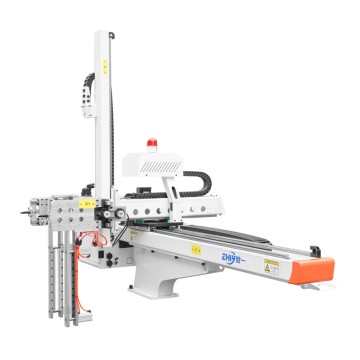
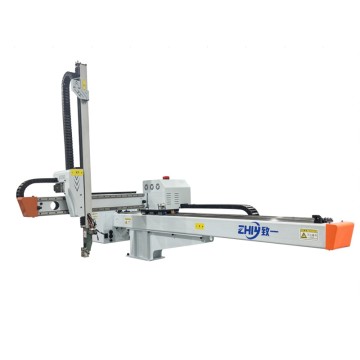
What are the specific advantages of servo manipulators in improving production efficiency?
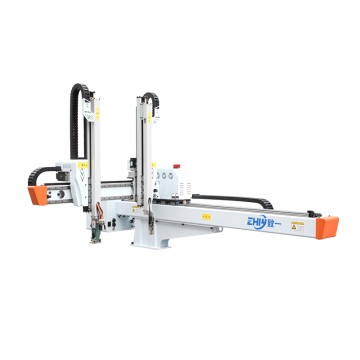
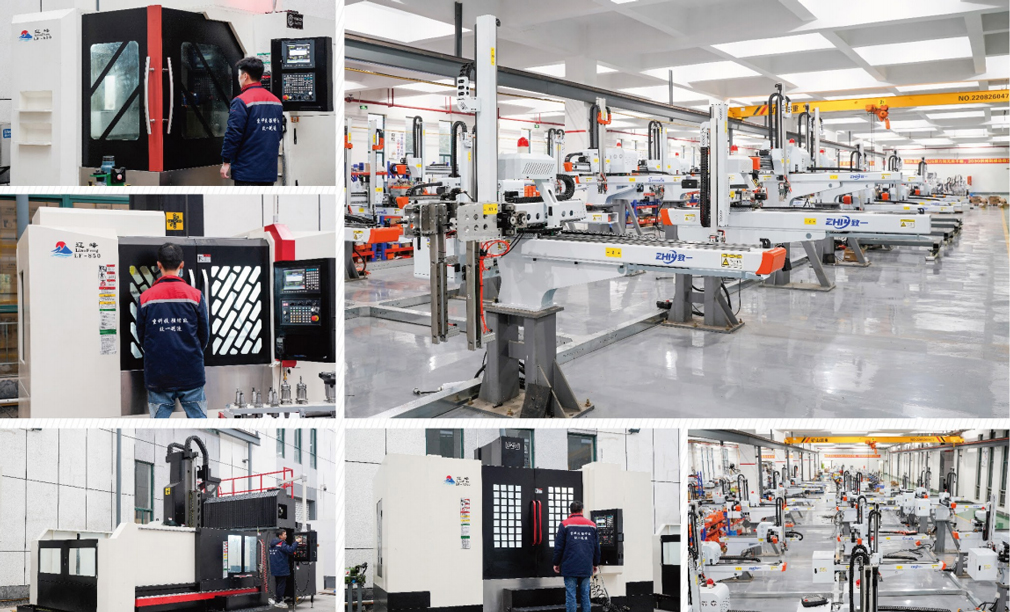
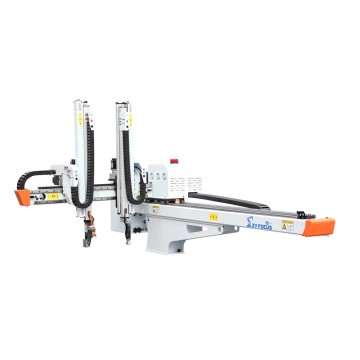
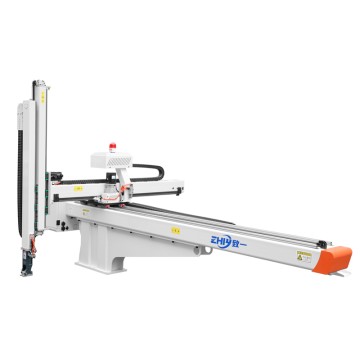
What are the specific advantages of Servo Manipulators in improving production efficiency?
Servo manipulators: opening a new chapter in production efficiency
In today's wave of global economic integration, competition in the manufacturing industry is becoming increasingly fierce. If companies want to occupy a place in the market, they must continuously improve production efficiency, reduce production costs, and ensure product quality. As an advanced automated production equipment, servo manipulators have become a powerful assistant for many companies to improve production efficiency with their many advantages. This article will explore in depth the specific advantages of servo manipulators in improving production efficiency.
1. Accurate positioning and reducing errors
The servo manipulator uses an advanced servo motor drive system and has high-precision positioning capabilities. During the production process, it can accurately grasp and place materials with a very small error range. For example, on the production line of electronic components, servo manipulators can accurately place tiny electronic components in designated positions to ensure the assembly accuracy of the product. This accuracy not only improves the product's pass rate, but also reduces material waste caused by inaccurate positioning, thereby improving production efficiency.
2. High-speed operation and improved beats
The servo manipulator moves quickly and can complete more production tasks per unit time. Its fast acceleration and deceleration performance enables the manipulator to quickly reach the required speed during operation and stop quickly after reaching the target position. Compared with traditional manual or pneumatic manipulators, the speed advantage of servo manipulators is particularly obvious. In the automotive parts manufacturing industry, servo manipulators can quickly move parts from one station to another, greatly shortening the production cycle and improving the overall efficiency of the production line.
3. Stable and reliable, reducing downtime
The servo manipulator adopts advanced control systems and high-quality components, with high stability and reliability. Once put into use, it can run stably for a long time, reducing downtime caused by equipment failure. Its stable performance makes the production process smoother and will not affect the production progress due to equipment problems. For example, in the food packaging industry, servo manipulators can continuously complete packaging tasks to ensure the efficient operation of the production line.
4. Good flexibility and flexibility
The programming and operation of servo manipulators are relatively simple, and can be flexibly adjusted according to different production tasks and process requirements. When the company's production products or processes change, only the program of the manipulator needs to be modified accordingly to quickly adapt to new production needs without large-scale transformation of the equipment. In the plastic injection molding industry, facing plastic products of different shapes and sizes, servo manipulators can quickly realize the production and processing of different products by adjusting parameters and replacing end effectors, thereby improving the production flexibility and market response speed of enterprises.
5. Multiple tasks can be performed simultaneously
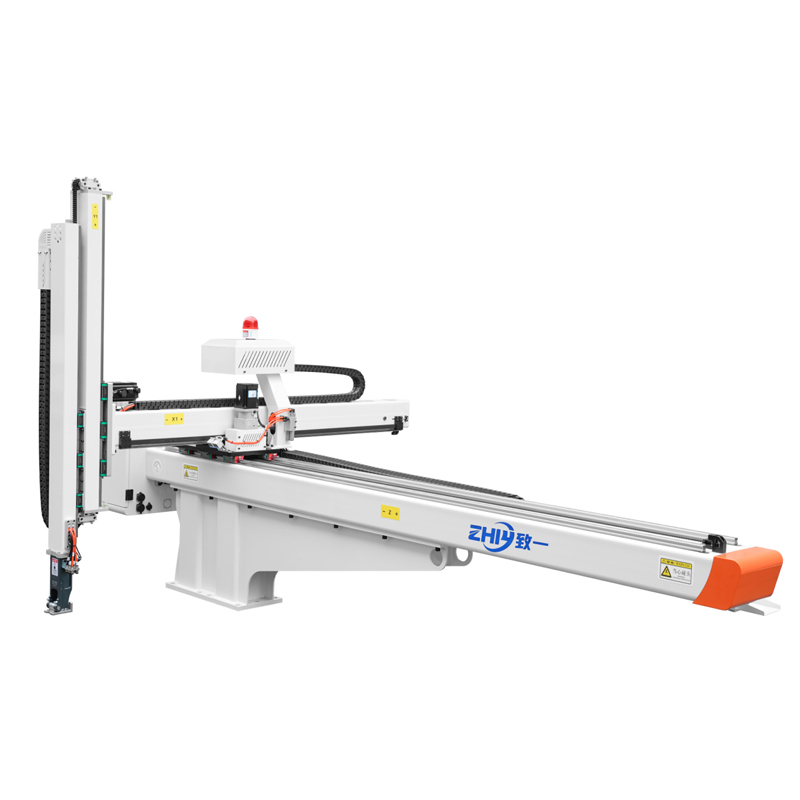
Servo manipulators can be equipped with a variety of functional modules, such as gripping modules, welding modules, handling modules, etc., to realize multiple production tasks at the same time. For example, in welding and handling tasks, servo manipulators can carry welding tools for welding operations, and immediately move the welded parts to the next station after welding. This multi-tasking parallel capability greatly improves production efficiency and reduces waiting time between processes.
6. Reduce labor costs
With the continuous rise in labor costs, enterprises are facing increasing pressure on labor costs. The application of servo manipulators can replace some manual operations, realize the automation of the production process, and thus reduce labor costs. In some production links with high repetitiveness and high labor intensity, such as material handling, loading and unloading, etc., servo manipulators can work stably for a long time, without the need to rest and change shifts like manual labor, which improves production efficiency and reduces labor management costs.
7. Improve the safety of the working environment
In some dangerous or harsh working environments, such as high temperature, high pressure, toxic and harmful places, servo manipulators can replace manual operations to avoid the risks of personnel working in these dangerous environments. It can operate stably according to the preset programs and parameters to ensure the safety of the production process. This not only protects the life safety and physical health of employees, but also reduces production interruptions and economic losses caused by safety accidents, and indirectly improves production efficiency.
8. Facilitate system integration and remote monitoring
The servo manipulator can be easily integrated with the company's production management system to achieve automatic control and data acquisition of the production process. Through the connection with PLC, Robot Controller and other equipment, the manipulator can receive production task instructions issued by the production management system, and feedback its own operating status and production data to the system. On the automated production line, the servo manipulator can be linked with other equipment to realize the automation and intelligence of the entire production process. At the same time, its remote monitoring function allows operators to operate and monitor the manipulator in a control room far away from the equipment, find problems in time and make adjustments to ensure the continuity and stability of the production process.
9. Case Analysis
Take a certain automobile manufacturing company as an example. The company introduced servo manipulators in the engine parts production line for handling and assembly operations. Before the introduction, the production line mainly relied on manual handling and assembly, and there were problems such as low production efficiency, high labor costs, and unstable product quality. Since the servo manipulator was put into use, its precise positioning and high-speed operation have significantly improved the handling and assembly accuracy of parts, and the production cycle has been shortened by about 30%. At the same time, due to the reduction of manual operation, the company saves a lot of labor costs every year. In addition, the stability and reliability of the servo manipulator also reduce the failure rate of equipment, reduce downtime, and further improve the overall efficiency of the production line. After one year of operation, the company found that its production efficiency has been significantly improved, product quality has been improved, and economic benefits have been significantly improved.
10. Development Trend
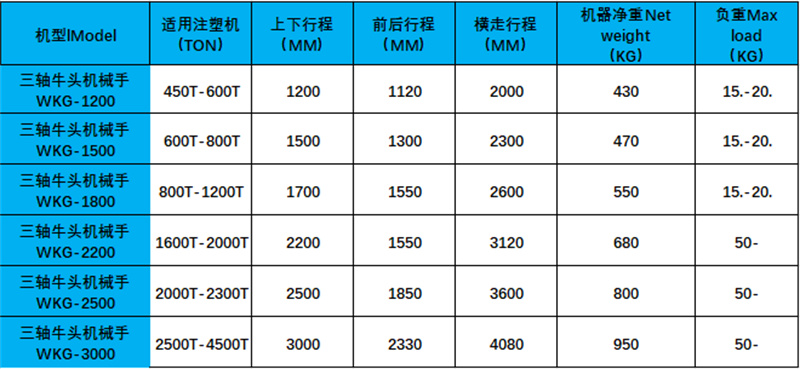
With the continuous advancement of science and technology, servo manipulators are also constantly developing and innovating. In the future, servo manipulators will be more intelligent, humanized and efficient. On the one hand, the manipulator will have stronger autonomous learning and adaptability, and can automatically adjust and optimize operating parameters according to changes in production environment and tasks. On the other hand, the operation of the robot will be simpler and more intuitive, the human-machine interaction will be more friendly, and non-professionals will be able to quickly operate and maintain it. In addition, the performance of servo robots will continue to improve, with faster speed, higher precision, and stronger load capacity, which can meet the needs of more complex production tasks.