Leave Your Message
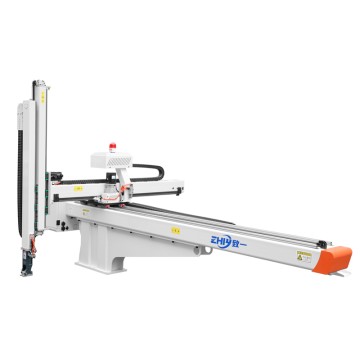
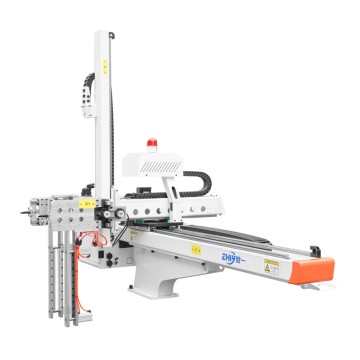
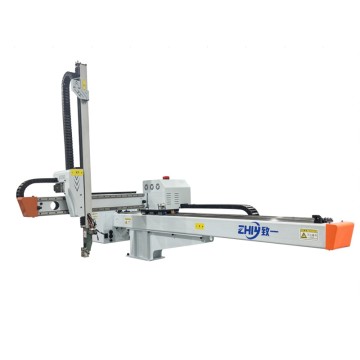
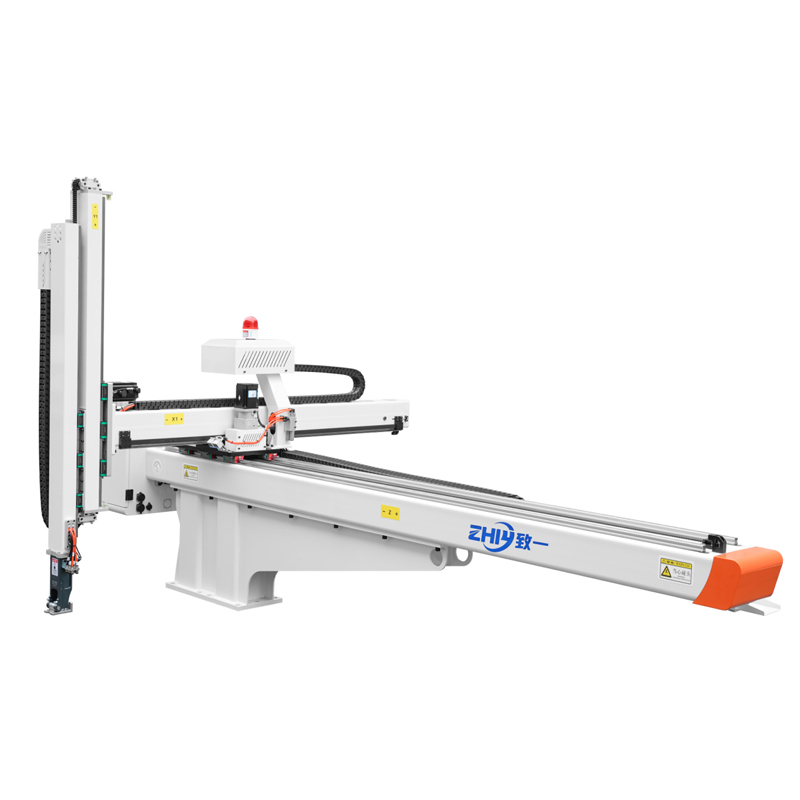
Three-Axis Servo Robot Factory Selection Guide: Essential Standards for European and American Buyers
Three-Axis Servo Robot Factory Selection Guide: Essential Standards for European and American Buyers
How to Efficiently Select Equipment, Mitigate Risks, and Achieve Automation Upgrades in Injection Molding
In today's increasingly competitive global injection molding industry, the performance of automated equipment directly determines production efficiency, product consistency, and overall cost control. For European and American buyers, choosing a reliable three-axis servo robot factory is not just about purchasing equipment, but also about establishing a long-term, stable partnership for automated production. Incorrect selection can lead to poor equipment compatibility, high downtime risks, and delayed after-sales response, directly impacting a company's competitiveness.
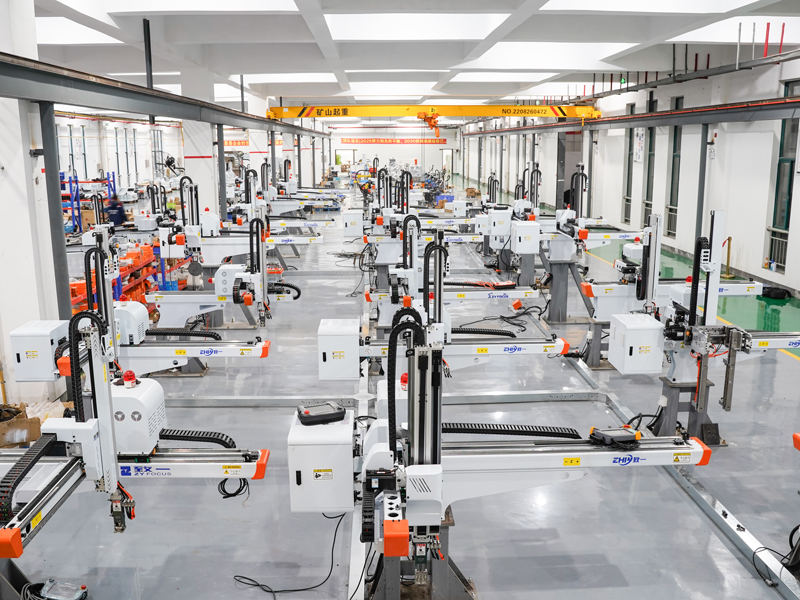
1. Prioritize Verifying the Factory's Core Qualifications and International Certifications
The European and American markets have strict requirements for the quality, safety, and compliance of industrial automation equipment. The factory's core qualifications are the "first hurdle" in selection. Before purchasing, the following two points should be verified:
Essential International Certifications: Confirm whether the factory's products have passed CE certification (EU safety standard, ensuring equipment complies with EU directives on electrical and mechanical safety) and ISO9001 quality management system certification (ensuring standardization of production processes, quality control, and after-sales service). These two certifications are the "passport" for products entering the European and American markets, and direct proof of the factory's standardized operation.
Technology Patents and R&D Strength: Examine whether the factory possesses core technology certifications such as utility model patents and invention patents (more than 10 patents better demonstrate technological accumulation). The number of patents not only reflects the factory's R&D investment but also ensures the product's advantages in core performance (such as precision and stability), avoiding the purchase of homogeneous, low-tech products.
2. Precisely Match Product Performance Parameters with Production Needs
The performance of a three-axis servo robot directly determines the efficiency and stability of injection molding production. Before purchasing, it is necessary to clearly define your own production scenario and specifically examine the core parameters of the factory's products to avoid "parameter overkill" or "performance underkill":
Maximum Load: Select based on the weight of the mold and the size of the product being handled—if large products or complex molds need to be picked up, prioritize models with a maximum load of ≥50kg; for the production of small and medium-sized products, models with a load of 10-30kg can be selected to balance efficiency and cost.
Effective Stroke: Ensure the effective stroke of the robot's X/Y/Z axes fully covers the Injection Molding Machine's operating range (e.g., mold opening and closing distance, product pick-and-place path) to avoid production bottlenecks due to insufficient stroke.
Repeatability: This is a key parameter for ensuring product consistency. Precision injection molding production in Europe and America typically requires repeatability ≤ ±0.05mm, necessitating third-party testing reports or on-site demonstrations from the factory.
Operating Speed and Energy Consumption: High-speed response increases production cycle time (e.g., pick-and-place operations per second), while low-energy design aligns with the green production needs of European and American companies. A comprehensive assessment of the "speed-energy consumption" balance is necessary to avoid excessively pursuing speed while neglecting energy costs.
3. Assess the Factory's Customization and Technical Adaptability
Different injection molding companies have different production processes, product types, and injection molding machine models, making it difficult for standardized products to be fully compatible. A high-quality three-axis servo robot factory should possess strong customization capabilities to meet personalized production needs:
Solution Customization Capability:Confirm whether the factory can provide customized services such as welding upgrades, inlay process adaptation, and non-standard stroke adjustments. Does it support providing exclusive solutions based on the customer's production process (e.g., dual-station adaptation, linkage with other automated equipment)?
Technical Adaptation and Training Support:Assess whether the factory can provide integrated services of "on-site demonstration + operation training" to help the team quickly master equipment debugging and maintenance skills. For European and American buyers, it is also necessary to confirm whether multilingual technical documents (English, German, etc.) are supported to ensure seamless technical communication.
R&D Iteration Capability:Understand whether the factory has a professional R&D team and whether it continuously upgrades its products (e.g., intelligent control, simplified programming). Factories with independent R&D capabilities can provide subsequent technical upgrade support based on industry trends (e.g., Industry 4.0, intelligent monitoring) to prevent equipment from becoming obsolete quickly.
4. Confirm Comprehensive After-Sales Service and Global Technical Support
The long-term stable operation of industrial equipment relies on timely after-sales service. For European and American companies sourcing across regions, "global responsiveness" is particularly important:
24-Hour Multilingual Support: Confirm whether the factory provides 24-hour English/local language technical consultation to avoid language barriers preventing timely resolution of malfunctions.
After-Sales Response and Spare Parts Supply: Require the factory to clearly define after-sales response times (e.g., remote resolution within 48 hours, on-site service within 72 hours) and verify the global spare parts supply system (e.g., whether there are spare parts warehouses in Europe and America, with a spare parts supply cycle of ≤7 days) to minimize downtime losses.
Full-Cycle Service Coverage: High-quality factories should provide full-cycle services from "pre-sales consultation (solution design) - installation (commissioning guidance) - after-sales maintenance (regular inspections, fault repair)," not just equipment delivery.
5. Analyze Cost-Effectiveness and Production Scale Suitability
European and American buyers prioritize "long-term cost control" rather than simply pursuing the initial purchase price. When selecting a factory, the following two points should be comprehensively evaluated to maximize cost-effectiveness:
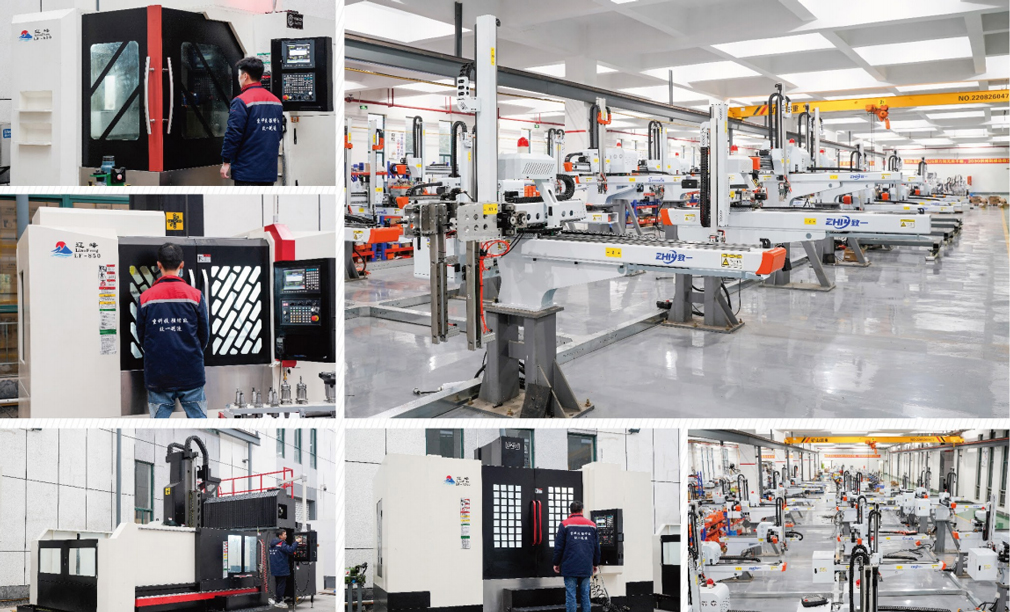
Production Scale and Cost Control: Examine the factory's annual production capacity (e.g., large-scale production of ≥2500 units). Large-scale production can effectively reduce component procurement and manufacturing costs, helping customers reduce overall production costs by approximately 30%, while ensuring the delivery capability of bulk orders.
Suitability to Your Production Scale: Small and medium-sized enterprises (SMEs) can prioritize factories that can provide flexible customization and cost-effective solutions to avoid over-investment; large enterprises need to focus on the factory's supply chain stability and bulk delivery capability (e.g., whether it can meet monthly orders of 100+ units) to ensure long-term cooperation without the risk of supply disruptions.
6. Referencing Industry Case Studies and Global Customer Reputation
A factory's past customer case studies are direct proof of its strength. Before purchasing, it's crucial to focus on "case study matching" and "global reputation":
Number of Case Studies and Industry Coverage: Choose factories with 500+ successful project cases, paying particular attention to whether they have experience serving injection molding companies in Europe and America, or leading brands in their respective industries (such as home furnishings, packaging, and automotive parts). Highly matched case studies reduce equipment compatibility risks. For example, factories that have served large mold manufacturing companies are better equipped to handle complex technical requirements.
Customer Evaluation and Industry Recognition: Research a factory's reputation through industry exhibitions (such as K Show in Germany, NPE Show in the US), industry forums, and customer recommendations. Avoid partners with no actual case studies or numerous negative reviews. Additionally, request 3-5 reference case studies from clients in the same industry to verify equipment operational stability and after-sales service quality.
website:https://www.zhiyirobotics.com/
Email:sales@zhiyirobotics.com