
Leave Your Message
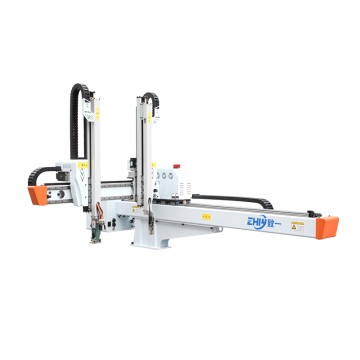
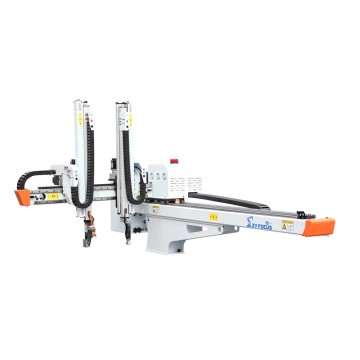
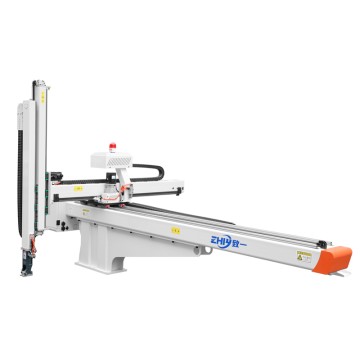
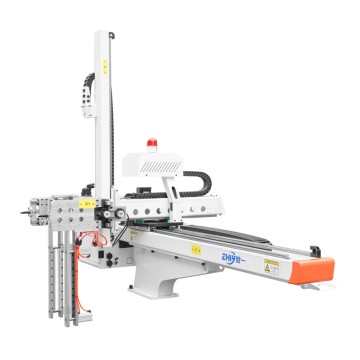
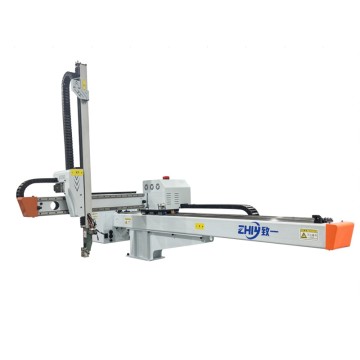
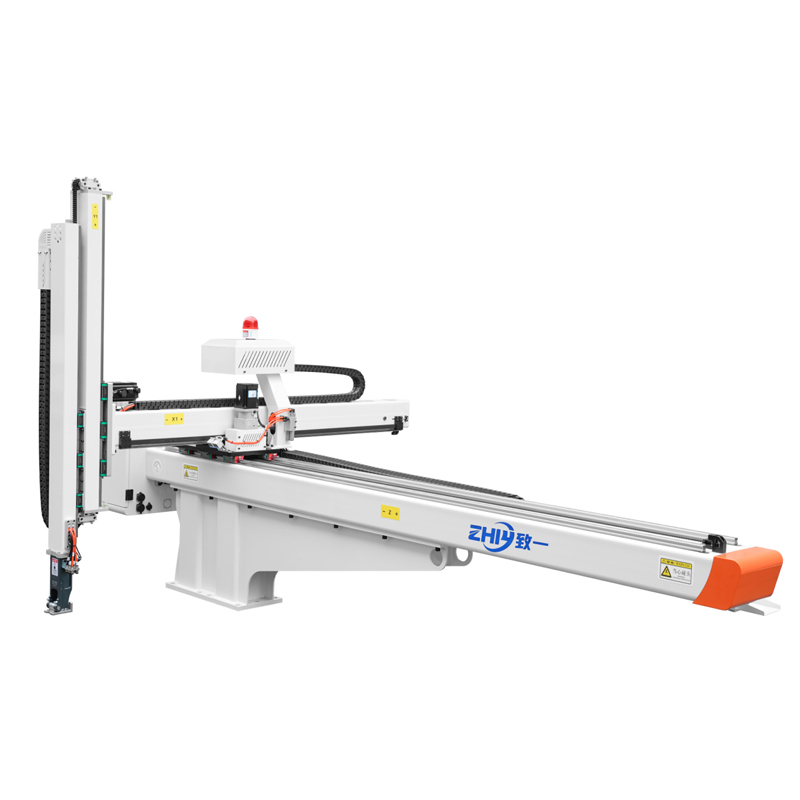
Three-axis servo manipulator for 90-200 ton injection molding machines
Three-axis servo manipulator for 90-200 ton Injection Molding Machines
In the wave of global manufacturing moving towards automation and intelligence, the injection molding industry is no exception. As an efficient and precise automation equipment, the three-axis servo manipulator is gradually becoming an indispensable partner for 90-200 ton injection molding machines.
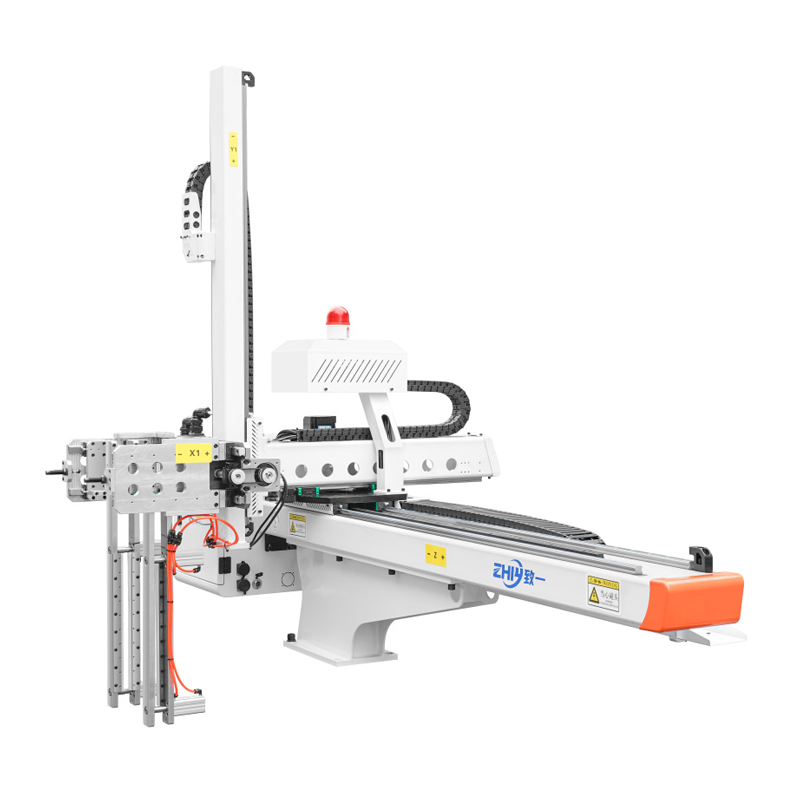
1. Unique advantages of three-axis servo manipulators
(I) Efficient and precise automated operation
The three-axis servo manipulator can achieve fast and precise product removal and placement through precise control of the three axes of X, Y, and Z. Its servo motor drive system ensures the smoothness of movement and high precision of repeated positioning, usually reaching an accuracy level of ±0.1mm. This high-precision operation is essential to improving product quality and production efficiency, especially when producing high-precision injection molding products, such as electronic component housings, small household appliance parts, etc.
(II) Diverse product adaptability
The three-axis servo manipulator can adapt to a variety of products and molds. Whether it is a simple two-plate mold or a complex three-plate mold, whether it is a lightweight small product or a heavy large product, the three-axis servo manipulator can meet different production needs by adjusting parameters and configurations. For example, for lighter products, the Robot Can adopt high-speed removal mode to shorten the production cycle; for heavier products, it can ensure stable operation by increasing the load capacity.
(III) Flexible installation and layout
The installation methods of the three-axis servo robot are flexible and diverse, and can be adjusted according to the model of the injection molding machine and the layout of the workshop. Common installation methods include column installation and cantilever installation. Column installation is suitable for workshops with limited space and can save floor space; while cantilever installation can provide a larger operating range and facilitate the handling of large injection molding machines. In addition, the stroke and height of the robot can also be customized according to the size of the injection molding machine to ensure a perfect match with the equipment.
(IV) Reduce labor costs and improve safety
In traditional injection molding production, manual removal of products is not only inefficient, but also has certain safety hazards. The automated operation of the three-axis servo robot can completely replace manual labor, which not only improves production efficiency, but also significantly reduces labor costs. At the same time, the robot can strictly abide by safety regulations during operation, avoid accidents caused by human operating errors, and improve the safety of the production environment.
2. Technical parameters and selection points
(I) Key technical parameters
Load capacity: The three-axis servo manipulator suitable for 90-200 ton injection molding machines usually has a load capacity of 3-15kg, which can meet the removal requirements of most small and medium-sized injection molding products.
Travel range: The X-axis (horizontal) travel is generally between 1000-2000mm, the Y-axis (pulling) travel is between 600-1200mm, and the Z-axis (up and down) travel is between 1000-1500mm. These travel ranges ensure that the manipulator can cover the working area of the injection molding machine and achieve accurate removal and placement of products.
Speed and acceleration: The high-speed response characteristics of the servo motor enable the three-axis servo manipulator to achieve fast movement, with a maximum operating speed of 1-2m/s and an acceleration of 1-3m/s². This helps to shorten the production cycle and improve production efficiency.
Repeat positioning accuracy: The high-precision servo control system and linear slide rails enable the manipulator to achieve a repeat positioning accuracy of ±0.1mm or even higher. This is particularly important for the production of high-precision injection molded products, which can ensure the consistency of each removal and placement operation.
(II) Selection points
Injection molding machine model and specifications: According to the tonnage, template size, mold opening stroke and other parameters of the injection molding machine, select the appropriate robot stroke and load capacity. For example, for a 150-ton injection molding machine, you may need to select a three-axis servo robot with a load capacity of 5kg, an X-axis stroke of 1500mm, a Y-axis stroke of 800mm, and a Z-axis stroke of 1200mm.
Mold type and product features: Consider the structure of the mold and the shape, size, weight and other factors of the product. If it is a three-plate mold, you may need to choose a double-arm robot or add a secondary arm; if it is a thin-walled product, you need to consider the high-speed removal capability and stability of the robot.
Production efficiency requirements: According to the production cycle and output requirements, select the appropriate speed and acceleration parameters. If the production cycle is short, you need to choose a high-speed robot to ensure that the product removal and placement operations are completed within the specified time.
Safety and reliability: Ensure that the robot meets relevant safety standards, such as CE certification. At the same time, consider the reliability of the manipulator, choose well-known brands and suppliers with reliable quality to reduce equipment failures and maintenance costs.
3. Market prospects and development trends
(I) Market demand growth
With the recovery of the global manufacturing industry and the continuous development of the injection molding industry, the demand for three-axis servo manipulators has shown a steady growth trend. Especially in areas with strong demand for injection molding products such as automobiles, electronics, and home appliances, the application of three-axis servo manipulators is becoming more and more extensive. It is expected that in the next few years, the global three-axis servo manipulator market size will maintain an annual growth rate of more than 10%.
(II) Technology innovation driven
In the future, three-axis servo manipulators will develop in the direction of intelligence, integration, and flexibility. In terms of intelligence, the manipulator will be equipped with advanced sensors and control systems, which can realize functions such as self-learning, self-diagnosis, and remote monitoring, and improve the intelligence level of the production process. In terms of integration, the manipulator will be more closely integrated with injection molding machines, molds, peripheral equipment, etc. to form a complete automated production