
Leave Your Message
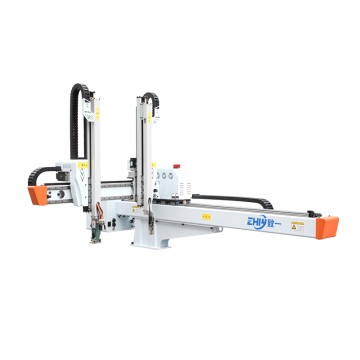
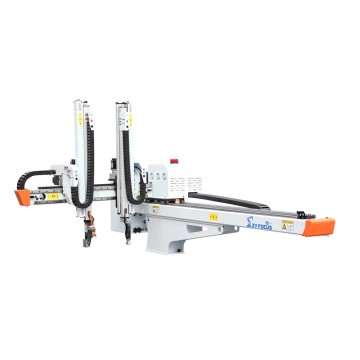
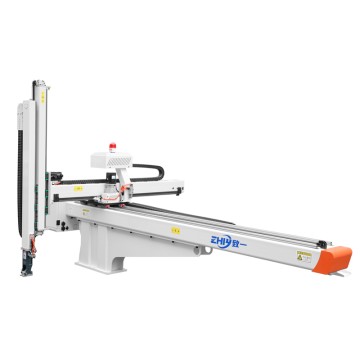
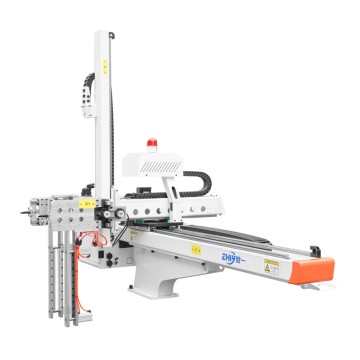
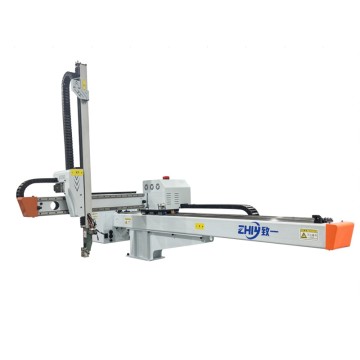
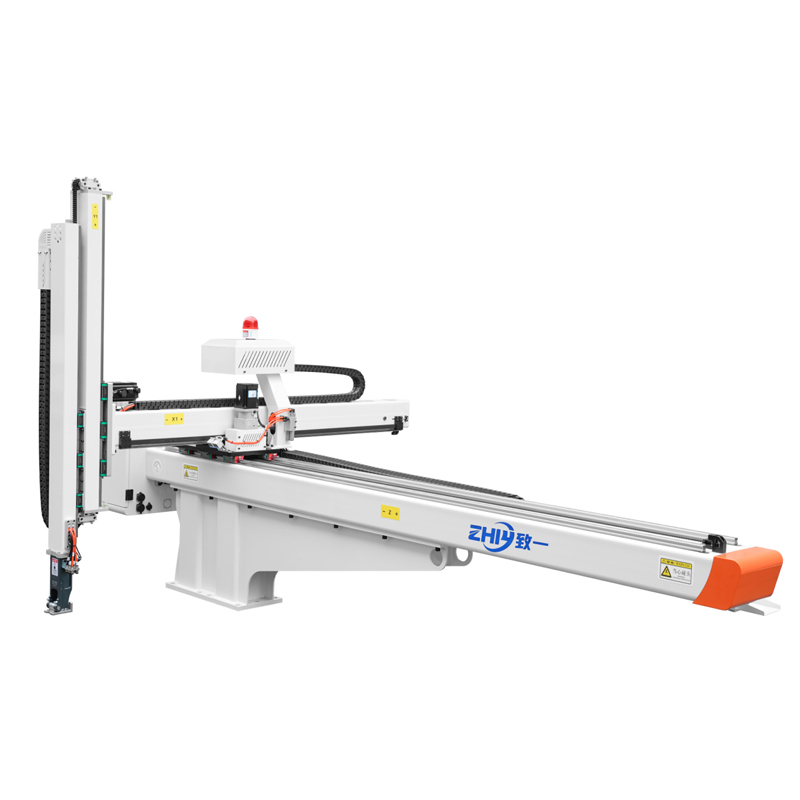
The Structure of a Five-Axis Injection Molding Machine Robot
The Structure of a Five-Axis Injection Molding Machine Robot: Ushering in a New Era of Injection Molding Automation
As the global manufacturing industry continues to pursue efficient and precise production models, five-axis injection molding machine robots, with their superior performance and wide application, have become indispensable automation equipment in the injection molding industry.
1. Definition and Function of a Five-Axis Injection Molding Machine Robot
A five-axis injection molding machine robot is a device specifically designed for automated injection molding production. It simulates the functions of the human upper limbs, precisely performing operations such as product conveying, gripping, and placement according to pre-programmed procedures. It plays a vital role in reducing worker labor intensity, improving production efficiency, stabilizing product quality, and reducing production costs.
2. Mechanical Structure of a Five-Axis Injection Molding Machine Robot
(I) Robot Base
The base is the foundation of a five-axis injection molding machine robot, providing stable support for the entire robot system. All mechanical components and control systems are mounted on the base, ensuring the robot remains stable during operation.
(II) Travel Mechanism
The travel mechanism is a key component for achieving robot movement. It is typically mounted on a guide rail and uses a synchronous belt drive to move the transverse axis. This design allows the robot to move freely on the guide rails, flexibly reaching different positions for operation according to production requirements.
(3) Robotic Arm
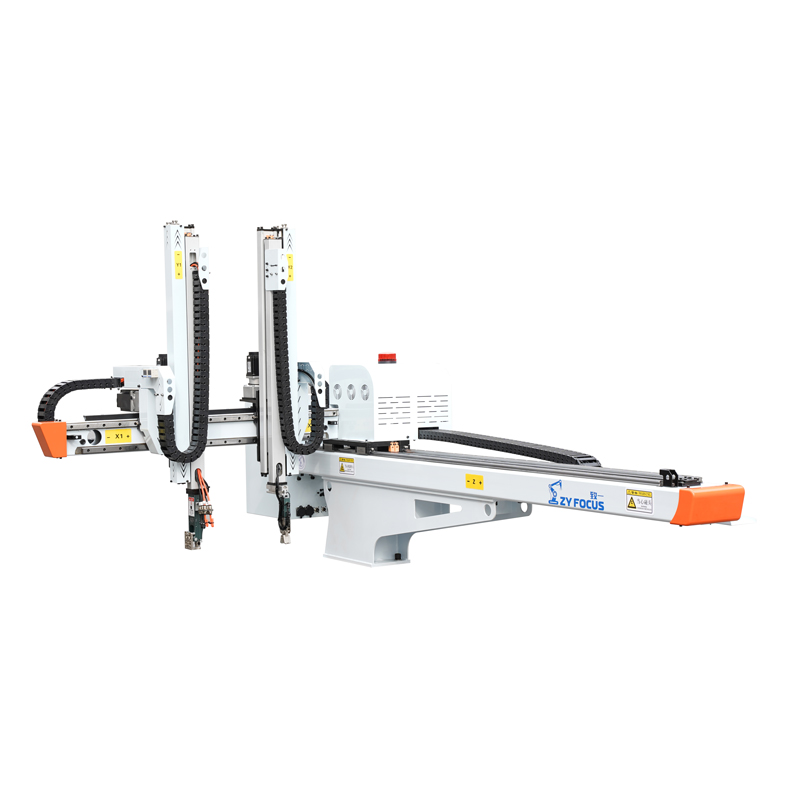
The robot arm is the core component of the five-axis injection molding machine robot. It consists of multiple axes, each with a specific function. The following is a detailed description of the five axes:
Main arm pull axis: Responsible for the main arm's pull-in and pull-out movements, enabling horizontal movement of the main arm.
Main arm vertical axis: Controls the main arm's vertical movement to accommodate products of varying heights.
Auxiliary arm pull axis: Responsible for the pull-in and pull-out movements of the auxiliary arm, working in conjunction with the main arm.
Auxiliary arm vertical axis: Controls the auxiliary arm's vertical movement, increasing the robot's operational flexibility.
Transverse axis: Driven by a synchronous belt, responsible for the robot's lateral movement.
The robot arm's design utilizes advanced gear and synchronous belt drive technology, ensuring precise and stable movement. Furthermore, the robot arm can be equipped with various grippers or suction cups as needed to accommodate products of various shapes and sizes.
3. Control System of a Five-Axis Injection Molding Machine Robot
The control system of a five-axis injection molding machine robot is the core of its intelligence and primarily includes the following components:
(1) Hand Controller
The hand controller is the device through which the operator directly interacts with the robot. Through the hand controller, the operator can manually control the robot's movements for debugging, maintenance, or special operations.
(2) Main Controller
The main controller is the "brain" of the entire robot, responsible for coordinating and controlling the operation of all components. It receives instructions from the hand controller or automation system and then, using complex algorithms and logic, controls the servo motors and pneumatic components to achieve precise movements.
(3) Servo Control System
The servo control system is the "muscle" of the five-axis injection molding machine robot, driving the movement of each axis through servo motors. Servos offer high precision and fast response, enabling complex motion trajectories and precise positioning. Furthermore, the servo control system includes various protection features, such as overload protection and limit protection, to ensure safe operation of the robot.
4. Advantages of Five-Axis Injection Molding Machine Robots
(1) High Precision
All five axes of a five-axis injection molding machine robot are driven by servo motors. Combined with an advanced control system, they achieve extremely high positioning accuracy. This makes them suitable for producing injection molded products with complex shapes and high precision requirements.
(2) High Efficiency
The five-axis injection molding machine robot has a fast response speed and can complete complex operations in a short time. Compared with traditional manual operations, it can significantly improve production efficiency and reduce production cycle time.
(3) High Reliability
The robot's design adopts a modular and standardized concept, with each component independent of each other, facilitating maintenance and replacement. Furthermore, the advanced control system monitors the robot's status in real time, promptly detecting and addressing faults and ensuring long-term stable operation of the equipment.
(4) Versatility
The five-axis injection molding machine robot not only performs basic operations such as product removal and placement, but can also perform various functions such as sprue cutting, product inspection, and automatic packaging as needed. This versatility enables it to meet the needs of different production processes and achieve full automation of injection molding production.
5. Application fields of five-axis injection molding machine robots
Five-axis injection molding machine robots are widely used in a variety of industries, including automotive, electronics, home appliances, medical, and toys. In automotive manufacturing, they are used to produce auto parts; in the electronics industry, they are used to produce housings for electronic products such as mobile phones and computers; and in the home appliance industry, they are used to produce injection molded components for appliances such as refrigerators and washing machines. Whether in large or small enterprises, five-axis injection molding machine robots have demonstrated strong adaptability.