
Leave Your Message
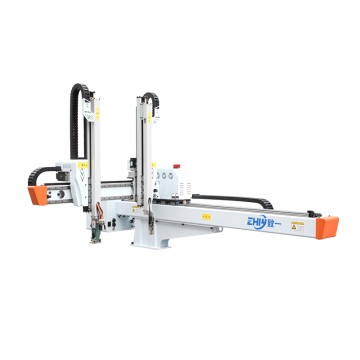
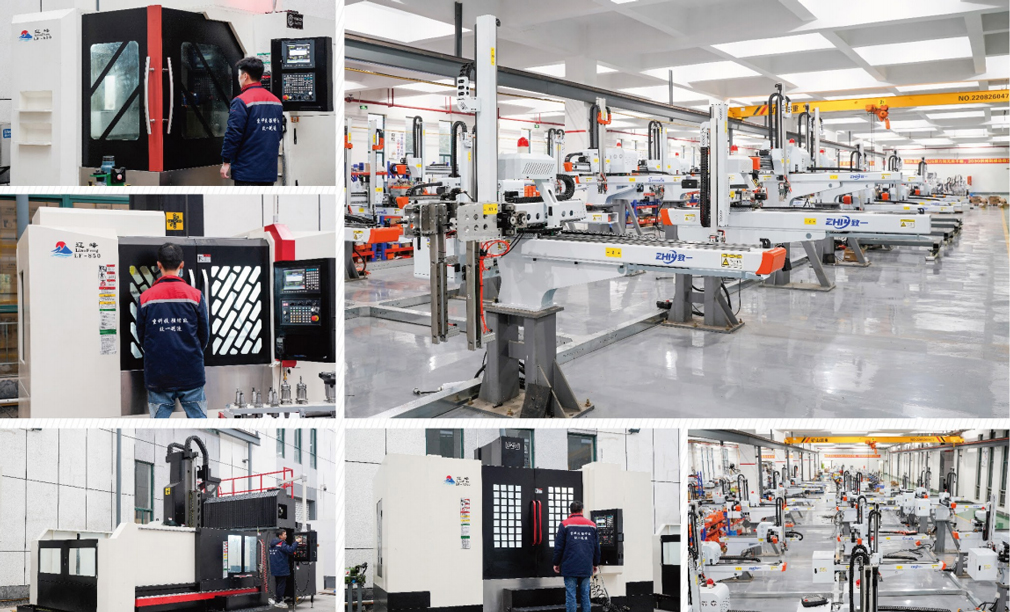
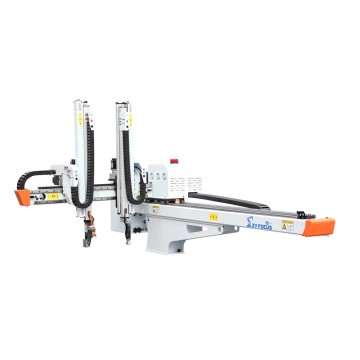
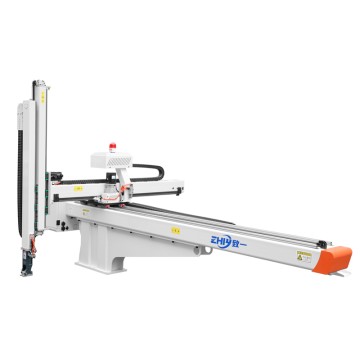
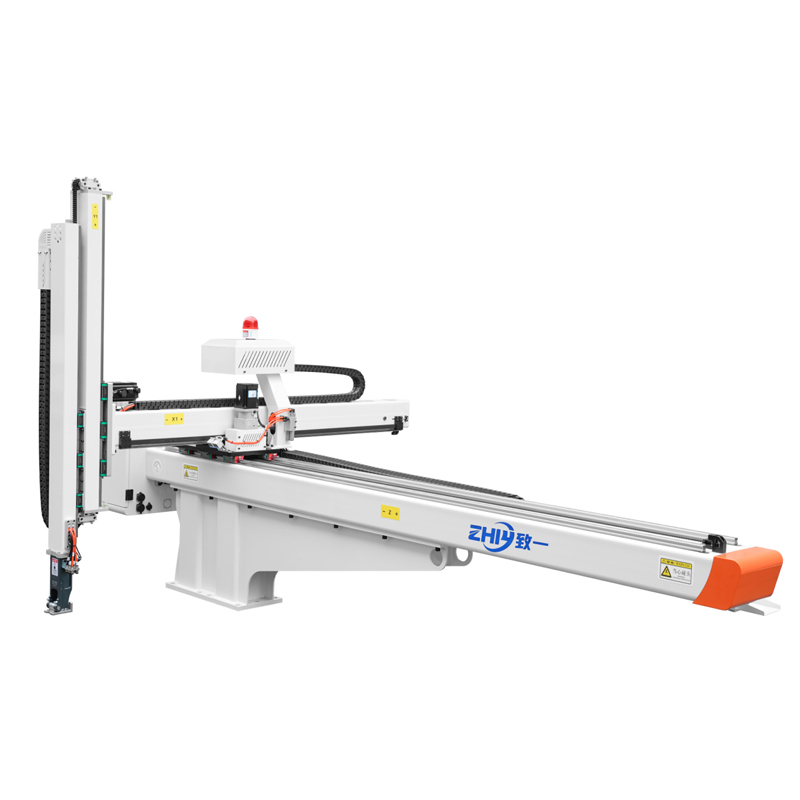
The Intelligent User Interface of a Three-Axis Servo-Controlled Robotic Arm for Injection Molding Machines
The Intelligent User Interface of a Three-Axis Servo-Controlled Robotic Arm for Injection Molding Machines: Functional Analysis and Efficiency Revolution
In the injection molding industry, "robot replacement" has evolved from a trend to a reality. As the golden partner of injection molding machines, the intelligent level of its user interface directly determines production efficiency, product precision, and maintenance costs. Compared to traditional button-based operation panels, the intelligent user interface of modern three-axis servo robotic arms focuses on visualization, configurability, and traceability. Through the synergy of software and hardware, it achieves a transformation from "passive operation" to "active empowerment." This article will deeply analyze the core functional modules of this interface to help you understand how intelligence is reshaping the operational logic of injection molding production.
First, the core logic of interface design: Adaptation to the injection molding scenario
Before analyzing the functions, we must first clarify a premise: the user interface of a three-axis servo robotic arm for injection molding machines is not a simple transplant of a general industrial interface; rather, it is a customized design deeply adapted to the characteristics of injection molding production: high-frequency repetition, precision-sensitive operation, and multi-mode switching. Its core logic is reflected in three aspects:
Extremely simplified operation levels: Injection molders can complete core operations through simple navigation without complex programming knowledge;
Clear information priority: Key parameters such as real-time pressure, position accuracy, and operating speed are displayed at the top, and abnormal alarm pop-ups take precedence over other screens;
Visualized servo coordination: The X/Y/Z axis motion trajectory, load status, and linkage logic are intuitively displayed, preventing production failures caused by inter-axis coordination errors.
Based on this logic, the intelligent operation interface forms a three-dimensional functional architecture of "core control + data monitoring + auxiliary management," covering the entire process from production startup to operation and maintenance review.
Second, Core Functional Module Analysis: Full Scenario Coverage from "Operation" to "Empowerment"
(I) Basic Control Module: The "Operation Core" for Precisely Driving the Three-Axis Servo
The basic control module is the "command center" of the interface, directly related to the motion accuracy and response speed of the three-axis servo motors. It is also the most frequently used functional area by frontline workers and primarily includes the following sub-functions:
A. Seamless Switching Between Manual and Automatic Modes
Manual Mode: For scenarios such as mold changes and commissioning, the "Jog" and "Inch" buttons on the interface precisely control single-axis motion (e.g., X-axis forward and backward, Z-axis up and down). The current axis position coordinates are displayed in real time (with an accuracy of up to 0.01mm), preventing collisions between the Robot Arm and the injection molding machine mold.
Automatic Mode: After startup, the robot arm operates according to the preset program. The interface displays the progress of the "pick-up - placement - return" process in real time. It supports one-touch "pause" and "emergency stop" functions. Emergency stops automatically save the current operating status, eliminating the need for re-commissioning upon resumption.
B. Program Editing and Calling: No Programming Skills Required
Traditional robotic arms require code to be programmed, but the intelligent interface provides "graphical programming": Workers can directly generate three-axis motion trajectories by dragging and dropping icons such as "pickup point," "placement point," and "wait time" on the interface, without having to enter a single line of code. Also supported:
Program Storage and Calling: Multiple program templates can be saved for different injection molding products (such as phone cases and automotive parts). These templates can be recalled with a single click when switching between products, eliminating the need for repeated debugging and reducing the switching time from the traditional 30 minutes to under 5 minutes.
Program Simulation Preview: After editing a new program, the "Simulation" function on the interface can be used to preview the three-axis motion trajectory, helping to proactively troubleshoot trajectory conflicts.
C. Real-time Servo Parameter Adjustment: Adapting to Different Load Requirements
The performance of the three-axis servo motor directly affects the stability of the pickup process. The interface supports visual adjustment of key parameters:
Speed Parameters: Adjust the motor speed in stages based on the "Pickup - Transfer - Placement" phase (e.g., low speed during pickup to avoid product damage, high speed during transfer to improve efficiency);
Torque Parameters: Adjust the servo motor's output torque based on product weight (e.g., 0.5kg/1kg) to prevent product damage due to excessive torque or dropped items due to insufficient torque.
(II) Data Monitoring Module: A "Digital Eye" for Real-Time Production Status
The core requirement of injection molding production is "stable mass production." The data monitoring module makes hidden problems visible by collecting real-time data from the three-axis servo system and the production process. It primarily includes the following functions:
E. Full-Dimensional Visualization of Three-Axis Operation Status
The interface uses a "dynamic 3D model" to intuitively display the real-time motion status of the robot arm, while also displaying key data through dashboards and graphs:
Position Accuracy Monitoring: Compares the deviation between the "preset position" and the "actual position" in real time. If the deviation exceeds a threshold (e.g., ±0.02mm), the interface automatically displays a red warning to prevent accuracy degradation due to servo system aging.
Load and Energy Consumption Monitoring: Displays the load rate of each axis' servo motor (e.g., 60% load on the X-axis, 40% load on the Z-axis) and real-time energy consumption in real time. If the load on any axis exceeds 80% for a long period of time, a message "Motor may be overloaded, check for obstructions" is displayed.
Temperature Monitoring: Collects real-time temperature data from the servo drive and motor. If the temperature exceeds At 60°C (the threshold varies by model), the interface automatically displays a "High Temperature Warning" to prevent motor burnout due to overheating.
D. Production Data Statistics and Analysis
The interface automatically compiles hourly and daily production data and generates visual reports:
Production Efficiency: Pickup cycle time (e.g., 3 seconds/time), effective production time, and equipment utilization rate (to avoid wasted robot arm idling);
Product Quality: The number of defective products and their cause classification (e.g., "Pickup offset" or "Product scratches") are displayed, with corresponding three-axis parameters associated (e.g., if the defect rate increases during a certain period, it can be automatically traced to whether the Z-axis speed parameter is misadjusted);
E.quipment Status: The operating time and number of failures of the three-axis servo system provide data support for subsequent maintenance.
F. Abnormal Alarms and Intelligent Diagnosis
When a system fault occurs (such as servo motor overload, excessive position deviation, or sensor failure), the interface immediately triggers an audible and visual alarm. Simultaneously:
Precise Alarm Location: The fault type (e.g., "Y-axis servo drive fault"), fault location, and possible causes (e.g., "poor wiring contact/drive aging") are clearly indicated.
Intelligent Solution Push: The interface automatically links to the "fault knowledge base" and pushes detailed troubleshooting steps (e.g., "Step 1: Check the Y-axis drive power supply; Step 2: Replace the spare drive and test it"). This allows frontline workers to quickly resolve issues without relying on technical experts, reducing downtime from the traditional two hours to under 30 minutes. (III) Auxiliary Management Module: A "Management Assistant" to Improve Production Collaboration Efficiency
The intelligent operation interface not only serves frontline operations but also breaks down the information barriers between "operation, management, and maintenance," providing support for shop floor management.
G. Permission Management: Ensuring Operational Safety
Different operation permissions are set for different roles (e.g., operator, technician, and administrator):
Operators are limited to basic functions such as "manual/auto switching" and "program call";
Technicians can edit programs and adjust servo parameters;
Administrators have full permissions and can view the operating data of all devices, preventing parameter misadjustments or program loss caused by conflicting operation permissions.
H. Remote Control and Collaboration: Breaking Down Space Limitations
Remote operation is supported via a LAN or cloud:
Technicians can log in to the interface remotely from a computer or mobile phone to assist in troubleshooting and editing programs, eliminating the need for on-site visits.
Administrators can remotely view the operating data of multiple robotic arms, enabling collaborative management of multiple machines (e.g., remotely dispatching other machines to share production tasks when a machine fails).
I. Data Export and Traceability: Meeting Compliance Needs
For industries with strict production traceability requirements, such as automotive and medical, the interface supports exporting production data (such as pickup time, servo parameters, and operator information for each batch of products) to Excel/PDF format or syncing it to the enterprise MES system. This enables full traceability from product to equipment to personnel, making it easy to handle customer audits and industry compliance inspections.
Third, the practical value of intelligent interfaces: A comprehensive upgrade from "cost reduction" to "quality improvement"
For injection molding companies, the value of intelligent operating interfaces goes beyond "easier operation"; they also translate directly into economic benefits:
Efficiency improvement: Product changeover time is reduced by over 70%, equipment utilization rate increases from the traditional 70% to over 90%, and the average daily output of a single robotic arm increases by 20%-30%;
Cost reduction: Downtime is reduced by 60%, reducing production losses caused by failures. Dependence on professional programmers is also reduced, reducing labor costs by 15%-20%;
Quality stability: Through real-time precision monitoring and parameter adjustment, product defect rates are reduced by an average of 30%-50%, making it particularly suitable for the production of high-precision injection molded products.
A case study at an automotive parts injection molding company showed that after introducing a three-axis servo robotic arm with an intelligent interface, its production line's "changeover efficiency" was reduced from 40 minutes per cycle to 5 minutes per cycle, reducing average monthly defective product losses by 80,000 yuan, and achieving a payback period of less than six months.
Fourth, Future Trends: From "Intelligent" to "Smart"
With the penetration of the Industrial Internet and AI technologies, the user interface of three-axis servo robotic arms for injection molding machines will continue to evolve towards a more advanced "intelligent" direction:
AI Adaptive Adjustment: The interface automatically optimizes three-axis servo parameters by learning from historical production data (for example, automatically adjusting motor torque based on ambient temperature changes), enabling "unmanned debugging";
Multi-machine Collaborative Scheduling: The interfaces of multiple robotic arms and injection molding machines enable data exchange, automatically allocating tasks based on production orders, and preventing overloading of some equipment and idleness of others;
Predictive Maintenance: AI algorithms analyze vibration, temperature, and other data of the three-axis servo motors to predict potential failures in advance (for example, "Z-axis motor bearing wear expected in 10 days") and push maintenance reminders to the interface, shifting from "after-the-fact repair" to "preemptive prevention."
Conclusion: Interface Upgrades Are Injection Molding Production Model Upgrades
The intelligent user interface for the three-axis servo-controlled robotic arm used in injection molding machines may appear to represent a "change in operating methods," but in reality, it represents a vehicle for the transformation of injection molding production from "experience-driven" to "data-driven." It not only lowers the operational barrier and improves production efficiency, but also provides injection molding companies with the flexibility to adapt to high-variety, small-batch production—a core requirement for the current manufacturing transformation and upgrade.
For injection molding companies introducing or upgrading three-axis servo robotic arms, when selecting an interface, they should consider not only its comprehensive functionality but also its suitability for their specific production scenarios (e.g., product types, worker skill levels, and management requirements). Only by ensuring that the interface truly serves as a "worker's assistant and management tool" can the performance advantages of the three-axis servo system be fully utilized, achieving improvements in both efficiency and quality in injection molding production.