
Leave Your Message
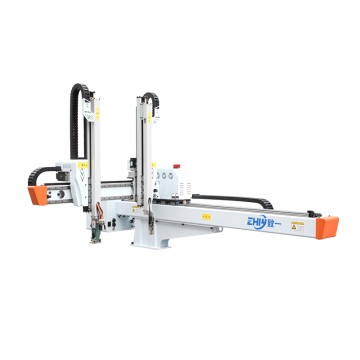
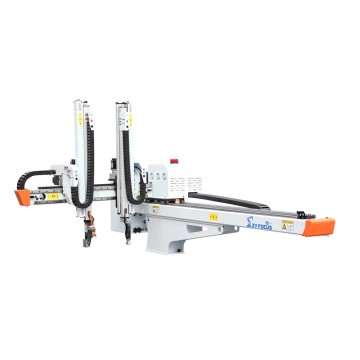
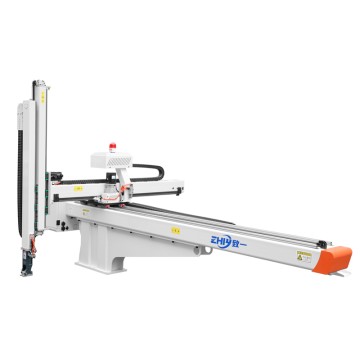
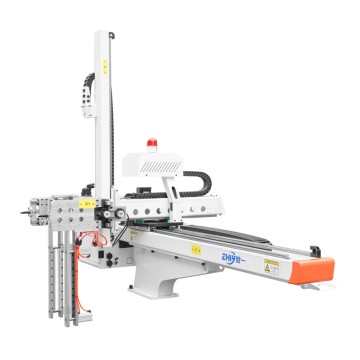
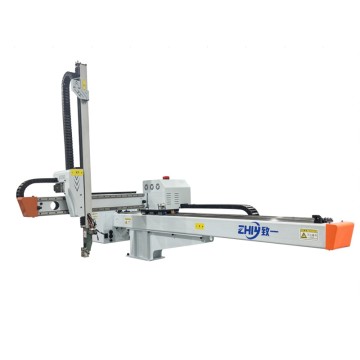
The difference between three-axis manipulator and five-axis manipulator
The difference between three-axis manipulator and five-axis manipulator: comprehensive analysis and application guide
In today's rapidly developing industrial automation field, manipulators, as important equipment to replace manual labor, have been widely used in various production scenarios. Three-axis manipulators and five-axis manipulators are two common types, each with its own unique characteristics and application scenarios. This article will explore the difference between three-axis manipulators and five-axis manipulators in depth to help international wholesale buyers better understand the characteristics, advantages and applicable scenarios of these two manipulators, thereby providing strong support for their purchasing decisions.
1. Basic concepts of three-axis manipulators and five-axis manipulators
(I) Three-axis manipulators
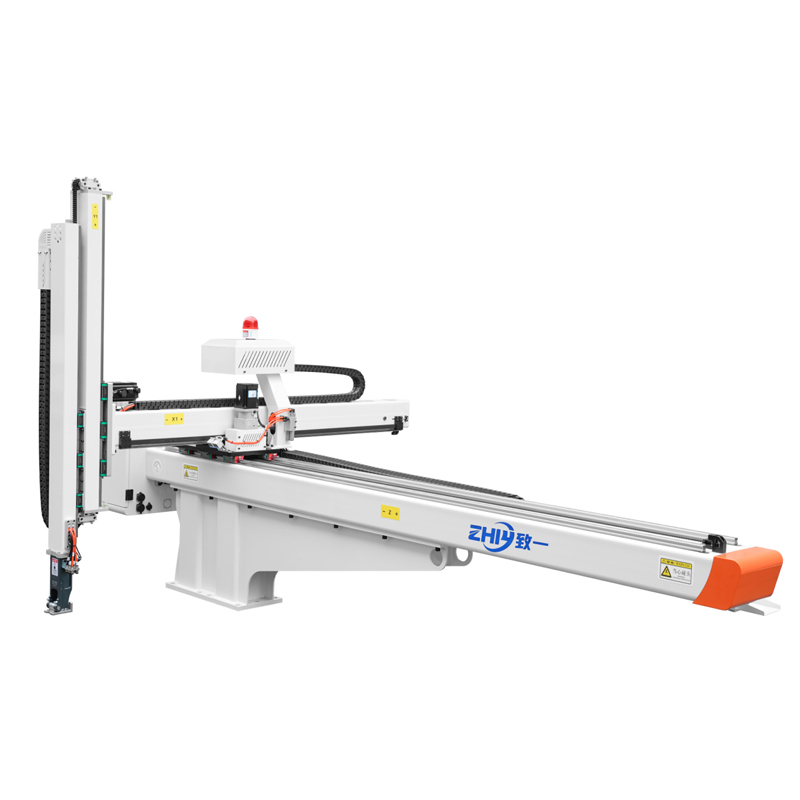
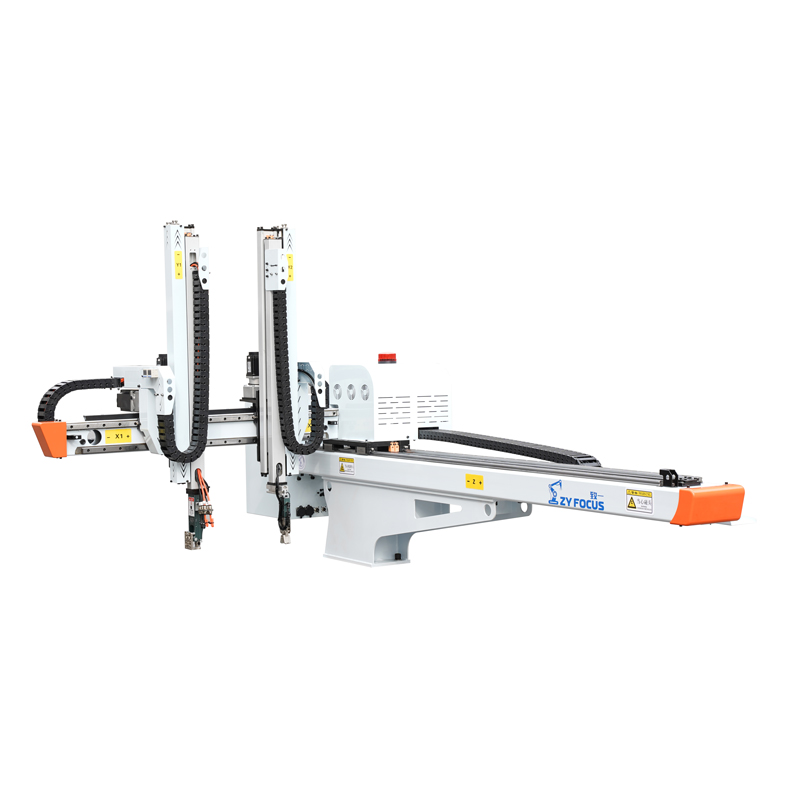
The three-axis manipulator is an automated device with three degrees of freedom, and its movement direction is usually linear motion along three mutually perpendicular axes (X, Y, and Z axes). The structure of this manipulator is relatively simple, mainly consisting of an actuator, a drive mechanism, and a control system. The original intention of the design of the three-axis manipulator was to complete some relatively simple tasks, such as Injection Molding Machine pickup, stamping material pickup, glass handling, and product stacking and stacking.
(II) Five-axis manipulator
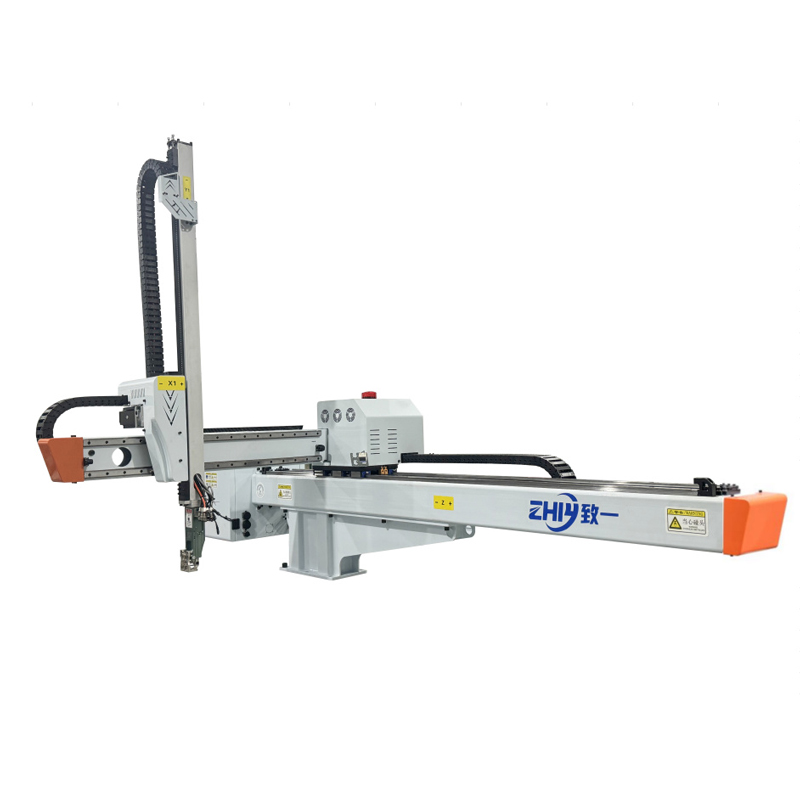
The five-axis manipulator adds two degrees of freedom on the basis of the three-axis manipulator, usually including the main arm pull-out axis, the main arm up-down axis, the auxiliary arm pull-out axis, the auxiliary arm up-down axis and the horizontal axis. The structure of this manipulator is more complex and can complete more complex movements and operations. The five-axis manipulator can not only complete all the tasks of the three-axis manipulator, but also perform more complex operations, such as in-mold inserts, in-mold labeling, mold assembly, shaping, etc.
2. Structural characteristics of three-axis manipulators and five-axis manipulators
(I) Three-axis manipulator
Structural composition
Three-axis manipulators usually have only one main arm, and some models may be equipped with auxiliary arms, but they are relatively rare. Its movement is mainly driven by cylinders or servo motors.
The up-down movement, horizontal movement and pull-out movement of the main arm are controlled by different drive mechanisms.
Advantages
Simple structure: Since there are only three degrees of freedom, its structure is relatively simple and easy to maintain and operate.
Low cost: Compared with five-axis manipulators, the price of three-axis manipulators is more affordable.
Fast running speed: In simple linear or circular motion tasks, the three-axis manipulator runs faster.
Disadvantages
Limited flexibility: Due to the small number of degrees of freedom, the three-axis manipulator has poor flexibility in complex operations.
Single function: It is mainly suitable for simple picking and handling tasks, and it is difficult to complete complex processing or assembly.
(II) Five-axis manipulator
Structural composition
Five-axis manipulators are usually equipped with a main arm and a secondary arm, each arm has independent lifting and guiding functions. Its movement is completely driven by a servo motor.
The control system of the five-axis manipulator is more complex and can achieve more precise motion control.
Advantages
High flexibility: The two additional degrees of freedom of the five-axis manipulator enable it to complete more complex operations.
Powerful functions: It can not only complete all the tasks of the three-axis manipulator, but also perform complex operations such as in-mold inserts, in-mold labeling, and out-of-mold assembly.
High precision: Due to the full servo drive, the five-axis manipulator has higher motion precision.
Disadvantages
Complex structure: The structure of the five-axis manipulator is complex and the maintenance cost is high.
Expensive: Compared with three-axis manipulators, five-axis manipulators are more expensive.
High requirements for operators: Due to its complexity, the operation and maintenance of five-axis manipulators require professional technicians.
3. Application scenarios of three-axis manipulators and five-axis manipulators
(I) Three-axis manipulators
Injection molding industry
Three-axis manipulators are widely used in the removal of finished products and nozzles of injection molding machines. Its simple design enables it to quickly complete the removal of injection molded parts and improve production efficiency.
Stamping industry
In stamping production, three-axis manipulators can complete the material collection and transportation of stamping parts. Its high-speed operation characteristics can effectively improve the efficiency of stamping production lines.
Handling and stacking
Three-axis manipulators can be used for product handling and stacking tasks. Its simple movement mode enables it to perform well in these tasks.
(II) Five-axis manipulators
Injection molding industry
Five-axis manipulators can not only complete the removal of injection molded parts, but also perform complex operations such as in-mold inserts and in-mold labeling. Its flexibility enables it to adapt to a variety of complex injection molding processes.
Machining
Five-axis manipulators are also widely used in the field of machining. It can complete complex machining tasks such as milling, drilling, etc.
Electronic assembly
In the electronics manufacturing industry, five-axis manipulators are used for the assembly of electronic products. Its high precision and versatility enable it to complete complex electronic assembly tasks.
Food processing
Five-axis manipulators are also used in the field of food processing and packaging. It can be used for handling, sorting and packaging of food.
4. Performance comparison between three-axis manipulators and five-axis manipulators
(I) Motion flexibility
Three-axis manipulators: Low motion flexibility, mainly suitable for simple linear or circular motion.
Five-axis manipulators: High motion flexibility, capable of completing complex three-dimensional motion.
(II) Motion accuracy
Three-axis manipulators: Relatively low motion accuracy, suitable for simple tasks.
Five-axis manipulators: High motion accuracy, suitable for complex machining and assembly tasks.
(III) Load capacity
Three-axis manipulators: Load capacity varies depending on the model, but is generally suitable for light or medium loads.
Five-axis manipulator: Strong load capacity, suitable for heavy or complex loads.
(IV) Operation speed
Three-axis manipulator: Faster operation speed in simple tasks.
Five-axis manipulator: Relatively slow operation speed in complex tasks, but capable of completing more complex operations.
(V) Cost
Three-axis manipulator: Relatively low price and low maintenance cost.
Five-axis manipulator: Expensive price and high maintenance cost.
5. Choose a three-axis manipulator or a five-axis manipulator?
The choice of a three-axis manipulator or a five-axis manipulator depends on the specific application requirements and budget. If the task is relatively simple, such as injection molded parts removal or simple handling tasks, a three-axis manipulator is an affordable choice. It can complete the task quickly and has low maintenance costs.
However, if the task is more complex, such as in-mold inserts, in-mold labeling or complex machining, a five-axis manipulator is a better choice. Although its price and maintenance cost are higher, its flexibility and versatility can meet the needs of complex tasks.
6. Future development trend of three-axis manipulator and five-axis manipulator
With the continuous development of industrial automation technology, three-axis manipulator and five-axis manipulator are also making continuous progress. In the future, these two manipulators will develop towards higher precision, stronger flexibility and lower cost. At the same time, with the application of artificial intelligence and Internet of Things technology, manipulators will have stronger autonomous learning and remote monitoring capabilities.
7. Summary
Three-axis manipulators and five-axis manipulators each have their own unique characteristics and application scenarios. The three-axis manipulator is suitable for simple picking and handling tasks with its simplicity, economy and efficiency. The five-axis manipulator is suitable for complex processing and assembly tasks with its high flexibility, versatility and high precision. When choosing a manipulator, it should be comprehensively considered according to the specific application requirements and budget.