
Leave Your Message
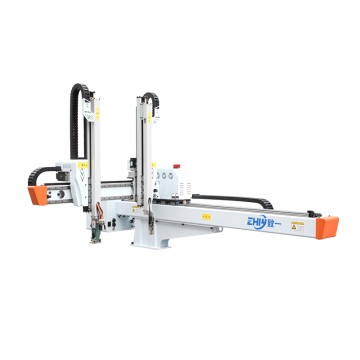
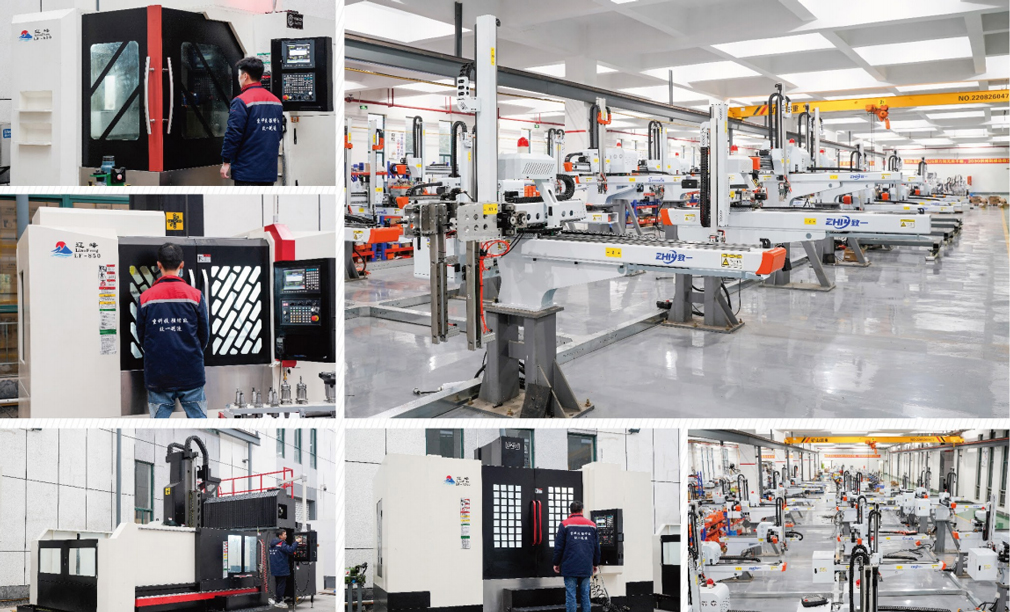
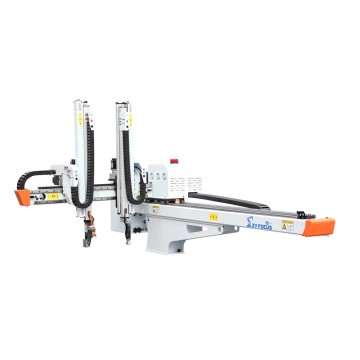
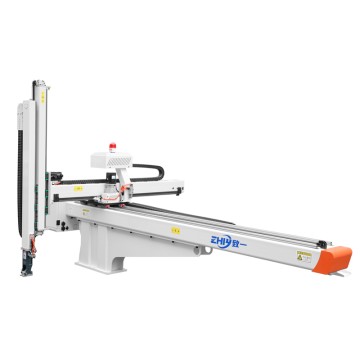
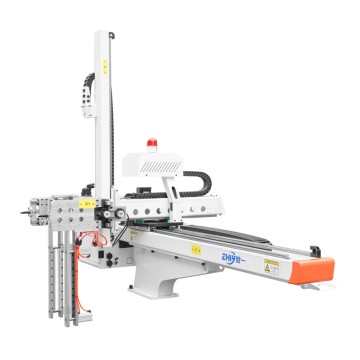
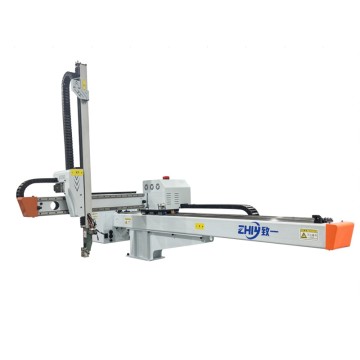
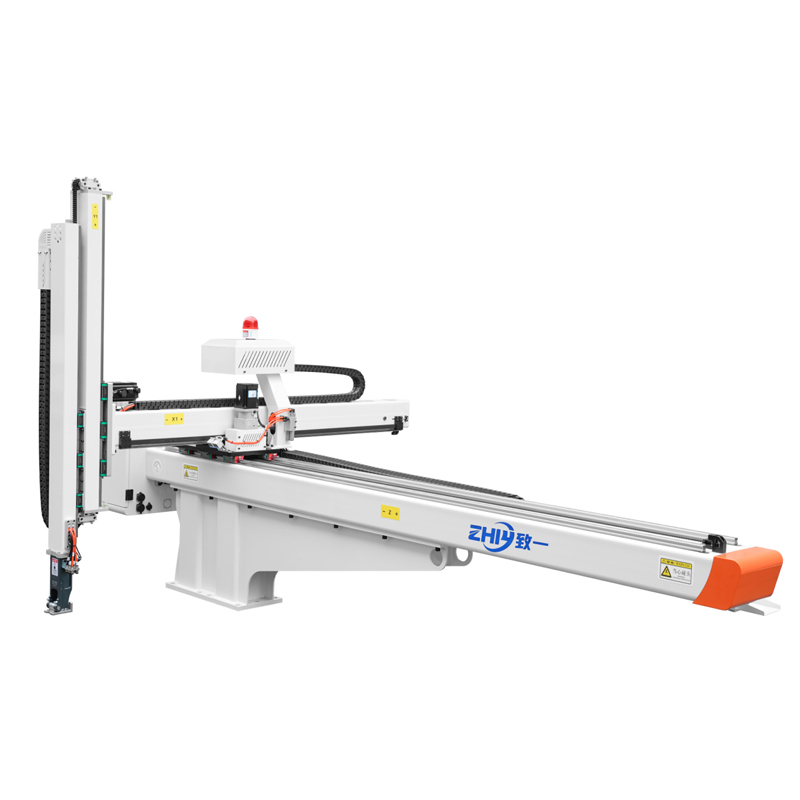
The core advantages of three-axis servo manipulator
The Core Advantages of Three-Axis Servo Robots
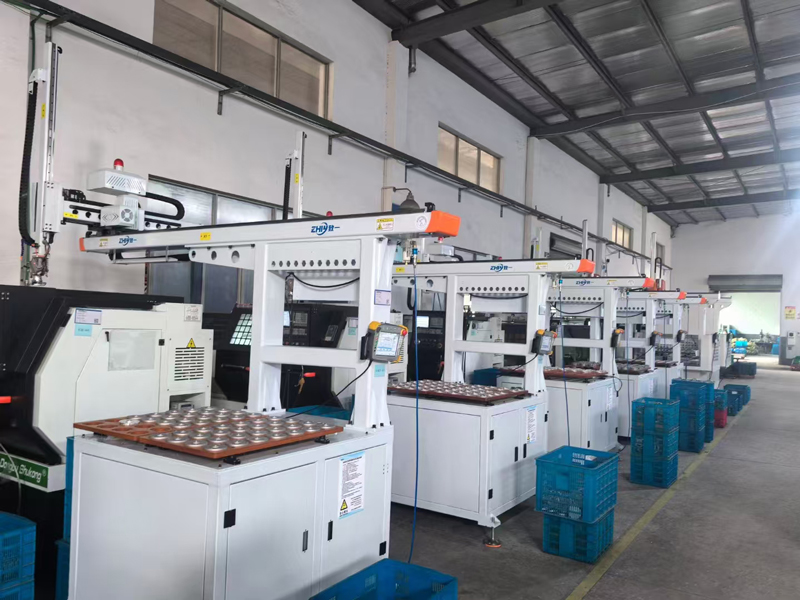
In the precision arena of automated production, millimeter-level accuracy is no longer the ultimate measure of precision. Micron-level and even submicron-level positioning capabilities are the key to determining production line efficiency, product qualification rates, and a company's core competitiveness. With their unmatched positioning accuracy, three-axis servo robots have become essential equipment in high-end fields such as electronics manufacturing, precision injection molding, and medical devices. This article will deeply analyze the core advantages of their ultra-high-precision positioning from three perspectives: core technology, performance, and industry value.
First, the Technical Foundation of Precision: The "Synergy Code" of the Three-Axis Servo System
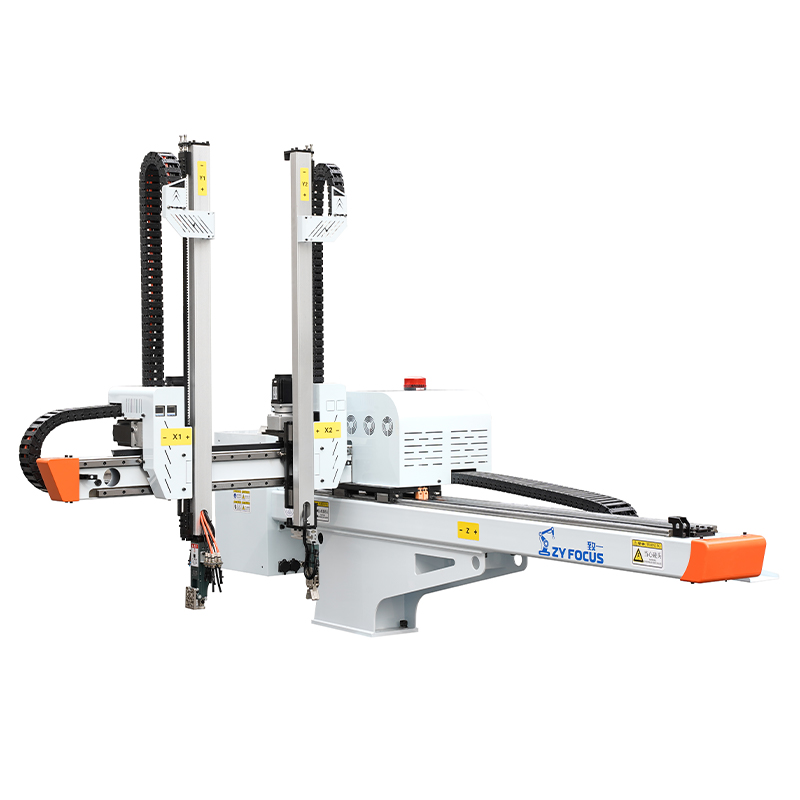
The ultra-high-precision positioning of a three-axis servo robot is not the sole function of a single component, but rather the synergistic effect of three core modules: the servo motor, the precision transmission mechanism, and the control system. Together, these three modules form the "technical triangle" of precision.
1. Servo Motor: The "Powerhouse" of Precision
The servo motor is the driving force behind high-precision positioning, and its performance directly determines the robot's response speed and positioning error. Unlike traditional stepper motors, AC servo motors feature closed-loop control. Real-time feedback from an encoder on motor speed and position enables precise control of speed, torque, and position. For example, a mainstream 23-bit absolute encoder generates 8,388,608 pulses per revolution, meaning the motor's rotational angle can be controlled with an accuracy of 0.000043 degrees, providing a fundamental guarantee for the robot's micro-positioning. Furthermore, the servo motor's "zero-speed lock" function ensures the robot remains stable after reaching the target position, preventing "drift" errors caused by inertia.
2. Precision Transmission: The "Transmission Link" of Precision
If the servo motor is the "heart," then the precision transmission mechanism is the "blood vessels," responsible for transmitting the motor's precise power without loss to the robot's actuator. Common transmission methods used in three-axis servo robots include ball screws, synchronous belts, and linear guides. The accuracy of these three directly affects the final positioning effect.
Ball screws: As a core component for linear motion, their lead error is a key indicator. High-end three-axis Servo Manipulators generally use ball screws rated C3 or higher, with lead error controlled within 0.015mm per meter. Some high-end models even reach C2 (0.008mm per meter). The rolling friction characteristics of ball screws not only reduce energy loss but also prevent the "creeping" phenomenon caused by sliding friction, ensuring smooth motion and repeatable positioning.
Linear guides: They provide guidance and support. Their parallelism and flatness errors directly contribute to end-positioning errors. Using precision-grade linear guides (such as H-grade) can control lateral error in single-axis motion to within 0.005mm/1000mm, providing the "track guarantee" for high-precision three-axis linkage.
3. Control System: The "Brain" of Precision
If hardware is the "body" of precision, then the control system is its "brain." The control system of a three-axis servo Robot Uses pulse commands or bus communication to plan and correct the motion trajectories of the three axes in real time. Its core advantages lie in the following two aspects:
Trajectory interpolation technology: Utilizing algorithms such as linear and circular interpolation, complex motion trajectories can be broken down into tiny straight or circular segments. Positioning errors in each segment can be controlled to the micron level, ensuring that the end effector strictly follows the preset path during multi-axis linkage (such as continuous grasping, transfer, and placement). This prevents trajectory deviation.
Closed-loop feedback correction: In addition to the servo motor's built-in encoder feedback, some high-end models also incorporate external detection devices such as optical or magnetic scales on the end effector or motion axis, achieving "dual closed-loop control." If the external detection device detects a deviation between the actual and target positions, the control system immediately adjusts the motor output to compensate for the error to within 0.001mm. This "real-time error correction" capability is the core guarantee of ultra-high-precision positioning.
Second, intuitive performance: comprehensive advantages from "precision" to "stability"
Based on the aforementioned technical foundation, the ultra-high-precision positioning advantages of three-axis servo manipulators are ultimately transformed into quantifiable and perceptible performance in production scenarios, encompassing three core metrics: positioning accuracy, repeatability, and motion stability.
1. Positioning Accuracy: From Millimeters to Micrometers
Positioning accuracy refers to the deviation between the actual position reached by the manipulator's end effector and the target position, and is a core indicator of accuracy. While the positioning accuracy of ordinary pneumatic manipulators is typically 0.1-0.5mm, the positioning accuracy of three-axis servo manipulators can generally reach 0.02-0.05mm, with high-end models achieving accuracy as low as 0.005-0.01mm. Taking electronic component soldering as an example, the chip pin pitch is only 0.3mm. If the robot's positioning error exceeds 0.05mm, it can cause a poor solder joint or short circuit. However, a three-axis servo robot with a positioning accuracy of 0.01mm can achieve precise alignment between the pins and the pads, increasing the soldering pass rate from 95% to over 99.9%.
2. Repeatability: The "Consistency Guarantee" for Mass Production
Repeatability refers to the deviation range when the robot reaches the same target position multiple times, which directly determines the consistency of mass-produced products. The repeatability of a three-axis servo robot typically achieves ±0.01mm, with some high-end models achieving ±0.003mm. In the precision injection molding industry, when producing thin-walled parts like mobile phone cases, A Robot must accurately grasp the part within the mold and place it on the inspection station. If the repeatability exceeds 0.02mm, it can lead to part misalignment and missed inspections. Ultra-high repeatability ensures consistent grasping and placement every time, keeping the dimensional tolerance of parts in mass production to within 0.01mm.
3. Motion Stability: Uncompromising Precision at High Speed
High precision requires not only static accuracy but also dynamic stability. A three-axis servo robot, operating at high speeds (e.g., no-load speeds of 1-2m/s), avoids positioning deviations caused by inertial shock through the control system's dynamic response and rigid support of the transmission mechanism. For example, in 3C product assembly lines, a robot must complete the "grasp a screw - move it to the screw hole - tighten" action within 1 second. Any vibration or deviation during movement can cause the screw to slip or misalign. The high-speed and stable characteristics of a three-axis servo robot enable the end effector to maintain precise positioning during rapid movement, keeping the coaxiality error during screw tightening within 0.02mm, significantly improving assembly efficiency and quality.
Third, Industry Value Realization: Practical Empowerment from "Cost Reduction" to "Efficiency Improvement"
The core advantage of ultra-high-precision positioning must ultimately be translated into practical value in industry applications. Across various high-end manufacturing sectors, the precision advantages of three-axis servo robots are reshaping production models, enabling the transition from manual labor to automated precision production.
1. Electronics Manufacturing: "Precision Manipulators" of Micro Components
Electronics manufacturing is one of the fields with the most demanding precision requirements. From chip packaging to PCB board soldering to electronic component assembly, micron-level positioning capabilities are required. Taking the assembly of mobile phone camera modules as an example, the gap between components such as the lens, sensor, and filter within the module must be controlled within 0.01mm. Manual operation is not only inefficient but also prone to fitting errors due to hand shake. A three-axis servo robot, through high-precision positioning and closed-loop control, achieves "zero-gap" fitting of components, increasing assembly efficiency by more than three times and reducing the defect rate from 5% to below 0.1%. Furthermore, in semiconductor wafer handling, the robot must grasp 300mm diameter wafers (only 0.77mm thick) and precisely place them on the lithography table, with a positioning error of less than 0.005mm. The ultra-high precision of the three-axis servo robot has become the "core hub" of wafer manufacturing.
2. Precision Injection Molding: The "Seamless Connector" between Molds and Parts
In precision injection molding production, the accuracy of the robot directly affects mold protection and part quality. When an injection mold opens and closes, the robot must precisely reach into the mold cavity to grasp the part. Any positioning deviation exceeding 0.05mm could result in a collision with the mold, causing tens of thousands of yuan in mold damage. The high-precision positioning of a three-axis servo robot ensures a positional deviation of less than 0.02mm for each grasp, completely eliminating the risk of mold collision. Furthermore, in two-shot or insert molding, the robot must precisely insert an insert (such as a metal nut) into the mold cavity, with a clearance of only 0.03mm. Ultra-high-precision positioning ensures "one-time, precise insertion," avoiding part scrap caused by insert misalignment and increasing material utilization by over 15%.
3. Medical Devices: "Precision Guarantors" in High-Cleanliness Environments
Medical device manufacturing places stringent demands on both precision and cleanliness. Applications like syringe needle processing, artificial joint polishing, and medical catheter assembly all require high-precision automated equipment. Taking the polishing of titanium alloy artificial joints as an example, the surface roughness of the joint must be controlled within Ra0.8μm. Any positioning error in the polishing path exceeding 0.01mm will affect the joint's fit and service life. A three-axis servo robot, through a combination of precise trajectory planning and end-point force control, can achieve micron-level control of the polishing path, ensuring the required surface precision while avoiding the dust pollution and precision fluctuations associated with manual polishing. In medical catheter assembly, a robot must precisely align a 0.5mm diameter catheter with a connector, with positioning deviations of less than 0.02mm. The precision advantages of a three-axis servo robot ensure zero errors during the docking process, ensuring the safety and reliability of medical devices.
4. Automotive Parts: The "Guardians of Quality" in High-End Manufacturing
As automobiles become more advanced, the manufacturing precision requirements for core components such as engines and transmissions continue to rise. The precision advantages of three-axis servo robots are replacing traditional manual labor and low-precision equipment. Taking engine piston ring installation as an example, the clearance between the piston ring and the piston groove must be controlled within 0.02-0.05mm. Manual installation can easily cause piston ring deformation due to uneven force and positioning errors. However, a three-axis servo robot, through high-precision positioning and flexible gripping, enables "non-destructive and precise installation" of piston rings, increasing the installation pass rate from 98% to 99.9%. During transmission gear assembly, the robot must precisely insert the gear into the drive shaft, with a clearance of only 0.015mm between the gear inner hole and the drive shaft. Ultra-high-precision positioning ensures coaxiality between the gear and the drive shaft, reducing noise and wear during transmission operation and extending product life.
Fourth, Selection and Application: How to Maximize the Advantages of High Precision?
To fully realize the ultra-high-precision positioning advantages of three-axis servo robots, companies should consider the following three points during model selection and application:
1. Clarify accuracy requirements: Avoid over-selection or under-selection
Precision requirements vary significantly across industries and processes. Companies must first identify core indicators—positioning accuracy, repeatability, and motion speed—before selecting the appropriate configuration. For example, for general electronic component assembly, a model with a positioning accuracy of 0.03-0.05mm can be selected, while semiconductor wafer handling requires a high-end model with a positioning accuracy of 0.005-0.01mm. This avoids increasing costs due to "excessive precision" or impacting production due to "under-precision."
2. Focus on overall rigidity: The "invisible guarantee" of precision
The overall rigidity of a robot directly affects its precision stability during high-speed motion. If the rigidity of the frame and motion axes is insufficient, deformation is likely to occur during high-speed motion, leading to positioning errors. Therefore, when selecting a robot, pay attention to the body material (such as aluminum alloy or cast iron) and the rigidity of the transmission components (such as the ball screw diameter and guide rail type) to ensure that the overall structure can support high-precision motion.
3. Emphasize Commissioning and Maintenance: A "Long-Term Guarantee" of Accuracy
Even high-end three-axis servo robots can experience a gradual decline in accuracy if improperly commissioned or neglected. Companies should arrange for professional installation and commissioning, optimizing control system parameters (such as gain adjustment and filter settings) to achieve optimal accuracy. Routine maintenance should include regular cleaning of transmission components, replenishing lubricants, and checking the cleanliness of encoders and scales to prevent loss of accuracy due to wear and contamination.