
Leave Your Message
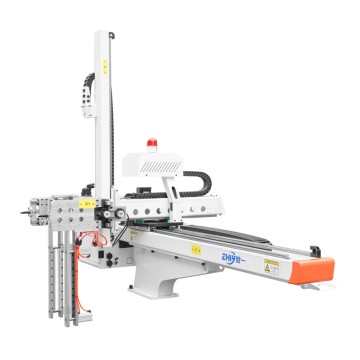
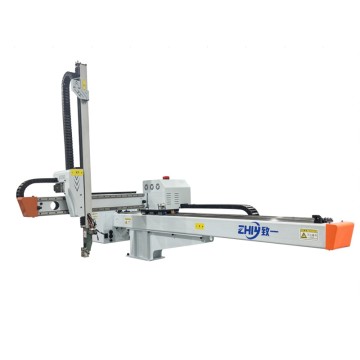
The Classification of Five-Axis Servo Robotic Arms
Introduction
In the realm of industrial automation, five-axis servo robotic arms have emerged as indispensable tools for enhancing efficiency, precision, and productivity. These advanced machines are widely employed across various sectors, including automotive manufacturing, electronics, packaging, and more.
Classification of Five-Axis Servo Robotic Arms
Dual-Arm Five-Axis Servo Robotic Arms
Structure and Features
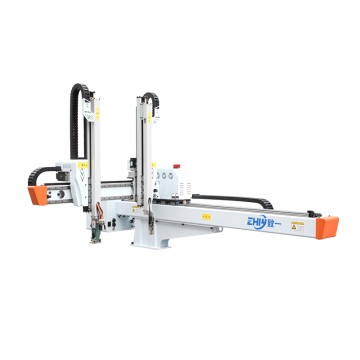
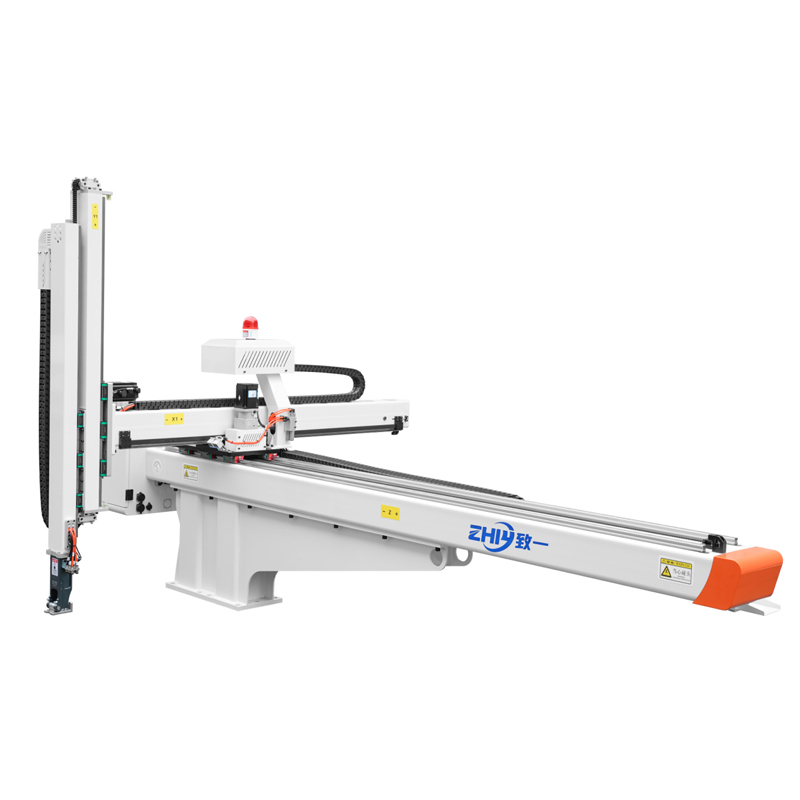
Dual-arm five-axis servo robotic arms are among the most commonly utilized structures in the market. These arms typically consist of one servo main arm and one servo material arm. The main arm is primarily responsible for extracting finished products and can also be employed in in-mold assembly systems for inserting components and retrieving finished products. The secondary arm, on the other hand, is dedicated to picking up sprues. This configuration is particularly well-suited for cold runner three-plate mold injection automation systems.
Applications
The versatility of dual-arm five-axis servo robotic arms makes them ideal for a wide range of applications. For instance, in the automotive industry, these robotic arms can be used to assemble complex components with high precision. In the electronics sector, they can handle delicate parts without compromising quality. Additionally, they are employed in packaging industries to automate the process of placing products into packaging materials.
Dual-Main-Arm Five-Axis Servo Robotic Arms
Structure and Features
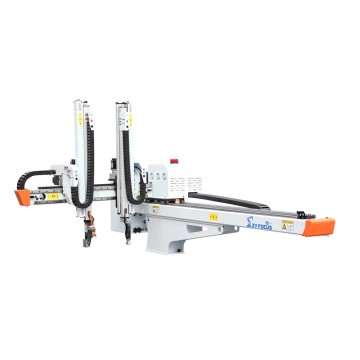
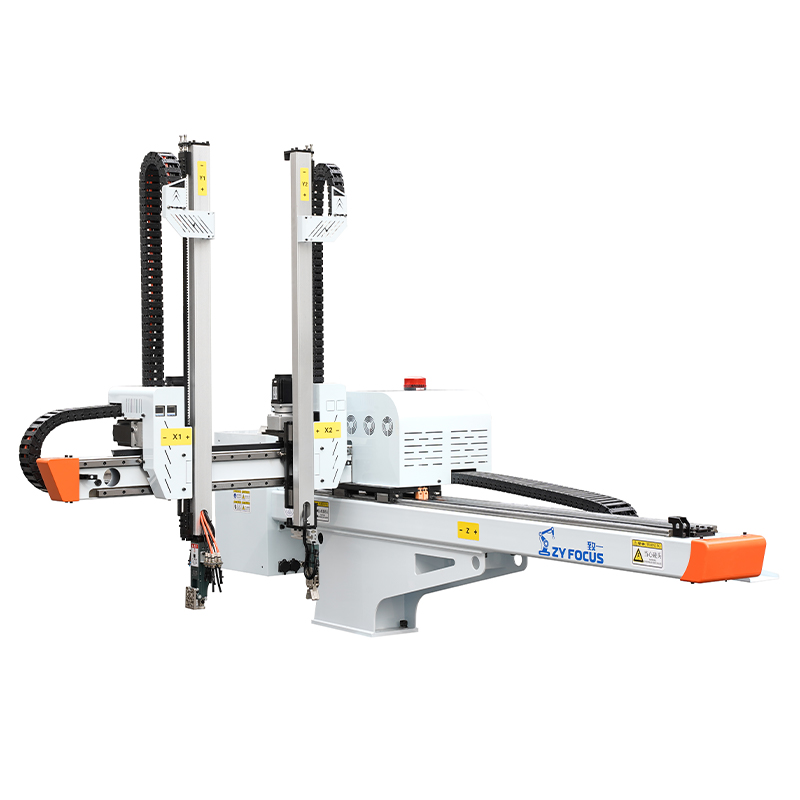
Dual-main-arm five-axis servo robotic arms are specifically designed for stack mold injection automation systems. Unlike the three-plate mold systems, stack molds have two cavities that produce finished products. Therefore, both arms of this type of robotic arm are designed to handle finished products. This design allows for efficient and simultaneous extraction of products from both cavities.
Applications
The applications of dual-main-arm five-axis servo robotic arms are primarily focused on industries that require high production efficiency and precision. For example, in the fast-food packaging industry, these robotic arms can be used to automate the process of extracting and stacking products such as disposable cutlery and containers. In the furniture manufacturing sector, they can handle large and complex components, such as tabletops, with ease.
The Classification of Five-Axis Servo Robotic Arms
Single-Arm Five-Axis Servo Robotic Arms
Structure and Features
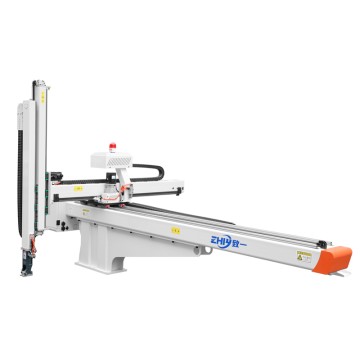
Single-arm five-axis servo robotic arms are designed to meet the needs of applications where the end effector (the tool or gripper at the end of the arm) requires arbitrary angle rotation. In general, the arms of servo robotic arms are equipped with bevel gears, which can achieve a 90-degree rotation after picking up a part. However, in some cases, the production process may demand a more extensive range of motion, such as 360-degree rotation in both the forward/backward and left/right directions. To accommodate these requirements, an additional servo axis is added to The Robotic Arm.
Applications
Single-arm five-axis servo robotic arms find extensive use in industries where complex and irregularly shaped products need to be handled with precision. For example, in the automotive industry, these robotic arms can be used to extract and handle large and irregularly shaped components such as bumpers. In the food packaging industry, they can be employed to apply labels to products with complex shapes. Additionally, they are used in the electronics industry for tasks such as cutting sprues and inspecting products.
Benefits of Five-Axis Servo Robotic Arms
Enhanced Precision and Efficiency
One of the primary advantages of five-axis servo robotic arms is their ability to deliver high precision and efficiency. The use of servo motors allows for precise control over the movement of the robotic arm, resulting in consistent and accurate production. This level of precision is crucial in industries such as automotive and electronics, where even the slightest deviation can lead to defects. Moreover, the automation provided by these robotic arms significantly increases production speed, enabling manufacturers to meet high demand.
Cost-Effectiveness
While the initial investment in five-axis servo robotic arms may be substantial, the long-term benefits make them a cost-effective solution. By automating repetitive tasks, these robotic arms reduce the need for manual labor, thereby lowering labor costs. Additionally, the consistent quality of products produced by these robotic arms reduces waste and rework, further contributing to cost savings. In the long run, the increased productivity and efficiency lead to a higher return on investment.
Improved Safety and Working Conditions
The use of five-axis servo robotic arms also enhances workplace safety. These robotic arms can perform tasks in hazardous environments or handle heavy and dangerous materials, reducing the risk of accidents and injuries to human workers. Moreover, they can operate continuously without fatigue, ensuring consistent performance even during long shifts. This not only improves the overall safety of the workplace but also enhances the working conditions for human employees.
Flexibility and Scalability
Five-axis servo robotic arms offer a high degree of flexibility and scalability. They can be easily reprogrammed to handle different tasks or products, making them suitable for a wide range of industries and applications. This flexibility allows manufacturers to adapt to changing market demands and product requirements without the need for significant investments in new equipment. Additionally, these robotic arms can be integrated into existing production lines, allowing for seamless scalability.
Conclusion
In conclusion, five-axis servo robotic arms have revolutionized industrial automation by offering enhanced precision, efficiency, and flexibility. Their diverse classification, including dual-arm, dual-main-arm, and single-arm configurations, enables them to cater to a wide range of applications across various industries.