
Leave Your Message
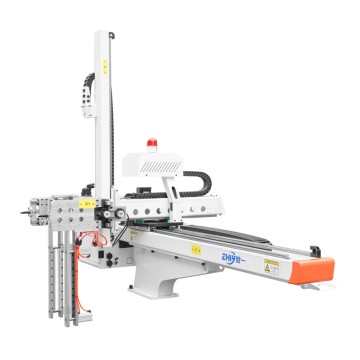
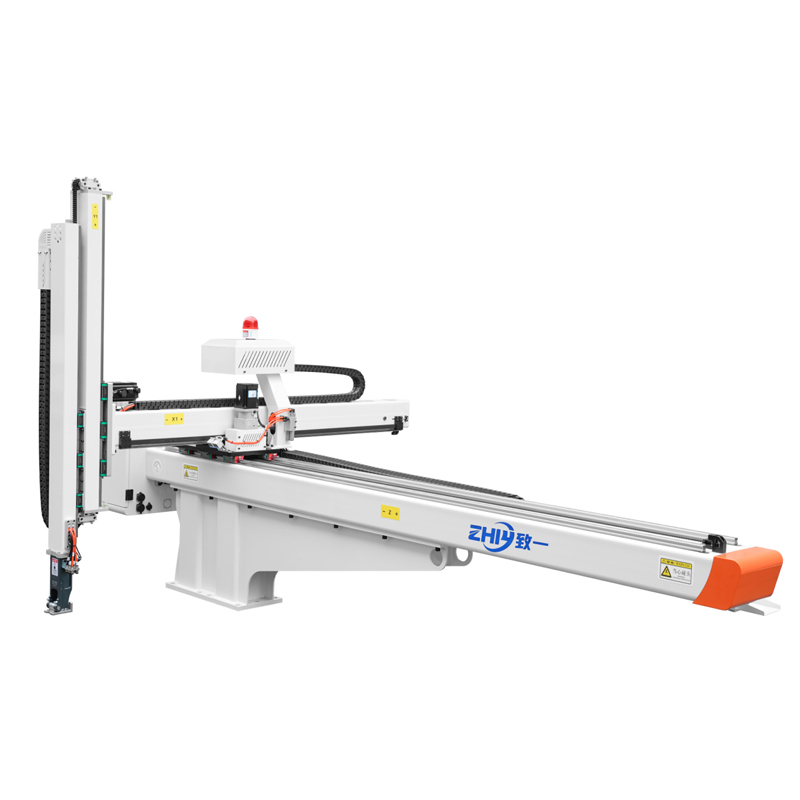
Thai Food Packaging Plants: Why are Three-Axis Robots the Top Choice for Automation Upgrades?
Thai Food Packaging Plants: Why are Three-Axis Robots the Top Choice for Automation Upgrades?
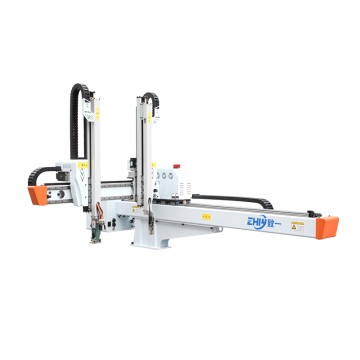
Driven by Thailand's 4.0 strategy, the food processing and packaging industry is experiencing a new wave of automation upgrades. The expansion of exports of pre-prepared foods, frozen ready-to-eat meals, and pet food has placed higher demands on local food packaging plants for production efficiency, product consistency, and cost control. As the core of food packaging container production, the automation transformation of the injection molding process directly determines the overall plant's capacity and competitiveness. Among numerous automated equipment options, three-axis servo robots, with their strong adaptability, high cost-effectiveness, and ease of operation, have become the top choice for automation upgrades in the injection molding process of Thai food packaging plants, perfectly meeting the production pain points and development needs of the local market.
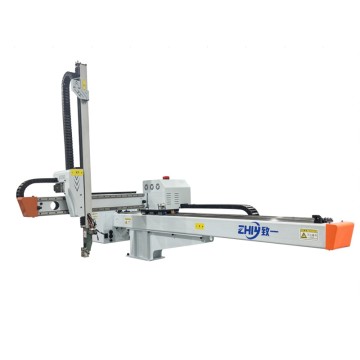
I. Three-Axis Robots Precisely Solve the Injection Molding Production Pain Points of Thai Food Packaging Plants
The current development status of the Thai food packaging industry makes the automation transformation of the injection molding process urgent, and these industry pain points are precisely the core solution direction for three-axis servo robots.
Labor shortages and rising costs make manual operations unsustainable.
Thai food packaging factories have long relied on foreign laborers and temporary workers. In recent years, the problems of labor shortages, high compliance costs, and high staff turnover have become increasingly prominent. The monthly salary for ordinary workers has reached 4,000-5,000 RMB and is increasing year by year. Repetitive tasks in the injection molding process, such as picking up parts, stacking, and cutting sprues, are not only inefficient to operate manually, but also prone to errors due to fatigue, leading to a higher rate of defective packaging containers. Three-axis servo Robotic Arms can achieve unmanned operation of the entire injection molding process. A single machine can replace more than three workers, completely eliminating dependence on manual labor. Furthermore, 24-hour uninterrupted operation removes production capacity constraints caused by staff scheduling.
Export orders have stringent requirements, and product consistency urgently needs improvement. Thai food packaging is highly export-oriented. Multinational food brands have strict requirements for the dimensional accuracy and appearance quality of packaging containers. The randomness of manual operation can easily lead to deviations in product specifications, affecting the delivery of export orders. The three-axis servo robot employs a high-precision servo control system, with positioning errors controlled to the millimeter level. Whether it's milk tea cups, food boxes, or food storage lids, it can achieve standardized picking and placement, ensuring product consistency from the source and meeting international export quality standards.
The trend towards small-batch, multi-variety production increases the demand for equipment flexibility.
With the diversification of the Thai food market, food packaging plants face the need for small-batch, multi-variety orders. Traditional fixed equipment is time-consuming to change molds and debug, resulting in low equipment utilization. The three-axis servo Robot Supports rapid parameter adjustment; changing a few components allows it to adapt to different specifications of food packaging injection molds, significantly reducing mold changeover time. One machine can complete the production of various packaging containers such as yogurt cups, condiment boxes, and snack jars, perfectly matching the production rhythm of Thai food packaging plants.
II. The core advantages of the three-axis robot in adapting to Thai food packaging injection molding make it the first choice for upgrades.
Compared to high-end equipment such as five-axis and six-axis robots, the three-axis servo robot is not a technologically "simplified" version, but a customized and efficient solution for the food packaging injection molding process. Its advantages directly address the core needs of Thai food packaging plants, making it the first choice for automation upgrades.
1. High Cost-Effectiveness, Fitting the Investment Budget of Thai SMEs in the Packaging Industry
The Thai food packaging market is dominated by small and medium-sized enterprises (SMEs). Automation upgrades prioritize return on investment, but the high prices of high-end robotic arms from Japan and Europe deter many SMEs from investing heavily in them initially. Three-axis servo robotic arms cost only one-third the price of high-end multi-axis robotic arms, while consuming less energy, requiring simpler daily maintenance, and eliminating complex precision parts, thus significantly reducing maintenance costs. More importantly, three-axis robotic arms can help companies reduce production costs by up to 30%. Combined with local labor costs in Thailand, the investment can typically be recouped in 6-12 months, making it the optimal solution for low-cost automation upgrades for small and medium-sized food packaging plants.
2. Highly Adaptable to Food Packaging Injection Molding Scenarios, Providing Immediate Capacity Boosts
Food packaging containers are mostly thin-walled injection molded products, such as milk tea cups, wet wipe lids, and food containers, requiring injection molding equipment with high-speed part handling and precise stacking capabilities. The three-axis servo robot features a lightweight design with an empty cycle time as low as a few seconds, perfectly matching the production rhythm of high-speed injection molding machines. This allows for immediate part removal after injection molding, preventing product sticking and deformation, and significantly reducing production cycles. For multi-cavity molds such as those producing 8 milk tea cups or 16 wet wipe caps in one cycle, the three-axis robot can achieve simultaneous part removal and orderly stacking. A single unit can increase injection molding capacity by more than 20%, allowing Thai food packaging factories to easily meet the production capacity demands of export orders.
3. Simple structure and easy operation, adapted to local Thai technical levels. Thai food packaging factories generally lack professional automation equipment technicians, and the operation and maintenance of complex equipment is a major obstacle to automation upgrades. The three-axis servo robot uses an intuitive touch-screen interface, requiring no complex programming knowledge. Ordinary workers can operate it after simple training. Furthermore, the simple structure of the equipment reduces potential failure points, allowing for quick troubleshooting and resolution of problems. Even during night shifts, workers can independently start and stop the equipment and perform daily operations, completely solving the problem of Thai companies being able to "afford equipment but not use it well."
4. High Load Capacity and Strong Stability to Meet Diverse Food Packaging Production Needs
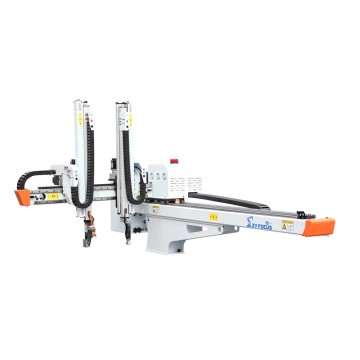
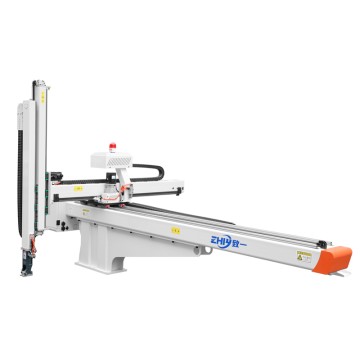
The production of food packaging containers covers a full range, from small yogurt cups to large food turnover boxes, placing different demands on the load capacity of robotic arms. High-quality three-axis servo robotic arms, such as the bull-head type, can handle a maximum load of 50kg, easily meeting the needs of handling large food packaging molds. Constructed with high-strength steel, they offer strong stability during operation and can adapt to the 24-hour continuous production conditions of Thai food packaging plants. Furthermore, the three-axis robotic arm can be equipped with pneumatic auxiliary arms, servo axes, and other accessories, flexibly upgrading to a dual-arm three-axis or single-arm four-axis robotic arm to meet diverse food packaging injection molding needs such as in-mold labeling, sprue cutting, and tableware packaging, achieving "one machine for multiple uses."
III. Three-Axis Robots Facilitate Standardization and Intelligent Transformation of Thai Food Packaging Plants
The upgrading of Thailand's food packaging industry is not merely a simple matter of "machine replacement of human labor," but a comprehensive transformation towards standardized and intelligent production. Three-axis servo robots are the core foundational equipment for this transformation.
On the one hand, the standardized operation of three-axis robots makes the injection molding production process traceable and controllable. Combined with production data from injection molding machines, it enables digital management of the production process, allowing food packaging plants to clearly grasp core indicators such as capacity and yield, aligning with the intelligent manufacturing requirements of Thailand's 4.0 strategy. On the other hand, three-axis robots can seamlessly connect to subsequent automatic packing, labeling, and palletizing equipment, building a fully automated production line from injection molding to packaging and warehousing. This solves the production pain point of Thai food packaging plants—"semi-automatic at the front end, fully manual at the back end"—and achieves a comprehensive improvement in overall plant production efficiency.
Meanwhile, high-quality three-axis servo robots have passed international certifications such as ISO9001 and CE. The safety and reliability of the equipment meet international production standards, ensuring not only the production safety of Thai food packaging plants but also allowing their products to better meet international export equipment requirements, thus safeguarding the export of food packaging.
IV. Conclusion: Three-Axis Robots – The Optimal Solution for Automation Upgrades in Thai Food Packaging Plants
Against the backdrop of the Thai food packaging industry's development towards high-end and export-oriented practices, automation upgrades in the injection molding process have become essential for enterprises to enhance their competitiveness. Three-axis servo robots, with their core advantages of high cost-effectiveness, high adaptability, ease of operation, and strong stability, precisely address the multiple pain points of Thai food packaging plants in terms of labor, cost, capacity, and quality. They fit the investment budgets of SMEs while meeting the needs of large-scale export production, making them the preferred equipment for automation upgrades.
For Thai food packaging factories, choosing a high-quality three-axis servo robot is not just about upgrading equipment; it's about embarking on a new journey of standardized and intelligent production. This allows companies to secure a place in the fiercely competitive international market with high efficiency and stable quality, truly achieving the goals of cost reduction, efficiency improvement, and quality enhancement through automation upgrades.
#ThreeAxisRobot #ThreeAxisServoRobot #InjectionMoldingMachineServoRobot #AutomationOfThaiFoodPackagingFactory #FoodPackagingInjectionMoldingAutomation #InjectionMoldingUpgradeEquipmentOfThaiFoodPackagingFactory #ApplicationOfThreeAxisRobotInFoodPackaging #ThinWallFoodPackagingInjectionMoldingRobot #AutomationSolutionsForSmallAndMediumFoodPackagingFactory #CostPerformanceOptionOfThaiInjectionMoldingRobot