
Leave Your Message
Special Applications of Servo Manipulators in Precision Machining
Special Applications of Servo Manipulators in Precision Machining
In modern manufacturing, precision machining is a key link to ensure product quality and performance, and servo manipulators, as a highly automated and sophisticated equipment, play an increasingly important role in this field. This article will explore in depth the various special applications of servo manipulators in the field of precision machining and how they promote the efficiency and quality of industrial production.
1. Introduction to Servo Manipulators
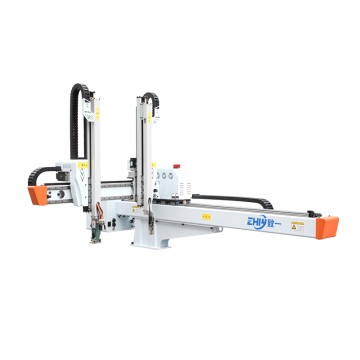
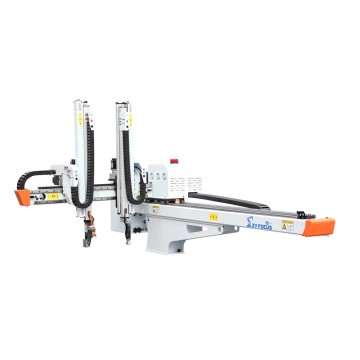
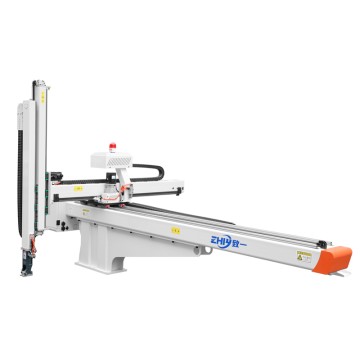
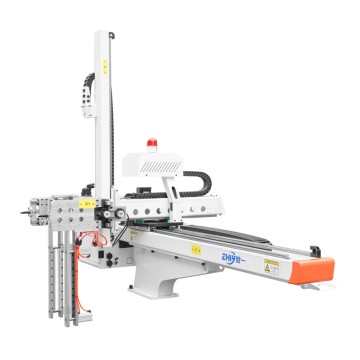
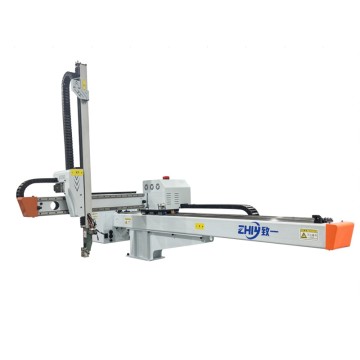
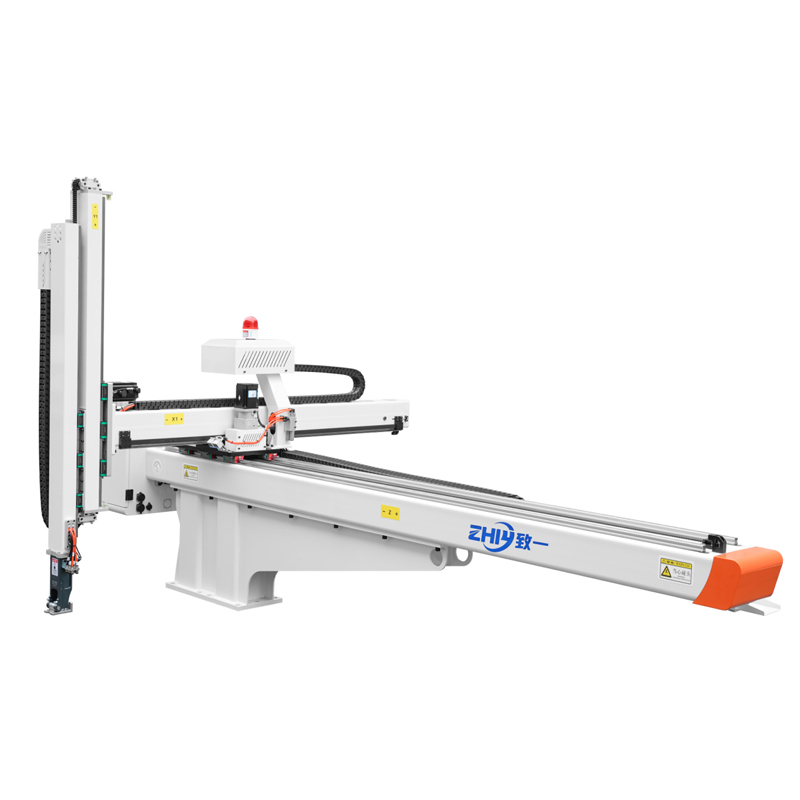
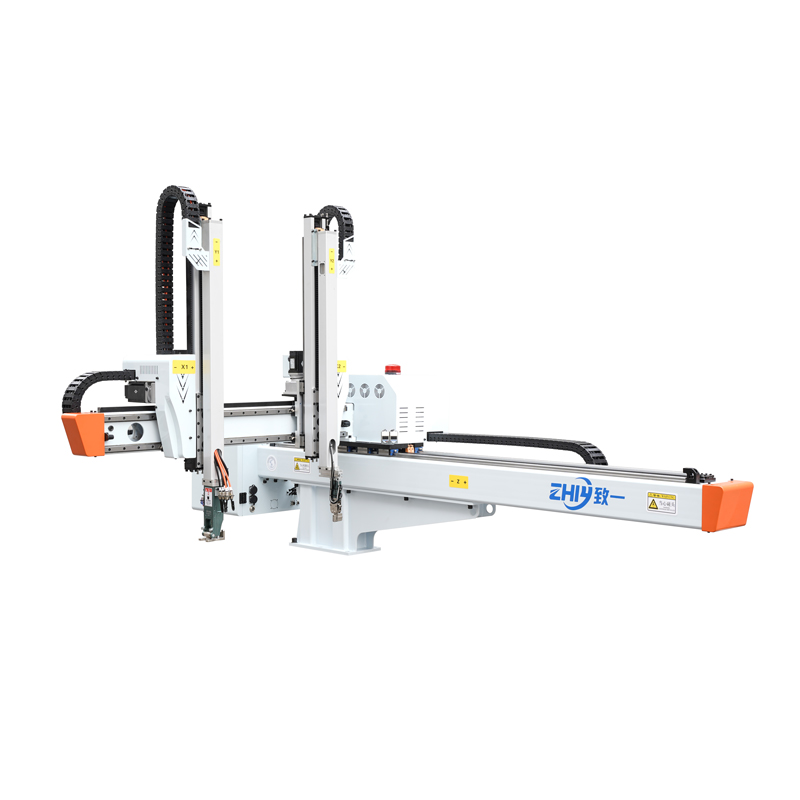
A servo manipulator is an automated device that can imitate the movement of human arms and accurately control its movements through a servo system. It has the characteristics of high precision, high speed, high stability and strong programmability, and can complete various complex operating tasks according to preset programs and instructions. The core components of a servo manipulator include servo motors, drivers, controllers and Robotic Arms, etc. These components work together to achieve precise motion control of the manipulator.
2. Special Applications of Servo Manipulators in Precision Machining
(I) 3C Electronics Industry
Glass Carving Processing: In 3C products such as smartphones and tablets, the fine processing of glass cover plates and protective films is crucial. Servo manipulators are applied to glass engraving machines to achieve fine processing and special-shaped cutting of ultra-thin glass. For example, loading and unloading can be completed by a three-axis manipulator, saving labor costs, and one person can operate multiple devices. During the processing, the servo system ensures the high precision and stability of the fixture grinding, tool setting, processing and other links, meeting the 3C industry's requirements for the appearance grinding and inner hole processing of small-sized, high-precision glass parts. The dimensional error can be controlled within 0.01-0.03mm, effectively improving the product's pass rate.
Assembly of electronic components: On the production line of electronic products, servo manipulators can be used for high-precision assembly of electronic components. The electric gripper at the end can finely grasp and place tiny components such as chips, resistors, capacitors, etc., to ensure the accuracy and consistency of assembly. By working in conjunction with automated production equipment, servo manipulators can greatly improve the production efficiency and quality of electronic products, while reducing the errors and risks of manual operations.
(II) Automobile manufacturing industry
Parts processing and assembly: Automobile manufacturing involves a large number of precision parts processing and assembly processes, and servo manipulators play an important role in them. For example, in the processing of key parts such as engine cylinders and crankshafts, servo manipulators can accurately place blanks on the fixtures of machine tools, and pick up and transport them after processing is completed, ensuring the stability and accuracy of the processing process. In the assembly of automotive parts, servo manipulators can complete the automated assembly of engine assemblies, body parts, etc., improve assembly efficiency and quality, and reduce production costs.
Stamping and welding: On the automotive stamping production line, servo manipulators can be used for loading and unloading and handling stamping parts. They can quickly and accurately place the plates in the stamping dies and remove the stamped parts, improving the automation and production efficiency of stamping production. At the same time, in the automotive welding process, servo manipulators are equipped with welding tools to achieve high-precision welding operations, ensure welding quality and consistency, and improve the strength and safety of the automotive body.
(III) Medical device industry
Precision equipment processing: Medical devices such as surgical tools and implants have extremely high requirements for processing accuracy and quality. Servo manipulators can achieve precise processing and assembly of tiny parts in medical device processing. For example, when processing micro-instruments for ophthalmic surgery, servo manipulators can stably grasp and operate tiny tools and parts, and perform milling, grinding and other operations according to the preset processing procedures to ensure that the dimensional accuracy and surface finish of the instruments meet the requirements, thereby improving the safety and reliability of medical devices.
Automated assembly and packaging: In the production process of medical devices, servo manipulators can be used for automated assembly and packaging of products. It can accurately assemble different parts into complete medical device products, and perform operations such as packaging and labeling. By adopting servo manipulators, medical device manufacturers can improve production efficiency, reduce the impact of human factors on product quality, and meet the strict production environment and quality control requirements of the medical device industry.
(IV) Aerospace field
Parts manufacturing: Aerospace parts usually have complex shapes, high precision requirements and high-strength materials. Servo manipulators can play their advantages of high precision and high stability in the manufacturing of aerospace parts. For example, when processing complex parts such as aircraft engine blades and wing structures, servo manipulators can cooperate with CNC machining centers to accurately complete multi-axis machining tasks of parts, ensuring that the dimensional accuracy, shape accuracy and surface quality of parts meet the design requirements, thereby improving the performance and reliability of aerospace products.
Assembly and testing: During the assembly and testing phase of aerospace products, servo manipulators can be used for assembly of large structural parts, cable connection, and parts inspection. Its high load capacity and precise motion control capabilities enable it to handle various complex and delicate tasks in the aerospace field, improve the efficiency and quality of assembly and testing, and shorten the product development cycle.
(V) Precision mold manufacturing industry
Mold processing and polishing: Molds are the basic tools for precision manufacturing, and their quality and precision directly affect the quality and production efficiency of products. Servo manipulators can achieve efficient and stable operation during mold processing and polishing. In mold processing, it can accurately control the feed rate and cutting speed of the milling tool, improve the processing accuracy and surface quality of the mold; in the mold polishing process, the servo manipulator is equipped with professional polishing tools, which can evenly polish the mold surface according to the preset polishing path and strength, eliminate surface defects, and improve the finish and service life of the mold.
Automated production process: By introducing servo manipulators, mold manufacturing companies can realize the automation and intelligence of mold production. Servo manipulators can complete a series of automated operations from raw material handling, loading, flipping and picking up during processing, to unloading and packaging of finished molds, improve production efficiency, reduce labor costs, and achieve 24-hour uninterrupted production, enhancing the competitiveness of enterprises.
3. Technical advantages of servo manipulators in precision machining
(I) High-precision positioning and repeatability
The servo manipulator adopts advanced servo motors and high-precision transmission devices, which can achieve millimeter-level or even micron-level positioning accuracy. In the precision machining process, it can accurately place the workpiece in the specified position according to the preset program, ensuring that the operating position of each machining is consistent, with extremely high repeatability. This high-precision positioning and repeatability capability is essential for producing high-quality, consistent precision parts, and can effectively reduce processing errors and scrap rates.
(ii) Fast and stable response capability
The servo system has a fast dynamic response characteristic and can respond accurately to control instructions in a short time. In precision machining, this enables the servo manipulator to quickly adjust its movement speed and direction to adapt to different machining processes and production rhythms. For example, when machining parts with complex shapes, the servo manipulator can quickly change the movement trajectory to ensure the continuity and stability of the machining process and improve production efficiency.
(iii) Programmability and flexibility
Servo manipulators are usually equipped with powerful control systems, and users can flexibly program and configure them through programming software to adapt to various precision machining tasks. According to different workpieces, machining processes and production requirements, corresponding control programs can be written to achieve complex and diverse operating actions. This programmability and flexibility enable servo manipulators to be widely used in multiple industries and fields to meet the personalized production requirements of different enterprises.
(iv) High load capacity and stability
The mechanical structure of the servo manipulator is reasonably designed, with a high load capacity, and can stably grasp and carry heavier workpieces. In the field of precision machining, for some large and heavy parts processing, such as large molds, heavy machinery parts, etc., servo manipulators can still maintain a stable and reliable working state to ensure the smooth progress of the processing process. At the same time, its stable operating performance can also reduce the processing errors caused by equipment jitter or instability, and improve product quality.
(V) Remote monitoring and intelligent management
Modern servo manipulators usually have remote monitoring and network communication functions. Operators can monitor and control the operation status of the manipulator in real time through the network in the monitoring center. Using sensors and data analysis technology, intelligent management of manipulators can also be achieved, such as fault diagnosis and predictive maintenance. This not only improves the management efficiency and maintenance level of the equipment, but also can timely discover and solve potential problems, reduce downtime, and improve the overall utilization rate and production efficiency of the equipment.
4. The industry impact of servo manipulators in the field of precision machining
(I) Improve production efficiency
Servo manipulators can complete high-precision repetitive operations in a short time, greatly improving the production efficiency of precision machining. It can achieve 24-hour uninterrupted work, reduce fatigue and error factors in manual operation, and maintain stable production speed and quality. For example, in the precision processing production line of electronic components, the use of servo manipulators can increase production efficiency by several times or even dozens of times, meeting the market demand for a large number of high-precision electronic products.
(ii) Improving product quality
Through precise positioning, stable motion control and high-precision processing operations, servo manipulators can effectively improve the quality and consistency of precision processed products. It can ensure that each component is processed in accordance with strict design requirements and reduce quality fluctuations caused by human factors. In fields such as medical devices and aerospace that have extremely high requirements for product quality, the application of servo manipulators helps to improve product reliability and safety and enhance the market competitiveness of enterprises.
(iii) Reducing production costs
Although the initial investment of servo manipulators is relatively high, in the long run, it can help enterprises reduce production costs. First, it reduces dependence on manual labor and reduces labor costs; second, its high production efficiency and high yield rate reduce the waste of raw materials and waste disposal costs; in addition, the stable operation and intelligent management of servo manipulators reduce equipment maintenance costs and downtime, and improve the overall economic benefits of equipment.
(IV) Promote industrial upgrading
The wide application of servo manipulators in the field of precision machining has promoted the industrial upgrading and intelligent development of the manufacturing industry. It has prompted enterprises to adopt more advanced production technologies and management models, improve the level of production automation and product quality, and thus enhance the competitiveness of the entire industry. At the same time, the development of servo manipulators has also driven the progress of related industries, such as the research and development and production of servo motors, drivers, controllers, sensors and other components, forming a complete industrial chain and injecting new impetus into economic growth.
(V) Promote safe production
In some dangerous or harsh precision machining environments, such as high temperature, high pressure, toxic and harmful workplaces, servo manipulators can replace manual operations to ensure the personal safety of operators. It can withstand harsh working conditions, stably complete work tasks, reduce the risk of accidents caused by exposure to dangerous environments, and meet the requirements of modern industrial production for safe production.
5. Future development trend of servo manipulators in the field of precision machining
(I) Higher precision and speed
With the continuous improvement of the requirements for product quality and production efficiency in the manufacturing industry, servo manipulators will develop in the direction of higher precision and speed. The future servo manipulator will be equipped with more advanced servo motors, high-precision reducers and advanced control algorithms to achieve micron-level or even higher precision positioning and faster movement speed to meet the needs of ultra-precision processing and efficient production in the field of precision processing.
(II) Integration of intelligence and automation
Servo manipulators will be deeply integrated with advanced technologies such as artificial intelligence, the Internet of Things, and big data to achieve a higher degree of intelligence and automation. By installing visual recognition systems, force sensors and other devices, servo manipulators can have the ability to autonomously perceive and judge the environment, and realize functions such as adaptive grasping and intelligent obstacle avoidance. At the same time, it will be seamlessly integrated with production management systems, automated production lines, etc. to form an intelligent production and manufacturing system, and realize full automation and intelligent management of the production process.
(III) Miniaturization and lightweight
In some small precision processing fields and desktop-level production equipment, the demand for miniaturized and lightweight servo manipulators will continue to increase. The future servo manipulator will adopt a more compact design structure and lightweight materials to reduce the size and weight of the equipment while ensuring performance, and improve the flexibility and operability of the equipment. This will help expand the application scope of servo manipulators, such as precision operation and processing in microscopic fields such as microelectronics and biomedicine.
(IV) Collaborative operation of multiple robots
In order to complete more complex and large-scale precision processing tasks, multiple servo manipulators will achieve collaborative operation. Through high-speed communication networks and coordinated control algorithms, multiple servo manipulators can cooperate with each other to jointly complete the processing or assembly tasks of a product. This multi-Robot Collaborative operation mode will greatly improve production efficiency and processing capabilities, and achieve optimal allocation and sharing of resources.
(V) Green energy saving and sustainable development
Against the background of increasing global attention to environmental protection and sustainable development, servo manipulators will also develop in the direction of green energy saving. Future servo manipulators will adopt more efficient energy-saving motors, optimized drive systems and energy recovery devices to reduce the energy consumption of equipment and the impact on the environment. At the same time, in the material selection and manufacturing process of the manipulator, more attention will be paid to environmental protection and resource recycling to promote the sustainable development of the entire industry.
6. Conclusion
The application of servo manipulators in the field of precision processing has achieved remarkable results and has shown great development potential. From 3C electronics, automobile manufacturing to medical devices, aerospace and other industries, it has brought revolutionary changes to the production and manufacturing of enterprises with its high precision, high efficiency, high stability and intelligence. With the continuous advancement and innovation of technology, servo manipulators will continue to break through their own limitations in future development, expand more application fields and scenarios, and make greater contributions to the upgrading and development of the global manufacturing industry.