
Leave Your Message
Servo Robots for Smart Factories
Servo Robots for Smart Factories: Reshaping the New Paradigm of Automated Production
In today's world, with the Industry 4.0 wave sweeping the globe, smart factories have moved from concept to reality. Servo robots, as the "core executors" on the production line, are breaking through traditional production bottlenecks with their precision, efficiency, and flexibility. This article will analyze how servo robots are becoming standard equipment in smart factories from six dimensions: positioning value, technological differences, core advantages, application scenarios, selection logic, and future trends.
I. Content Outline
1. Servo Robots: The Core Execution Unit of Smart Factories
2. Three-Axis and Five-Axis Servo Robots: Technological Differences and Application Boundaries
3. Core Value Reconstruction: How Servo Technology Enhances Factory Competitiveness
4. Diverse Application Scenarios: Industry-Wide Coverage from Automotive to Medical
5. Smart Factory Selection Guide: Decision Logic for Matching Needs
6. The Future is Here: The Intelligent Upgrade Direction of Servo Robots
II. Servo Robots: The Core Execution Unit of Smart Factories
The core characteristic of smart factories is the automation, digitization, and intelligence of the production process, and servo robotsare the key hub connecting the perception layer and the execution layer. Unlike traditional Pneumatic Robots, servo robots are driven by servo motors, combined with precise transmission mechanisms and control systems, enabling precise closed-loop control of position, speed, and torque. This technological characteristic makes them the core carrier of "flexible production" in smart factories—able to respond to real-time instructions from the MES system to adjust operating parameters, and also to optimize production processes through data feedback.
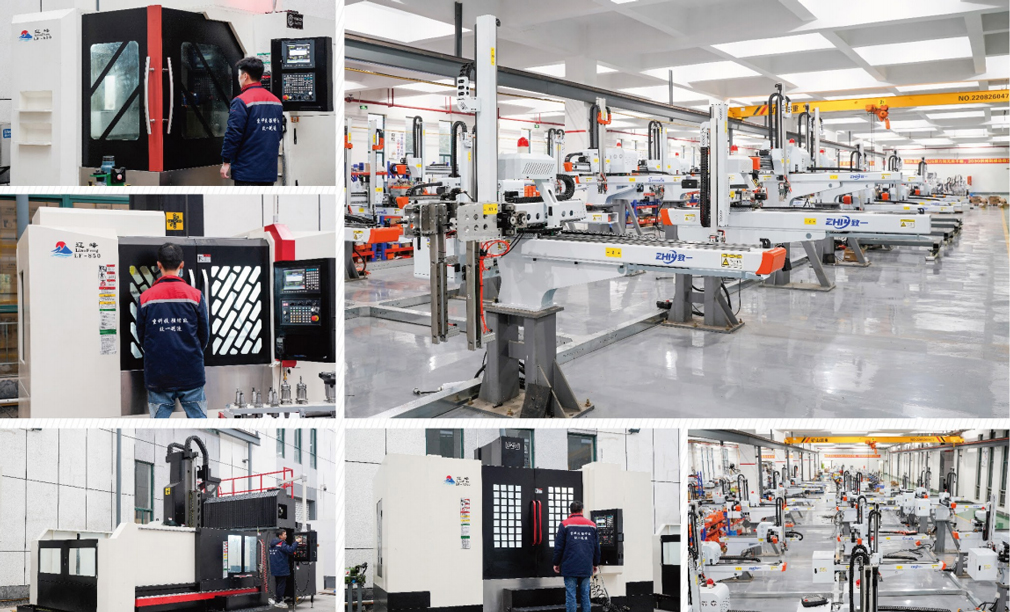
In the automated workflow of modern factories, servo robots undertake key tasks such as material handling, precision assembly, and quality inspection. Their performance directly determines the efficiency of the production line and the product qualification rate. Data shows that production lines equipped with servo robots can achieve equipment utilization rates exceeding 90%, far surpassing the 60% of manual operation, while controlling production errors within the micrometer range. Essentially, servo robots are no longer simply replacements for manual tools, but rather "terminal nodes" with data interaction capabilities in intelligent manufacturing networks.
III. Three-Axis vs. Five-Axis Servo Robots: Technological Differences and Application Boundaries
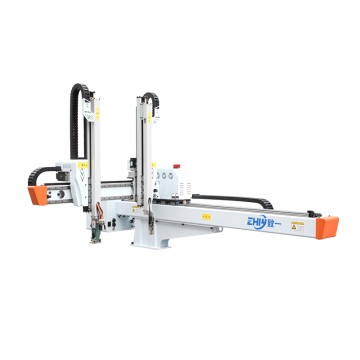
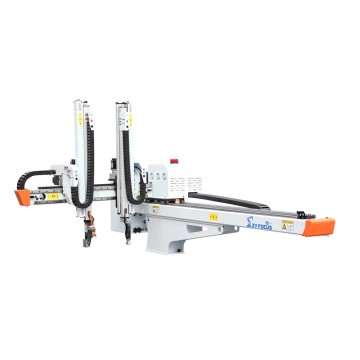
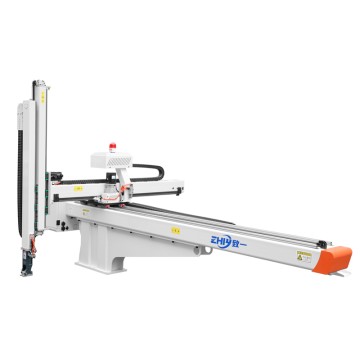
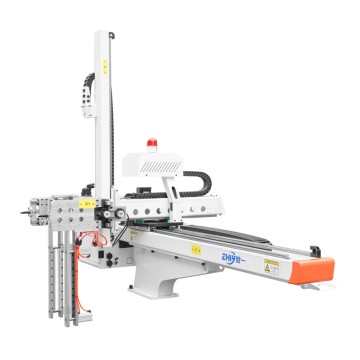
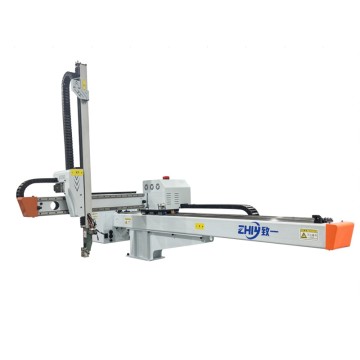
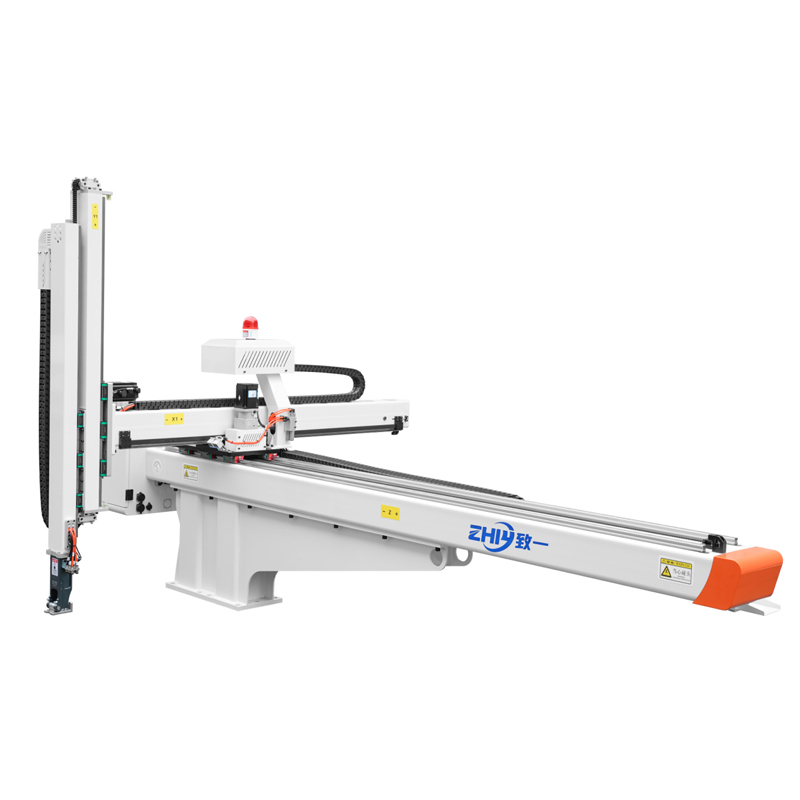
The core difference between three-axis and five-axis servo robots lies in their degrees of freedom and drive methods, which directly determine their application scenarios. Three-Axis Robots are mostly single-arm, double-section structures, employing a hybrid pneumatic and electric drive system, equipped with imported pneumatic components and speed-multiplying mechanisms. They are characterized by light weight, low friction, and fast response. Their core advantage lies in completing simple, repetitive linear operations, such as removing injection-molded parts and sorting materials. Due to their relatively simple structure, three-axis robots have lower procurement and maintenance costs, making them suitable for large-scale production scenarios with low operational complexity requirements.
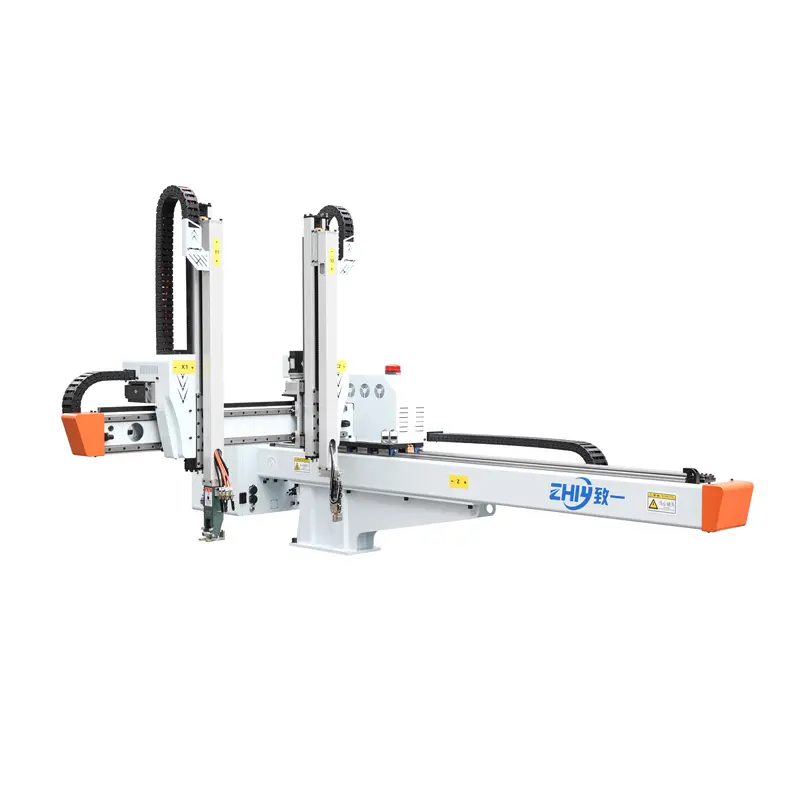
Five-axis servo robots, on the other hand, utilize fully electric servo drives and feature a dual-structure design with a main arm and auxiliary arm. Five servo motors control traversing, lifting, and pulling movements, and some high-tonnage models also include a gripper rotation motor, achieving greater flexibility in spatial movement. This full servo drive system enables breakthroughs in precision and load capacity, achieving a repeatability accuracy of ±0.02mm, and allowing for precision operations such as multi-angle flipping and complex assembly. Compared to three-axis models, five-axis robots offer greater adaptability, compatible with high-speed punch presses, precision Injection Molding Machines, and other equipment, making them particularly suitable for the rapid removal of thin-walled molded products and the assembly of precision electronic components.
The choice between the two is not simply a comparison of performance superiority or inferiority, but rather a precise match based on production needs: when the production line primarily operates on a standardized, high-speed cycle, three-axis robots offer the best value; when facing flexible production demands for diverse products and high precision, five-axis robots play an irreplaceable role.
IV. Core Value Reconstruction: How Servo Technology Enhances Factory Competitiveness
The value enhancement of servo robotic arms for smart factories is reflected in four dimensions: efficiency, cost, quality, and safety, forming a complete competitiveness reconstruction system. In terms of efficiency improvement, the millisecond-level response speed of servo robotic arms perfectly matches high-speed production equipment, shortening the production cycle of processes such as stamping and injection molding by 20%-40%, and increasing capacity by 10%-30% in some scenarios. Its 24/7 uninterrupted operation capability breaks through the time limitations of manual operation, significantly improving equipment utilization.
In terms of cost control, one standard servo robotic arm can replace 2-3 operators. Based on a three-shift system, this can reduce labor costs by 6-8 people annually, and the equipment investment payback period can typically be controlled within 1-2 years. Simultaneously, servo drives are more than 30% more energy-efficient than traditional hydraulic drives, and with intelligent standby modes, energy consumption can be further reduced; while precise motion control increases material utilization by 2%-5%, reducing waste.
In terms of quality assurance, the stable operation of servo robotic arms fundamentally eliminates interference factors such as human emotions and fatigue during manual operation, increasing the product qualification rate to over 99.9%. Its micron-level positioning accuracy ensures the consistency of the manufacturing process for every product, making it particularly suitable for the production of precision parts such as electronic connectors and micro-motor housings. Regarding safety protection, modern servo robotic arms are equipped with multiple devices including safety light curtains, overload protection, and emergency stop mechanisms. Physical isolation allows for separate human-machine operation, completely avoiding the safety risks of hazardous processes such as stamping and injection molding.
V. Diverse Application Scenarios: Covering the Entire Industry from Automotive to Medical
The versatility and adaptability of servo robotic arms enable their deep application in smart factories across multiple industries, becoming a cross-domain automation solution. In the automotive manufacturing sector, five-axis servo robotic arms undertake key tasks such as body welding and parts assembly. Their multi-degree-of-freedom motion capabilities enable precise operation on complex curved surfaces. Combined with vision-guided technology, they can complete the precise positioning and installation of engine blocks with an error controlled within 0.1mm.
The electronics industry is one of the core application scenarios for servo robots. Three-axis robots are used for high-speed transfer and sorting of circuit boards, while five-axis robots are responsible for precision operations such as chip packaging and electronic component soldering. Due to their full servo drive, the operating noise of these robots is controlled below 70 decibels, avoiding the air pollution problems associated with pneumatic equipment and meeting the clean production requirements of electronics workshops. In 3C product manufacturing, their rapid pick-and-place capabilities reduce the removal time of thin-walled molded parts to less than 0.5 seconds, significantly improving production efficiency.
Medical equipment manufacturing has extremely high requirements for precision and cleanliness. Five-axis servo robots, through special sealing designs and corrosion-resistant materials, can complete the assembly and testing of surgical instruments in sterile workshops. Their force control technology can precisely control the gripping force, avoiding damage to precision medical components. In the food and daily chemical industries, three-axis servo robots, with their oil-resistant and easy-to-clean characteristics, undertake tasks such as packaging, sorting, and palletizing. Combined with food-grade grippers, they achieve fully contactless operations, meeting food safety standards.
VI. Smart Factory Selection Guide: Decision-Making Logic Based on Needs
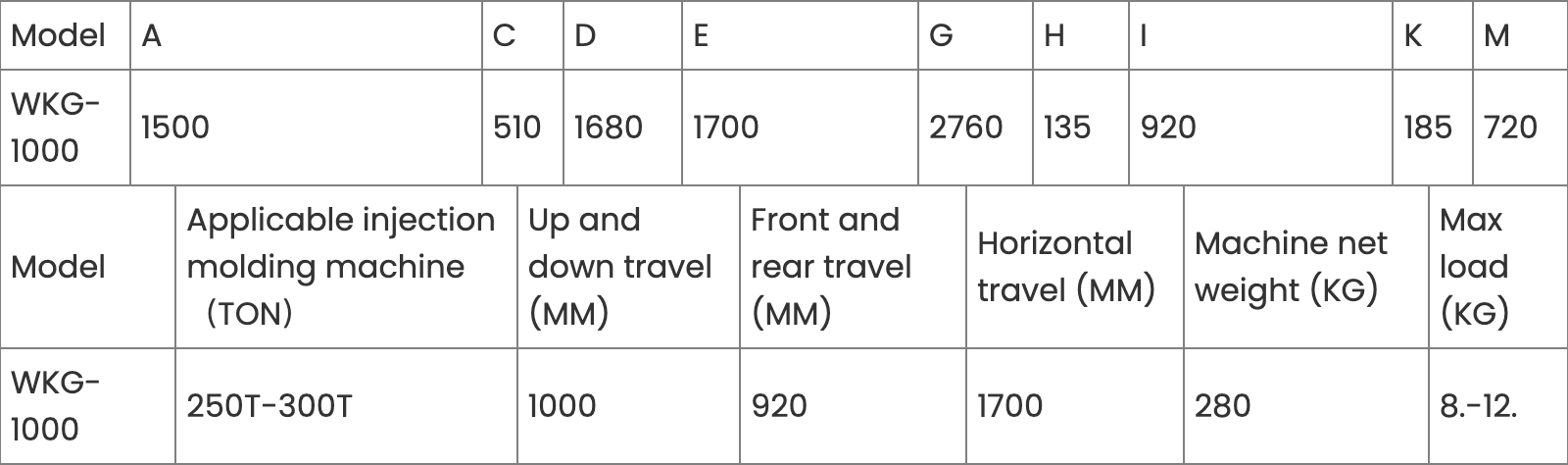
When selecting servo robotic arms for smart factories, a "demand-oriented" decision-making logic must be established to avoid blindly pursuing high-performance parameters. First, core production parameters should be clearly defined: for operations requiring accuracy above ±0.1mm and complex spatial movements, a five-axis full-servo model should be prioritized; for simple linear operations with stable cycle times, a three-axis robotic arm offers better cost-effectiveness. Load capacity should also be considered during selection. Generally, the electronics industry often uses 5-10kg load models, while the automotive industry requires models with a load capacity of 50kg or more.
Second, integration compatibility must be evaluated. High-quality servo robotic arms should support mainstream industrial communication protocols such as PROFIBUS and Ethernet, enabling seamless integration with the factory's MES and ERP systems for real-time data interaction and remote monitoring. Under flexible production requirements, the programming flexibility of the robotic arm should also be considered. Models supporting multiple fixed modes and self-editing modes can adapt more quickly to product changeover needs.
Total lifecycle cost is a crucial factor in product selection. Besides procurement costs, ease of maintenance is also essential – modular designs and universally compatible wear parts reduce ongoing maintenance costs; products with a mean time between failures (MTBF) exceeding 10,000 hours minimize downtime losses. Finally, safety and compliance are paramount; products must meet international safety standards such as ISO 10218 to ensure compliant use in factories across different countries and regions.
VII. The Future is Here: The Intelligent Upgrade Direction of Servo Robots
With the development of artificial intelligence and IoT technologies, servo robots are upgrading towards greater intelligence, collaboration, and efficiency. The integration of AI vision guidance technology is a significant trend. By incorporating high-definition cameras and intelligent algorithms, robots can achieve real-time compensation of incoming material positions and online detection of product defects, eliminating the need for manual pre-setting of positioning benchmarks and adapting to the demands of flexible production.
Breakthroughs in force control technology will further expand application boundaries. Servo robots integrating force/torque sensors can detect subtle changes in contact force, enabling complex tasks requiring force feedback, such as precision assembly and deburring, and even non-destructive gripping of semiconductor chips. The application of digital twin technology is revolutionizing robot operation and maintenance. By building virtual simulation models, operational status monitoring, fault warnings, and remote debugging can be achieved, reducing maintenance response time by more than 50%.
Collaborative development is also emerging as a new direction. Future servo robots will possess more accurate collision detection capabilities, allowing them to work collaboratively with humans without physical isolation, retaining automation efficiency while maintaining the flexibility of manual operation. Simultaneously, modular design will be further refined, enabling multi-task switching from handling and assembly to inspection through rapid interchange of grippers and end effectors, truly becoming "all-rounders" in smart factories.
Conclusion
Servo robots have evolved from simple production tools into the core infrastructure of smart factories. Whether it's the high efficiency and stability of three-axis models or the flexibility and precision of five-axis models, the essence lies in achieving a dual improvement in production efficiency and quality through technological innovation. In the global wave of intelligent transformation in manufacturing, choosing the right servo robot is not only a necessity for production upgrades but also a key to building future competitiveness. With continuous technological iteration, servo robots will undoubtedly create value in more fields, propelling smart factories to new heights.
Axis Of Robot#Robot Eoat#3 Axis Cartesian Robot#Sprue Pickers#Robots From Robots#Robots For Robots
Website:https://www.zhiyirobotics.com/
Email:sales@zhiyirobotics.com