Service Life of Injection Molding Machine Servo Manipulators: Influencing Factors and Extension Strategies
In the highly competitive global manufacturing landscape, injection molding servo robots have become indispensable core equipment for improving production efficiency, reducing labor costs, and ensuring product consistency. For manufacturers, the service life of
injection molding servo robots directly affects production continuity, investment return rates, and long-term operational costs. How to maximize the service life of the equipment while maintaining stable performance has become a key concern for Europe and America procurement managers and production directors. This article will deeply analyze the core factors affecting the service life of injection molding servo robots and share practical extension strategies, combined with international industry standards and ZHIYI Robotics' technical experience.
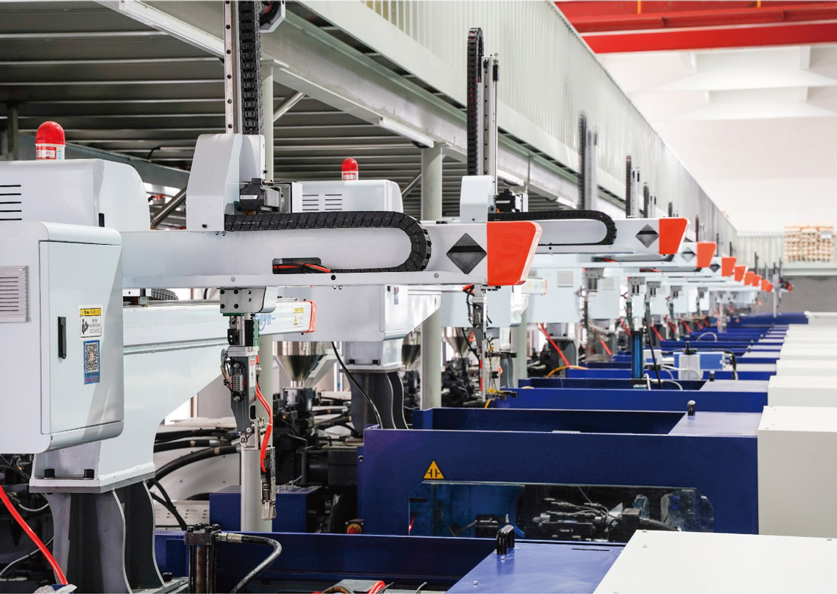
The service life of injection molding servo robots (usually 8-12 years under normal use and maintenance) is not a fixed value, but is jointly determined by four key factors: equipment quality, operational specifications, environmental conditions, and maintenance frequency.
The initial quality of the robot is the prerequisite for a long service life, which is directly related to the selection of core components, manufacturing precision, and compliance with international standards.
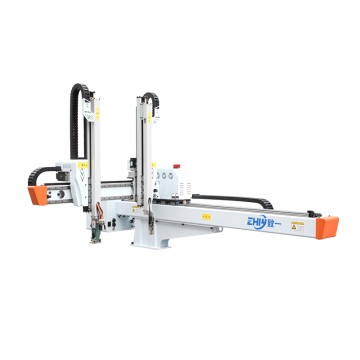
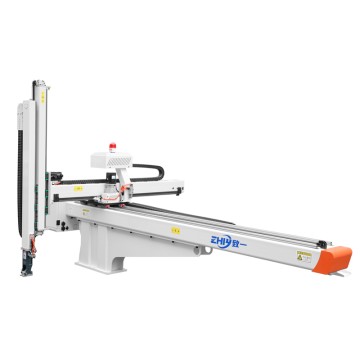
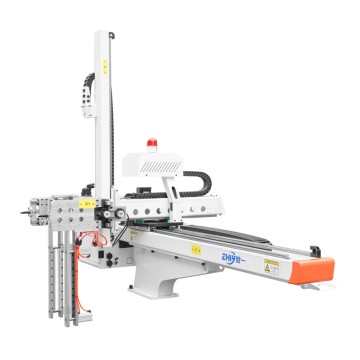
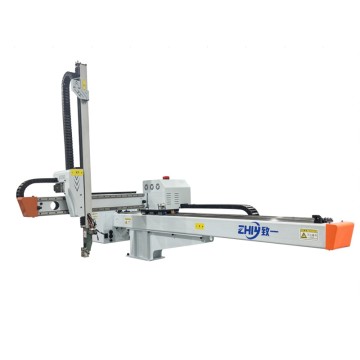
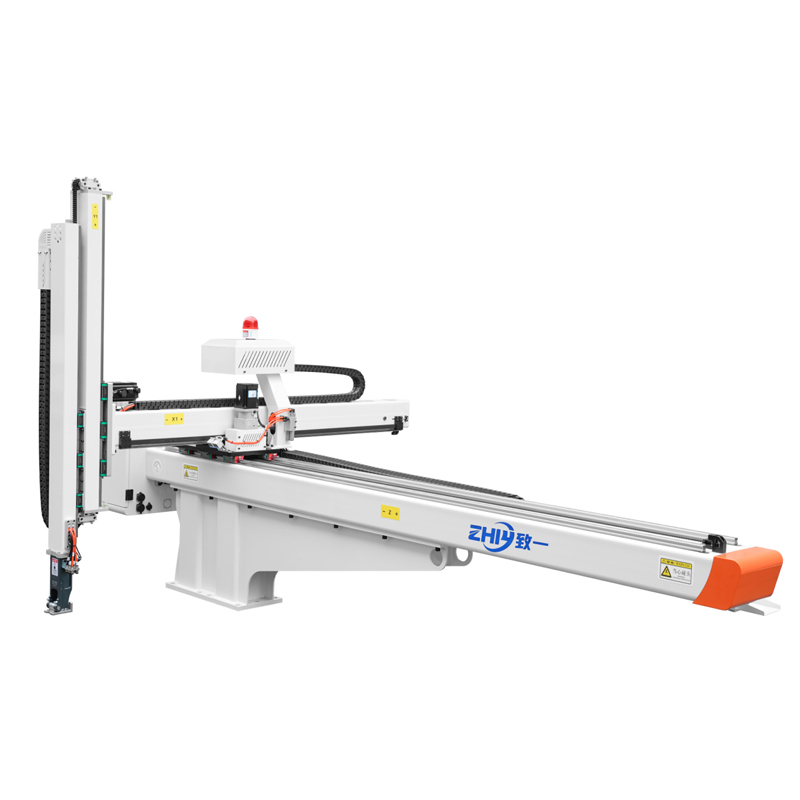
- Core component configuration: High-quality servo motors, precision reducers, and sensors can withstand long-term high-intensity operations. For example, ZHIYI's Bull Head 3-Axis Servo Robotic Arm adopts internationally renowned brand components, with a maximum load of 50kg that meets the needs of heavy-load operations while ensuring stable operation.
- Compliance with international certifications: Products that have passed ISO9001 quality management system certification and CE safety certification (such as ZHIYI's full range of injection molding servo robots) undergo rigorous durability testing before leaving the factory, and their service life is 20-30% longer than that of non-certified products on average.
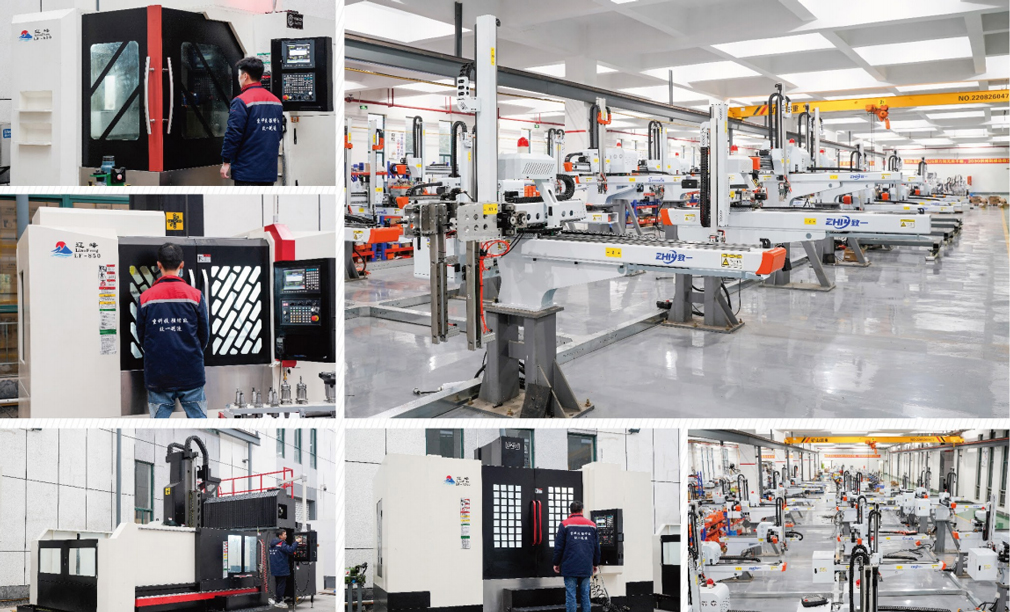
- Customized design: Tailor-made solutions according to the actual production needs of customers can avoid mismatches between equipment performance and production tasks (such as overload operation caused by insufficient load capacity), thereby extending service life. ZHIYI has accumulated more than 500 project cases, providing customized welding, inlay, and handling solutions for global manufacturers.
Improper operation is one of the main reasons for the shortened service life of servo robots, especially the following two types of behaviors:
- Overload operation: Exceeding the rated load of the robot for a long time will cause excessive wear on the servo motor and transmission mechanism, and even irreversible damage. It is crucial to strictly follow the equipment manual to formulate picking and placing tasks.
- Irregular start-stop and speed changes: Frequent sudden start-stop, rapid acceleration, and deceleration will increase the impact force on the mechanical structure and electrical components. Operators should maintain a stable operation rhythm and avoid violent operations.
The operating environment of injection molding workshops has a significant impact on the service life of servo robots, and key control indicators include:
- Temperature and humidity: The optimal operating temperature range for servo robots is 0-45℃, and the relative humidity should be controlled between 30%-70%. Excessively high temperature will accelerate the aging of electrical components, while excessive humidity may cause short circuits in the control system.
- Dust and corrosion: Dust in the workshop (especially plastic particles and metal debris) will enter the transmission mechanism and affect the lubrication effect, leading to increased friction. For workshops with corrosive gases (such as chemical auxiliary volatilization), it is necessary to install protective covers for robots.
Regular maintenance is the key to extending the service life of injection molding servo robots. Neglecting maintenance will make small faults accumulate into major problems, and the service life may be shortened by 30-50%.
Based on ZHIYI Robotics' technical experience in serving global SMEs and large manufacturing enterprises, the following four strategies can effectively extend the service life of injection molding servo robots.
Establish a three-level maintenance system combining daily inspection, monthly maintenance, and annual overhauls:
- Daily inspection (before starting work): Check whether the robot's movement is smooth, whether there is abnormal noise, whether the cable is damaged, and whether the lubricating oil level is normal;
- Monthly maintenance: Clean the surface and internal dust of the robot, replace the lubricating oil of the transmission mechanism, calibrate the precision of the servo motor, and test the sensitivity of the sensor;
- Annual overhaul: Conduct a comprehensive inspection of core components (such as servo motors, reducers, and control systems), replace aging parts (such as seals and cables), and conduct overall performance testing and debugging.
- Match the robot model according to production needs: Select a robot with a rated load 10-20% higher than the actual working load to avoid long-term operation at the load limit. For example, if the actual handling weight is 30kg, choosing ZHIYI's Bull Head 3-Axis Servo Robotic Arm with a maximum load of 50kg can effectively reduce equipment wear.
- Monitor load in real time: Use the intelligent monitoring system of the robot to set overload alarms. Once the load exceeds the limit, the equipment will automatically stop to avoid damage.
- Install environmental control equipment: Equip the workshop with air conditioning, dehumidifiers, or exhaust fans to maintain a stable temperature and humidity environment;
- Add protective measures: Install dust covers for the robot's transmission parts and control box, and regularly clean the heat dissipation holes to ensure heat dissipation efficiency;
- Isolate harmful factors: Keep the robot away from injection molding machines with high temperature and corrosive material storage areas.
Professional operation and maintenance skills can significantly reduce equipment failures caused by human error. ZHIYI Robotics provides on-site training services for global customers, covering equipment operation specifications, daily maintenance points, and common fault handling methods. Through systematic training, operators can master the correct use methods, such as avoiding improper speed adjustment and overload operation, and timely discover potential problems during daily inspections.
In addition to overall maintenance, timely replacement of worn components is also an important part of extending the service life of the robot. The following is the reference replacement cycle of key components of injection molding servo robots (adjusted according to actual operating intensity and environment):
- Servo motor: 5-8 years. If abnormal noise, reduced power, or unstable speed occurs, it should be inspected and replaced in advance;
- Precision reducer: 3-5 years. Pay attention to the lubrication status during use. If oil leakage or increased backlash is found, replace it in time;
- Sensor: 2-4 years. Regularly calibrate the sensor accuracy. If the detection error exceeds the standard, replace it immediately;
- Cable and connector: 3-6 years. Check for aging, cracking, or poor contact, and replace in time to avoid electrical failures;
- Lubricating oil: Replace every 3-6 months (or according to the operating hours specified in the manual) to ensure the lubrication effect of the transmission mechanism.
The service life of injection molding servo robots is not only related to use and maintenance but also closely linked to the supplier's technical strength and after-sales support. When choosing a supplier, 欧美 procurement managers should focus on the following points:
- Compliance with international standards: Prioritize suppliers whose products have passed ISO9001 and CE certifications to ensure product quality and safety compliance;
- Customized R&D capabilities: Suppliers that can provide customized solutions according to production needs can avoid equipment mismatches and reduce unnecessary wear;
- Global after-sales support: 24/7 pre-sales consultation and after-sales technical support (such as ZHIYI Robotics' global service network) can solve maintenance problems in a timely manner and avoid prolonged production downtime;
- Technical experience accumulation: Suppliers with rich project cases (such as ZHIYI's more than 500 global project cases) have in-depth understanding of the service life needs of different industries and can provide targeted optimization suggestions.
The service life of injection molding servo robots is a comprehensive result of equipment quality, operational specifications, environmental management, and maintenance frequency. For global manufacturers, maximizing the service life of servo robots is not only a way to reduce costs but also a key to improving production stability and market competitiveness. By choosing high-quality equipment that meets international standards (such as
ZHIYI's injection molding servo robots), formulating scientific maintenance plans, and standardizing operational behaviors, enterprises can extend the service life of robots to 10 years or more, thereby reducing investment costs and improving long-term operational benefits.
Website:https://www.zhiyirobotics.com/
Email:sales@zhiyirobotics.com