
Leave Your Message
Russian Injection Molding Market: The Optimal Alternative for Three-Axis Servo Robots After Western Brand Withdrawal
Russian Injection Molding Market: The Optimal Alternative for Three-Axis Servo Robots After Western Brand Withdrawal
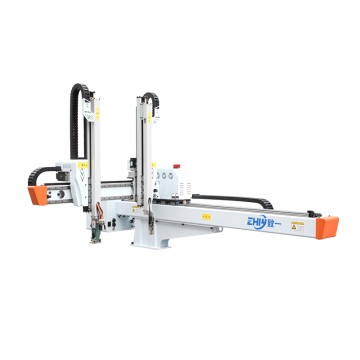
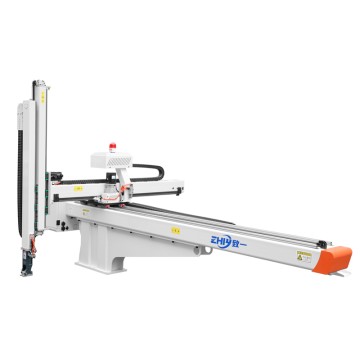
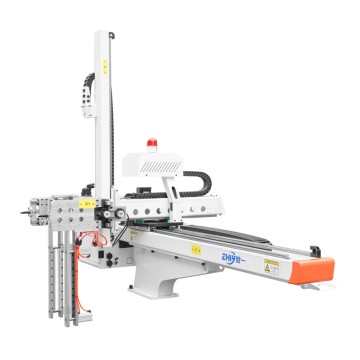
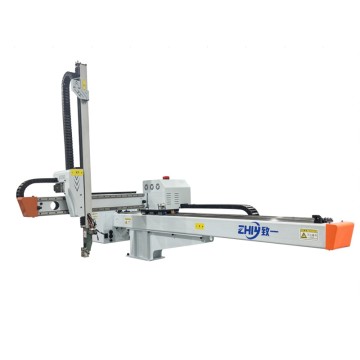
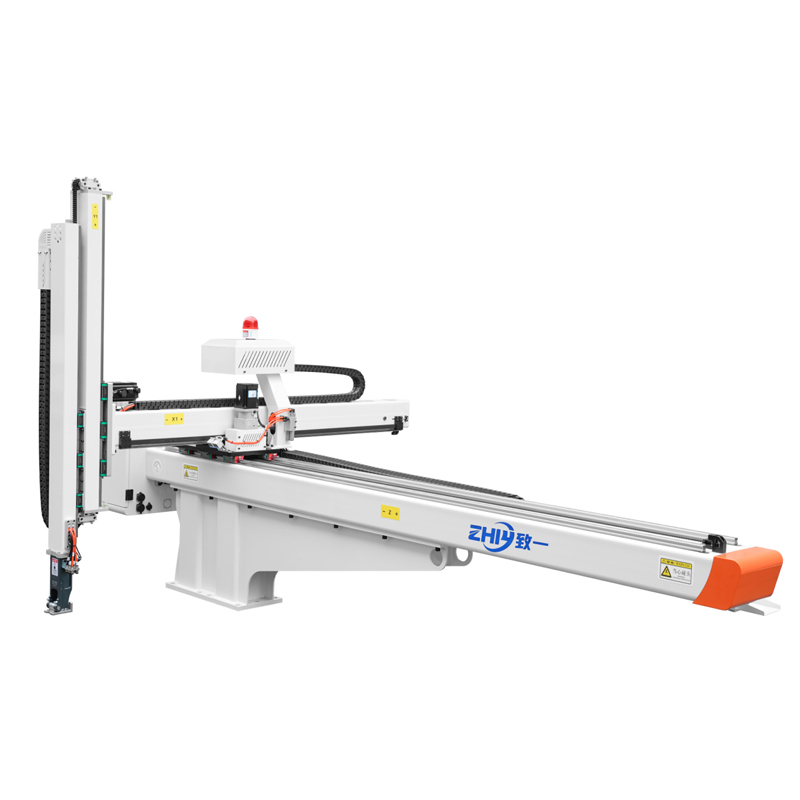
Amidst the global restructuring of injection molding automation, the Russian market is undergoing a critical transformation. With Western brands gradually withdrawing due to sanctions, the demand gap for domestic plastic machinery continues to widen. Three-axis Injection Molding Machine servo robots, with their high adaptability, cost-effectiveness, and mature technology, have become a core alternative to fill this market gap, providing stable production support for injection molding companies in the Russian construction, automotive, and consumer electronics industries.
I. Current Status and Pain Points of the Russian Injection Molding Market
Russia is a major global consumer market for plastics, with construction, automotive, consumer electronics, and packaging forming the core demand scenarios for plastic machinery. With accelerated urbanization and upgrading consumer demands, the plastics industry has become one of the fastest-growing sectors in Russia, leading to a continuous increase in demand for injection molding automation equipment.
Key Market Pain Points
Insufficient Domestic Supply: The number of domestic plastic machinery manufacturers in Russia is small, and their technological accumulation is weak, resulting in a long-term reliance on imports for injection molding machines and related automation equipment.
Supply Disruptions from the West: After 2022, major European and American plastics machinery manufacturers successively reduced production or withdrew from the Russian market, leading to a disruption in the supply of high-end automated equipment and difficulties in equipment maintenance and spare parts replacement.
Import Structure Restructuring: Russia has significantly increased its imports of plastics machinery from China and other regions. In the first half of 2023, imports of plastics machinery from China surged by 108.95% year-on-year, reaching US$119 million, indicating a clear demand for substitution.
Urgent Upgrade Needs: Approximately 50% of Russian plastics-related enterprises plan to upgrade their equipment within the next 2-3 years, creating a strong demand for highly stable and easy-to-operate automation solutions.
II. The Core Logic Behind Three-Axis Servo Robots as an Alternative Solution
Among varioUs Robot types such as single-axis, three-axis, and five-axis, the three-axis servo robot has become the preferred alternative in the Russian market primarily due to its precise adaptability to local production scenarios, rather than simply its cost advantage.
1. Functional Adaptability: Covering Mainstream Injection Molding Production Needs
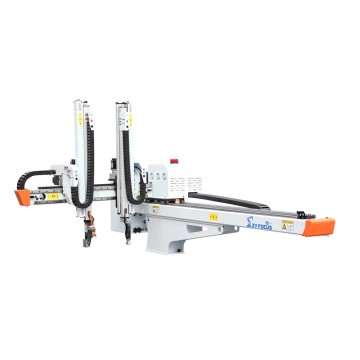
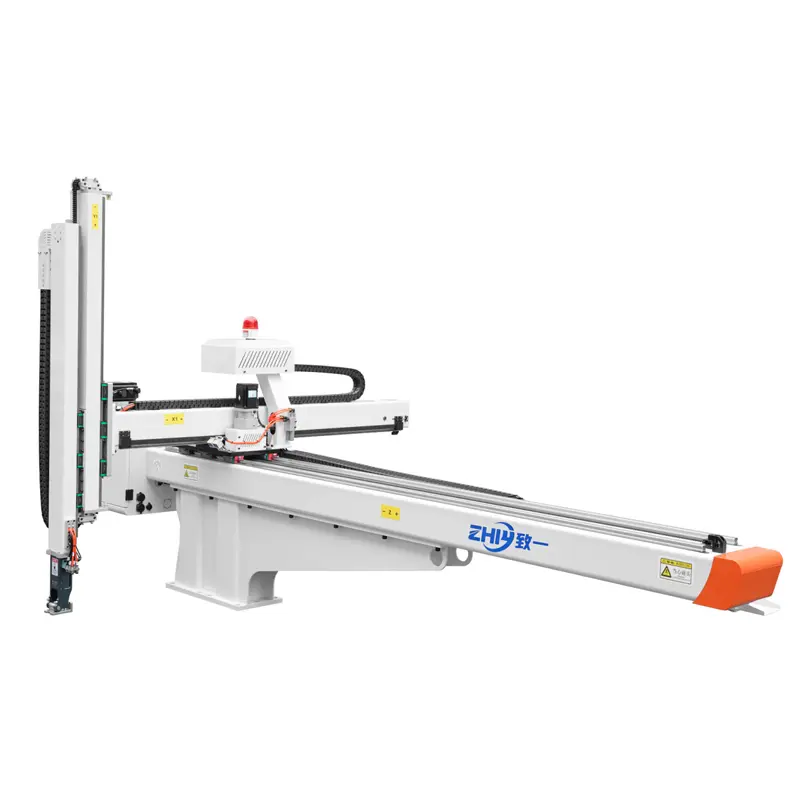
The three-axis robot, through X (lateral), Y (forward/backward), and Z (height) three-dimensional linear motion, can efficiently complete core processes such as plastic part picking, unloading, and simple stacking, fully matching the operating scenarios of mainstream horizontal/vertical injection molding machines in the Russian market. For single-process production of conventional plastic parts such as shells and sheets, its ±0.1~±0.2mm repeatability accuracy meets quality requirements and is on par with similar products from Western brands.
2. Advantages in Balancing Cost and Efficiency
The global injection molding machine Robot Market is projected to reach $560 million by 2032, with three-axis products holding a significant share due to their cost-effectiveness. Compared to five-axis robots, three-axis equipment reduces procurement costs by 30%-50% and eliminates the need for complex rotary axis adjustments, helping Russian companies quickly restore production capacity while controlling investment. Furthermore, its fully servo-driven main arm design enables high-speed part picking, meeting the efficiency requirements of mass production.
3. Installation and Maintenance: Adapting to the Russian Industrial Base
Some Russian injection molding companies have limited workshop space and small technical maintenance teams. The installation and commissioning characteristics of three-axis robotic arms perfectly suit this situation: installation requires only 4 fixed points, normal operation is possible with a levelness error ≤0.5mm/m, and there are few pneumatic and electrical interfaces, simplifying wiring. Furthermore, the equipment has a simple structure and highly interchangeable spare parts, reducing the difficulty and cost of later maintenance and solving the problem of spare parts shortages after Western brands withdraw from the market.
III. Key Considerations for Adapting Three-Axis Servo Robots to the Russian Market
To become a stable alternative, three-axis robotic arms must meet the compliance requirements of the Russian market and be suitable for localized application scenarios. This is also a core consideration in procurement decisions.
1. Compliance Certification: EAC Certification is a Prerequisite for Market Access
Russia mandates EAC certification (formerly GOST-R certification) for industrial machinery. Three-axis robotic arms must meet the core requirements of the Customs Union Technical Regulations (TR CU):
Comply with TR CU 010/2011 "Safety of Machinery" and TR CU 020/2011 "Electromagnetic Compatibility" standards;
Provide a notarized technical passport, risk analysis report, and BOM (Bill of Materials) in Russian or with a notarized translation;
Noise limits must be ≤85dB, meeting the requirements of GOST 12.1.003.
Equipment with EAC certification can clear customs smoothly and enjoy tariff preferences under the Eurasian Economic Union (EAEU).
2. Precise Matching of Application Scenarios
Targeting the core needs of the Russian injection molding industry, three-axis servo robots can be specifically adapted to:
Automotive parts production: Adapted for picking up and unloading large plastic parts such as bumpers and interior components, matching the conventional operation process of horizontal injection molding machines;
Packaging industry: Meets the high-speed picking requirements for mass production of plastic films and containers, improving production line cycle time;
Construction plastic parts: Adapted for the automated production of simple plastic parts such as pipes and profiles, reducing reliance on manual labor.
3. Technological Upgrade Compatibility
As Russian injection molding companies transform towards intelligent manufacturing, high-quality three-axis robots need to have technological expansion capabilities: supporting integration with MES systems, reserving data acquisition interfaces, and adapting to the intelligent upgrade needs of future factories; some high-end models are also compatible with vision recognition modules to meet high-precision picking scenarios, achieving flexible configuration of "basic functions sufficient, upgraded functions optional".
IV. Future Trends of Alternative Solutions in the Russian Injection Molding Market
The global market for dedicated injection molding machine robots is continuing to grow at a CAGR of 3.6%-3.7%, and the demand for alternatives in the Russian market will be further released. For Russian injection molding companies seeking stable alternatives, the core value of three-axis servo robots will focus on three points: first, supply chain stability, choosing brands with global supply capabilities to ensure a continuous supply of spare parts; second, customized adaptation, adjusting equipment parameters according to the injection molding machine tonnage and the type of plastic parts; and third, full-cycle service, including installation guidance, operation training, and remote maintenance support.