Leave Your Message
Purchasing Servo Manipulators: Key Factors in Supplier Evaluation and Screening
Purchasing Servo Manipulators: Key Factors in Supplier Evaluation and Screening
For buyers, servo manipulators, as core equipment in industrial automation production, have a crucial impact on downstream customers' production efficiency and cost control due to their quality, performance, and supply chain stability. In the global market, there are numerous servo manipulator suppliers, but their qualifications and capabilities vary widely. Accurately evaluating and selecting high-quality suppliers that meet long-term partnership requirements is a crucial step in purchasing decisions. This article will analyze the key factors in evaluating servo manipulator suppliers based on five core dimensions: technical strength, production capacity, quality control, service system, and partnership flexibility. This provides buyers with a systematic screening framework to help mitigate procurement risks and enhance supply chain competitiveness.
First, Technical Strength: Assessing the Supplier's "Core Competitiveness"
The technical content of servo manipulators directly affects the equipment's accuracy, speed, stability, and adaptability, and the supplier's technical strength is fundamental to ensuring product performance. Wholesale buyers should focus on the following three aspects when evaluating:
1. Independent R&D Capabilities for Core Technologies
High-quality suppliers should possess independent R&D capabilities for servo systems, control systems, and mechanical structure design, rather than simply relying on externally sourced core components for assembly. Verification can be achieved through the following methods:
Check whether the supplier possesses patented technologies (such as servo motor optimization algorithms, motion trajectory planning technology, and multi-axis coordinated control technology), and understand the proportion of patents used in actual products;
Inquire about the size and composition of the R&D team (such as the number and experience of mechanical engineers, electronic engineers, and software algorithm engineers), as well as the average annual R&D investment (typically, high-quality suppliers invest at least 8%-12% of annual revenue);
Investigate the speed of product technology iteration, such as whether the product can quickly launch customized models adapted to different scenarios based on industry needs (such as 3C electronics, automotive manufacturing, and medical devices), and whether the product supports technology upgrades (such as the later addition of vision positioning systems or force control sensors).
2. Product Performance Parameters and Industry Compatibility
Different industries have significantly different requirements for servo manipulators (e.g., automotive welding requires high loads, 3C assembly requires high precision). The supplier's product portfolio and industry experience directly determine the feasibility of cooperation:
Focus on core performance parameters: repeatability (should be ≤±0.02mm, ≤±0.005mm for high-precision applications), maximum load (must cover the mainstream needs of the buyer's downstream customers, e.g., 5kg-500kg), operating speed (maximum no-load speed and speed decay rate under load), and service life (key components such as guide rails and lead screws should have a design life of ≥10,000 hours).
Verify industry application cases: Prioritize suppliers with proven case studies in the buyer's target industries (e.g., new energy battery assembly, food packaging). Request customer usage reports (e.g., equipment failure rates, production efficiency improvement data), and conduct on-site inspections of benchmark customer scenarios.
Test customization capabilities: Wholesale buyers often need to provide differentiated products for different customers. Suppliers must be able to quickly respond to customization requests, for example, whether they can deliver a complete product within 30-60 days. The process from design to prototype delivery can be completed within 10 days, with manageable customization costs (typically, the premium for customized models does not exceed 20% of the standard model).
3. Technical Compliance and Industry Certifications
The global market has strict compliance requirements for industrial equipment, and suppliers' product certifications directly impact buyers' export risks:
Required international certifications: EU CE certification (EMC, LVD), US UL certification, ISO 9001 quality management system certification, and ISO 14001 environmental management system certification;
Industry-specific certifications: Certifications for specific fields (such as ISO 13485 for medical devices and ATEX for explosion-proof applications) must be verified based on the buyer's target market and application scenarios;
Environmental and Safety Standards: Focus on product compliance with the RoHS 2.0 environmental directive (restriction of hazardous substances) and the inclusion of safety features (such as emergency stop buttons and safety light curtain interfaces) to avoid shipment delays or returns due to compliance issues.
Second, Production Capacity: Ensuring the "Stability Bottom Line" of the Supply Chain
Buyers' core requirements are "volume, on-time, and stable" supply. Suppliers' production scale, capacity reserves, and supply chain management capabilities are key to avoiding order delays and supply disruptions. The following dimensions should be considered during the evaluation:
1. Production Scale and Capacity Reserves
The scale and capacity ceiling of a supplier's production base determine their ability to handle large orders and cope with demand fluctuations.
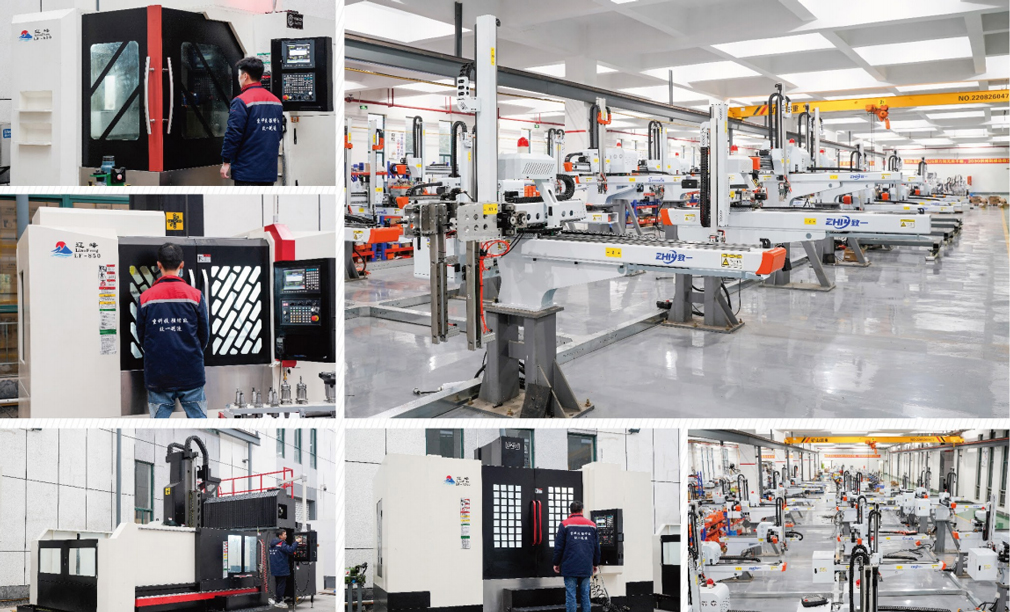
Investigate the production base configuration: the area of the owned production base (should be ≥5,000 m2; large suppliers typically have plants exceeding 10,000 m2), the number of production lines (≥3 for standard models and ≥1 for customized models), and the degree of automation of key production equipment (such as CNC machining centers, laser cutting machines, and servo motor test benches) (the automation rate should be ≥60% to ensure machining accuracy and consistency).
Verify production capacity data: Require suppliers to provide actual production capacity for the past 12 months (e.g., 500 standard models and 100 customized models per month), capacity utilization (normally maintained at 70%-80%, with 20%-30% reserved for emergency orders), and peak capacity (e.g., whether capacity can be increased within one month during peak season or for urgent orders). 50%);
Confirm inventory reserves: Understand suppliers' safety stock levels for core components (such as servo motors, controllers, and guide rails) (which should cover 30-60 days of production demand) and whether long-term supply agreements have been signed with core component suppliers (such as Panasonic, Mitsubishi, and THK) to prevent production halts due to upstream supply disruptions.
2. Production Cycle and Delivery Efficiency
For buyers, delivery cycle directly impacts cash flow and customer satisfaction. Therefore, it's crucial to assess suppliers' production efficiency and logistics capabilities:
Standard Model Delivery Cycle: High-quality suppliers should have standard models in stock covering over 80% of mainstream models. Production cycles for models not in stock should be 15-20 days or less.
Custom Model Delivery Cycle: The cycle from proposal confirmation to mass delivery should be 45-60 days or less, with clear timelines for each stage (e.g., 7 days for design, 30 days for production, 5 days for testing, and 3 days for logistics). A delivery delay compensation agreement must be signed (typically, a 0.5%-1% compensation for each day's delay is 0.5%-1% of the order value).
Logistics and Warehousing Support: Suppliers must possess global logistics and distribution capabilities, offering a variety of shipping options, including sea, air, and land transport, and partnerships with renowned logistics companies (e.g., We should have long-term cooperation with major shipping companies (such as DHL, FedEx, and Maersk) to ensure that goods are delivered on time to all parts of the world; at the same time, we should support buyers' bonded warehousing needs (such as setting up overseas warehouses in Europe and the United States) to shorten the delivery time for downstream customers.
3. Supply Chain Management and Risk Response Capabilities
Global supply chains are subject to frequent fluctuations (such as raw material price increases and logistics disruptions). A supplier's supply chain management capabilities directly determine the stability of the partnership:
Verify the supplier's sourcing channels for core components: whether they utilize diversified sourcing (e.g., servo motors have at least two major brand suppliers) to avoid the risk of supply disruptions from a single channel;
Understand cost control and pricing mechanisms: whether they have established an early warning mechanism for raw material price fluctuations (e.g., promptly negotiate pricing adjustments with the buyer if the price of a key raw material increases by more than 10%), and whether pricing is transparent (e.g., providing a detailed breakdown of cost structures, e.g., raw materials (60%), production and processing (20%), and profit (20%));
Evaluate risk response plans: Require suppliers to provide plans for responding to supply chain disruptions (e.g., whether they have backup production bases in the event of production halts due to epidemics or natural disasters; whether they have alternative transportation routes in the event of logistics disruptions). They should also provide a track record of successfully responding to supply chain crises (e.g., whether they were able to ensure on-time delivery of more than 70% of orders during the global logistics congestion in 2022).
Third, quality control: A key line of defense for mitigating procurement risks.
Servo robots are high-value industrial equipment. Any quality issues can cause downstream customers' production lines to shut down, resulting in significant financial losses and brand risks for the purchaser. Therefore, the supplier's quality control system is a core component of the evaluation, focusing on both "full-process quality inspection" and "after-sales quality assurance":
1. Full-process quality inspection system
High-quality suppliers should establish a comprehensive quality inspection mechanism, from incoming raw materials to finished product shipment, to ensure that every device meets standards:
Incoming raw material inspection (IQC): Verify that the supplier conducts 100% unpacking inspection of core components (such as servo motors, controllers, and guide rails). Inspection items include visual inspection, performance testing (such as motor no-load current and controller response speed), and verification of certification documents. The return rate for non-conforming components should be ≤ 0.5%;
In-process quality inspection (IPQC): Set up quality inspection nodes at key production stages (such as mechanical assembly, circuit welding, and software debugging). The sampling rate at each node should be ≥ 10%, and automated testing equipment (such as laser interferometers for positioning accuracy and vibration meters for operational stability) should be used to minimize manual inspection errors;
Outgoing finished product inspection (OQC): Each device undergoes a full performance test before shipment, including continuous operation for 24 hours. The factory inspection report can only be issued after the product passes the following tests: 100% trouble-free operation, load test (8 hours operation at maximum load), and environmental adaptability test (such as operational stability at high temperature of 40°C and low temperature of -10°C). The pass rate must reach 100%.
2. Quality Issue Handling and Traceability
Even high-quality suppliers may occasionally encounter quality issues. Their handling efficiency and traceability directly impact the buyer's loss control:
Quality Issue Response Speed: Suppliers are required to commit to responding to quality complaints within 24 hours and providing solutions (such as remote debugging, component replacement, or complete device return) within 48 hours. Major quality issues (such as batch failures) require on-site dispatch of engineers (arriving within 48 hours domestically and 72 hours overseas).
Product Traceability System: Suppliers must establish a comprehensive product traceability system that uses equipment serial numbers to trace back to raw material batches, production teams, inspection personnel, and factory dates. This facilitates rapid identification of the root causes of quality issues and prevents recurrence.
Quality Improvement Mechanism: Suppliers must regularly conduct quality analysis meetings, develop improvement measures (such as optimizing production processes or changing component suppliers) based on customer feedback, and provide quality improvement reports (such as monthly quality failure rates and data on the reduction in failure rates after improvements) to ensure continuous improvement in quality.
3. Warranty Policy and After-Sales Service
Servo manipulators have a long service life, and the supplier's warranty policy and after-sales service capabilities directly impact the long-term cost of using the equipment:
Warranty Period: Standard models should have a warranty period of 12-24 months or longer, while core components (such as servo motors and controllers) should have a warranty period of 36 months or longer. Suppliers with warranty periods longer than the industry average (typically 12 months) are more competitive.
After-sales Service Content: Whether free technical training (such as equipment operation and maintenance training for buyers and downstream customers) is provided; regular inspection services (such as on-site inspections every six months to identify potential faults); and backup unit support (such as the provision of free backup units during equipment maintenance to minimize customer downtime losses).
Global Service Network: For wholesale buyers, suppliers must have global after-sales service capabilities and establish service centers or authorized service providers in key target markets (such as Europe, North America, and Southeast Asia) to ensure that local customers can quickly access technical support and repair services.
Fourth, Cooperation Flexibility: A "Plus Point" for Adapting to Wholesale Purchasing Needs
Wholesale buyers' business models are characterized by bulk purchasing, differentiated needs, and long-term partnerships. Suppliers' cooperation policies and flexibility directly impact cooperation efficiency and profit margins. The following dimensions should be considered during the evaluation:
1. Purchase Volume and Pricing Strategy
The core advantage of wholesale purchasing is "bulk bargaining." The supplier's pricing strategy must meet the requirements of bulk purchasing:
Minimum Order Quantity Requirements: The minimum order quantity for standard models should be ≤10 units (to facilitate small trial orders by buyers); the minimum order quantity for customized models should be ≤5 units (to reduce the cost of trial and error in customization);
Bulk Discount Policy: Clear bulk discount tiers must be provided (e.g., 10% discount for purchases of 50 or more units, 15% discount for purchases of 100 or more units). Discounts should be higher than those offered through retail channels (typically, bulk discounts are 15%-30% below the retail price);
Long-Term Pricing: For annual framework purchases (e.g., annual orders of 1,000 or more units), suppliers should offer a locked-in price policy (e.g., price fluctuations of no more than 5% within a year) to prevent raw material price increases from increasing procurement costs.
2. Payment Methods and Account Terms
Flexible payment methods and account terms can effectively alleviate buyers' financial pressures and increase their willingness to cooperate:
Payment Methods: We support various international payment methods, including Telegraphic Transfer (T/T), Letter of Credit (L/C), and Documents Against Payment (D/P). The down payment ratio should be ≤30% (the industry's common ratio is 30% down payment + 70% final payment). The final payment can be agreed upon after the goods have been inspected and accepted.
Account Terms: For long-term and creditworthy buyers, suppliers should offer reasonable account terms (e.g., 30% down payment + 30% before shipment + 40% after inspection).
Sample Purchase Policy: We support small-volume sample purchases (e.g., 1-2 units), with sample prices no higher than 110% of the standard model. The production cycle for sample orders should be ≤7 days, allowing buyers to quickly test product performance.
3. Brand Licensing and Market Protection
Wholesale buyers often seek exclusive or regional authorization to avoid unhealthy competition. The supplier's market protection policy is crucial:
Licensing Model: Whether to provide regional exclusive agency authorization (e.g., authorizing the buyer to be the exclusive wholesaler in a country or region) or brand use authorization (allowing the buyer to use the supplier's brand on product packaging and promotional materials);
Price Protection: Suppliers should set a unified market retail price, prohibit price dumping, and protect buyers' profit margins. If they discover underpricing through other channels, they must intervene promptly and compensate buyers for their losses;
Customer Resource Protection: Suppliers should commit to not directly connect with downstream customers introduced by buyers, avoiding transactions bypassing the buyer and ensuring the buyer's exclusive access to customer resources.
Fifth: Corporate Reputation and Long-Term Partnership Potential
Servo robot procurement is a long-term partnership. The supplier's corporate reputation and development potential determine the stability and sustainability of the partnership. During the evaluation, two aspects of the company's qualifications and cooperation cases should be verified:
1. Company Qualifications and Financial Stability
The supplier's size and financial status are the foundation for long-term cooperation:
Years of Establishment: Prioritize suppliers with more than five years of establishment (they have more industry experience and are more resilient to risks), and their revenue compound growth rate over the past three years should be ≥15% (indicating a growth phase).
Financial Status: Require suppliers to provide financial statements (such as balance sheets and income statements) for the past two years. Verify their debt-to-asset ratio (should be ≤60%) and current ratio (should be ≥1.5). Avoid cooperation with companies with high financial risks.
Industry Reputation: Review the supplier's customer reviews on third-party platforms (such as Alibaba International Station and Made-in-China.com), or consult industry associations and peer buyers to determine if they have a history of negative cooperation (such as malicious delivery delays or refusal to provide after-sales repairs).
2. Long-term Cooperation Planning and Collaboration Capabilities
Quality suppliers should view buyers as partners, not simply customers, and embrace a collaborative development mindset:
Cooperation Planning: Are suppliers willing to work with buyers to develop long-term development plans (e.g., pre-positioning overseas warehouses and adjusting production capacity based on the buyer's market expansion plans)?
Technology Sharing: Are suppliers willing to provide buyers with technical training, product manuals, repair drawings, and other materials to help them enhance their technical service capabilities?
Market Support: Are suppliers willing to provide marketing support (e.g., jointly participating in industry exhibitions, providing promotional materials, and assisting in developing promotional plans) to help buyers expand into downstream markets?
Conclusion: Establish a Systematic Screening System to Achieve Win-Win Cooperation
For global wholesale buyers, selecting servo robot suppliers requires more than a single-dimensional "price comparison"; rather, it involves a systematic assessment encompassing technology, production, quality, service, and partnership flexibility. By using the five core dimensions outlined in this article (technical strength, production capacity, quality control, partnership flexibility, and corporate reputation), buyers can establish a clear screening framework, accurately identify high-quality suppliers, and mitigate procurement risks. At the same time, high-quality supplier relationships are two-way: buyers must clearly define their needs (such as target industries, batch sizes, and customization requirements) and establish transparent communication mechanisms with suppliers to jointly resolve issues arising from the collaboration....