
Leave Your Message
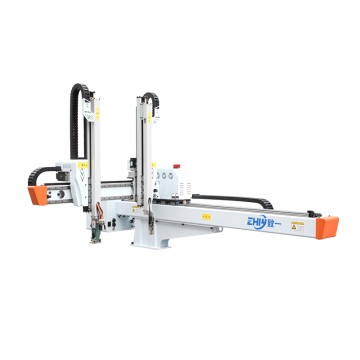
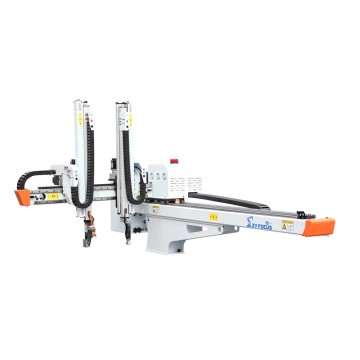
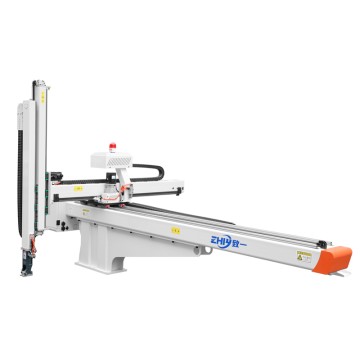
Prevention and maintenance tips for common faults of servo manipulators for injection molding machines
Prevention and maintenance tips for common faults of servo manipulators for Injection Molding Machines
Introduction
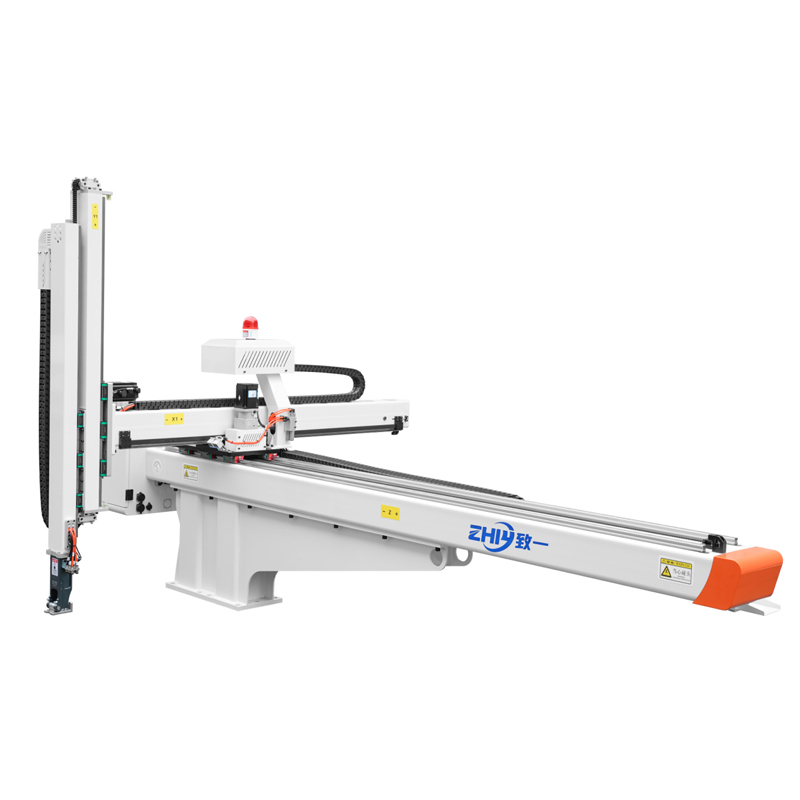
Servo manipulators for injection molding machines play a vital role in the modern plastic processing industry. Their high efficiency and precision performance greatly improve production efficiency and product quality. However, long-term high-intensity operation will inevitably lead to various faults, which will not only affect production progress, but also increase maintenance costs. This article will explore the common faults of servo manipulators for injection molding machines in depth, and share a series of practical prevention and maintenance tips to help international wholesale buyers and users ensure the stable operation of the equipment and extend its service life.
Common faults and cause analysis
Mechanical faults:
Abnormal joint movement: It may be caused by servo motor failure, reducer failure, encoder failure, or wear and loosening of transmission parts such as belts and gears.
Failure of manipulator movement: Such as cylinder leakage, solenoid valve failure, abnormal electrical control signal, sensor failure, or loose and stuck mechanical structure, etc., which may make the manipulator unable to perform normal actions.
Unstable grasping: aging, damage or air leakage of the suction cup, wear of the clamp or insufficient spring force, and decreased positioning accuracy of the manipulator will lead to unstable grasping.
Electrical failure:
Servo system alarm: Usually caused by incorrect parameter settings, motor overload, encoder failure or driver failure.
Control system freezes or does not respond: It may be a software failure, hardware damage, unstable power supply or poor heat dissipation that causes the control system to fail to work properly.
Hydraulic failure (some servo manipulators use a system that combines hydraulics and servos):
Unstable oil pressure: Hydraulic pump failure, overflow valve failure, oil circuit blockage or leakage may cause oil pressure fluctuations, affecting the movement accuracy and strength of the manipulator.
Hydraulic oil temperature is too high: Radiator failure, low oil level in the oil tank, inappropriate hydraulic oil viscosity or excessive system pressure may cause the oil temperature to rise, accelerating the wear and aging of hydraulic components.
Fault prevention tips
Do a good job of daily inspection:
Appearance inspection: Carefully check the surface of the manipulator for scratches, collision marks, loose or missing parts before each use to detect potential mechanical damage in time.
Oil inspection: Check whether the oil level of hydraulic oil and lubricating oil is normal, whether the oil is clear, whether there is emulsification, deterioration or impurities mixed in. Change the oil regularly to ensure the lubrication and cooling effect of the system.
Electrical inspection: Check whether the door seal of the electrical control cabinet is good to prevent dust and oil from entering. Check whether the indicator light is normal and whether there is any alarm information. Check whether the outer skin of the wires and cables is intact, whether there is wear, aging or looseness.
Air source inspection: Ensure that the air source pressure is stable and meets the working requirements of the manipulator. Check whether pneumatic components such as air filters, pressure reducing valves, and oil misters are working properly, and regularly remove water and dirt from the filters.
Standardized operation process:
Operation training: Provide professional training for operators to make them familiar with the structure, principle and operation method of the injection molding machine servo manipulator, strictly abide by the operating procedures, and avoid failures caused by misoperation.
Preheating and lubrication: Before starting the manipulator, preheat it first to let the hydraulic oil and lubricating oil flow and reduce friction between mechanical parts. At the same time, lubricate the moving parts of the manipulator regularly to ensure smooth movement.
Reasonable parameter setting: According to different production tasks and mold requirements, reasonably set the parameters of the injection molding machine and manipulator, such as temperature, pressure, speed, position, etc., to avoid excessive load or damage to the equipment due to improper parameter settings.
Environmental maintenance:
Keep clean: Keep the injection molding machine servo manipulator and its working area clean, and clean up the surrounding plastic debris, oil, dust and other debris in time to prevent these substances from entering the manipulator and affecting its normal operation.
Temperature and humidity control: Try to place the equipment in an environment with moderate temperature and humidity to avoid high temperature, high humidity or low temperature and humid environment to cause adverse effects on electrical components and hydraulic systems. For example, in high temperatures in summer, air conditioners or fans can be installed to cool down; in humid areas, dehumidification equipment can be used to reduce humidity.
Anti-static and electromagnetic interference: Take effective anti-static measures, such as installing electrostatic grounding devices and using anti-static materials, to avoid static electricity from damaging electronic components. At the same time, avoid placing strong electromagnetic field sources near the manipulator to prevent electromagnetic interference from affecting the normal operation of the control system.
Maintenance Tips
Regular maintenance plan:
Develop maintenance cycle: According to the frequency of use and work intensity of the injection molding machine servo manipulator, develop a reasonable regular maintenance plan. Generally speaking, it can be divided into monthly maintenance, quarterly maintenance and annual maintenance.
Monthly maintenance content: Clean the dust and oil on the surface and inside of the manipulator; Check whether the bolts and nuts at each connection are loose and tighten them; Check whether the air pressure of the pneumatic system is normal and clean the air filter; Check the oil level and oil quality of the hydraulic system, replenish or replace the hydraulic oil; Lubricate the various moving axes of the manipulator and check whether the seals are aging or damaged.
Quarterly maintenance content: In addition to repeating the monthly maintenance content, it is also necessary to inspect and maintain key components such as servo motors, reducers, and drivers, including cleaning the motor radiator, checking the motor insulation resistance, lubricating the reducer gears, checking the parameter settings of the driver, etc.; Check the accuracy of the manipulator, such as repeated positioning accuracy, trajectory accuracy, etc. If there is a deviation, correct it in time; Conduct a comprehensive inspection of the control system, update the software version (if necessary), and back up important data.
Annual maintenance content: On the basis of quarterly maintenance, the manipulator is fully disassembled, cleaned and inspected. Replace severely worn parts such as bearings, seals, belts, etc.; perform comprehensive cleaning and maintenance on the hydraulic system, including hydraulic pumps, valves, cylinders and other components; perform comprehensive inspection and maintenance on the electrical control system, repair or replace aging wires, cables, connectors, etc.; perform strength inspection on the mechanical structure of the manipulator to ensure that it can withstand long-term workload.
Maintenance of key components:
Servo motor maintenance: Regularly check whether the wiring of the motor is firm and whether the insulation resistance meets the requirements. Keep the surface of the motor clean to prevent oil and dust from entering the inside of the motor. Regularly replace the grease of the motor to ensure good lubrication of the motor bearings. Avoid frequent starting and stopping and overload operation of the motor to extend its service life.
Reducer maintenance: Regularly check the oil level and oil quality of the reducer, and replenish or replace the lubricating oil in time. Check the sealing condition of the reducer to prevent oil leakage. Listen to the sound of the reducer during operation. If there is abnormal noise or vibration, promptly investigate the cause and repair it. Check the bearing clearance of the reducer regularly to ensure its normal operation.
Drive maintenance: Keep the drive clean and well ventilated, and regularly clean the dust and dirt on the drive surface. Check whether the cooling fan of the drive is working properly. If it is blocked or damaged, clean or replace it in time. Regularly check whether the parameter settings of the drive are correct, such as power supply voltage, current limit, pulse equivalent, etc. Avoid excessive electromagnetic interference and voltage fluctuations on the drive. If necessary, install filters and voltage stabilizers.
Controller maintenance: Regularly back up the program and data of the controller to prevent data loss due to unexpected situations. Keep the controller clean and dry to prevent water vapor and oil from entering the controller. Check whether the wiring of the controller is firm and whether there is any looseness or virtual connection. Regularly update the software version of the controller to obtain better performance and functions. Avoid placing strong magnetic field sources and high-temperature objects near the controller to prevent damage to the controller.
Fault diagnosis and repair:
Establish a fault file: Record the time, phenomenon, cause and repair method of each fault, and establish a detailed fault file. By analyzing the fault files, the weak links and common fault types of the equipment can be found, providing a basis for preventive maintenance.
Rapid fault diagnosis: When a fault occurs, the operator should quickly determine the approximate location and cause of the fault based on the alarm information, abnormal sound, vibration, odor and other phenomena of the equipment. Then, use professional detection tools and instruments, such as multimeters, oscilloscopes, pressure gauges, thermometers, etc., to detect and measure the relevant components to further determine the fault point.
Timely repair and replacement: After determining the cause of the fault, the damaged parts should be repaired or replaced as soon as possible. For some wearing parts, such as sealing rings, sensors, solenoid valves, etc., sufficient inventory should be available for timely replacement. During the repair process, the equipment maintenance manual and operating procedures should be strictly followed to ensure the quality of the repair.
Post-repair test verification: After the repair is completed, the equipment should be fully tested and verified to ensure that the fault has been completely eliminated and the equipment can operate normally. The test content includes the robot's motion accuracy, speed, gripping force, repeated positioning accuracy, etc., as well as the online operation test of the injection molding machine and the robot to ensure that the two can work in coordination.
Summary
The normal operation of the servo robot of the injection molding machine is crucial to improving production efficiency and ensuring product quality. By understanding common faults and their causes, taking effective preventive measures, such as doing daily inspections, standardizing operating procedures, maintaining the equipment environment, etc., and carefully maintaining the equipment according to the regular maintenance plan, the probability of failure can be greatly reduced and the service life of the equipment can be extended. At the same time, when a fault occurs, it can be diagnosed and repaired quickly and accurately, minimizing downtime and ensuring smooth production.