
Leave Your Message
0102030405
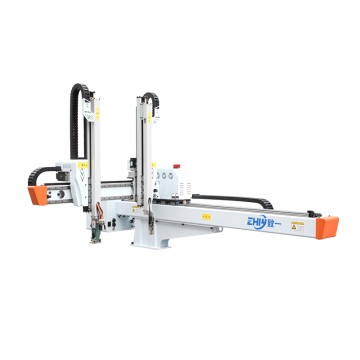
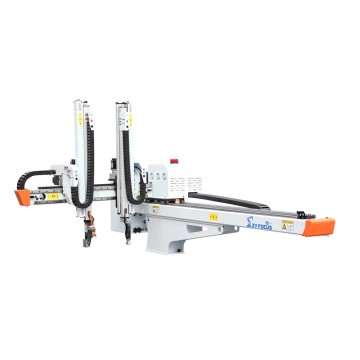
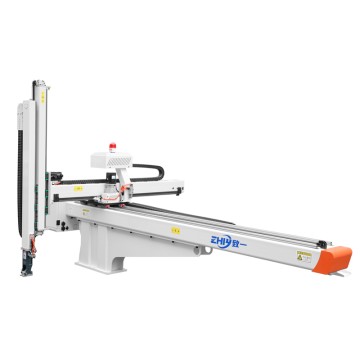
OEM Five Axis Double Arm Guide: Precision Engineering for Advanced Manufacturing
2026-04-17
OEM Five Axis Double Arm Guide: Precision Engineering for Advanced Manufacturing
Table of Contents
- Understanding Five Axis Double Arm Guide Fundamentals
- Core Design Principles of Double Arm Five Axis Systems
- Key Performance Specifications & Industry Standards
- OEM Customization Options for Five Axis Double Arm Guides
- Ideal Applications Across Manufacturing Industries
- Benefits of Choosing OEM Five Axis Double Arm Solutions
- Selection Criteria for OEM Partners & Components
- Installation, Maintenance & Longevity Best Practices
- FAQs
- Conclusion
For manufacturers focused on high-precision motion control, complex machining, and multi-axis automation, the five-axis double arm guide stands as a critical component that elevates accuracy, stability, and operational efficiency. Unlike standard linear guides or single-arm positioning systems, double arm five-axis assemblies deliver synchronized movement across multiple axes while maintaining exceptional rigidity under dynamic loads.
Many industrial buyers and equipment builders rely on OEM five-axis double arm guides to integrate seamlessly into custom machinery, robotic platforms, and precision processing lines. OEM solutions provide tailored engineering, consistent quality, and scalable production—all essential for businesses aiming to optimize performance without excessive in-house development costs.
This guide explores the fundamentals, design logic, performance metrics, customization capabilities, and real-world use cases of OEM five-axis double arm guides, helping you make informed decisions for your automation and machining projects.
Understanding Five Axis Double Arm Guide Fundamentals
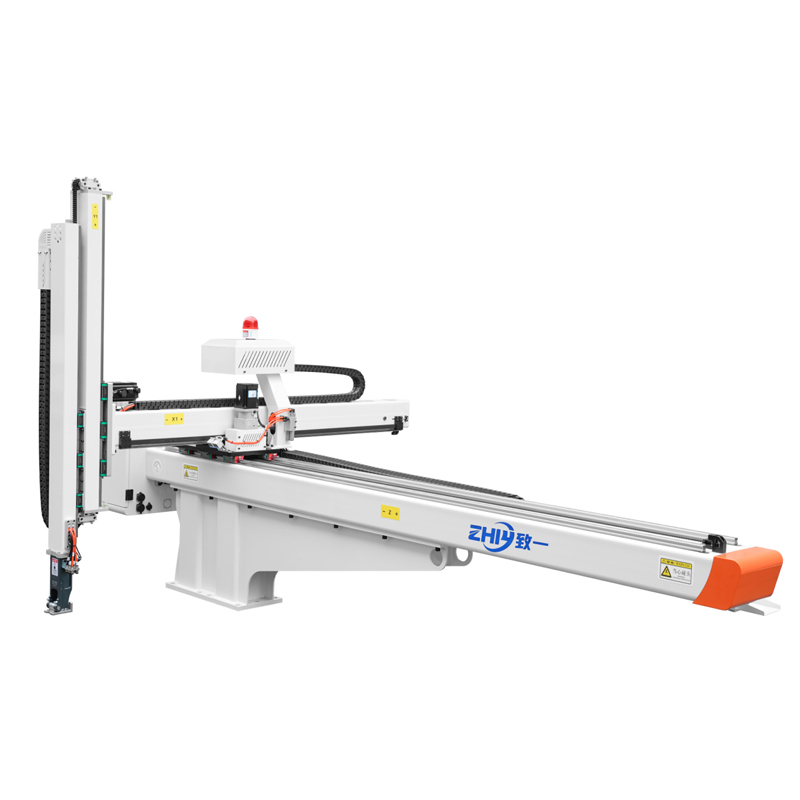
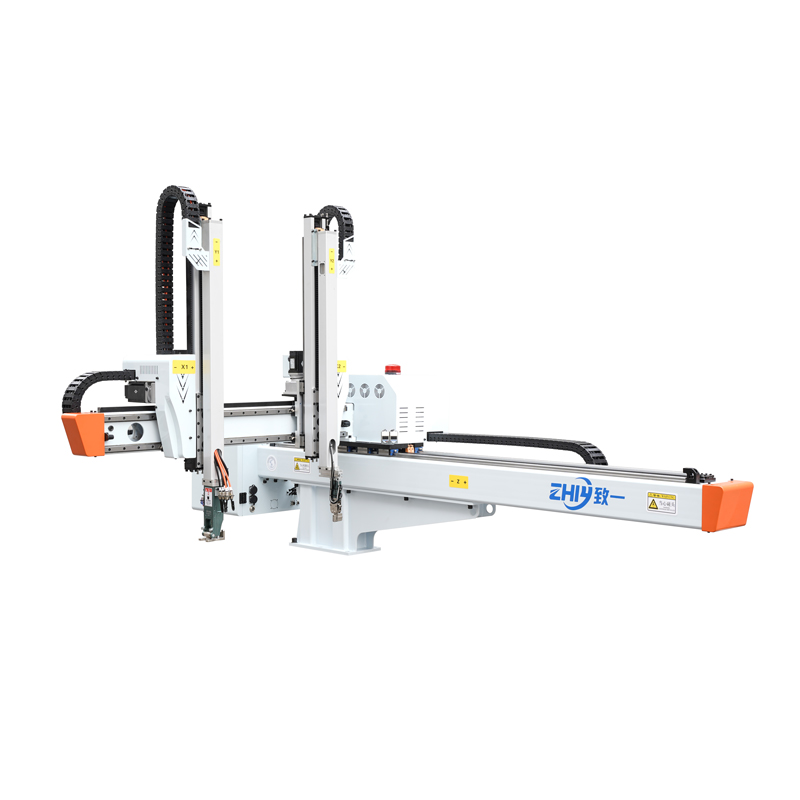
A five-axis double arm guide is a precision motion subsystem that enables controlled movement along three linear axes (X, Y, Z) and two rotational axes (A, C or B, C), supported by a dual-arm structural frame for enhanced stability and load distribution.
This configuration differs from conventional single-arm guides by using symmetric dual support structures to reduce deflection, improve dynamic balance, and maintain positional accuracy during high-speed or heavy-duty operation. The double arm design minimizes torsional stress, enhances thermal stability, and supports more consistent path control for complex contouring and multi-sided processing.
In practical terms, these guides act as the “backbone” for five-axis machining centers, robotic assembly stations, precision inspection equipment, and automated handling systems where coordinated multi-axis motion is required.
Core Design Principles of Double Arm Five Axis Systems
The performance of a five-axis double arm guide depends on disciplined engineering focused on rigidity, precision, and durability.
- Symmetric Load Distribution: Dual-arm geometry evenly distributes forces, reducing bending and improving repeatability compared to single-side support designs.
- High-Stiffness Materials: Typically manufactured from hardened alloy steel, precision extruded aluminum, or cast iron to resist deformation under load and speed.
- Precision Rail & Bearing Integration: Uses profile linear rails, crossed-roller bearings, or linear motion bearings to ensure low friction, smooth travel, and micron-level accuracy.
- Synchronized Drive Compatibility: Optimized for ball screws, linear motors, or rack-and-pinion systems to support coordinated five-axis motion control.
- Thermal Stability Management: Structural design and material selection reduce heat-induced expansion, preserving accuracy during continuous operation.
- Modular Construction: Supports OEM adaptation for different strokes, load capacities, mounting configurations, and environmental conditions.
These principles ensure the double arm guide delivers reliable performance in demanding industrial environments.
Key Performance Specifications & Industry Standards
When evaluating OEM five-axis double arm guides, buyers focus on measurable specifications that directly impact machine performance and part quality.
| Specification | Typical Industrial Range | Importance |
|---|---|---|
| Positional Accuracy | ±0.005 mm to ±0.02 mm | Determines final part precision |
| Repeatability | ±0.001 mm to ±0.005 mm | Ensures consistent production |
| Load Capacity | 50 kg to 2,000 kg+ | Supports heavy workpieces or tools |
| Travel Speed | 0.1 m/min to 1.0 m/min+ | Balances speed and stability |
| Structural Rigidity | High torsion & bending resistance | Reduces vibration during machining |
| Protection Rating | IP54 to IP67 | Resists dust, coolant, and debris |
Leading manufacturers align with global standards for motion components, including ISO precision requirements and industry-specific testing for fatigue, load life, and environmental resistance. Compliance ensures interchangeability, reliability, and compatibility with common control systems.
OEM Customization Options for Five Axis Double Arm Guides
OEM flexibility is what makes five-axis double arm guides valuable for specialized machinery builders. Reputable suppliers offer extensive modification to match unique project requirements.
Common customizations include:
- Custom stroke lengths for X, Y, Z linear axes
- Adjustable rotational limits for A/C or B/C axes
- Modified mounting interfaces and hole patterns
- Special coatings for corrosion resistance or cleanroom use
- Integrated sensor ports for position, temperature, or vibration monitoring
- Tailored load capacities and rigidity profiles
- Compatibility with specific motors, drives, and controllers
- Compact or extended geometries for space-constrained machines
OEM teams work closely with clients to refine design parameters, conduct prototype testing, and validate performance before full-scale production. This collaborative approach reduces integration risks and shortens time-to-market for new equipment.
Ideal Applications Across Manufacturing Industries
Five-axis double arm guides enable high-performance automation in sectors that demand complex motion and micron-level precision.
- Aerospace & Aviation: Turbine blades, structural components, and complex curved parts requiring multi-sided machining.
- Automotive Manufacturing: Lightweight alloy components, transmission parts, and custom tooling with intricate geometries.
- Medical Devices: Precision implants, surgical instruments, and micro-components needing ultra-accurate positioning.
- Tool & Mold Making: Complex cavities, deep ribs, and 3D contours that require five-axis contouring.
- Robotics & Automation: Dual-arm assembly robots, handling systems, and collaborative machines requiring balanced motion.
- Precision Inspection: Coordinate measuring machines (CMM) and non-destructive testing equipment.
- Electronics Manufacturing: High-precision assembly, bonding, and trimming of micro-components.
In each case, the double arm design improves stability, reduces cycle times, and enhances final product quality.
Benefits of Choosing OEM Five Axis Double Arm Solutions
Opting for OEM-manufactured five-axis double arm guides delivers tangible advantages for equipment producers and end-users alike.
- Tailored Engineering: Components designed specifically for your machine’s architecture and performance goals.
- Cost Efficiency: Reduces R&D expenses compared to in-house development.
- Scalable Production: OEM facilities support consistent volume from prototypes to mass production.
- Quality Assurance: Rigorous testing and standardized manufacturing ensure reliability.
- Reduced Lead Times: Proven platforms speed up integration and launch schedules.
- Technical Support: Access to engineering expertise for design, installation, and troubleshooting.
- Long-Term Supply Stability: Established supply chains minimize production disruptions.
For businesses building specialized five-axis machinery, partnering with a trusted OEM creates a competitive edge in performance, cost, and market responsiveness.
Selection Criteria for OEM Partners & Components
Choosing the right OEM supplier is critical to achieving consistent quality and performance. Use these criteria to evaluate potential partners:
- Engineering Expertise: Experience in five-axis motion systems and structural optimization.
- Quality Management: Certified processes (ISO 9001 or equivalent) and traceable production.
- Customization Capacity: Ability to modify designs, materials, and interfaces to your specs.
- Testing & Validation: In-house metrology, load testing, and lifecycle validation.
- Lead Time & Scalability: Reliable delivery for prototyping and full production runs.
- After-Sales Support: Technical assistance, maintenance guidelines, and spare parts availability.
- Material & Component Sourcing: Use of premium rails, bearings, and structural materials.
- Industry Track Record: Proven applications in automation, robotics, or five-axis machining.
Taking time to vet OEM partners ensures long-term performance and reduces risks in equipment development.
Installation, Maintenance & Longevity Best Practices
To maximize the service life and precision of your five-axis double arm guide, follow these guidelines:
Installation
- Clean mounting surfaces and ensure flatness and rigidity of the base structure.
- Align rails and arms per manufacturer specifications using precision indicators.
- Torque fasteners to defined values to avoid preload distortion.
- Verify smooth motion through full travel before final assembly.
Maintenance
- Regular lubrication based on duty cycle and environmental conditions.
- Inspection for wear, contamination, or abnormal noise.
- Keep guides protected from coolant, metal chips, and dust.
- Periodic calibration to preserve positional accuracy.
Longevity Tips
- Operate within design limits for speed, load, and acceleration.
- Avoid shock loads or abrupt directional changes that stress structural components.
- Store components in clean, dry, temperature-stable environments when not in use.
Proactive care extends operational life and maintains precision over years of production.
FAQs
What is the difference between a single-arm and double-arm five-axis guide?
Double-arm designs provide symmetric support, higher rigidity, lower deflection, and better dynamic stability than single-arm configurations, making them ideal for heavy loads and high-precision applications.
Double-arm designs provide symmetric support, higher rigidity, lower deflection, and better dynamic stability than single-arm configurations, making them ideal for heavy loads and high-precision applications.
What industries benefit most from OEM five-axis double arm guides?
Aerospace, automotive, medical devices, mold making, robotics, and precision inspection benefit most due to complex motion and accuracy requirements.
Aerospace, automotive, medical devices, mold making, robotics, and precision inspection benefit most due to complex motion and accuracy requirements.
Can OEM five-axis double arm guides be retrofitted into existing machines?
Yes, many OEMs provide adapted designs for retrofits, including custom mounting, stroke adjustments, and compatibility with existing controls.
Yes, many OEMs provide adapted designs for retrofits, including custom mounting, stroke adjustments, and compatibility with existing controls.
How long does an OEM five-axis double arm guide typically last?
With proper maintenance, these systems often operate reliably for 5–10 years or longer depending on usage intensity and environment.
With proper maintenance, these systems often operate reliably for 5–10 years or longer depending on usage intensity and environment.
What accuracy can I expect from a professional OEM double arm five-axis assembly?
High-end OEM units deliver positional accuracy down to ±0.005 mm and repeatability near ±0.001 mm, suitable for precision machining and automation.
High-end OEM units deliver positional accuracy down to ±0.005 mm and repeatability near ±0.001 mm, suitable for precision machining and automation.
Conclusion
OEM five-axis double arm guides represent a cornerstone of advanced manufacturing, enabling the precision, flexibility, and efficiency required for modern multi-axis machinery. By combining symmetric dual-arm design, high-performance materials, and customizable engineering, these components elevate the capabilities of automation systems, robotic platforms, and five-axis machining centers across key industries.
For equipment builders and industrial buyers, partnering with an experienced OEM delivers tailored solutions, consistent quality, and cost-effective production—all while reducing development time and technical risk.
Whether you are developing new machinery, upgrading existing systems, or scaling production, understanding the fundamentals, performance metrics, and selection criteria of five-axis double arm guides will help you implement reliable, high-precision motion control that supports long-term operational success.