
Leave Your Message
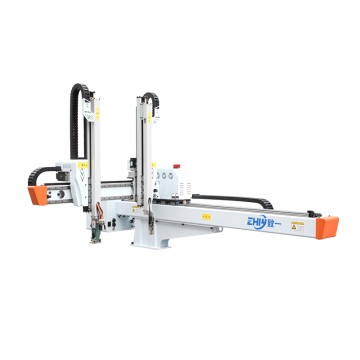
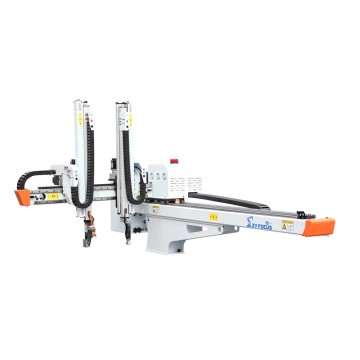
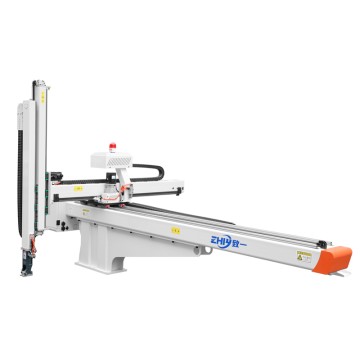
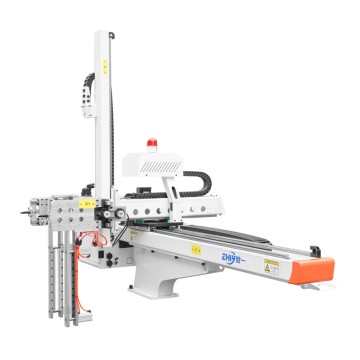
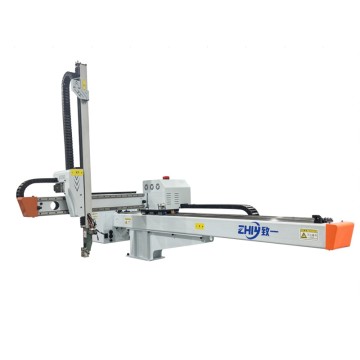
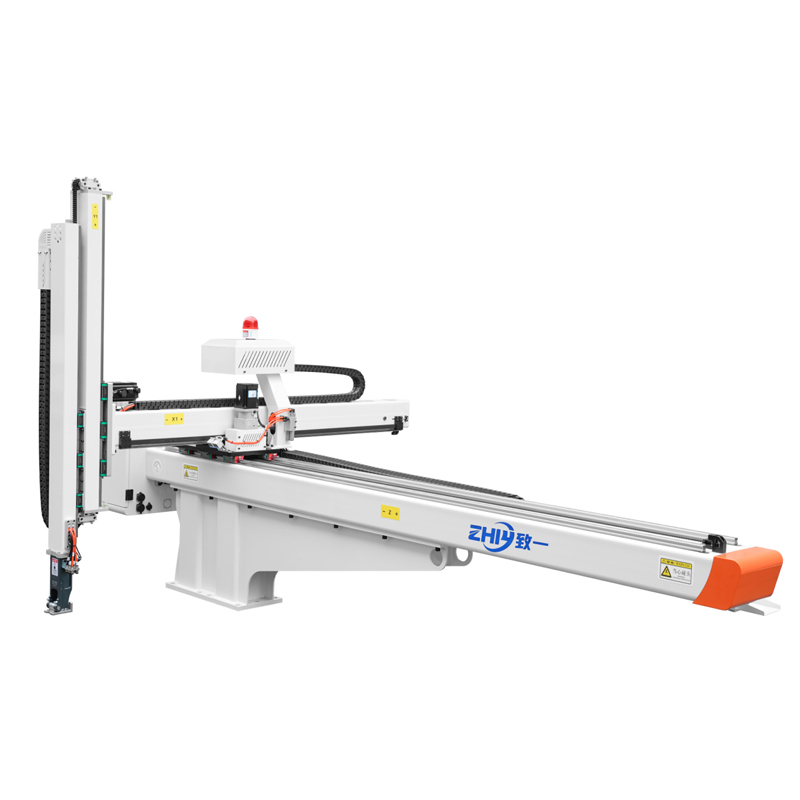
Large Injection Molding Machines (>500T): The Necessity of Five-Axis Servo Robots
Large Injection Molding Machines (>500T): The Necessity of Five-Axis Servo Robots
Against the backdrop of the global injection molding industry's upgrade towards intelligent and large-scale production, large injection molding machines of 500T and above have become core production equipment in fields such as automotive parts, large appliance casings, and industrial plastic products. The selection of automated part handling and processing equipment to match these machines directly determines production efficiency, product yield, and overall operating costs. While three-Axis Robots can meet basic part handling needs, in the high-load, high-precision, and complex process scenarios of large injection molding machines,five-axis servo robots have become an irreplaceable core configuration. Their advantages in motion flexibility, process adaptability, and capacity enhancement make them a key choice for achieving automation upgrades in large injection molding production.
I. The Production Characteristics of Large Injection Molding Machines Determine the Limitations of Three-Axis Robotic Arms
The production scenarios of large injection molding machines (500T and above) differ fundamentally from those of small and medium-sized machines: injection molded products are mostly large-sized, heavy-duty plastic parts; the mold structures are complex and often include inserts, in-mold labeling, and other processes; production cycle time requirements are high, and there are stringent standards for product positioning accuracy and posture control. Three-axis servo robotic arms, however, only possess X/Y/Z linear motion capabilities, with a repeatability of only ±0.1~±0.2mm. They can only perform simple pick-up and unload actions, exhibiting a significant limitation in their suitability for large-scale injection molding production.
Limited Motion Patterns, Incompatible with Complex Molds and Product Posture Adjustments: Large injection molded products often require angle adjustments, flipping, or precise alignment with subsequent processing steps after demolding. Three-axis robots, lacking a rotary axis, can only move along fixed linear paths, unable to achieve multi-angle posture adjustments for the plastic parts. This easily leads to product collisions with molds and tie rods, causing scratches on the plastic parts or damage to the mold. This is especially problematic for irregularly shaped large plastic parts, significantly reducing part handling efficiency and safety.
Poor Process Adaptability, Difficult to Perform Composite Production Actions: Large injection molding production (500T and above) often involves composite processes such as in-mold insert placement, in-mold labeling, automatic sprue separation, and multi-station transfer. Three-axis robots can only perform basic pick-and-place operations and cannot coordinate with the mold to achieve precise insert placement or simultaneous separation of the plastic part and sprue. Additional manual intervention is required, increasing labor costs and reducing production stability due to the uncertainty of manual operation.
Insufficient load capacity and precision fail to meet the production requirements of large plastic parts. Large injection-molded products can weigh several kilograms or even tens of kilograms, placing extremely high demands on the load capacity and operational stability of robotic arms. Simultaneously, products such as automotive bumpers and large appliance panels have stringent dimensional accuracy requirements. The linear motion accuracy and vibration resistance of three-axis robotic arms are insufficient to prevent positional deviations during part handling, easily leading to dimensional errors and surface defects.
II. The core advantages of five-axis servo robotic arms: precisely matching the production needs of large injection molding machines.
Building upon the three-axis X/Y/Z linear motion, five-axis servo robotic arms add two rotary axes (A-axis rotation around the Z-axis and B-axis rotation around the X-axis), achieving a composite linear + rotary motion. Repeatability is improved to ±0.05~±0.1mm. Combined with a high-rigidity body and a precision servo drive system, it comprehensively matches the production characteristics of large injection molding machines (500T and above) in terms of motion flexibility, process adaptability, and precision control, becoming the optimal solution for large injection molding automation.
1. Flexible Multi-Dimensional Motion for Safe and Efficient Removal of Large Plastic Parts: The five-axis servo robot features a dual-rotation axis design, enabling ±180° rotation and ±90° tilt. It can adjust the removal angle according to the structural characteristics of large molds, easily avoiding obstacles such as mold pull rods and safety gates, and completing complex removal actions such as oblique and lateral movements. This completely solves the problem of adjusting the posture of large plastic parts after demolding. Simultaneously, its motion path can be freely planned, allowing for precise control of removal speed and position, avoiding collisions between the plastic part and the mold/equipment, significantly improving removal safety and reducing product scrap rates.
2. High Precision and High Load Capacity to Meet the Quality and Efficiency Requirements of Large Plastic Parts: Designed for the high load requirements of injection molding machines exceeding 500T, the professional five-axis servo robot utilizes robust steel and a precision linear guide rail design. Its maximum load capacity meets the removal needs of large plastic parts. Combined with AC servo motor drive and a precision planetary reducer, it exhibits low vibration and high stability during operation, preventing equipment misalignment or plastic part shaking due to excessive load. Meanwhile, a repeatability accuracy of ±0.05~±0.1mm precisely controls the placement and removal of plastic parts, perfectly matching the dimensional accuracy requirements of large plastic parts and ensuring product consistency.
3. Full-process process adaptation, achieving automated closed-loop production for large-scale injection molding. The five-axis servo robot can complete fully automated actions such as part picking, posture adjustment, insert insertion, sprue separation, in-mold labeling, automatic stacking, and multi-station transfer, without human intervention, perfectly adapting to the complex process requirements of large-scale injection molding production. For example, in the injection molding production of automotive bumpers, the robot can automatically cut the sprue while picking up the part, then precisely flip and transport the plastic part to the inspection station; in the production of large home appliance shells, it can achieve precise embedding and in-mold labeling of inserts, significantly shortening the production cycle and improving production efficiency.
4. Strong Intelligent Linkage and Expandability, Adaptable to Intelligent Production Line Construction
The five-axis servo robot is equipped with an intelligent drive and control integrated system, enabling deep integration with large injection molding machines, conveyor belts, testing equipment, and MES systems. It supports the memory of over 100 sets of mold data, simplifying mold changeover operations and significantly reducing changeover time. Simultaneously, the equipment reserves multiple external device interfaces, easily connecting to automated packaging, palletizing, and other equipment to build a fully automated production line from injection molding to finished product delivery, aligning with the global trend of intelligent upgrades in Industry 4.0.
III. Value Enhancement of Large Injection Molding Production by Five-Axis Servo Robots: Achieving Cost Reduction, Efficiency Improvement, and Capacity Upgrades
For the operation of large injection molding machines of 500T and above, five-axis servo robots are not simply "equipment upgrades," but rather optimize the entire production process through automation technology, creating real value for enterprises from multiple dimensions such as capacity, cost, quality, and management. This is the core reason why it has become an essential configuration for large injection molding production.
Capacity increased by over 30%, production cycle significantly shortened. The high-speed part-picking capability and fully automated operation of the five-axis servo robot enable 24/7 continuous operation, avoiding fatigue and efficiency fluctuations associated with manual operation. The part-picking time can be precisely controlled according to production needs, significantly shortening the injection molding production cycle. Simultaneously, its non-manual composite process operation reduces waiting time between processes. Practical application verification shows that when paired with a five-axis servo robot on a large injection molding machine of 500T or more, capacity can be increased by over 30%.
Reduced labor costs and product defect rate, achieving overall cost optimization. Manual part-picking of large injection molded products not only requires professional operators but also suffers from low efficiency and error-proneness, resulting in high labor costs and product scrap costs. Five-axis servo robotic arms can replace multiple workers in completing the entire process, helping companies reduce labor costs by more than 50%. Simultaneously, their high-precision motion control and standardized operating procedures effectively avoid problems such as scratches and dimensional deviations in plastic parts caused by manual operation, reducing product defect rates by more than 10%, achieving comprehensive cost optimization from both labor and quality control perspectives.
Improving production safety and reducing equipment maintenance costs: Large injection molding machines (500T and above) have high clamping forces and large mold sizes, posing a significant safety risk to manual part handling. The automated operation of five-axis servo robotic arms completely eliminates the need for manual entry into the mold working area, preventing accidents at their source. Furthermore, the use of highly wear-resistant and high-rigidity components, coupled with a highly anti-interference control system, results in low equipment failure rates and simple maintenance, significantly reducing equipment maintenance costs and downtime, ensuring continuous production.
Achieving standardized production and improving enterprise management efficiency: The operation process of the five-axis servo robot can be precisely set through the system. All production actions are executed according to standardized procedures, avoiding the subjectivity and randomness of manual operation and achieving traceability and controllability of the production process. Simultaneously, the equipment can be integrated with the MES system to collect production data in real time. Enterprises can remotely monitor production progress and equipment operating status, significantly improving production management efficiency and meeting the standardization and digital management needs of large manufacturing enterprises.
IV. Key Considerations for Selecting a Five-Axis Servo Robot for Large Injection Molding Machines
When selecting a five-axis servo robot for large injection molding machines (500T and above), it is essential to consider five core factors based on actual production needs: load capacity, stroke adaptation, precision control, brand reliability, and service capabilities.
The load capacity must match the weight of the large plastic parts, while allowing for a certain load margin to ensure equipment operational stability.
The robot's vertical, horizontal, and pull-out strokes must be precisely matched to the injection molding machine's mold dimensions and production space to avoid insufficient stroke or wasted space.
Prioritize products equipped with imported AC servo motors and precision planetary reducers to ensure positioning accuracy and operational stability.
Choose brands with international certifications such as ISO9001 and CE for better product quality and safety.
Pay attention to the brand's global service capabilities to ensure timely pre-sales commissioning, after-sales maintenance, and technical support worldwide.
Conclusion
In production scenarios using large injection molding machines of 500T and above, the application of five-axis servo robots is not merely "optional," but an inevitable choice for achieving automated, intelligent, and large-scale production. Their core advantages in motion flexibility, process adaptability, and precision control perfectly overcome the limitations of three-axis robots in large injection molding production. By achieving fully automated operation, they help companies increase capacity, reduce costs, optimize quality, and ultimately achieve a dual upgrade in production efficiency and overall competitiveness.
For global injection molding companies, choosing a high-quality, highly adaptable five-axis servo robot is key to maximizing the production value of large injection molding machines and a core guarantee for gaining a competitive edge in the global manufacturing industry.
#InjectionMoldingMachine5AxisServoRobot #LargeInjectionMoldingMachineRobot #500TandandUpInjectionMoldingMachineRobot #InjectionMoldingMachineAutomationEquipment #NecessityOf5AxisRobotsForLargeInjectionMoldingMachines #500TInjectionMoldingMachineRobotSelection #AdvantagesOf5AxisServoRobotsForInjectionMoldingMachines #AutomationSolutionsForLargePlasticPartInjectionMoldingMachines #CostReductionAndEfficiencyEnhancementOfInjectionMoldingMachineRobots