Leave Your Message
Intelligent control of servo robots: opening a new chapter in industrial automation
Intelligent control of servo robots: opening a new chapter in industrial automation
introduction
In today's booming wave of global manufacturing, automation technology is changing production methods at an unprecedented rate, and servo robots play a crucial role as a key force. It not only greatly improves production efficiency, but also significantly improves product quality and consistency, becoming the focus of many international wholesale buyers when purchasing automation equipment. This article will deeply explore how servo robots can achieve intelligence with advanced control technology, as well as the many advantages and broad application prospects brought by this intelligent control, providing comprehensive and valuable reference information for buyers who are considering introducing or upgrading servo robots.
1. Basic composition and working principle of servo robot
(I) Main components
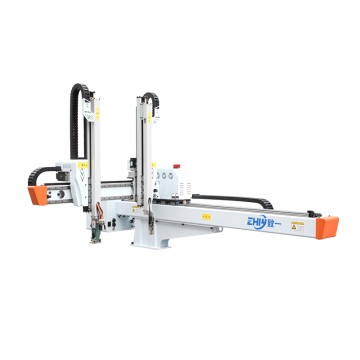
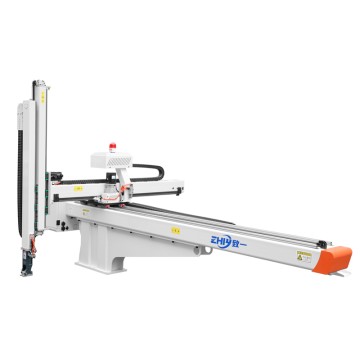
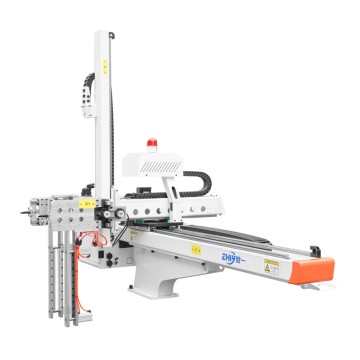
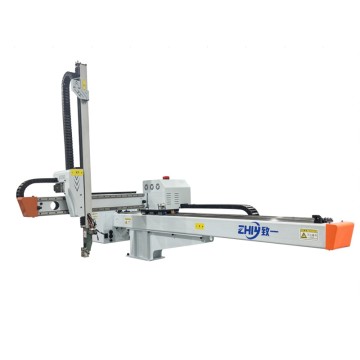
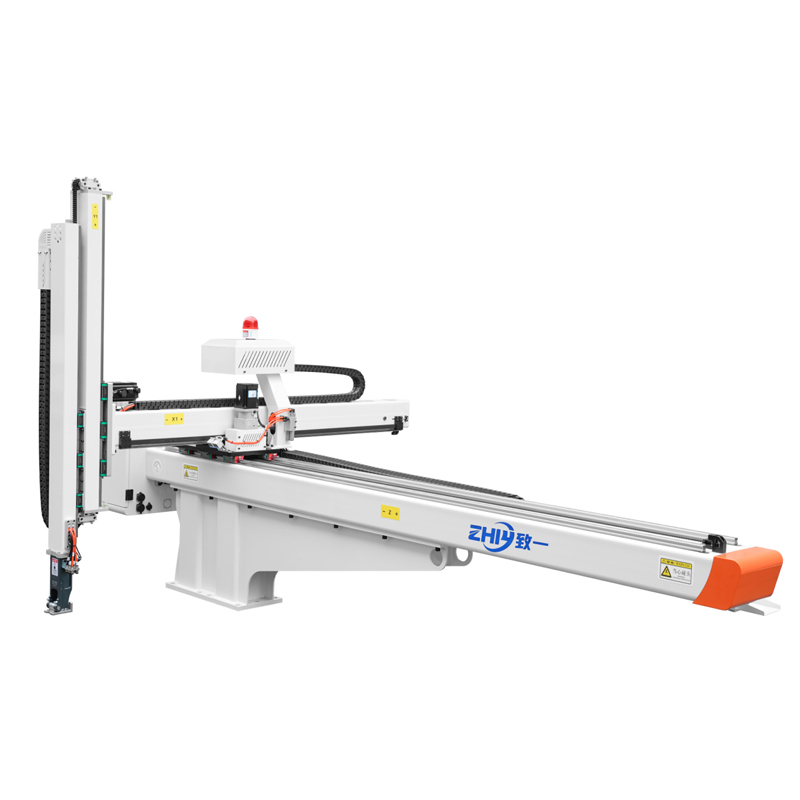
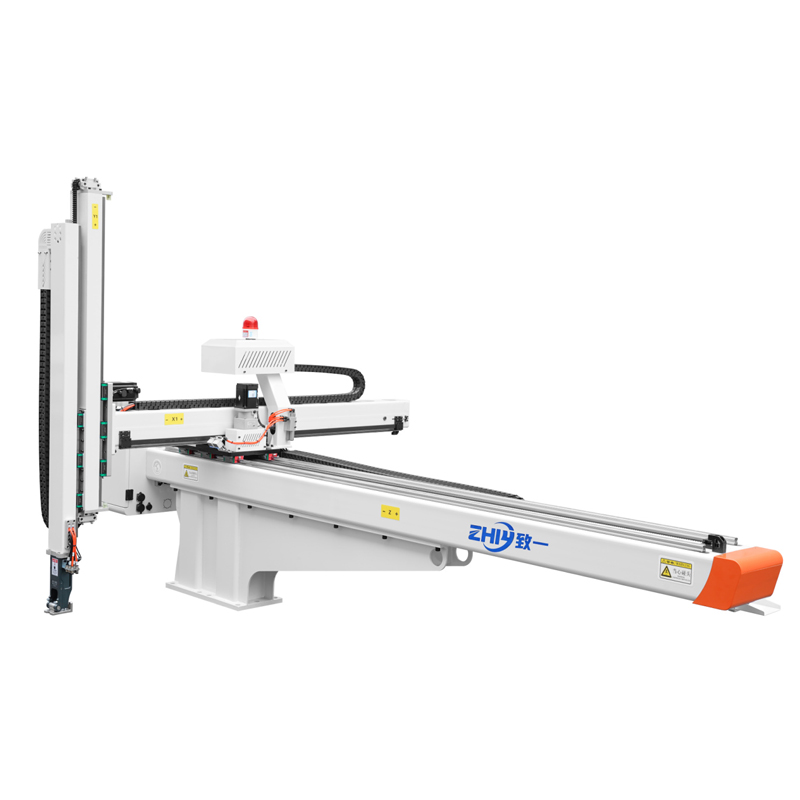
The servo robot is mainly composed of mechanical structural parts, servo drive systems, control systems and various sensors. The mechanical structural part includes arms, joints, end effectors, etc., providing the basis for movement and support for the robot. The servo drive system is a power source that drives the movement of each joint of the robot. It is usually composed of a servo motor, a driver, etc., which can accurately control the speed, torque and position of the motor. As the core brain of the entire servo robot, the control system is responsible for processing various input signals, executing control algorithms and outputting control instructions to achieve accurate operation of the robot. The sensors are distributed in different parts of the robot and are used to sense information such as position, speed, force, vision and other information in real time, providing a basis for the decision-making of the control system.
(II) Working principle
When the servo robot receives the command from the control system, the servo drive system will generate corresponding driving torque according to the command, and each joint of the driving mechanical structure moves according to the predetermined trajectory and speed. In this process, the sensor will constantly pass feedback information such as the robot's actual position and speed to the control system. The control system adjusts the output control signals in real time based on the differences between these feedback information and the target instructions, so that the Robot Can always accurately perform established tasks, such as grabbing, handling, assembly and other operations. The principle is similar to the process of manual operation in which the hand movements accept brain instructions and continuously adjust according to visual, touch and other feedback.
2. Key technologies for intelligent control of servo robots
(I) High-precision servo control technology
Closed-loop control principle: High-precision servo control is the basis for realizing the intelligence of servo robots. It usually adopts a three-closed loop control structure for position, speed and current. The position ring outputs speed commands to control the movement position of the robot according to the deviation of the given target position and the actual position; the speed ring adjusts the output torque of the motor according to the deviation of the speed command output from the actual speed, so that the robot can run at a stable speed; the current ring is mainly used to control the driving current of the motor to ensure that the motor outputs the best torque waveform in the dynamic process, thereby achieving fast, accurate and stable positioning control, and the positioning accuracy can reach an extremely high level, effectively meeting the strict requirements for precise operation in industrial production.
Feedforward control technology: In addition to traditional closed-loop control, feedforward control technology is also widely used in high-precision servo control. By predicting the dynamic characteristics of the robot during movement, compensating the control signals in advance, reducing the system's response delay and overshooting phenomenon, further improving control accuracy and dynamic performance, so that the robot can adapt to various complex task requirements and fast production beats more quickly.
(II) The integration of machine vision technology
The composition and function of the visual system: Machine vision is an important perception method for servo robots to achieve intelligent control. A typical machine vision system usually includes parts such as cameras, lenses, light sources, and image processing software. The camera is used to capture image information in the working area of the robot, while the lens ensures clear imaging of the image. The light source provides good lighting conditions for imaging and highlights the characteristics of the target object. The image processing software is responsible for analyzing and processing the collected images, including image preprocessing, feature extraction, pattern recognition and other steps, so as to achieve accurate identification and positioning of the position, shape, size, color and other features of the workpiece.
Application in Robot Control: In practical applications, the machine vision system can guide the servo robot to automatically identify and grasp objects of different shapes, sizes and positions to achieve flexible production. For example, in the electronic manufacturing industry, the vision system can accurately identify the pin position and direction of tiny electronic components, and guide the robot to perform high-precision plug-in or patch operations; in the field of logistics sorting, by visually identifying the category and position information of objects, the robot can quickly and accurately classify and place different items in designated locations, improving sorting efficiency and accuracy, and reducing the cost of manual intervention.
(III) Multi-sensor fusion technology
Types and functions of sensors: In addition to machine vision sensors, servo robots can also be equipped with a variety of other types of sensors, such as force sensors, torque sensors, proximity sensors, pressure sensors, etc. Force sensors and torque sensors can monitor the force and torque magnitude of the robot during grasping and operating objects in real time, preventing the object from sliding or damage, and provide a basis for realizing force control; proximity sensors and pressure sensors are used to detect the distance and contact pressure between the robot and the object, ensuring that the robot can safely and stably approach and grasp the target object, avoid collision and excessive squeeze.
Fusion method and advantages: Multi-sensor fusion technology comprehensively processes and analyzes different types of sensor data, allowing the robot to more comprehensively and accurately perceive the surrounding environment and its own state. Through data fusion algorithms, such as Kalman filtering, neural networks, etc., the information of various sensors can be optimized and combined to improve the reliability and accuracy of the information. For example, when the robot performs complex assembly tasks, combined with the position information of the visual sensor and the force feedback of the force sensor, the comprehensive judgment of the control system can enable the robot to accurately assemble the parts to the designated position with appropriate force and angle, greatly improving the success rate and quality stability of the assembly.
(IV) Advanced motion control algorithm
Model-based control algorithm: Advanced motion control algorithm is the key to implementing intelligent control of servo robots. Model-based control algorithms, such as sliding mode control, self-immune disturbance control, etc., can effectively suppress the impact of external disturbances and parameter changes on control performance by accurately establishing and analyzing the dynamic model of the robot, and improve the robustness and adaptability of the robot. For example, in industrial production sites, when the robot grabs objects of different weights or is disturbed by external wind, the model-based control algorithm can quickly adjust the control strategy based on the model prediction and real-time feedback information to ensure that the robot's movement trajectory and operating accuracy are not affected and always maintain a stable and reliable operating state.
Intelligent control algorithm: Intelligent control algorithms, such as fuzzy control, neural network control, genetic algorithms, etc., have the ability to learn, adapt and self-organize, and can automatically adjust control parameters and optimize control strategies according to the actual operation of the robot. Fuzzy control algorithms can describe and infer complex control system behaviors with fuzzy rules based on expert experience and knowledge to realize nonlinear control of the robot, especially suitable for complex working conditions that are difficult to establish accurate mathematical models; neural network control automatically extracts the input and output mapping relationship of the robot through the learning and training of a large amount of sample data, so as to achieve rapid identification and precise control of complex motion patterns; genetic algorithms can be used to optimize the robot's motion trajectory planning and control parameters optimization, find the optimal control scheme, and improve the work efficiency and performance of the robot.
(V) Network communication and remote monitoring technology
Application of network communication technology: With the rapid development of the industrial Internet, network communication technology plays an increasingly important role in the intelligent control of servo robots. By adopting communication technologies such as Ethernet and fieldbus, the servo robot can conduct high-speed and reliable data communication with upper computers, PLCs (programmable logic controllers), robot controllers and other devices, real-time interaction and sharing of information. For example, A Robot can upload its own operating status, fault information, production data, etc. to the upper computer monitoring system in a timely manner, and at the same time receive control instructions and task parameters issued by the upper computer to ensure the coordinated and automated operation of the entire production process.
Remote monitoring and troubleshooting: With the help of network communication technology, users can realize remote monitoring and troubleshooting of servo robots. By displaying the various operating parameters and working status of the robot in real time on the upper computer monitoring software, operators can operate, debug and monitor the robot from a place far away from the production site, discover and solve problems in a timely manner, reduce downtime, and improve equipment utilization and production efficiency. In addition, the fault diagnosis system based on big data analysis and machine learning algorithms can deeply mine and analyze the historical operation data and real-time monitoring data of the robot, predict potential failure risks in advance, provide strong support for preventive maintenance, and reduce maintenance costs and equipment damage risks.
3. Advantages of intelligent control of servo robots
(I) Improve production efficiency
Intelligent servo robots can achieve fast and precise action execution, greatly shortening the task completion time. On the production line, it can work tirelessly and maintain a stable production rhythm. Compared with manual operations, production efficiency can be improved several times or even dozens of times, effectively meeting the needs of large-scale production and improving the market competitiveness of the enterprise.
With advanced motion control algorithms and optimized trajectory planning, the robot can avoid unnecessary movements and path detours, further improving the efficiency and fluency of the operation. At the same time, multiple servo robots can achieve collaborative operations through network communication to jointly complete complex production tasks, realize the optimized allocation of production resources and seamless connection between production processes, and maximize the efficiency of the entire production system.
(II) Improve product quality
High-precision servo control technology ensures that the robot can operate accurately according to the set procedures and parameters, achieving extremely consistent and repeatable production actions, thereby effectively reducing product quality fluctuations caused by human factors or unstable equipment accuracy. For example, during the processing and assembly of parts, the robot can accurately control the feed rate of the tool, the installation position and angle of the parts, etc., to ensure that the dimensional accuracy and assembly quality of each product meet the strict standards and improve the yield rate and reliability of the product.
The quality detection function of the machine vision system can conduct real-time operation of product appearance inspection, size measurement, defect identification and other operations during the production process, promptly detect unqualified products and automatically screen and deal with them, preventing bad products from flowing into the next process or market, and further ensuring the stability and consistency of product quality. Through statistical analysis of the detection data, it can also provide a basis for the optimization and improvement of production processes, helping enterprises continuously improve product quality.
(III) Enhance production flexibility
The intelligent control system of servo robots has good programmability and scalability, and can easily adapt to the production needs and process changes of different products. By simply modifying the control program and adjusting parameters, the robot can quickly switch production tasks, realize a flexible production model of multiple varieties and small batches, and meet the market's growing demand for personalized customized products. For example, in the electronic product manufacturing industry, facing the continuous renewal of product models and functional needs, enterprises can use the flexibility of servo robots to quickly adjust the production line layout and operating procedures, launch new products in a timely manner, and seize market opportunities.
The servo robot that integrates machine vision and multi-sensor fusion technology has stronger environmental perception and adaptability, and can automatically identify and handle various complex and changeable production scenarios. Whether it is the position deviation of the workpiece, the shape changes, or the changes in the lighting, temperature and other conditions of the working environment, the robot can successfully complete the task by adjusting the control strategies and operation methods in real time, reducing the dependence on manual intervention and improving the flexibility and automation of production.
(IV) Reduce labor intensity and labor costs
In some dangerous, harsh or high-intensity working environments, such as high temperature, high pressure, toxic and harmful, heavy load handling, etc., the servo robot can replace manual operations, freeing operators from heavy physical labor and high-risk working environments, effectively reducing labor intensity, and ensuring the safety of people's lives and physical health. At the same time, with the increase in the degree of automation, the demand for labor by enterprises has also decreased accordingly. In the long run, it can significantly reduce labor cost investment and improve the economic benefits of enterprises.
In addition, intelligent servo robots can realize automated material handling, loading and unloading, reducing the number of auxiliary workers and logistics handling personnel on the production line. Through seamless connection with automated warehousing systems, automated production lines and other equipment, an intelligent production logistics system is built, the production process is further optimized, the overall production efficiency is improved, and the operation costs of the enterprise are reduced.
(V) Promote the intelligent production and management upgrade of enterprises
As an important part of the intelligent manufacturing system, servo robots can deeply integrate with the enterprise's production management systems (such as MES, ERP, etc.) to realize real-time collection, transmission and analysis of production data. Through the mining and utilization of production data, enterprises can fully understand various information in the production process, such as equipment utilization, production efficiency, product quality, material consumption, etc., providing scientific basis for the formulation of production plans, optimization of production scheduling, and management of equipment maintenance, and realizing intelligent production and management decisions.
Intelligent servo robots have also promoted enterprises to develop towards digital workshops and smart factories. Multiple robots and peripheral automation equipment, robots, etc. form a production network that works collaboratively through the industrial Internet, realizing interconnection and information sharing between equipment, forming an efficient, flexible and intelligent production and manufacturing system. This intelligent manufacturing model can not only improve the production efficiency and product quality of enterprises and enhance the market competitiveness of enterprises, but also drive the upgrading and development of the entire industrial chain and inject strong impetus into the transformation and upgrading of the manufacturing industry.
4. Application scenarios and case analysis of intelligent control of servo robots
(I) Automobile manufacturing industry
In the manufacturing and parts production of automobile complete vehicles, servo robots are widely used in welding, coating, assembly, handling and other links. For example, in the automotive body welding workshop, multiple servo robots can work together, and through high-precision positioning control and stable welding trajectory planning, automated welding of body parts is achieved. The welding quality and production efficiency are much higher than traditional manual welding methods. At the same time, the machine vision system can accurately identify and position the positions of the body parts, ensure the accurate butt of the welding fixture and the precise positioning of the welding points, and improve the assembly accuracy and overall quality of the body.
On the assembly line of the automobile engine, the servo robot is responsible for installing and tightening various components, such as cylinder heads, crankshafts, connecting rods, etc. in strict assembly processes and sequences. Based on high-precision servo control and torque feedback control technology, the robot can accurately control the assembly force, avoid damage and loosening of parts, and ensure the assembly quality and performance stability of the engine. In addition, through integration with the production management system, real-time monitoring of production data and equipment status, timely adjustment of production plans and solving problems in the production process, the production efficiency and automation level of the engine assembly line are improved.
(II) Electronics Manufacturing Industry
In the production process of electronic products, such as mobile phones, computers, home appliances, etc., servo robots play a key role in plug-ins, patches, assembly, and testing. For example, in the circuit board plug-in process, high-speed and high-precision servo robots can quickly and accurately insert various electronic components into designated positions of the circuit board, and the plug-in accuracy can reach an extremely high level, greatly improving production efficiency and product quality. The machine vision system can accurately identify and align pad positions and component pins on the circuit board, ensuring the accuracy and reliability of the plug-in.
In the assembly and inspection of electronic products, the servo robot can be equipped with various special end effectors and inspection equipment, such as screwdrivers, tweezers, test probes, etc., to achieve refined assembly and automated inspection of electronic products. Through intelligent control algorithms and sensor feedback technology, the robot can automatically adjust the operating force and detection parameters according to different product models and detection requirements, and complete complex tasks such as screw tightening, component installation, performance testing, etc., which improves the flexibility and intelligence level of production of electronic manufacturing enterprises, shortens the product production cycle, and reduces production costs.
(III) Food and Beverage Industry
In the production, packaging and handling of food and beverages, the application of servo robots is becoming more and more extensive. For example, in a food processing workshop, a robot can be responsible for sorting, boxing, bagging and other operations of processed food, and its high-speed and stable grab and handling capabilities can meet the high-yield needs of food production. At the same time, food-grade materials and special protective design ensure that the robot can operate safely and reliably in harsh environments such as wet and greasy, and comply with the hygiene and safety standards of the food industry.
On the beverage filling and packaging production lines, servo robots can realize automatic loading, handling, packing and palletizing of beverage bottles. Through linkage control with filling machines, packaging machines and other equipment, the robot can automatically adjust the operating rhythm according to the speed of the production line, and realize the automation and continuous production process. In addition, combined with visual recognition technology and robot control system, robotic hands can flexibly adapt to the packaging needs of beverage bottles of different specifications and shapes, improve the versatility and flexibility of the production line, and reduce the company's equipment investment costs.
(IV) Logistics and Warehousing Industry
In the logistics and storage center, servo robots are mainly used for cargo handling, sorting, palletizing and warehouse entry and exit operations. For example, in a large automated three-dimensional warehouse, servo-driven stackers and shuttle trucks can realize efficient storage and handling of goods between shelves, and their precise positioning control and high-speed operation capabilities greatly improve the space utilization and cargo storage of the warehouse. At the same time, through the dispatching and command of the warehouse management system, the robot can work in collaboration with conveyor belts, sorting robots and other equipment to realize the automated sorting and distribution of goods, and improve logistics efficiency and service quality.
In the field of express logistics, intelligent sorting robots combine machine vision and artificial intelligence technology to quickly identify the barcode, QR code or image information of express parcels, and automatically classify and sort operations based on destination information. The sorting speed and accuracy are much higher than the manual sorting method. This not only improves the operational efficiency of express delivery companies and reduces labor costs, but also reduces customer complaints and losses caused by sorting errors, and enhances the company's market competitiveness.
5. Future development trends and prospects
(I) Higher level of intelligence
With the continuous breakthroughs and innovations in artificial intelligence technology, servo robots will have stronger learning and cognitive abilities. Deep reinforcement learning algorithms will be widely used in robotic control optimization, allowing them to automatically adjust control strategies and behavior patterns through continuous interaction and learning with the environment to adapt to more complex and changeable task requirements and work scenarios. For example, robots can independently learn how to grasp, operating skills and workflow of different objects, continuously improve their operating efficiency and flexibility, and reduce their dependence on human programming and debugging.
Human-computer collaboration technology will be further developed and popularized. The servo robot of the future will no longer be isolated automation devices, but an intelligent partner who can work more closely and safely with human operators. Through natural human-computer interaction interfaces, such as voice control, gesture recognition, brain-computer interface and other technologies, operators can direct robots to complete various tasks more intuitively and conveniently, achieving complementary human-computer advantages. At the same time, the robot will have higher security perception and self-protection capabilities, and can monitor the location and movement of surrounding people in real time when sharing the workspace with humans, automatically adjust the operating speed and strength, and ensure the safety and reliability of human-machine collaboration.
(II) Higher accuracy and speed
Developing more efficient servo motors and drivers, improving the torque density, power density and response speed of the motor, while reducing the vibration and noise of the motor will be one of the key directions for the future development of servo robots. The application of new motor materials and manufacturing processes, such as rare earth permanent magnet materials, high-speed bearings, high-frequency modulation technology, will further improve the performance indicators of servo motors and provide strong support for robots to achieve higher motion accuracy and speed.
In terms of control algorithms, more advanced motion control strategies will be continuously explored and innovated, such as the fusion application of algorithms based on model prediction control, adaptive control, sliding mode variable structure control and other algorithms, so as to achieve accurate compensation and optimization control of the complex dynamic characteristics of the robot, and improve the stability and trajectory tracking accuracy of the robot in high-speed and high-precision motion. In addition, by optimizing the structural design and transmission system of the robot, reducing mechanical clearance and moment of inertia matching will also help further improve the dynamic performance and control accuracy of the robot.
(III) Stronger perception and interaction capabilities
The continuous advancement of sensor technology will greatly enhance the perception ability of servo robots. In addition to existing sensors such as vision, force, position, and speed, more new and high-performance sensors will appear in the future, such as tactile sensors, olfactory sensors, temperature sensors, etc., allowing robots to more comprehensively and meticulously perceive various physical and chemical characteristics of the surrounding environment and objects, providing rich information support for achieving more realistic and natural interactive operations.
The deep integration of virtual reality (VR)/Augmented Reality (AR) technology and servo robots will provide operators with a more intuitive and immersive interactive experience. By wearing VR/AR equipment, operators can observe the work scene and status information of the robot in real time, and remotely control the robot to complete various complex operations through virtual commands or gestures, as if they are immersive. This interaction method of combining virtual and real will have broad application prospects in telemedicine surgery, space exploration, deep-sea operations and other fields, expanding the application scope and value of servo robots.
(IV) Widespread industry applications
With the continuous maturity of servo robot technology and the gradual reduction of costs, its application areas will continue to expand and penetrate into more industries. In addition to the traditional manufacturing and logistics and warehousing industries, agriculture, forestry, fishery, medical and health, construction, aerospace and other industries will also become a new stage for servo robots to show their strengths.
In the agricultural field, servo robots can be used in the planting, picking, sorting, packaging and other aspects of crops to improve agricultural production efficiency and agricultural product quality, and alleviate labor shortage; in the medical and health field, robots can assist doctors in surgical operations, rehabilitation training, drug distribution and other work, and improve the level and accuracy of medical services; in the construction industry, robots can participate in construction tasks such as handling, installation, welding of building components, and improve the working environment and construction safety of construction workers; in the aerospace field, high-precision and high-reliability servo robots will play an irreplaceable role in satellite manufacturing, aircraft assembly, space exploration, etc., and promote the development of human aerospace industry.