Leave Your Message
Injection Molding Robot Procurement: 3 Essential Technical Parameters to Consider
Injection Molding Robot Procurement: 3 Essential Technical Parameters to Consider
In the global manufacturing trend towards automation, choosing an injection molding servo robotthat matches production needs directly determines the yield, efficiency, and long-term costs of the injection molding production line. However, many buyers often fall into the trap of "only looking at Injection Molding Machine tonnage" and "blindly comparing prices," neglecting the matching of core technical parameters – ultimately leading to frequent robot downtime, increased product scrap rates, and increased hidden costs.
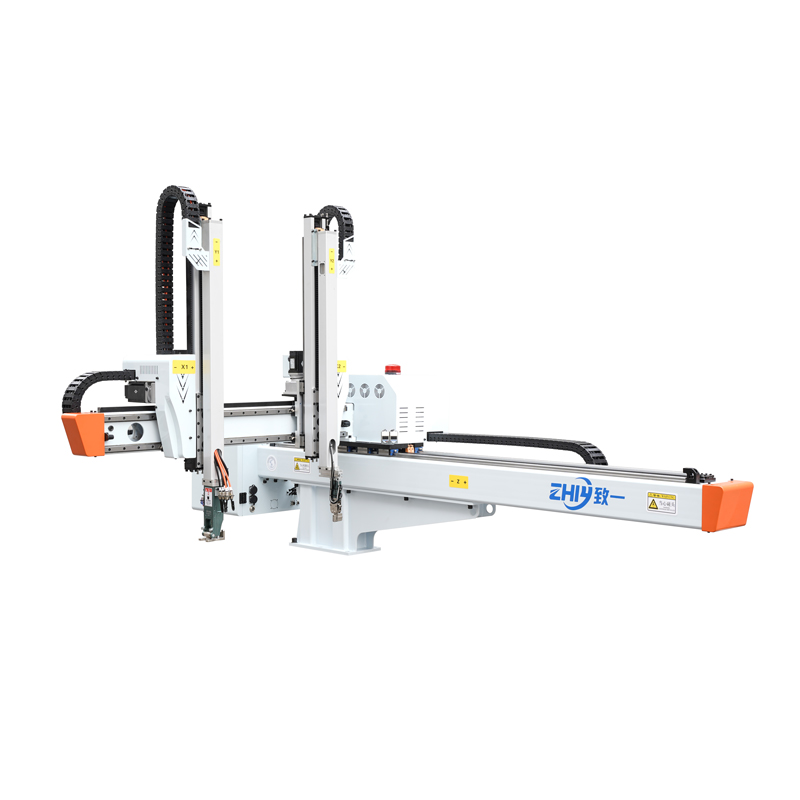
I. Essential Technical Parameter 1: Repeatability – The "Invisible Key" to Product Yield
1. What is repeatability?
Repeatability refers to the error range when the robot returns to the same position after each picking and placing action. The unit is usually measured in millimeters (mm) or micrometers (μm). For injection molding production, it's not "the higher the better," but "the better the match to the application scenario" – this is the core logic for selecting the repeatability of an injection molding robot.
2. Why is it crucial for production?
- For medical consumables (such as sensor brackets) or miniature electronic components: an accuracy of ±0.02mm or less is required, otherwise it will lead to insert displacement and product assembly failure;
- For new energy vehicle battery casings: the accuracy needs to be controlled within ±0.05mm to avoid exceeding wall thickness error limits and reduce the defect rate from 1.2% to 0.03%;
- For home appliance parts (such as mobile phone casings, refrigerator drawers): ±0.1mm accuracy can meet the needs of mass production, and excessively pursuing high accuracy will increase procurement costs by more than 30%. 3. ZHIYI's Precision Advantages
All ZHIYI series injection molding machine servo robots are ISO9001/CE certified, including:
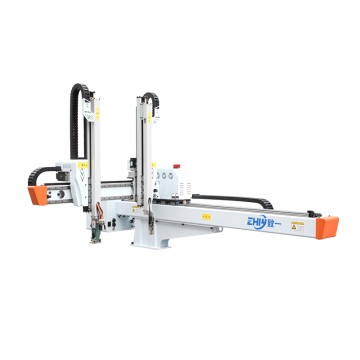
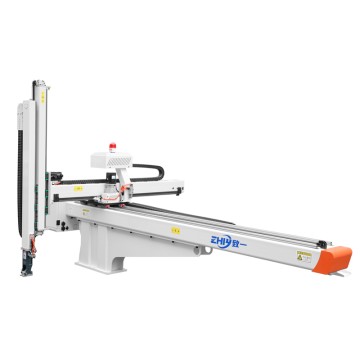
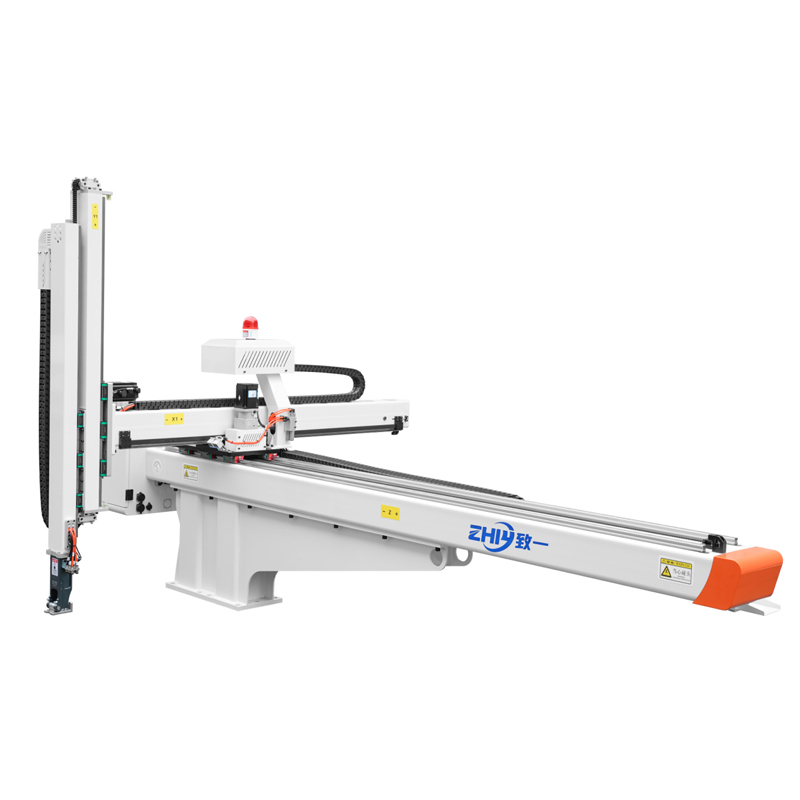
- Bullhead 3-axis servo robot (maximum load 50kg): Repeat positioning accuracy ±0.05mm, suitable for 650-3200 ton injection molding machines, specifically designed for large mold part removal;
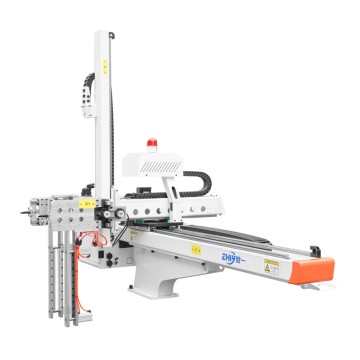
- Five-axis dual-arm servo robot: Accuracy up to ±0.03mm, supporting complex processes such as in-mold insertion and labeling, and has served 3C industry customers such as Canon and HP.
II. Essential Technical Parameters 2: Load Capacity – Avoiding "Overload Damage" and "Production Waste"
1. The "Correct Calculation Method" for Load Capacity
Purchasers often overlook that the robot's "load" is not only the weight of the product but also needs to include the weight of auxiliary components such as fixtures and suction cups (usually requiring a 10%-20% redundancy). For example, to pick up a 10kg plastic bucket, A Robot with a load capacity of ≥12kg is required – this is a crucial detail in the parameter selection of heavy-duty injection molding servo robots.
2. Load Requirements for Different Scenarios
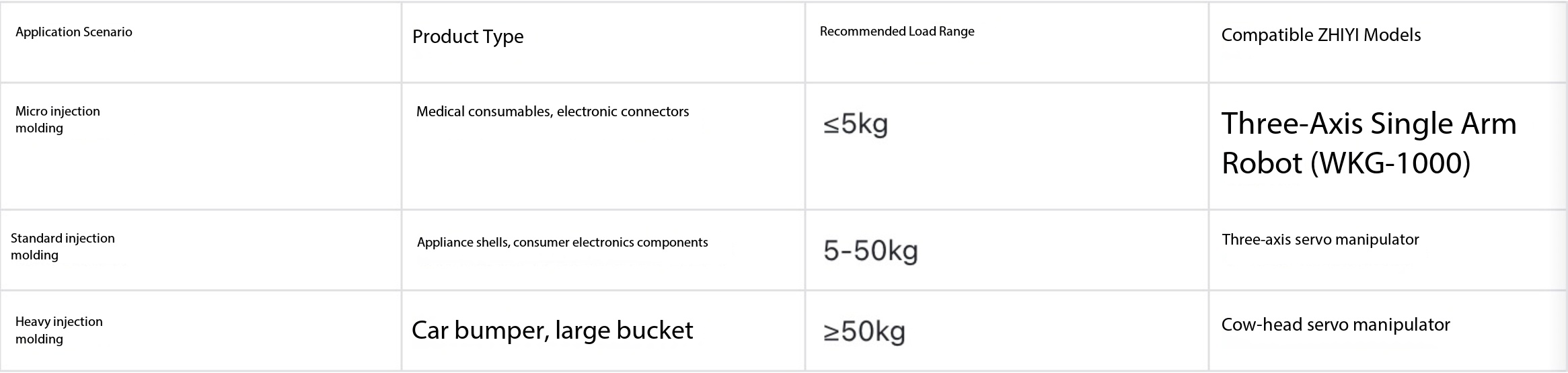
3. ZHIYI's Load Advantages
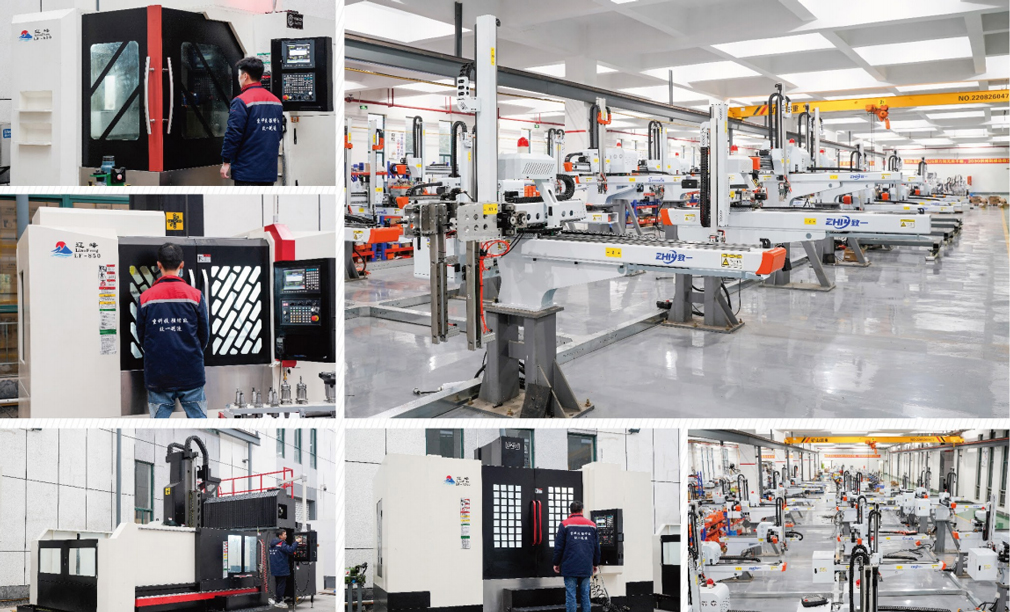
ZHIYI has an annual production capacity of 2500 units, with load capacities covering 1-60kg, adaptable to 100-650 ton injection molding machines:
- For the automotive industry: Bullhead robots have a load capacity of up to 60kg, capable of stably gripping heavy parts such as battery covers and headlights;
- For food packaging: Lightweight five-axis robots (8kg load capacity), suitable for 350-800 ton injection molding machines, meeting the high-speed pick-and-place requirements for milk powder lids and ice cream lids.
III. Essential Technical Parameters 3: Cycle Time – Directly Affecting Production Line Capacity
1. The "Hidden Value" of Cycle Time
Cycle time refers to the time it takes for the robot to complete a single "pick-and-place" cycle, measured in seconds (s). For mass production, a 1-second cycle difference can affect the production capacity of over 8000 pieces per day (24 hours) – this is a core consideration in ZHIYI's five-axis injection molding robot motion cycle design.
2. Selection Misconceptions: Focusing only on "speed" and neglecting "stability"
Some buyers blindly pursue "high speed" but ignore the stability of the robot's operation: a high-speed but shaky robot can lead to product scratching and mold collisions, increasing rework costs. ZHIYI achieves a balance of "high speed + stability" through servo drive + THK linear guide technology:
- High-speed blow molding machine sorting robot: Cycle time of only 7-10 seconds, with no shaking during picking;
- Dual-station five-axis system: Reduces waiting time through "alternating picking," increasing overall production capacity by 25%.
3. ZHIYI's Cycle Advantage
ZHIYI robots' motion cycles can be customized according to the injection molding machine's cycle time: for example, the automated solution designed for a milk tea cup manufacturer, producing "12 cups at a time," matches the injection molding machine's 15-second cycle, achieving 24-hour uninterrupted production and reducing labor costs by 30%.
Advanced Purchasing: The "Linked Matching" Logic of 3 Parameters
A single parameter cannot determine the suitability of a robot; a combination of "precision + load + cycle" is needed for selection:
- Case 1: New energy battery casing production → Precision ±0.05mm + Load 30kg + Cycle 12 seconds → Suitable for ZHIYI five-axis dual-arm robot;
- Case 2: Disposable cutlery production → Precision ±0.1mm + Load 3kg + Cycle 8 seconds → Suitable for ZHIYI three-axis high-speed robot.
ZHIYI holds 13 utility model patents and can provide a full range of services, from initial consultation to after-sales support, including "parameter customization + on-site debugging," based on your injection molding machine tonnage and product process – 24-hour response to global customer needs (Inquiry Hotline: +86 0579-83987825). Why choose ZHIYI injection molding machine servo robots?
1. Leading Technology: Our technology will reach a leading domestic level by 2025, supporting "lights-out factory" deployments;
2. Quality Assurance: All products in our series are ISO9001/CE certified, with over 500 project cases covering well-known companies such as Hars and Jiayi Co., Ltd.;
3. Cost Optimization: Our automation solutions help customers reduce labor costs by 30% and decrease defect rates by over 90%.