
Leave Your Message
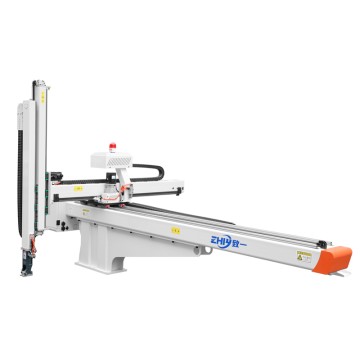
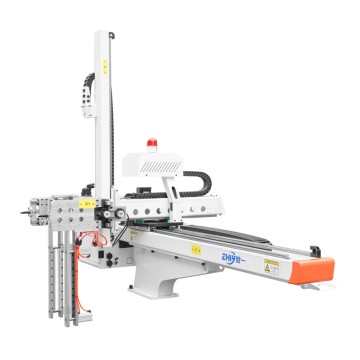
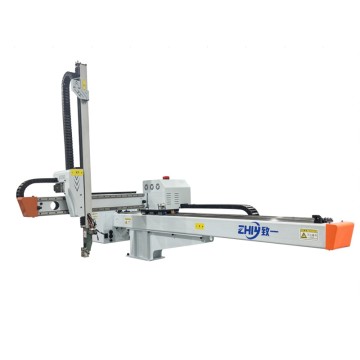
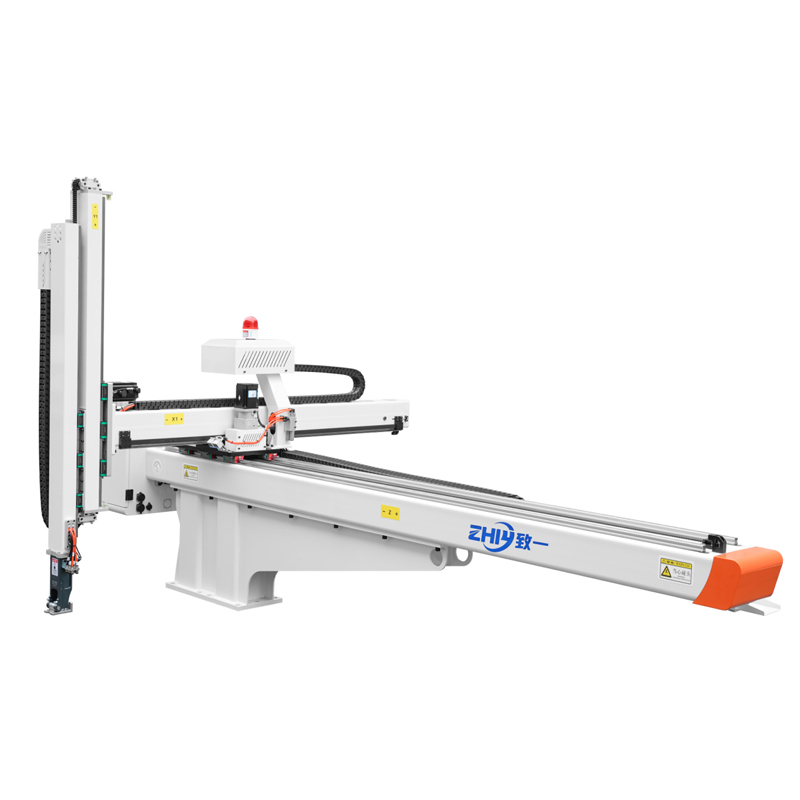
How to quickly determine whether the motor of the servo manipulator is damaged
How to quickly determine whether the motor of the Servo Manipulator is damaged
In the process of industrial automation, the servo manipulator plays an indispensable role as a key device to improve production efficiency and precision. The servo motor is one of the core components of the servo manipulator, and its performance is directly related to the operating status of the entire equipment. Therefore, it is crucial for international wholesale buyers and related maintenance personnel to be able to quickly and accurately determine whether the motor of the servo manipulator is damaged. This article will introduce in detail a variety of practical judgment methods to help you discover potential problems with the motor in a timely manner, reduce downtime, and reduce production losses.
1. Observe the appearance
Check the surface of the motor: First, carefully check whether there are obvious signs of physical damage such as cracks, deformation, and burning on the outer shell of the motor. If these conditions are found, it is likely that the inside of the motor has also been damaged and further in-depth inspection is required. In addition, check whether the mounting screws of the motor are loose. If they are loose, the motor may vibrate during operation, which will damage the motor components in the long run.
Check the wiring terminals and cables: Check whether the wiring terminals of the motor are oxidized, burned, or loose. Whether the cables are damaged, aged, or broken. Poor contact or cable damage may affect the normal power supply and signal transmission of the motor, and even cause the motor to malfunction or malfunction.
2. Auditory and tactile judgment
Listen to the motor sound: During the operation of the motor, a normal servo motor usually emits a steady and rhythmic hum. If you hear a sharp friction sound, it may be due to bearing wear or friction between the rotor and the stator; periodic abnormal noises often indicate problems with the gear transmission components; irregular knocking sounds may be caused by loose or unbalanced mechanical structures; and howling sounds are usually related to the electromagnetic field or control system of the motor, which may be caused by improper driver parameter settings or internal short circuits in the motor.
Touch the motor housing: After the motor has been running for a period of time, gently touch the motor housing with the back of your hand to feel whether its temperature rises abnormally. Excessive temperature may be caused by poor heat dissipation, overload, or short circuit in the internal winding of the motor. Under normal circumstances, the temperature of the motor housing should be kept within a relatively reasonable range, generally not exceeding 80°C. The specific temperature should also be determined based on factors such as the power, model, and working environment of the motor. At the same time, pay attention to whether the motor surface is vibrating. If the vibration is too large, it may indicate that the motor bearing is worn, the rotor is unbalanced, or the mechanical installation is improper.
3. Use instruments to detect
Multimeter detection
Measure the winding resistance: Turn off the power of the motor and disassemble the relevant components to expose the winding terminals of the motor. Use the resistance range of the multimeter to measure the resistance values between the three-phase windings respectively. Under normal circumstances, the resistance values of the three-phase windings should be equal or close. If the resistance value of one or two phases is obviously larger or smaller, or even infinite (open circuit) or zero (short circuit), it means that the motor winding is faulty. For example, if the resistance value of one phase winding is much larger than that of the other two phases, it may indicate that the phase winding has a problem of open circuit or poor contact; if the resistance value is zero, it indicates that the winding is short-circuited.
Check the insulation resistance: Use an insulation resistance meter (megohmmeter) to measure the insulation resistance between the motor winding and the casing. Under normal circumstances, the insulation resistance value should be above several megohms. If the insulation resistance value is too low, it means that the insulation performance of the motor has deteriorated, and there may be a risk of leakage, which may easily cause the motor winding to break down and damage, or even cause a safety accident.
Oscilloscope detection: The electrical signal waveform of the motor can be observed more intuitively through an oscilloscope. Connect the probe of the oscilloscope to the output end of the motor or the relevant control signal line to observe whether the waveforms of signals such as voltage and current are normal. For example, a normal motor drive signal should be a regular square wave or sine wave. If the waveform is distorted, jittered, burred or has abnormal amplitude, it may mean that the motor or driver is faulty. Oscilloscope detection can help technicians quickly locate the fault point, such as judging whether the encoder signal is normal and whether the driver output is stable.
4. Reference alarm information and fault codes
Check the driver alarm indicator: Many servo motor drivers are equipped with alarm indicators, and the colors and flashing patterns of these indicators usually carry specific fault information. For example, a red indicator light that is continuously on may indicate a hardware failure, such as motor overload, short circuit or driver failure; a flashing yellow indicator light may indicate overload, overheating or encoder signal abnormality. The specific meaning needs to be interpreted according to the driver's manual.
Read the fault code: When the servo manipulator fails, the control system often records the corresponding fault code. These fault codes are an important basis for rapid fault diagnosis. Buyers or maintenance personnel can obtain detailed explanations of the fault codes by consulting the user manual of the servo manipulator or contacting the equipment supplier. For example, the fault code "20504" of a certain brand of servo manipulator indicates that the motor temperature is too high, which may be caused by heat dissipation problems or overload; the fault code "10023" may indicate an encoder failure, and further inspection of the encoder connection, calibration or damage is required.
5. Perform functional tests
No-load operation test: Under the premise of ensuring safety, first perform a no-load operation test on the servo manipulator. Observe whether the motor's start, stop, forward and reverse rotation, and speed regulation functions are normal under no-load conditions. If the motor has problems such as difficulty in starting, unstable operation, excessive speed deviation, or abnormal noise when it is no-load, it may be that there is a fault in the motor itself or the drive control system. For example, wear of the motor bearing may cause increased vibration and noise during no-load operation; incorrect driver parameter settings may cause unstable motor speed, etc.
Load operation test: On the basis of normal no-load operation, gradually increase the load to make the servo manipulator simulate the actual working state. Observe the operation of the motor under load conditions and check whether there are problems such as overheating, overload protection action, excessive speed drop, inaccurate positioning, etc. If the motor cannot work normally under rated load, such as overload alarm, speed is significantly lower than the set value, or the expected torque output cannot be achieved, it may be that the motor performance is degraded or damaged. For example, a local short circuit in the motor winding will reduce its output power and cannot meet the demand when the load increases; a failure of the mechanical transmission component may cause the motor load to be too large, thereby affecting the normal operation of the motor.
6. Check related components
Encoder inspection: The encoder is an important part of the servo motor and is used to detect the position and speed information of the motor. Use a professional encoder detection instrument to send a test signal and observe whether the encoder's feedback data is accurate and stable. If the data jumps, is lost, or the error is too large, it may indicate that the encoder is damaged or has poor contact. In addition, you can also check the appearance of the encoder, the connection line, and whether the installation is loose to make a preliminary judgment on whether it is normal. For example, whether the encoder's grating disk is dirty or damaged, and whether the connecting cable is worn or broken will affect its normal operation.
Bearing inspection: Turn the motor shaft by hand to feel whether there is any stagnation, abnormal resistance or looseness. If the rotation is not flexible or there is an abnormal sound, it may mean that the bearing is worn, lacks oil or is damaged. For motors that have been installed on the manipulator, you can also indirectly judge the state of the bearing by observing whether the manipulator moves flexibly and smoothly. For example, if the manipulator shakes, freezes or the accuracy of repeated positioning decreases during movement, it may be caused by a motor bearing failure.
Cooling system inspection: Check whether the motor's cooling fan is operating normally and whether the heat sink is clogged with dust. If the heat dissipation is poor, the motor temperature will rise, accelerate the aging of the insulation material inside the motor, and cause motor failure. If necessary, compressed air can be used to clean the dust on the heat sink to ensure that the heat dissipation channel is unobstructed. At the same time, check whether the motor of the cooling fan is damaged. If damaged, it should be replaced in time.
7. Compare normal motor parameters
Collect motor nameplate information: Before starting the comparison, carefully check the various parameters on the motor nameplate, including the motor model, rated voltage, rated current, rated power, rated speed, insulation level, protection level, etc. These parameters are important bases for judging whether the motor is working properly.
Actual measurement and comparison: Use corresponding instruments, such as clamp ammeter to measure the actual working current of the motor, tachometer to measure the actual speed of the motor, etc., and compare the measurement results with the rated parameters on the nameplate. If the actual current significantly exceeds the rated current, it may indicate that the motor is overloaded or there is a short circuit. If the actual speed deviates too much from the rated speed, it may be a control system failure of the motor or an abnormality of the mechanical transmission components.
8. Regular maintenance and preventive inspection
Develop a maintenance plan: In order to ensure that the motor of the servo manipulator always maintains a good operating state and reduce the probability of failure, a reasonable regular maintenance plan should be formulated. According to the frequency of use of the equipment and the working environment, it is generally recommended to conduct a comprehensive inspection and maintenance every 3 to 6 months. The maintenance content includes cleaning the dust and debris on the surface and inside of the motor, checking whether the fasteners of the motor are loose, lubricating the bearings, and checking whether the cooling system is normal.
Preventive inspection: In daily use, regular preventive inspections are carried out to detect potential faults in a timely manner. For example, observe whether there are abnormal changes in the running sound, temperature, vibration, etc. of the motor; check whether the motor terminals and cables have signs of overheating, oxidation, breakage, etc.; pay attention to the alarm indicator and fault code display of the driver. Through these simple daily inspections, problems can be found in the early stage of the fault, so that corresponding measures can be taken to avoid further expansion of the fault.
9. Analysis of common causes of motor damage
Overload operation: Long-term overload operation is one of the common causes of servo motor damage. When the load borne by the motor exceeds its rated power, it will cause the motor current to be too large and the winding to overheat, thereby accelerating the aging of the insulation material, and eventually causing the winding to short-circuit, open circuit or ground fault. For example, in the process of heavy load handling or frequent starting and stopping of the manipulator, if the load parameters or control strategies are not set reasonably, it is easy to overload the motor.
Power supply problem: Unstable power supply will have a great impact on the servo motor. Excessive voltage will cause the motor winding to overheat and insulation breakdown; too low voltage may cause difficulty in starting the motor, failure to work normally, or even burn the motor. In addition, harmonic interference in the power supply may also cause problems such as motor vibration, increased noise, and reduced efficiency. For example, in the power system of the factory, if there are phenomena such as the start and stop of large equipment, power grid failure or aging of power lines, the power supply quality may be reduced, affecting the normal operation of the motor.
Environmental factors: A harsh working environment will accelerate the damage of the motor. For example, in an environment with high temperature, high humidity, high dust, corrosive gas, etc., the heat dissipation performance of the motor will be reduced, the insulation material will be easily damp and aged, and the metal parts will rust and corrode, thus affecting the performance and life of the motor. If the protection level of the motor is not enough, foreign objects such as iron filings, oil stains, water, etc. will enter, which will also cause problems such as internal short circuit, poor contact or mechanical jamming of the motor.
Mechanical failure: Failure of the mechanical structure will also cause damage to the motor. For example, bearing wear, gear damage, belt aging and loosening will cause the vibration of the motor to intensify during operation, increase the load, and then cause the motor to overheat and the winding to fatigue damage. In addition, improper installation of mechanical parts, such as coupling eccentricity and transmission shaft bending, will also cause abnormal vibration and noise of the motor, affecting the normal operation of the motor.
10. Summary
To quickly and accurately determine whether the motor of the servo manipulator is damaged, it is necessary to use a variety of methods and means in combination. From appearance inspection, hearing and touch judgment, to instrument detection, alarm information analysis, to related component inspection and functional testing, every link is crucial. Through these methods, you can fully understand the operating status of the motor and discover potential fault problems in time.
For international wholesale buyers, when choosing a servo manipulator, you should pay attention to the quality, performance and after-sales service of the equipment. Give priority to well-known brands and reputable suppliers to ensure that the purchased equipment has reliable motors and perfect warranty policies. During the use of the equipment, strictly follow the operating procedures, perform regular maintenance, and provide professional training for operators to improve their ability to identify and handle equipment failures.
When encountering complex faults such as motor damage, do not blindly repair it yourself. You should contact a professional maintenance organization or equipment supplier in time, and have professional technicians perform maintenance and replace parts. At the same time, establish an equipment failure file to record the time, phenomenon, cause and maintenance measures of each failure. This will help analyze the failure rules of the equipment, formulate a more scientific and reasonable maintenance plan, improve the reliability and service life of the equipment, and ensure the smooth progress of production.