
Leave Your Message
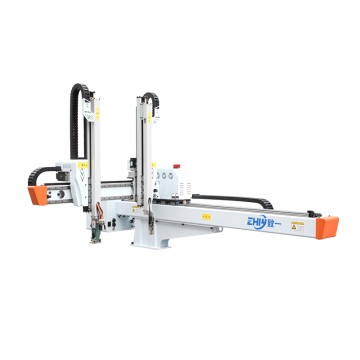
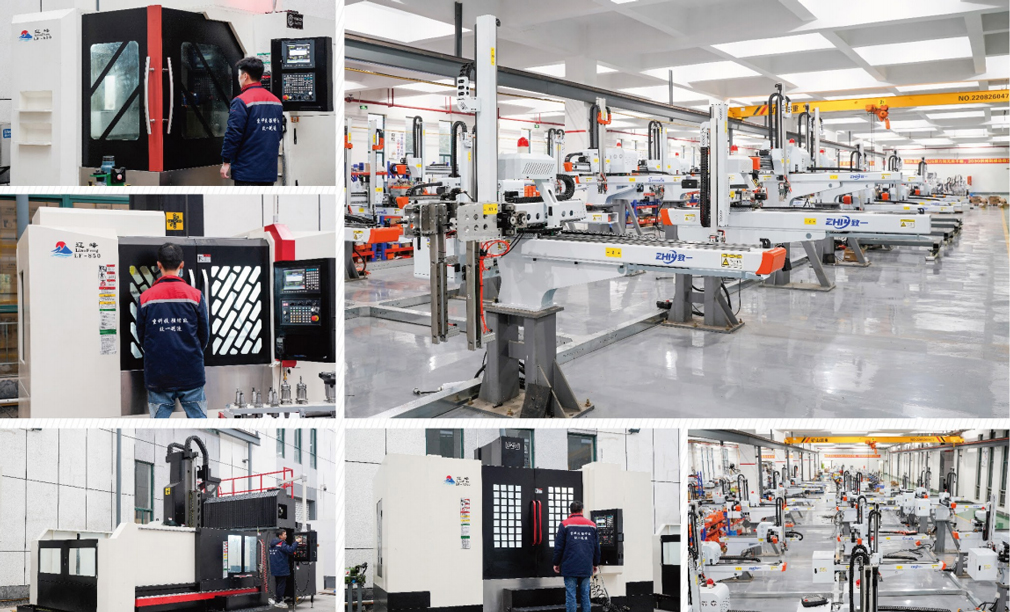
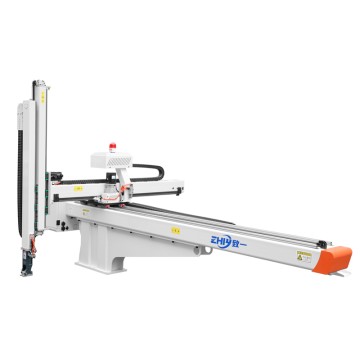
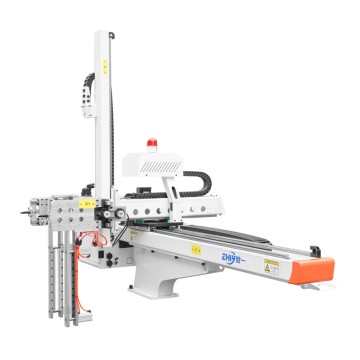
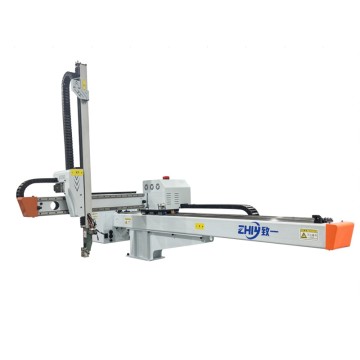
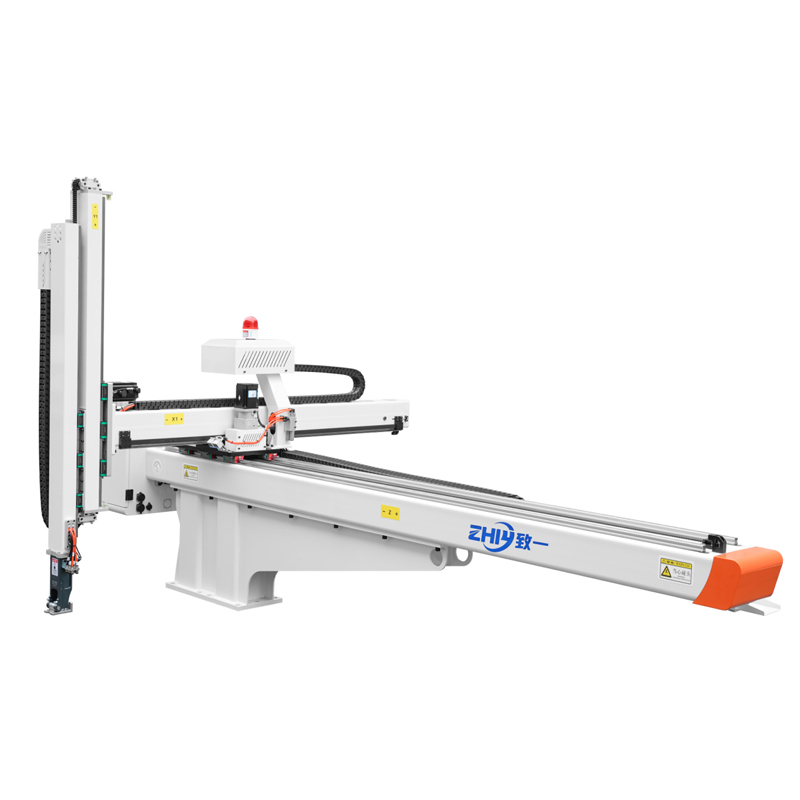
How to Ensure the Accuracy of Five-Axis Servo Robots?
How to Ensure the Accuracy of Five-Axis Servo Robots? From Core Technology to Implementation
In precision manufacturing, electronic assembly, medical device processing, and other fields, the accuracy of five-axis servo robots directly determines product quality and production efficiency. Compared to three-Axis Robots,five-axis systems, with two additional rotary axes (usually the A, C, or B axes), can achieve more complex spatial motion, but this also places higher demands on precision control—even an error of 0.01mm can result in part scrap and production line halts. This article will analyze the key methods for ensuring the accuracy of five-axis servo robots from five core aspects: mechanical design, servo system, control algorithm, installation and commissioning, and routine maintenance, providing a practical guide for enterprise selection and operation.
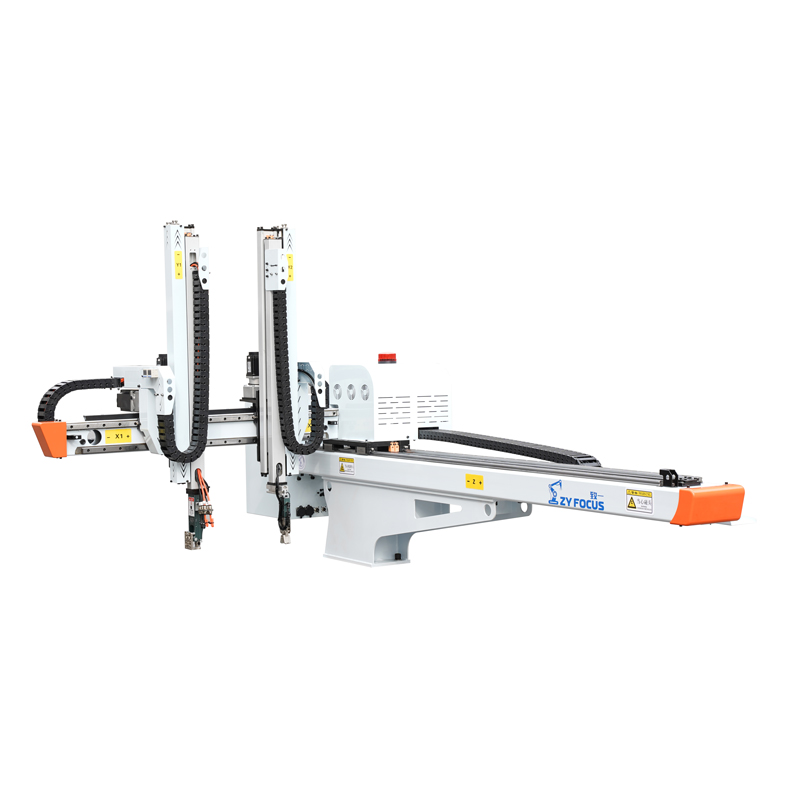
First. Mechanical Structure: The "Physical Foundation" of Accuracy: Error Control from the Design Source
The accuracy of a five-axis servo robot depends primarily on the stability of its mechanical structure. Any deformation, play, or wear of its components will directly translate into motion errors. Focus on the following three core components:
1. Core Transmission Components: Choosing the Right Type and Control Precision
The transmission system is key to both power transmission and precision execution. Common transmission methods include ball screws, harmonic reducers, and planetary reducers. These must be matched based on load and precision requirements:
Ball screws: These are responsible for the movement of linear axes (such as the X/Y/Z axes). Their accuracy directly impacts positioning error. We recommend selecting C3 accuracy or higher (positioning error ≤ 0.008mm/300mm). A preload mechanism (such as a double-nut preload) should be used to eliminate backlash between the screw and nut. High-strength alloy steel (such as SUJ2) should be preferred, and hardened (surface hardness ≥ HRC58) to reduce wear and deformation after long-term use.
Harmonic reducers: Used for rotating axes (such as A/C axes), they offer advantages such as a high transmission ratio and compact size. However, elastic deformation of the flexspline may cause return errors. Choose a high-precision model with a return error of ≤1 arc minute. Also, control the input speed (avoid exceeding 80% of the rated speed) to minimize fatigue damage to the flexspline. Some high-end equipment uses a combination of a harmonic reducer and an absolute encoder to compensate for elastic deformation errors in real time.
Guides: These guide the robot's motion and must maintain parallelism with the transmission components. Linear roller guides are recommended (they offer greater load capacity and rigidity than ball guides). During installation, calibrate the guide rail parallelism using a laser interferometer (to an error of ≤0.005mm/m) to avoid "creep" or misalignment caused by guide rail tilt.
2. Frame: A balance between rigidity and lightweight
Insufficient frame rigidity can lead to "vibration deformation" during movement, especially at high speeds or under heavy loads, where errors are magnified. Design considerations:
Material selection: High-strength aluminum alloys (such as 6061-T6) can be used for small and medium-load manipulators, balancing lightweightness and rigidity. For heavy-load applications (loads > 50kg), cast iron (such as HT300) or welded steel structures are recommended. Aging treatment can be used to eliminate internal stresses and reduce deformation after long-term use.
Structural optimization: Adopt a "triangular support" or "box-type" design to enhance the frame's torsional rigidity. Add reinforcement ribs to key load-bearing areas (such as rotating axis connections) to avoid localized stress concentration. For example, a five-axis manipulator from an automotive parts manufacturer reduced dynamic motion error by 40% by increasing the torsional rigidity of the frame from 150 N·m/° to 280 N·m/°.
3. End effector: Adapt to the load and reduce "end droop"
The weight and mounting accuracy of the end effector (such as the gripper or suction cup) will affect the manipulator's "end positioning accuracy." The "load matching" principle must be adhered to:
The end load must not exceed 80% of the robot's rated load (to avoid shaft deformation caused by overload);
The connection between the actuator and the robot flange must be secured using dowel pins and high-strength bolts. The flange surface flatness error must be ≤ 0.003mm, and the coaxiality error must be ≤ 0.005mm to prevent end misalignment due to connection eccentricity.
Second. Servo System: The "Power Core" of Precision, Reducing Deviation at the Control Level
The motion accuracy of a five-axis servo robot is essentially the "servo system's ability to follow commands"—after a command is sent, the servo motor, driver, and encoder must work together to minimize errors. The following three aspects require key optimization:
1. Servo Motor: Select the Right Type + Improve Resolution
The servo motor is the "power output source," and its accuracy directly determines motion smoothness and positioning accuracy.
Type Selection: Permanent magnet synchronous servo motors are preferred (they offer 30% faster response speed and 20% less torque ripple than asynchronous motors). This is especially important in high-speed start-stop scenarios (such as electronic component pickup), as they can reduce "lost steps" errors caused by insufficient torque.
Encoder Resolution: The encoder is the "position feedback element." The higher the resolution, the more accurate the position detection. It is recommended to use a 23-bit absolute encoder (positioning accuracy ≤ 0.001mm) for linear axes and a 17-bit absolute encoder (angular accuracy ≤ 0.005°) for rotary axes. Compared to incremental encoders, absolute encoders do not require "home calibration," which can prevent position deviations after power failures and restarts.
2. Driver: Optimize the control algorithm to reduce following error
The servo driver is the "motor control center," and the quality of its algorithm directly affects its error compensation capabilities. The following core functions must be enabled:
PID parameter auto-tuning: The driver automatically identifies motor load and inertia, optimizing proportional (P), integral (I), and differential (D) parameters to reduce overshoot (e.g., oscillation during positioning). For example, a customer in the 3C industry reduced X-axis following error from 0.02mm to 0.008mm through driver auto-tuning.
Feedforward control: This predicts motor load changes (e.g., inertial force during acceleration) in advance and proactively outputs torque compensation to avoid speed deviations caused by load fluctuations. For five-axis linkage scenarios (e.g., surface machining), feedforward control can reduce contour error by over 30%.
Resonance suppression: To address mechanical resonance during Robot Movement (e.g., frame vibration during high-speed motion), the driver uses "notch filtering" to eliminate vibrations at specific frequencies, reducing accuracy offsets caused by resonance.
3. Five-Axis Coordinated Control: Resolving "Inter-Axis Coupling Error"
The biggest challenge with five-axis manipulators is the coordination of multi-axis motion. When all five axes move simultaneously, the speed and acceleration of each axis must be strictly matched, otherwise "contour errors" (such as shape deviations when machining curved surfaces) will occur. This requires optimization through the following technologies:
Kinematic forward and inverse algorithms: Utilize a high-precision five-axis kinematic model to accurately calculate the motion parameters of each axis (such as angle compensation for rotary axes) to avoid errors caused by algorithmic approximations. For example, for a "cradle-style" five-axis configuration (A + C axes), an algorithm must compensate for the offset between the centers of the rotary and linear axes.
Interpolation algorithm optimization: Utilize "spline interpolation" or "NURBS interpolation" (rather than traditional linear interpolation) to achieve smoother motion for each axis and reduce the impact errors caused by sudden speed changes. A medical device manufacturer improved the accuracy of artificial joint surface machining from ±0.03mm to ±0.015mm by implementing NURBS interpolation.
Third. Error Compensation: A "Correction Method" for Accuracy, Using Technology to Offset Inherent Deviations
Even after mechanical and servo systems have been optimized, inherent errors (such as thermal error, positioning error, and geometric error) will still exist, requiring active compensation techniques to further mitigate them:
1. Thermal Error Compensation: The "Invisible Killer" of Temperature Changes
When a five-axis robot is in operation, friction generates heat in the motor, lead screw, and guide rail, causing expansion and deformation of the components. For example, for every 1°C increase in ball screw temperature, the length increases by approximately 11μm/m, directly leading to linear axis positioning errors. Solutions include:
Hardware: Install temperature sensors (such as PT1000) near the motor and lead screw to monitor temperature changes in real time.
Software: Develop a "temperature-error" mathematical model (such as a linear regression model) to automatically calculate and compensate for errors based on sensor data. For example, a machine tool manufacturer used thermal error compensation to stabilize the long-term operating accuracy (over an 8-hour period) of a five-axis robot from ±0.025mm to ±0.012mm.
2. Positioning Error Compensation: Using a Laser Interferometer to "Calibrate Each Step"
Positioning error refers to the deviation between the robot's actual position and the commanded position. It must be measured and compensated using specialized equipment:
Measuring Tools: Use a laser interferometer (such as the Renishaw XL-80) to measure positioning error, repeatability error, and backlash for each axis.
Compensation Method: Import the measurement data into the Robot Control system, create an "error compensation table," and apply real-time corrections during movement. For example, at an aviation parts manufacturer, laser interferometer calibration reduced the X-axis positioning error from 0.018mm to 0.006mm.
3. Geometric Error Compensation: Eliminating "Inherent Deviations" in Structural Design
The geometric errors of a five-axis robot include axis perpendicularity errors and rotational axis eccentricity errors, which require compensation through the following methods:
Perpendicularity Calibration: Use a square and dial indicator or a laser interferometer to measure the perpendicularity between the linear axes (e.g., the perpendicularity error between the X and Y axes should be ≤ 0.005 mm/m). Correct this error using the control system's "perpendicularity compensation" function.
Rotational Axis Eccentricity Compensation: Use a ballbar to measure the eccentricity of the rotational axis (e.g., the offset between the A-axis rotation center and the Z-axis). Eccentricity compensation parameters are then incorporated into the kinematic model to avoid end position deviations caused by eccentricity.
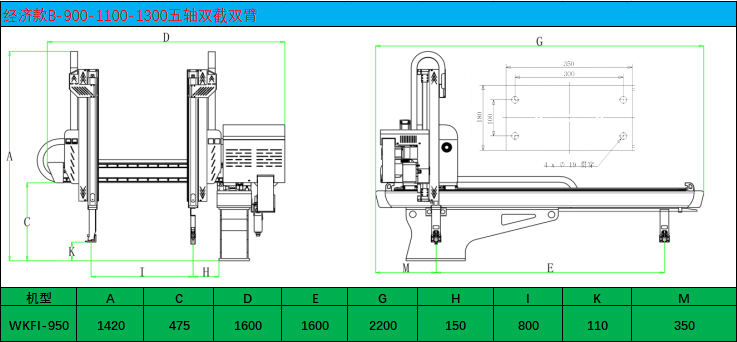
Fourth. Installation and Commissioning: The "Key to Implementation" of Accuracy; Details Determine the Final Results
Even if the equipment itself meets the required accuracy, improper installation and commissioning can still lead to precision loss. The following procedures must be strictly followed:
1. Installation Base: Ensure a stable and level foundation
Foundation Requirements: The surface on which the robot is installed must be concrete-cured (strength ≥ C30) and ≥ 200mm thick to prevent tilting caused by ground subsidence.
Horizontal Calibration: Use a precision level (accuracy 0.02mm/m) to calibrate the machine body for horizontality. The horizontal error of the linear axis should be ≤ 0.01mm/m, and the end-face runout of the rotary axis should be ≤ 0.005mm.
2. Axis System Debugging: Optimize stepwise from single-axis to coordinated
Single-axis debugging: First test the motion accuracy (positioning error and repeatability) of each axis individually. Once the single-axis accuracy meets the standard, proceed to multi-axis coordinated debugging.
Coordinated debugging: Through trial cutting or trajectory tracking testing (e.g., moving the robot along a preset curve and using a laser tracker to detect trajectory deviation), optimize the five-axis linkage parameters to ensure that the contour accuracy meets the standard.
3. Load Testing: Simulate Actual Operating Conditions to Verify Accuracy Stability
Perform a continuous load test for 8-12 hours based on the "maximum load" and "maximum speed" used in actual production.
Perform regular accuracy checks during the test (e.g., measuring end-position error with a dial indicator every 2 hours) to ensure that accuracy remains within acceptable limits under load conditions.
Fifth. Daily Maintenance: "Long-Term Guarantee" of Accuracy: Prevention is Better Than Repair
The accuracy of a five-axis servo robot will decrease over time, so a regular maintenance schedule is essential:
1. Transmission Component Maintenance: Lubrication and Cleaning to Reduce Wear
Ball Screw/Guide Rails: Apply specialized grease (e.g., lithium-based grease) every 50 hours of operation to prevent wear caused by dry friction. Clean the guide rail dust cover monthly to prevent dust from entering the guide rail.
Harmonic Reducer: Check the lubricant level every 200 hours of operation and add specialized lubricant (e.g., harmonic reducer gear oil) as needed. Change the lubricant annually.
2. Servo System Maintenance: Regular Inspections and Early Warnings
Encoder: Clean the encoder housing quarterly and check the cable connections for security to prevent signal interference caused by loose cables.
Drive: Check the driver's cooling fan monthly for proper operation and clean dust from the cooling holes to prevent performance degradation due to overheating.
3. Accuracy Recheck: Regular Calibration and Timely Correction
Recheck the accuracy of each axis every three months using a laser interferometer or ballbar. If the error exceeds the threshold (e.g., positioning error > 0.01mm), re-compensate promptly.
Perform a "full accuracy calibration" annually, including mechanical structure inspection, servo parameter optimization, and error compensation updates, to ensure the equipment maintains high-precision operation over the long term.
Conclusion: The accuracy of a five-axis servo robot is a "systems project," not a single step.
Ensuring the accuracy of a five-axis servo robot requires a comprehensive lifecycle approach: "design and selection - manufacturing - installation and commissioning - routine maintenance." The mechanical structure is the foundation, the servo system is the core, error compensation is the means, and installation and maintenance are the safeguards. For businesses, in addition to selecting high-precision equipment, it's crucial to develop a "precision management consciousness"—through regular calibration, data monitoring, and continuous optimization—to ensure that the robot's accuracy consistently meets production requirements.
If you encounter specific issues with the precision control of a five-axis servo robot (such as excessive error in a single axis or insufficient contour accuracy during linkage), further analysis based on actual operating conditions can be used to develop targeted optimization solutions, allowing the equipment to truly realize its "precision manufacturing" value.