
Leave Your Message
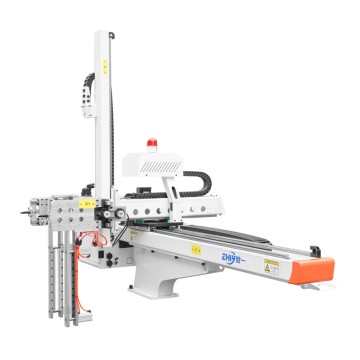
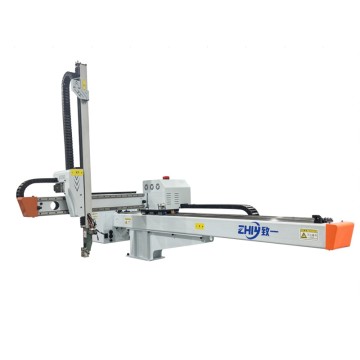
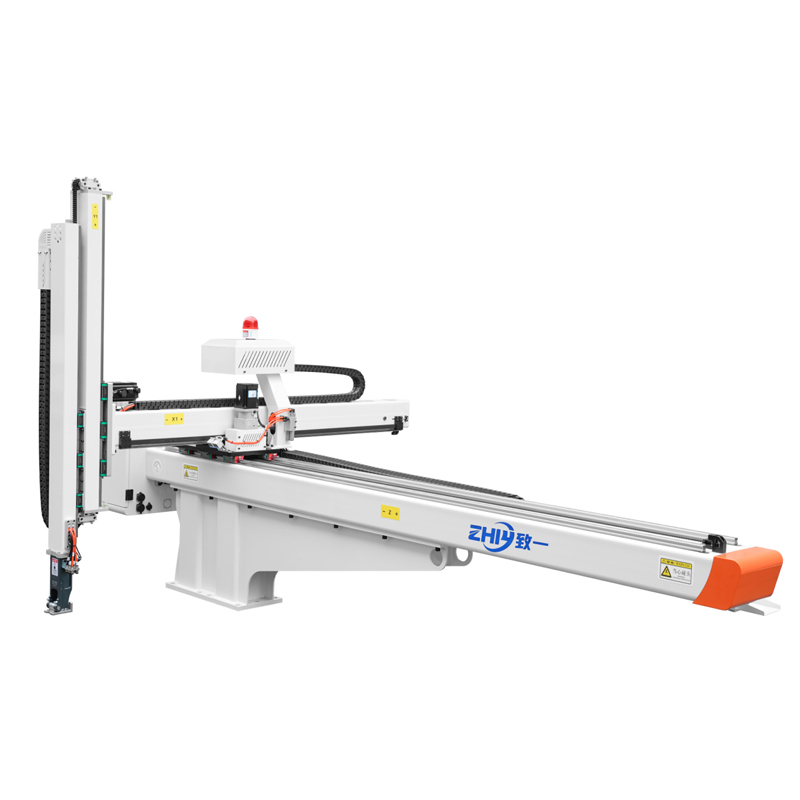
How to Choose the Right Injection Molding Robot
How to Choose the Right Injection Molding Robot
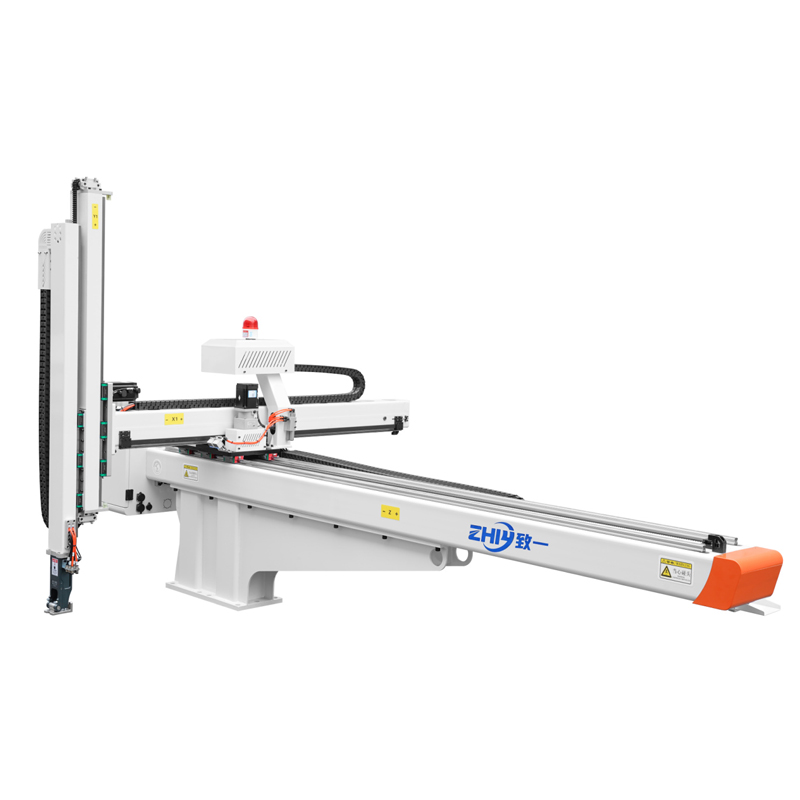
In today's competitive manufacturing environment, injection molding robots have become essential tools for improving productivity, reducing labor costs, and enhancing product quality. However, with a wide variety of robot models and configurations available on the market, selecting the right injection molding Robot Can be a daunting task. This guide aims to provide comprehensive advice on how to choose the right injection molding robot to meet your specific production needs.
Understanding Your Production Needs
Before diving into the technical details, it is crucial to have a clear understanding of your production requirements. Consider the following key factors:
1. Injection Machine Tonnage
The tonnage of your injection molding machine plays a significant role in determining the appropriate robot model. The robot's reach and payload capacity must be compatible with the size and capacity of the injection machine.
For machines under 250T: Single-arm robots with single-section arms are generally sufficient.
For machines over 300T: Dual-arm robots or single-arm robots with double-section arms may be necessary to accommodate larger molds and products.
2. Mold Structure
The structure of your molds also influences the type of robot you need.
For three-plate molds: These molds typically produce multiple products and require dual-arm robots to handle the increased complexity.
For two-plate molds: Single-arm robots are usually sufficient for these molds, especially if they are used for proprietary products with stable production.
3. Product Characteristics
The size, weight, and complexity of the products being molded are critical factors in robot selection.
For small products (under 150T machines): Suspended-arm robots are suitable for simple tasks such as picking up sprues.
For larger products (over 50T machines): Horizontal robots are preferable as they can handle more complex movements and ensure product appearance is not compromised.
4. Workshop Environment
The height of your workshop and the position of the injection machine can affect the robot's configuration.
For workshops with high ceilings: Single-section arms can be used for machines under 250T.
For workshops with low ceilings: Double-section arms are recommended for machines over 300T to ensure the robot can reach the required positions.
Technical Specifications of Injection Molding Robots
Once you have a clear understanding of your production needs, it's time to delve into the technical specifications of the robots. Here are some key considerations:
1. Drive Systems
The drive system of the robot affects its speed, precision, and reliability.
Single-axis servo: Suitable for basic applications where the robot's horizontal movement is driven by an AC servo motor, and the vertical movement is driven by a pneumatic cylinder.
Two-axis servo: Provides more precise control with both horizontal and vertical movements driven by AC servo motors.
Three-axis and five-axis servo: These robots offer the highest precision and flexibility, suitable for complex tasks such as in-mold labeling, insert molding, and high-speed picking.
2. Payload Capacity
The robot's payload capacity must be sufficient to handle the weight of the products and any fixtures used.
Maximum payload = fixture weight + product weight: Ensure that the total weight is within the robot's rated capacity to avoid overloading.
3. Motion Range
The robot's motion range, defined by its X, Y, and Z axes, must be compatible with the dimensions of your molds and products.
X-axis (pulling stroke): Determines how far the robot can reach into the mold to extract the product.
Y-axis (vertical stroke): Affects the robot's ability to move products up and down, especially important for multi-level mold structures.
Z-axis (horizontal stroke): Influences the robot's reach across the mold and its ability to place products in different locations.
4. Speed and Precision
The speed and precision of the robot are critical for maintaining production efficiency and product quality.
Speed: Look for robots with high-speed capabilities to reduce cycle times. However, ensure that the robot can maintain precision at high speeds.
Precision: Precision is especially important for tasks such as in-mold labeling and insert molding. Robots with high precision can place components accurately, reducing defects.
5. Safety Features
Safety is paramount in any manufacturing environment. Ensure that the robot is equipped with the necessary safety features.
Emergency stop buttons: Easily accessible in case of an emergency.
Safety sensors: To detect obstacles and prevent collisions.
Safety-rated controllers: Ensure that the robot's control system meets safety standards.
Types of Injection Molding Robots
There are several types of injection molding robots, each with its own advantages and applications. Understanding the differences will help you make an informed decision.
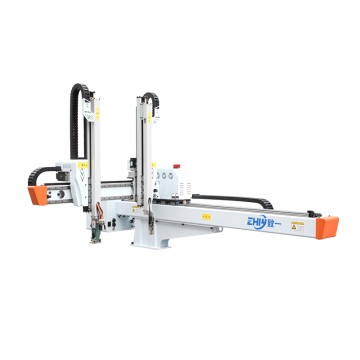
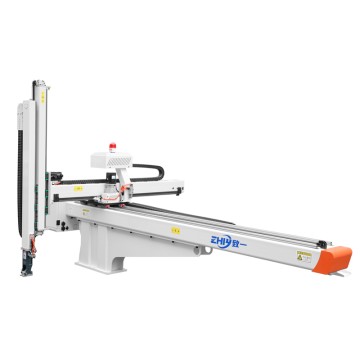
1. Single-Arm Robots
Single-arm robots are the most common type of injection molding robot. They are versatile and can be used for a wide range of applications.
Advantages:
Cost-effective: Generally less expensive than dual-arm robots.
Flexible: Can be configured for various tasks.
Space-efficient: Require less space compared to dual-arm robots.
Applications: Suitable for single-product molds, sprue picking, and simple product handling.
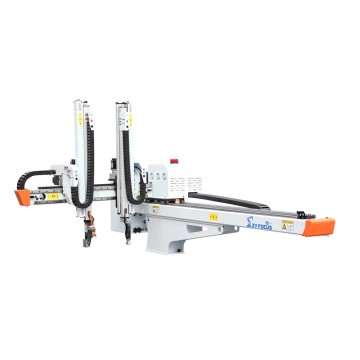
2. Dual-Arm Robots
Dual-arm robots are designed for more complex applications, such as handling multiple products or performing in-mold labeling.
Advantages:
Increased productivity: Can handle multiple products simultaneously.
Higher precision: Capable of more complex movements and tasks.
Enhanced flexibility: Can be configured for a wide range of applications.
Applications: Ideal for three-plate molds, in-mold labeling, and multi-product molds.
3. Horizontal Robots
Horizontal robots are designed to move products horizontally, making them ideal for certain types of molds and products.
Advantages:
Improved product appearance: Ensures that products are not damaged during handling.
Suitable for large products: Can handle larger products and molds.
High-speed picking: Capable of high-speed picking and placing.
Applications: Suitable for large products, high-speed picking, and applications where product appearance is critical.
4. Suspended-Arm Robots
Suspended-arm robots are typically used for smaller products and simpler tasks.
Advantages:
Cost-effective: Generally less expensive than other types of robots.
Simple to operate: Easy to program and maintain.
Space-saving: Can be installed in tight spaces.
Applications: Ideal for small products, sprue picking, and simple product handling.
Additional Features to Consider
When selecting an injection molding robot, there are several additional features that can enhance its functionality and efficiency.
1. In-Mold Labeling (IML) Function
For applications requiring in-mold labeling, ensure that the robot is equipped with the necessary features.
Label placement precision: The robot must be able to place labels accurately to avoid defects.
Label handling: The robot should be capable of handling labels without damaging them.
2. Insert Molding Function
If your production involves insert molding, the robot should have the appropriate features.
Insert handling: The robot must be able to handle inserts accurately and place them in the mold without damaging them.
Precision: High precision is essential for accurate placement of inserts.
3. Multi-Level Mold Handling
For molds with multiple levels, the robot must be capable of handling products from different levels.
Vertical reach: Ensure that the robot has sufficient vertical reach to access all levels of the mold.
Precision: High precision is necessary to accurately place products from different levels.
4. High-Speed Picking
For applications requiring high-speed picking, the robot should have the necessary speed and precision.
Speed: Look for robots with high-speed capabilities to reduce cycle times.
Precision: Ensure that the robot can maintain precision at high speeds to avoid defects.
5. Customizable End-of-Arm Tooling (EOAT)
The end-of-arm tooling (EOAT) is a critical component of the robot, as it directly interacts with the products.
Customizable: Ensure that the EOAT can be customized to handle different products and tasks.
Durability: The EOAT should be durable and capable of withstanding repeated use.
Precision: High precision is essential for accurate handling of products.
Evaluating Robot Manufacturers
When selecting an injection molding robot, it is important to evaluate the manufacturers carefully. Here are some key factors to consider:
1. Experience and Reputation
Choose a manufacturer with a proven track record in the industry.
Years of experience: Look for manufacturers with extensive experience in producing injection molding robots.
Customer reviews: Check customer reviews and testimonials to gauge the manufacturer's reputation.
2. Technical Support
Ensure that the manufacturer provides comprehensive technical support.
Pre-sales support: Assistance in selecting the right robot for your needs.
After-sales support: Availability of technical support for troubleshooting and maintenance.
Training: Training programs for your staff to ensure they can operate and maintain the robot effectively.
3. Quality Control
The quality of the robot is crucial for its reliability and performance.
Quality certifications: Ensure that the manufacturer adheres to quality standards such as ISO certifications.
Component quality: Check the quality of the components used in the robot, including motors, controllers, and sensors.
4. Customization Capabilities
Different production environments and applications may require customized solutions.
Customizable robots: Ensure that the manufacturer can customize the robot to meet your specific needs.
Flexibility: The manufacturer should be able to adapt the robot's configuration and features to suit your production requirements.
5. Price and Value for Money
While price is an important consideration, it should not be the sole factor in your decision.
Total cost of ownership: Consider the total cost of ownership, including purchase price, maintenance costs, and potential downtime.
Value for money: Ensure that the robot provides good value for money in terms of its performance, reliability, and features.
Installation and Integration
Once you have selected the right injection molding robot, the next step is to ensure proper installation and integration into your production line.
1. Site Preparation
Prepare the installation site to ensure that the robot can be installed and operated safely and efficiently.
Space requirements: Ensure that there is sufficient space for the robot and its peripherals.
Power supply: Check that the power supply meets the robot's requirements.
Safety measures: Install safety barriers and signage to ensure the safety of personnel.
2. Installation Process
Follow the manufacturer's guidelines for the installation process.
Professional installation: Hire a professional installation team if necessary to ensure that the robot is installed correctly.
Quality checks: Conduct quality checks during the installation process to ensure that everything is installed correctly.
3. Integration with Production Line
Integrate the robot with your production line to ensure seamless operation.
Communication protocols: Ensure that the robot can communicate effectively with other equipment in your production line.
Programming: Program the robot to perform the required tasks accurately and efficiently.
Testing: Conduct thorough testing to ensure that the robot is integrated correctly and operating as expected.
Training and Maintenance
To ensure the long-term performance and reliability of your injection molding robot, it is essential to provide proper training for your staff and establish a maintenance schedule.
1. Staff Training
Train your staff to operate and maintain the robot effectively.
Operation training: Provide training on how to operate the robot safely and efficiently.
Maintenance training: Train your staff on the maintenance requirements of the robot to ensure that it is maintained correctly.
Safety training: Ensure that your staff is trained on the safety procedures related to operating the robot.
2. Maintenance Schedule
Establish a maintenance schedule to ensure that the robot is maintained regularly.
Regular inspections: Conduct regular inspections to identify any potential issues before they become major problems.
Preventive maintenance: Perform preventive maintenance tasks such as lubrication, cleaning, and calibration to ensure the robot's performance and reliability.
Component replacement: Replace worn-out components promptly to avoid downtime.
Case Studies and Success Stories
To gain further insights into the benefits of injection molding robots, let's look at some case studies and success stories from companies that have successfully implemented these robots in their production lines.
XYZ Manufacturing
XYZ Manufacturing is a leading producer of high-quality plastic products. The company was facing challenges in maintaining production efficiency and product quality due to manual handling of products. They decided to invest in a dual-arm injection molding robot to automate their production process.
Implementation: The robot was installed and integrated into their production line, and staff were trained on its operation and maintenance.
Results: The company reported a 30% increase in production efficiency, a 20% reduction in labor costs, and a significant improvement in product quality. The robot's high precision and speed enabled the company to meet increased demand and improve customer satisfaction.