
Leave Your Message
How to Choose Robot for Injection Industry
How to Choose Robot for Injection Industry
Introduction
Automation has become one of the biggest drivers of growth in the global injection molding industry. Rising labor costs, increasing quality standards, shorter delivery cycles, and the demand for stable production have pushed manufacturers to adopt robotic automation faster than ever before. From automotive plastic parts to medical consumables and consumer electronics, injection molding robots are now widely used to improve efficiency and reduce production risks.
However, many overseas buyers still face one important question: how do you choose the right robot for your injection molding application?
Selecting the wrong Robot Can lead to low productivity, unstable operation, frequent maintenance, and unnecessary investment costs. On the other hand, the correct automation solution can significantly improve production capacity, reduce labor dependency, and create long-term competitive advantages.
This guide explains the key factors international buyers should consider when choosing robots for the injection molding industry.
Why Injection Molding Factories Need Robots
Before choosing A Robot, it is important to understand why automation has become essential in modern injection molding production.
Traditional injection molding production relies heavily on manual labor for part removal, sorting, trimming, stacking, and packaging. This creates several problems:
-
High labor costs
-
Inconsistent product quality
-
Safety risks
-
Slow production cycles
-
Difficulty operating 24/7 production
Injection Molding Robots solve these problems by automating repetitive movements with stable accuracy and high speed.
Modern servo robots can improve production efficiency by 20% to 40%, reduce defective rates, and support continuous unmanned operation. In industries such as automotive, medical, and electronics, robotic automation has become a standard production requirement rather than an optional upgrade.
Understand Different Types of Injection Molding Robots
One of the first steps in choosing the right robot is understanding the different robot categories available in the market.
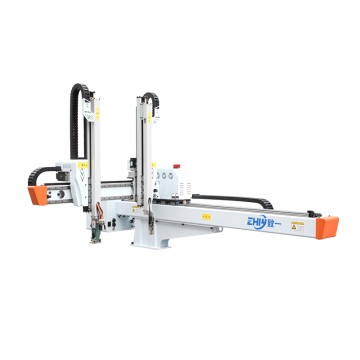
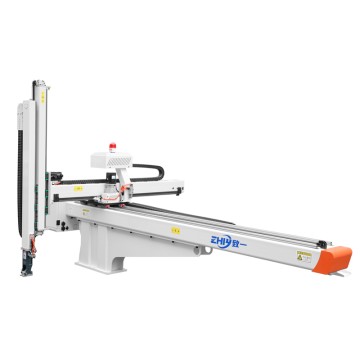
1. Three-Axis Servo Robots
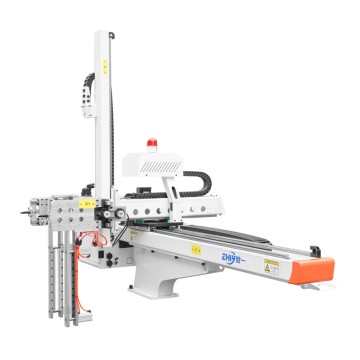
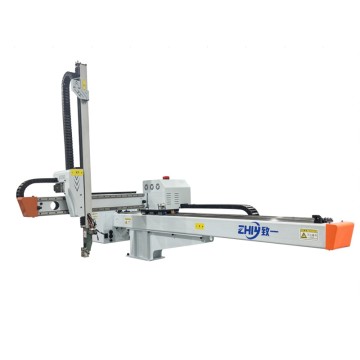
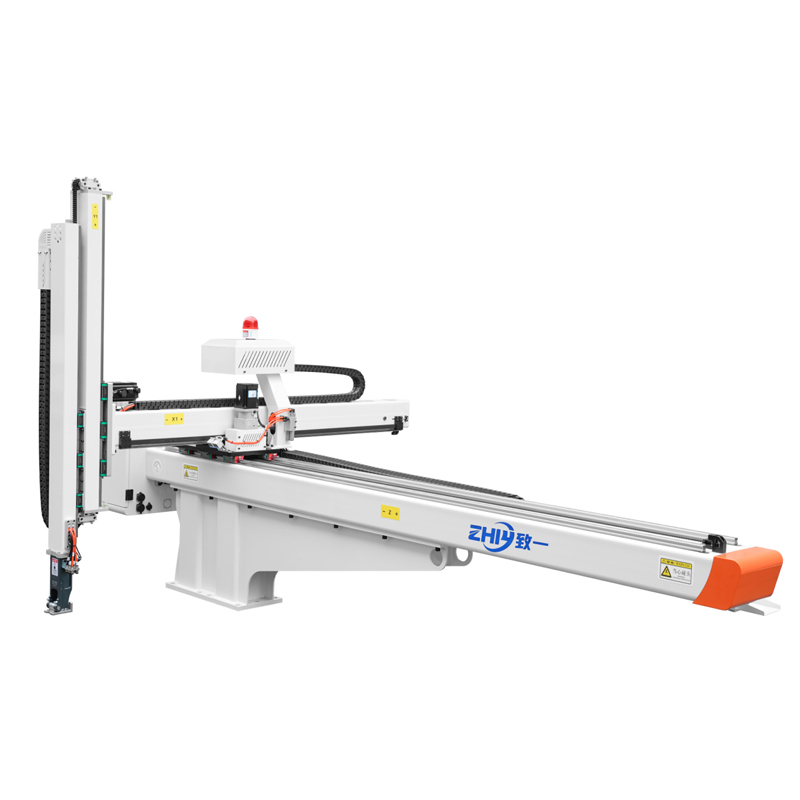
Three-axis robots are the most commonly used automation solution in injection molding factories.
They usually perform:
-
Product take-out
-
Sprue removal
-
Part placement
-
Simple stacking
Advantages:
-
Cost-effective
-
Easy programming
-
Fast installation
-
Stable operation
-
Suitable for most standard injection molding applications
Three-axis robots are widely used for:
-
Household products
-
Packaging components
-
Daily plastic products
-
Basic automotive parts
For factories seeking fast ROI and simple automation upgrades, three-axis servo robots are often the preferred choice.
2. Five-Axis Servo Robots
Five-axis robots provide greater movement flexibility and higher precision compared to three-axis systems.
These robots are suitable for:
-
Complex part handling
-
Multi-angle product extraction
-
High-speed packaging
-
Insert molding applications
Advantages:
-
More flexible movement
-
Better positioning accuracy
-
Suitable for complex molds
-
Higher production automation level
Five-axis robots are commonly used in:
-
Automotive parts
-
Electronics
-
Precision injection molding
-
Medical products
3. Six-Axis Industrial Robots
Six-axis robots are advanced automation systems used for highly customized manufacturing tasks.
Applications include:
-
Assembly
-
Secondary processing
-
Vision inspection
-
Automated polishing
-
Intelligent packaging
Advantages:
-
Maximum flexibility
-
Intelligent integration
-
Multi-process operation
-
Suitable for Industry 4.0 systems
However, six-axis robots usually require higher investment and more complex programming.
For many injection molding factories, a three-axis or five-axis robot may already meet most production needs.
Evaluate Your Injection Molding Machine Specifications
Choosing a robot without matching the injection molding machine specifications is one of the most common mistakes buyers make.
Key machine parameters include:
Clamping Force
Robot size and payload capacity must match the tonnage of the injection molding machine.
Examples:
-
Small robots: 50T–250T machines
-
Medium robots: 250T–650T machines
-
Large robots: 650T+ machines
An oversized robot increases costs unnecessarily, while an undersized robot may create stability problems.
Mold Opening Stroke
The robot arm must have enough vertical stroke and extraction distance to remove products safely from the mold.
If the robot travel distance is insufficient:
-
Products may fall
-
Cycle time may increase
-
Mold damage risks become higher
Product Weight
Always calculate:
-
Product weight
-
Runner weight
-
End-of-arm tooling weight
The total payload should remain within the robot’s safe operating capacity.
It is recommended to leave additional payload margin for future production changes.
Determine Your Production Goals
Different factories require different automation priorities.
Before selecting a robot, buyers should clearly define their production objectives.
High-Speed Production
If the goal is faster cycle time:
-
Choose high-speed servo systems
-
Prioritize lightweight arms
-
Select optimized motion control systems
High-speed robots are commonly used in:
-
Packaging
-
Disposable products
-
Thin-wall injection molding
Precision Manufacturing
For industries such as medical and electronics, precision is more important than speed.
Buyers should focus on:
-
Repeat positioning accuracy
-
Servo stability
-
Low vibration
-
Intelligent motion control
Some advanced systems can achieve repeatability within ±0.02 mm.
Labor Reduction
For factories facing labor shortages, simple automation may already generate significant value.
In this case:
-
Three-axis robots are often sufficient
-
Easy programming becomes important
-
Maintenance simplicity should be prioritized
Consider Industry-Specific Requirements
Different industries have unique automation standards.
Automotive Industry
Automotive production requires:
-
High reliability
-
Stable continuous operation
-
Large payload capacity
-
Integration with conveyor systems
Robots in automotive injection molding often operate 24/7 with minimal downtime.
Medical Industry
Medical applications require:
-
Cleanroom compatibility
-
High precision
-
Dust-free operation
-
Stainless steel components
Medical automation standards are much stricter than general industrial production.
Electronics Industry
Electronics manufacturers usually require:
-
High-speed take-out
-
Precision positioning
-
Anti-static systems
-
Compact robot design
Miniature precision robots are becoming increasingly important in electronics manufacturing.
Evaluate Servo System Quality
The servo system is the core component of an injection molding robot.
High-quality servo systems provide:
-
Faster movement
-
Better positioning accuracy
-
Lower energy consumption
-
Longer service life
When evaluating robot suppliers, buyers should ask:
-
Which servo brands are used?
-
What is the repeatability accuracy?
-
What is the operating lifespan?
-
Is remote diagnosis supported?
Reliable servo systems reduce long-term maintenance costs significantly.
Check Robot Programming and Control Systems
Easy operation is extremely important for factory efficiency.
A complicated control system increases:
-
Training costs
-
Downtime
-
Programming errors
Modern injection molding robots should provide:
-
User-friendly touch screens
-
Multiple language support
-
Simple teaching functions
-
Remote monitoring capability
Some advanced robots now integrate:
-
Vision systems
-
Predictive maintenance
-
IoT connectivity
-
Cloud-based monitoring
These technologies are becoming more common in smart factories.
Understand End-of-Arm Tooling (EOAT)
Many buyers focus only on the robot itself and ignore the importance of end-of-arm tooling.
EOAT directly affects:
-
Product stability
-
Extraction speed
-
Product protection
-
Automation flexibility
Different products require different grippers:
-
Vacuum cups
-
Pneumatic grippers
-
Magnetic tools
-
Customized fixtures
Well-designed EOAT improves efficiency and reduces product damage.
Energy Efficiency Matters
Energy-saving automation is becoming increasingly important worldwide.
Modern servo robots consume far less energy than traditional pneumatic systems.
Benefits include:
-
Lower electricity costs
-
Reduced heat generation
-
Better environmental compliance
-
Lower operational expenses
Energy-efficient robots are especially attractive for factories operating large-scale continuous production lines.
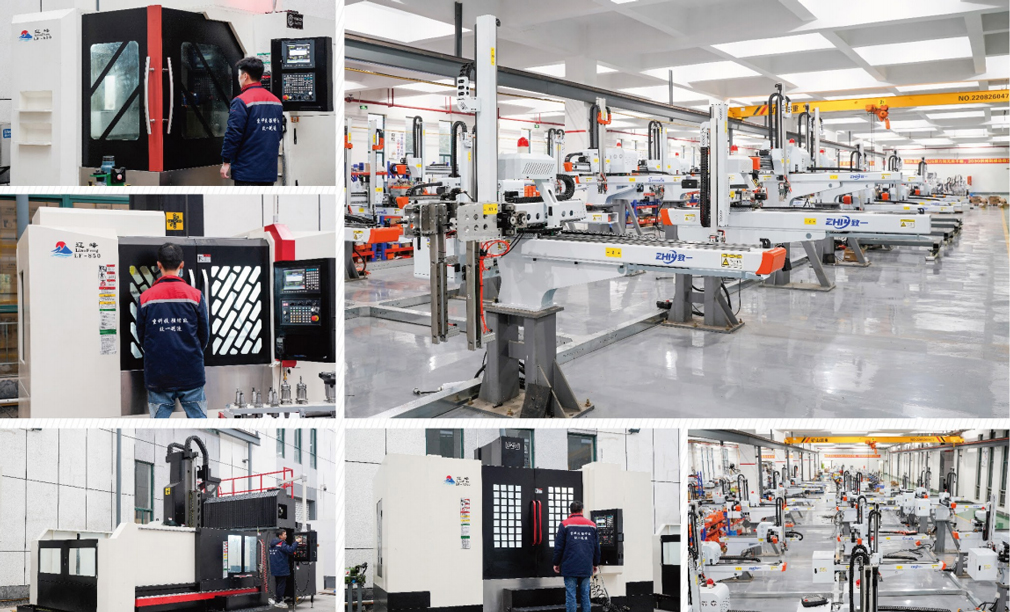
Evaluate Supplier Manufacturing Capability
Choosing the right robot supplier is just as important as choosing the robot itself.
International buyers should evaluate:
Production Capacity
Can the supplier handle:
-
Large-volume orders?
-
Stable lead times?
-
Long-term cooperation?
Quality Control
Check whether the supplier performs:
-
Assembly inspection
-
Motion testing
-
Aging tests
-
Full-load testing
Reliable QC systems reduce future after-sales problems.
Export Experience
Experienced exporters understand:
-
International certifications
-
Shipping requirements
-
Voltage standards
-
Overseas technical support
This is extremely important for global buyers.
Consider After-Sales Service
After-sales support directly affects long-term equipment performance.
Before purchasing, ask suppliers:
-
Is online technical support available?
-
Are spare parts easy to obtain?
-
Is remote troubleshooting supported?
-
How fast is response time?
Some advanced suppliers now provide predictive maintenance systems that detect potential failures before breakdowns occur.
Think About Future Expansion
Many factories only focus on current production requirements and ignore future growth.
A scalable robot system allows:
-
Additional automation modules
-
Vision upgrades
-
Conveyor integration
-
Multi-machine networking
Future-ready automation systems reduce upgrade costs later.
Common Mistakes Buyers Should Avoid
Choosing Only by Price
The cheapest robot is not always the most cost-effective.
Low-quality robots may create:
-
Frequent downtime
-
Poor precision
-
High maintenance costs
-
Short service life
Ignoring Compatibility
Always confirm compatibility between:
-
Robot
-
Injection molding machine
-
Mold
-
Factory layout
Overbuying Automation
Some factories purchase highly complex systems that exceed actual production needs.
Choose automation according to:
-
Production scale
-
Product complexity
-
ROI expectations
Future Trends in Injection Molding Robotics
The injection molding industry is rapidly evolving toward smarter automation.
Future trends include:
AI-Based Quality Control
Artificial intelligence is increasingly used to predict defects and optimize molding parameters automatically.
Vision-Guided Robotics
3D vision systems improve positioning accuracy and flexible handling capabilities.
IoT and Remote Monitoring
Factories can now monitor robot performance remotely in real time.
Collaborative Automation
Human-machine collaboration is becoming more common in flexible manufacturing environments.
Conclusion
Choosing the right robot for the injection molding industry requires balancing productivity, precision, budget, and future scalability.
International buyers should carefully evaluate:
-
Robot type
-
Injection machine specifications
-
Product requirements
-
Servo quality
-
Supplier capability
-
After-sales support
A well-matched automation solution can significantly improve manufacturing efficiency, reduce labor dependency, and strengthen long-term competitiveness in the global plastics industry.
As global manufacturing continues moving toward intelligent automation, injection molding robots will become an increasingly important investment for factories worldwide.
Website:https://www.zhiyirobotics.com/
Email:sales@zhiyirobotics.com
Whastapp:15215884071