Leave Your Message
0102030405
How to Choose Robot Arm with Best Price
2026-05-28
How to Choose Robot Arm with Best Price
For manufacturing and industrial procurement professionals, selecting A Robot arm that balancespremium performance and reasonable pricing is never an easy task. Many buyers only focus on the upfront purchase price and overlook long-term operating costs, compatibility and after-sales support, which eventually leads to higher hidden expenses and production losses.
Choosing a cost-effective robot arm is not about picking the cheapest option, but finding the most suitable one that matches production needs, budget limits and long-term development goals. Whether you are purchasing robot arms for injection molding, assembly, material handling or sorting tasks, mastering scientific selection methods will help you make a wise investment decision.
Table of Contents
- Clarify Your Actual Production Requirements First
- Key Performance Parameters That Affect Robot Arm Pricing
- Compare Different Types of Robot Arms and Price Ranges
- Evaluate Total Cost Instead of One-Time Purchase Price
- How to Verify Supplier Strength and Product Quality
- Practical Tips to Get the Best Price Without Sacrificing Quality
- Avoid Common Mistakes When Choosing Budget-Friendly Robot Arms
- Final Checklist Before Placing an Order
Clarify Your Actual Production Requirements First
Before checking robot arm prices from different suppliers, you need to define your own production needs clearly. Unclear demands will easily make you overbuy high-end models with redundant functions or buy low-spec products that cannot meet production standards.
First, confirm the core application scenarios. Robot arms are widely used in injection molding automation, product assembly, palletizing, blow molding sorting and precision picking. Each scenario has different demands on load capacity, operating range and running speed. For heavy mold handling, you need a robot arm with high load capacity, while electronic component assembly requires high positioning accuracy.
Second, define production space and working cycle. Measure the on-site installation space to confirm the required arm span and installation method. Clarify the hourly production efficiency standard, so as to match the robot arm’s running speed and cycle time.
Finally, set a clear budget range and long-term production planning. Determine the acceptable one-time procurement budget, and consider whether future production line expansion will require the robot arm to support function upgrading and customized modification. Clear demands are the premise of choosing the best-priced robot arm.
Key Performance Parameters That Affect Robot Arm Pricing
Robot arm prices are mainly determined by core performance parameters. Understanding these indicators allows you to judge whether the supplier’s quotation is reasonable and avoid being overcharged for basic configurations.
- Load Capacity: It is one of the biggest price factors. The load ranges from several kilograms for small precision operations to 50kg or more for heavy-duty handling. Higher load capacity usually means larger structure and higher configuration cost.
- Positioning Accuracy: Precision demands vary by industry. Ordinary handling tasks allow moderate accuracy, while precision assembly and electronic manufacturing need ultra-high repeated positioning accuracy. Higher accuracy will push up the manufacturing and control system cost.
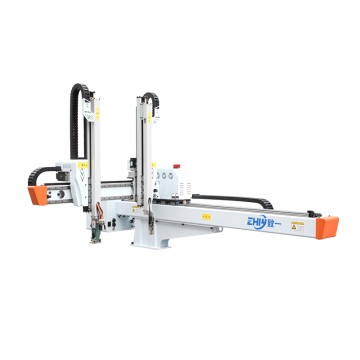
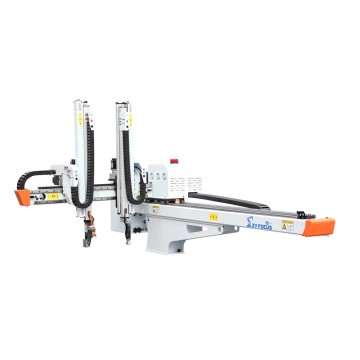
- Axis Configuration: Three-axis, five-axis and multi-Axis Robot Arms have obvious price differences. Three-axis servo models are cost-effective for simple linear operations, while five-axis dual-arm models are suitable for complex multi-angle tasks with relatively higher prices.
- Protection Grade & Stability: Industrial robot arms with IP54 or higher protection grade adapt to harsh factory environments like dust and high temperature, with stricter production standards and slightly higher prices. Certified stable products have longer service life and lower failure rate.
- Control System & Compatibility: Independent intelligent control systems and open interface designs are more expensive, but they support docking with existing production lines and secondary development, saving later transformation costs.
Compare Different Types of Robot Arms and Price Ranges
Different types of robot arms have differentiated positioning in performance and price, which helps you quickly lock the target model within the budget.
| Robot Arm Type | Core Application | Performance Feature | Price Level |
|---|---|---|---|
| 3-Axis Servo Robot Arm | Injection molding picking, simple material handling | Large stroke, strong load capacity, stable operation | Economical & budget-friendly |
| 5-Axis Dual-Arm Robot Arm | Complex picking, multi-station operation, customized production | Flexible movement, multi-angle operation, high efficiency | Mid-to-high range |
| Single-Arm Single-Section Robot Arm | Standard injection molding machine automation | Compact structure, easy installation, low energy consumption | Entry-level cost-effective |
| Custom Non-Standard Robot Arm | Special-shaped product sorting, embedded processing | Customized structure and function according to demands | Negotiable, based on configuration |
Three-axis models are the preferred choice for small and medium-sized enterprises with limited budget and single production demand. Five-axis dual-arm models are suitable for large factories with high efficiency and complex processes. Custom non-standard robot arms are tailored for special production needs, and the price is determined by actual configuration and function requirements.
Evaluate Total Cost Instead of One-Time Purchase Price
Most procurement professionals only compare the initial quotation of robot arms, ignoring the total cost of ownership (TCO) in the whole life cycle, which is the key to missing the real best price.
The total cost includes multiple parts: equipment purchase fee, installation and debugging fee, personnel training fee, daily operation energy consumption, regular maintenance fee and spare parts replacement cost. Some suppliers offer low upfront prices, but charge high fees for after-sales maintenance, spare parts and technical support in the later stage.
In contrast, qualified suppliers provide standardized pricing, free basic installation and training, and affordable spare parts prices. Their products have passed strict quality testing, with low failure rate and less production downtime loss. Calculating the 3–5 year comprehensive use cost is more reliable than simply comparing the one-time purchase price. Choosing a robot arm with low total cost is the real cost-effective choice.
How to Verify Supplier Strength and Product Quality
A reasonable price must be backed by reliable product quality and supplier strength. Low-price products without quality assurance will bring frequent failures, production delays and extra maintenance costs.
First, check official certifications and qualification honors. Regular robot arm manufacturers have ISO9001 quality management system certification and CE safety certification, which are basic guarantees of product reliability and compliance with international industrial standards.
Second, review industry project cases and customer reputation. Suppliers with rich manufacturing experience have hundreds of successful application cases in injection molding, automation assembly and other industries, and have stable cooperative customers in multiple fields. Real customer feedback and on-site case videos can intuitively reflect product actual operation effect.
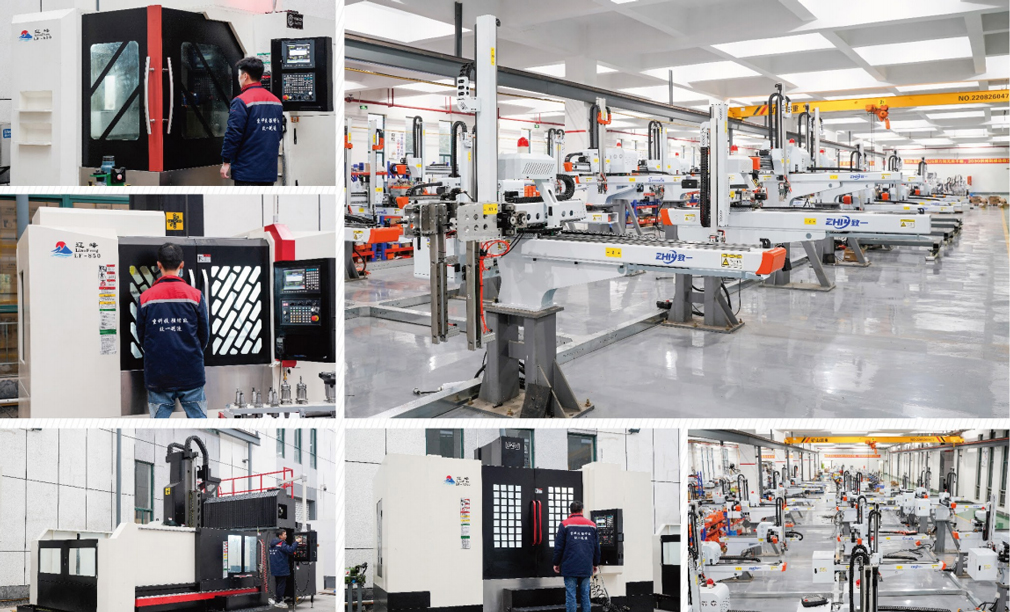
Third, confirm independent R&D and production capacity. Manufacturers with independent intellectual property rights and utility patents have stronger product optimization and customized solution capabilities, with more stable product quality and more transparent pricing, no middlemen markup.
Practical Tips to Get the Best Price Without Sacrificing Quality
Getting a favorable quotation from suppliers does not mean bargaining blindly. Mastering practical negotiation and selection skills can help you get the best price on the premise of ensuring performance and quality.
- Put forward detailed demand parameters: Provide clear load, arm span, accuracy, application scenario and installation conditions to suppliers. Accurate demand allows suppliers to quote targeted standard configurations, avoiding extra charges for unnecessary optional functions.
- Inquire quotations from 2–3 regular suppliers: Choose manufacturers with similar strength and product positioning for price comparison, not simply selecting the lowest one, but comparing configuration, service and warranty terms comprehensively.
- Focus on bulk order and long-term cooperation discount: If you have multiple production lines to be equipped with robot arms or follow-up expansion plans, you can negotiate bulk purchase discount and long-term after-sales service package with suppliers.
- Confirm warranty and after-sales response time in writing: Low-price offers with short warranty period and slow after-sales response are not cost-effective. Prioritize suppliers who provide long warranty and 24-hour technical support.
- Ask for on-site demonstration and sample test: Request suppliers to provide machine operation demonstration or sample production test, verify actual performance matches parameter description, and avoid overpricing for exaggerated parameters.
Avoid Common Mistakes When Choosing Budget-Friendly Robot Arms
Many buyers easily fall into selection misunderstandings when pursuing the best price, resulting in inappropriate procurement and economic losses.
- Blindly chasing the lowest price: Excessively low-priced robot arms often use inferior accessories and simplified control systems, with high failure rate and short service life, leading to frequent production shutdowns.
- Pursuing over-configured parameters: Buying high-precision, multi-axis high-end models for simple handling tasks causes function redundancy and unnecessary cost waste.
- Ignoring compatibility with existing production lines: Neglecting interface and program compatibility leads to inability to dock with original equipment, requiring additional transformation costs.
- Neglecting after-sales service network: Choosing suppliers without local technical support will face long waiting time for maintenance and spare parts replacement once the equipment fails.
- Believing exaggerated parameter publicity: Some suppliers exaggerate positioning accuracy and load capacity. Without actual testing, it is easy to buy products that cannot meet production demands.
Final Checklist Before Placing an Order
Before confirming the purchase of a robot arm, go through this simple checklist to ensure you get the best price and suitable configuration:
- Have I clarified all production demands including load, accuracy, working range and application scenario?
- Is the robot arm configuration fully matched with production needs, no redundancy and no insufficient performance?
- Have I compared quotations and comprehensive services from multiple regular suppliers?
- Have I calculated the full life cycle total cost instead of only the upfront price?
- Are product certifications, project cases and supplier production strength verified?
- Are warranty period, after-sales response and spare parts supply terms clearly confirmed?
- Have I watched on-site demonstration or tested sample production to verify actual performance?
Conclusion
Choosing a robot arm with the best price is a comprehensive decision that combines demand matching, performance parameter evaluation, total cost accounting and supplier strength verification. It is not to find the cheapest product, but to select the most suitable one that fits your production scenario, budget and long-term operation plan.
By clarifying actual needs first, distinguishing the price difference of different robot arm types, focusing on total life cycle cost, and verifying supplier quality and service, you can effectively avoid selection traps and overpayment. Following the selection tips and avoiding common mistakes will help every industrial procurement professional complete robot arm procurement efficiently, achieve production automation upgrading, and reduce long-term operating costs steadily.