
Leave Your Message
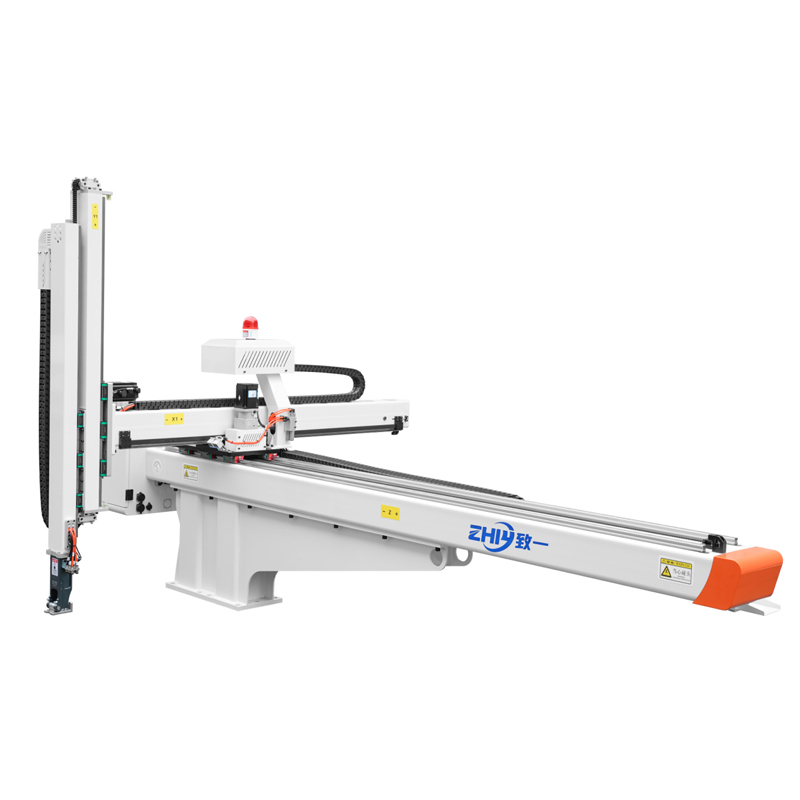
How can companies evaluate the return on investment (ROI) of introducing servo robots?
How can companies evaluate the return on investment (ROI) of introducing servo robots?
Amid the surge in industrial automation, servo robots, with their advantages of high precision, stability, and flexibility, have become a key option for manufacturers seeking to improve production efficiency and optimize product quality. However, for most companies, introducing a servo robot is a significant investment. From equipment procurement and installation to personnel training, each step requires the allocation of funds and resources. Therefore, a scientific return on investment (ROI) assessment is crucial in determining whether and when to introduce a servo robot.
This article will examine the core principles of ROI and break down the key elements, calculation methods, and potential variables in the evaluation process. This will help companies establish a systematic evaluation framework, avoid blind investment, and ensure that every dollar is converted into tangible benefits.
1. Calculate the "investment" first: Clarify the full-lifecycle cost of a servo robot.
The first step in evaluating ROI is to accurately calculate the total cost of ownership (TCO) of introducing a servo robot—not just the initial purchase price. Many companies overlook these hidden costs, resulting in a significantly lower ROI than anticipated. The full-cycle cost typically includes the following four components:
1. Initial Purchase Cost: Basic Investment in Equipment and Supporting Equipment
This is the most intuitive cost item, primarily covering:
Cost of the servo robot: Depending on parameters such as payload (e.g., 5kg, 20kg, 50kg), travel (horizontal/vertical travel distance), and accuracy (repeatability of ±0.01mm/±0.05mm), the unit price ranges from tens of thousands to hundreds of thousands of yuan. For example, a small servo robot for electronic component assembly (with a payload under 3kg) costs approximately 50,000-100,000 yuan, while a heavy-duty servo robot for automotive parts handling (with a payload over 50kg) can cost over 300,000 yuan.
Supporting System Cost: This includes the end effector (gripper, suction cup, etc., customized according to workpiece characteristics, costing approximately 5,000-50,000 yuan), the vision positioning system (to improve gripping accuracy, costing 20,000-80,000 yuan), and safety devices (fences, photoelectric sensors, costing approximately 10,000-30,000 yuan). Installation and commissioning costs: These involve site modifications (such as circuit and air supply layout), equipment installation, and system integration and commissioning, typically accounting for 10%-20% of the total equipment price. If integration with an existing production line is required, the costs may be even higher.
2. Operation and maintenance costs: Long-term and ongoing resource consumption
After a servo robot is put into operation, the following hidden costs should be considered during daily operations:
Replacement costs for consumables: These include servo motor bearings, reducer lubricant, and gripper consumable parts (silicone suction cups and jaw gaskets). Annual consumption accounts for approximately 5%-8% of the total equipment price.
Energy consumption: The energy consumption of a servo system is related to operating frequency. For example, if a servo robot with a 10kg payload operates 8 hours per day, 250 days per year, the electricity bill is approximately 1,000-2,000 yuan per year (based on the industrial electricity price of 1 yuan per kWh). Maintenance Service Costs: If an enterprise does not have a dedicated operations and maintenance team, it must entrust a vendor with regular maintenance (such as quarterly inspections and annual overhauls). The average annual service fee is approximately 2,000-5,000 yuan. If a malfunction occurs, the cost of replacing parts and labor for emergency repairs can add tens of thousands of yuan.
3. Personnel Costs: Training and Team Adaptation
The introduction of automated equipment does not replace humans; it rather involves restructuring human resources. Related costs include:
Operation Training Costs: Production line employees must receive training in servo robot operation, program adjustments, and basic troubleshooting. The average cost per person per training session is approximately 1,000-3,000 yuan (including teaching materials, instructors, and venue fees). If multiple groups of employees are involved, the costs are compounded.
Professional Talent Costs: If an enterprise requires a dedicated automation engineer (responsible for system optimization and complex troubleshooting), the monthly salary typically ranges from 8,000-15,000 yuan, resulting in an average annual labor cost of approximately 100,000-180,000 yuan. 4. Other Hidden Costs: Easily Overlooked "Invisible Expenses"
Downtime Costs: If a servo Robot Stops due to a malfunction, it can disrupt the entire production line. For example, for a production line with an average daily output value of 100,000 yuan, a single day of downtime results in a loss of 100,000 yuan. Therefore, equipment reliability (mean time between failures (MTBF)) directly impacts these hidden costs.
Upgrade and Iteration Costs: As product processes evolve or production requirements change, the servo robot's programming and hardware may need to be upgraded (e.g., replacing a motor with a larger load capacity). The cost of a single upgrade is approximately 15%-30% of the initial purchase price.
II. Recalculating the "Benefit Account": Quantifying the Multi-Dimensional Value of the Servo Robot
After clarifying the cost accounting, it is necessary to quantify the value of the servo robot from both a "direct benefit" and "indirect benefit" perspective. Unlike the "certainty" of costs, benefit assessment requires consideration of a company's specific production scenarios (e.g., industry, product type, and production capacity requirements). However, the core logic can be summarized into the following four categories:
1. Direct Cost Savings: Visible "Cost Reduction"
This is the most easily quantified benefit, primarily reflected in improved manpower and efficiency:
Labor Cost Savings: Servo robots can replace repetitive, high-intensity manual tasks (such as handling, assembly, and sorting). For example, a handling position requiring two workers in shifts (with an average monthly salary of 6,000 yuan and social security and provident fund contributions of approximately 2,000 yuan per person per month) has an average annual labor cost of approximately 192,000 yuan. Introducing a servo robot to replace this position could directly save 150,000-180,000 yuan annually (after deducting equipment maintenance costs).
Production Efficiency Improvement: Servos offer a far greater continuous operating capacity than manual labor (capable of 24-hour uninterrupted operation with a low failure rate) and operate at a stable speed. Taking the electronics industry's plug-in process as an example, manual insertion efficiency is approximately 300 pieces/hour. A servo Robot Can increase this to 800 pieces/hour, a 167% increase. If the unit price of a product is 10 yuan and the average daily workday is 20 hours, the added daily output value is approximately 100,000 yuan (800-300 pieces/hour × 20 hours × 10 yuan/piece), resulting in an annual added value of approximately 25 million yuan.
Reduced material waste benefits: Manual operations are prone to damage due to fatigue and errors (such as drops and collisions). Servo robots offer a repeatability of ±0.02mm, reducing the waste rate from 3%-5% for manual operations to 0.1%-0.5%. For example, on a production line producing 10,000 pieces per day at a cost of 50 yuan per piece, every 1% reduction in waste can result in annual cost savings of 1.8 million yuan (10,000 pieces/day × 360 days × 50 yuan/piece × 1%).
2. Product Quality Improvement: Invisible "Added Value"
In high-precision manufacturing (such as automotive parts and medical devices), improved product quality directly translates into market competitiveness and profits:
Benefits from Reduced Defective Rates: The standardized operation of servo robots eliminates the random errors inherent in manual operation. For example, in precision assembly processes, the defective rate for manual labor is approximately 2%, while that of servo robots can be reduced to 0.3%. With an annual production volume of 1 million units and a defective rework cost of 200 yuan per unit, this translates to an average annual cost savings of 3.4 million yuan ((2% - 0.3%) x 1 million units x 200 yuan per unit).
Benefits from Improved Customer Satisfaction: High-quality products reduce customer complaints and returns, enhance brand reputation, and indirectly drive sales growth. According to industry statistics, every 1% reduction in product defective rate increases customer repurchase rate by 3%-5%. For a company with annual sales of 100 million yuan, this can generate additional revenue of 3-5 million yuan.
3. Improved Production Flexibility: The "Value of Elasticity" in Responding to Market Changes
The current manufacturing industry is facing a trend toward high-mix, low-batch production. The high flexibility of servo robots can help companies quickly respond to market demands:
Benefits from Improved Productivity Changeovers: Manual production line changes require reconfiguration of workstations and employee training, potentially taking 1-3 days. Servo robots, on the other hand, can complete product changes simply by switching programs, taking only 1-2 hours. Assuming 20 product changes per year and a loss of 50,000 yuan per downtime (average daily output value of 100,000 yuan), this translates to an average annual reduction in losses of approximately 2.8 million yuan ((3 days x 24 hours - 2 hours) / 24 hours x 50,000 yuan x 20 changes).
Benefits from Capacity Expansion: If market demand suddenly increases, servo robots can quickly increase production capacity by extending operating hours (for example, from 8 hours to 24 hours), eliminating the need to recruit and train a large number of workers in a short period of time and avoiding the risk of redundant labor. For example, a home appliance company achieved 24-hour production using servo robots, increasing peak season production capacity by 200% and successfully securing an additional 50 million yuan in orders.
4. Safety and Management Optimization: Long-Term Strategic Value
Safety Benefits: Servo robots can replace manual labor in high-risk environments (such as high temperatures, high pressures, and toxic and hazardous materials), reducing workplace accidents. According to the Work Injury Insurance Regulations, the compensation and handling costs for a single workplace accident typically range from 100,000 to 500,000 yuan. However, the safety protection system of servo robots can reduce the risk of workplace injuries to near zero, resulting in significant long-term cost savings.
Management Efficiency Benefits: Servo robots can be integrated into MES (Manufacturing Execution Systems) to provide real-time feedback on production data (such as output, failure rate, and energy consumption), helping companies achieve refined management. For example, optimizing production plans through data analysis can reduce work-in-process inventory and lower capital costs (for example, a 10% increase in inventory turnover can save approximately 500,000 to 1 million yuan annually, calculated at a 5% interest rate). ROI Calculation: From "Static Formula" to "Dynamic Model"
Once costs and benefits are clearly defined, you can use the formula to calculate return on investment. However, it's important to note that static ROI is only a guide; dynamic ROI is more tailored to your business's realities (it takes into account factors like the time value of money and market fluctuations).
1. Static ROI Calculation: A Quick Preliminary Assessment
Static ROI does not consider the time value of money (such as interest and inflation) and is suitable for short-term (1-2 year) investment evaluation. The formula is as follows:
Static ROI = (Average Annual Revenue - Average Annual Cost) / Initial Total Investment × 100%
Payback Period (Years) = Initial Total Investment / (Average Annual Revenue - Average Annual Cost)
Case Study: An Electronic Component Assembly Company Introduces a Servo Robot
Initial Total Investment: Servo Robot Body (80,000 RMB) + Supporting Systems (30,000 RMB) + Installation and Commissioning (16,000 RMB) + Initial Training (4,000 RMB) = 130,000 RMB
Annual Total Cost: Maintenance Consumables (8,000 RMB) + Energy (2,000 RMB) + Annual Training (3,000 RMB) = 13,000 RMB
Annual Total Benefit:
Labor Savings: Replacing 2 assemblers results in an average annual savings of 19.2 10,000 yuan
Defective product reduction: The defective product rate dropped from 2% to 0.3%, resulting in an average annual savings of 272,000 yuan (annual output of 800,000 units, with rework cost of 200 yuan per unit).
Efficiency improvement: Production capacity increased from 1 million units/year to 1.5 million units/year, generating an additional 5 million yuan in revenue (at a unit price of 10 yuan). Based on a 10% profit margin, this translates to an additional 500,000 yuan in profit.
Total annual revenue: 192,000 yuan + 272,000 yuan + 500,000 yuan = 964,000 yuan
Static ROI = (96.4 - 1.3) / 13 × 100% ≈ 731%
Payback period = 13 / (96.4 - 1.3) ≈ 0.14 years (approximately 50 days)
This case study demonstrates that servo robots offer a rapid return on investment in applications requiring high manpower and precision. However, please note that this calculation is based on ideal conditions; in practice, dynamic variables must be considered.
2. Dynamic ROI Calculation: Considering Long-Term Variables
Dynamic ROI requires the "time value of money" (calculated using a discount rate) and takes into account the uncertainty of returns (such as market demand fluctuations and technological iterations). The formula is as follows:
Dynamic ROI = (Present Value of Cumulative Net Cash Flow - Initial Investment) / Initial Investment × 100%
(Note: Net cash flow = current year's revenue - current year's costs; present value = net cash flow / (1 + discount rate)^n, where n is the number of years)
Key Variable Adjustments:
Discount rate: This is typically based on the company's financing costs (e.g., loan interest rates of 4%-6%) or the industry average rate of return. If the discount rate is 5%, then the present value of 1 million yuan in revenue three years from now is only 863,800 yuan (100 / (1 + 0.05)^3). Revenue decay: If a product has a five-year lifecycle, orders may drop by 30% in years 4-5, requiring a corresponding reduction in subsequent revenue.
Technology iteration costs: If a new generation of servo robots is needed after five years, the upgrade costs should be included in the total costs for the fifth year.
Dynamic calculations can provide a more realistic reflection of long-term return on investment. For example, if, in the above example, revenue decreases by 20% in year 3 due to declining market demand, and the discount rate is 5%, the five-year dynamic ROI is approximately 580%, with a payback period of approximately 0.18 years (still well below the industry average).
IV. Evaluation Mistakes and Pitfalls: Avoiding "Miscalculation"
In actual evaluations, companies often misjudge ROI due to the following mistakes, which should be avoided:
1. Focusing solely on "unit price" and ignoring "full-cycle costs"
Some companies choose low-cost servo robots (such as unbranded, low-precision products) to save money. However, these devices have high failure rates (annual maintenance costs can reach 30% of the initial price), high energy consumption (20%-30% higher than high-quality products), and short lifespans (only 2-3 years, compared to 8-10 years for high-quality products). Over the entire lifecycle, the total cost of low-cost equipment can be more than double that of high-quality products, ultimately reducing ROI.
Tips for avoiding pitfalls: Prioritize brands with industry case studies and comprehensive after-sales service (such as Fanuc, Yaskawa, and Kuka). Also, request that the manufacturer provide a "full-cycle cost calculation sheet" to clearly identify hidden costs at each stage.
2. Overestimating "Benefits" and Ignoring "Adaptability"
Some companies blindly copy industry examples, believing "if they can use it, so can I," without considering the differences in their own production scenarios. For example, a food company, seeing the high ROI of servo robots in the automotive industry, introduced heavy-duty servo robots for food sorting. However, due to the fragile workpieces (soft foods) and insufficient production line space, the actual benefits were only 30% of the expected returns.
Tips for avoiding pitfalls: Before evaluating, clarify the "core need"—is it to replace human labor, improve precision, or enhance flexibility? Ask the manufacturer to provide "scenario-based solutions" (such as simulating production processes and testing workpiece gripping).
(Effective) to avoid a "one-size-fits-all" approach.
3. Ignoring "Team Capacity" Leads to "Idle Equipment"
After introducing servo robots, some companies have found that due to employee inexperience and the lack of a professional operations and maintenance team, the equipment remains "semi-idle" for extended periods (e.g., operating for only four hours per day), resulting in actual returns far below expectations. For example, a hardware company invested 200,000 yuan in servo robots, but due to insufficient operator training, the equipment only operated for an average of three hours per day, extending the expected payback period from 0.5 years to two years.
Avoidance Tip: Plan a "staffing plan" during the evaluation process. If the company lacks automation talent, consider outsourcing operations and maintenance services offered by the manufacturer (e.g., paying a monthly service fee for daily maintenance), or recruit/train professionals in advance.
4. Failing to Consider "Future Scalability" Limits Long-Term Profits
The flexibility of servo robots lies not only in current production but also in future scalability. If a company purchases equipment based solely on existing production capacity, future orders will require additional equipment, resulting in duplicate investment. For example, an electronics company initially required 1 million units/year of production capacity and purchased a 5kg-load servo robot. One year later, as capacity increased to 2 million units/year, an additional unit was required, increasing costs by 150,000 yuan.
Tips for avoiding pitfalls: Choose a servo robot with a modular design (e.g., replaceable end effectors and expandable travel ranges) and include interfaces (e.g., support for vision system upgrades and MES integration) to ensure flexibility as production capacity grows.
V. Conclusion: Establish a "scenario-based evaluation framework" for more targeted investment
The return on investment for a servo robot isn't a fixed value; it depends on three key factors: the company's production scenario, core needs, and team capabilities. When evaluating a servo robot, follow a four-step process:
Clear Requirements: First, determine the core objectives for introducing a servo robot (e.g., cost reduction, efficiency improvement, and quality improvement), then match the equipment parameters (load, precision, and flexibility);
Full Cost Accounting: Calculate not only the initial purchase price but also maintenance, personnel, and hidden costs to avoid short-term thinking;
Dynamic Benefit Calculation: Incorporate market changes and technological advancements to assess long-term value using a dynamic ROI model;
Risk Contingency Plan: Plan your operations and maintenance team and equipment upgrade plans in advance to avoid idle equipment or lower-than-expected returns.
For most manufacturing companies, with rising labor costs and increasing product precision requirements, the return on investment (ROI) of servo robots has shifted from an "option" to a "must." The key, however, lies not in whether to introduce them but in how to accurately evaluate and scientifically implement them. Only by establishing an evaluation framework tailored to your specific needs can servo robots truly become a tool for cost reduction and efficiency improvement, rather than a burden.