
Leave Your Message
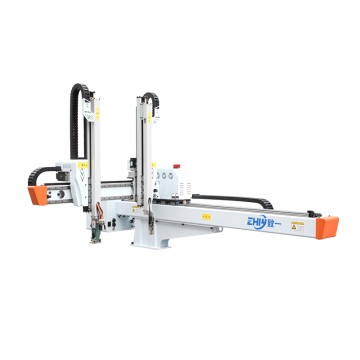
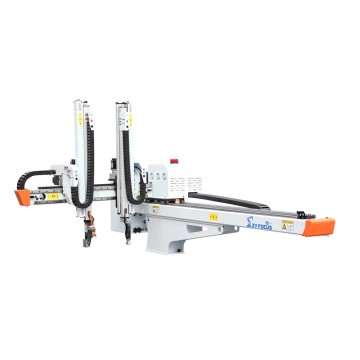
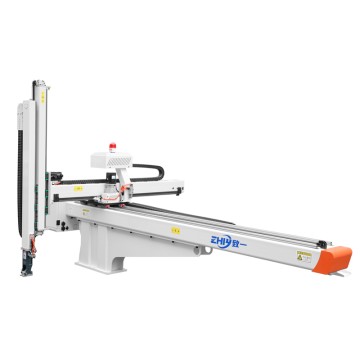
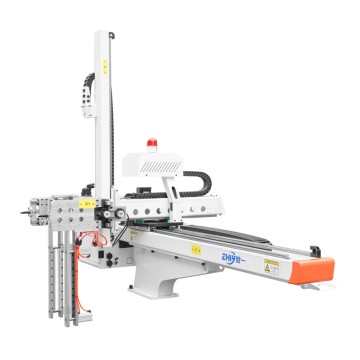
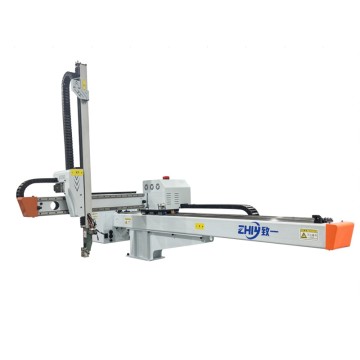
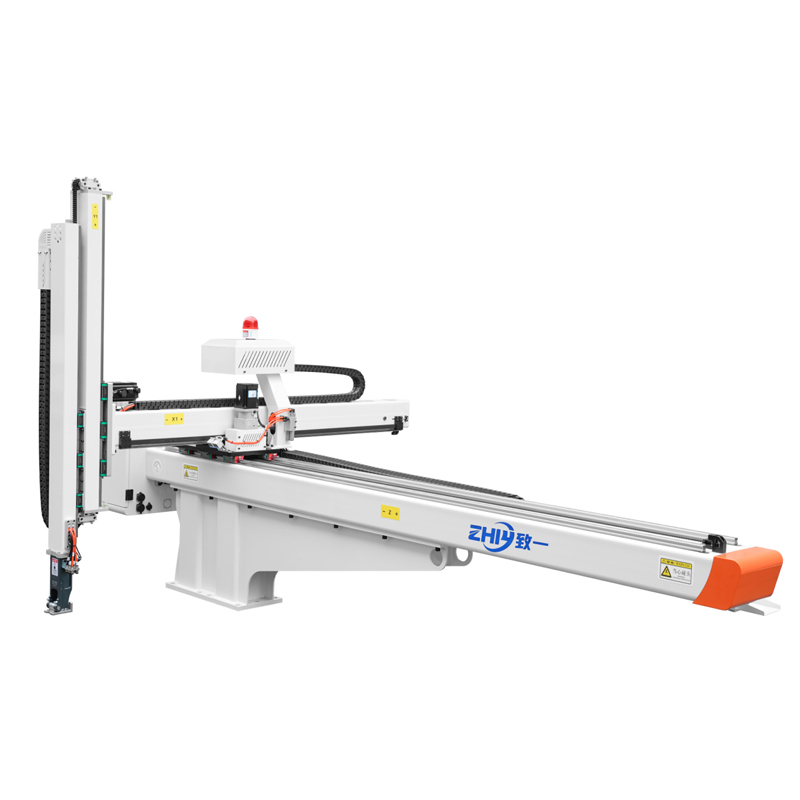
Five-Axis Servo Robot Designed for Factory Automation
Five-Axis Servo Robot Designed for Factory Automation
1. Core Technology of the Five-Axis Servo Robot: The Synergistic Advantages of Multi-Axis Linkage and Servo Control
2. Adaptability to Factory Automation Scenarios: Covering all scenarios from precision manufacturing to hazardous operations
3. Quantified Production Efficiency: A Triple Improvement Logic of Efficiency, Cost, and Quality
4. System Integration and Adaptability: Flexible Solutions Compatible with Global Industrial Standards
5. Technological Evolution Trends: Functional Upgrade Direction for Future Intelligent Manufacturing
I. Core Technology of the Five-Axis Servo Robot: The Synergistic Advantages of Multi-Axis Linkage and Servo Control
The core competitiveness of the five-axis servo robotstems from the deep integration of "multi-axis degrees of freedom" and "precise servo control." Compared to traditional single-axis and three-Axis Robots, the two additional rotary axes endow the device with complex motion capabilities in three-dimensional space. Combined with AC servo motor drive, it achieves a dual breakthrough in trajectory accuracy and dynamic response. Its technological highlights are concentrated in three aspects:
Precise Positioning Capability: Employing a 20-bit encoder and integrated drive and control system, the repeatability accuracy reaches ±0.05mm, with a command pulse input frequency up to 4MHz. One revolution can achieve precise control of 1.04 million pulses, ensuring consistency in complex processes.
High-Speed Response Characteristics: The servo system response frequency reaches 1.2kHz, rotating from -3000 to 3000 revolutions in just 7ms, with a minimum take-up time of 1.32 seconds and a full cycle time as low as 4.95 seconds, significantly shortening the production cycle.
Stable Operation Guarantee: The double-section, double-arm structure design enhances rigidity and reduces cumulative motion errors; the signal line design with strong anti-interference capabilities and simplified mechanical structure significantly reduce equipment failure rates and extend maintenance cycles.
This technical architecture completely solves the pain points of traditional automated equipment—"insufficient flexibility" and "limited precision"—providing core support for automating complex factory processes.
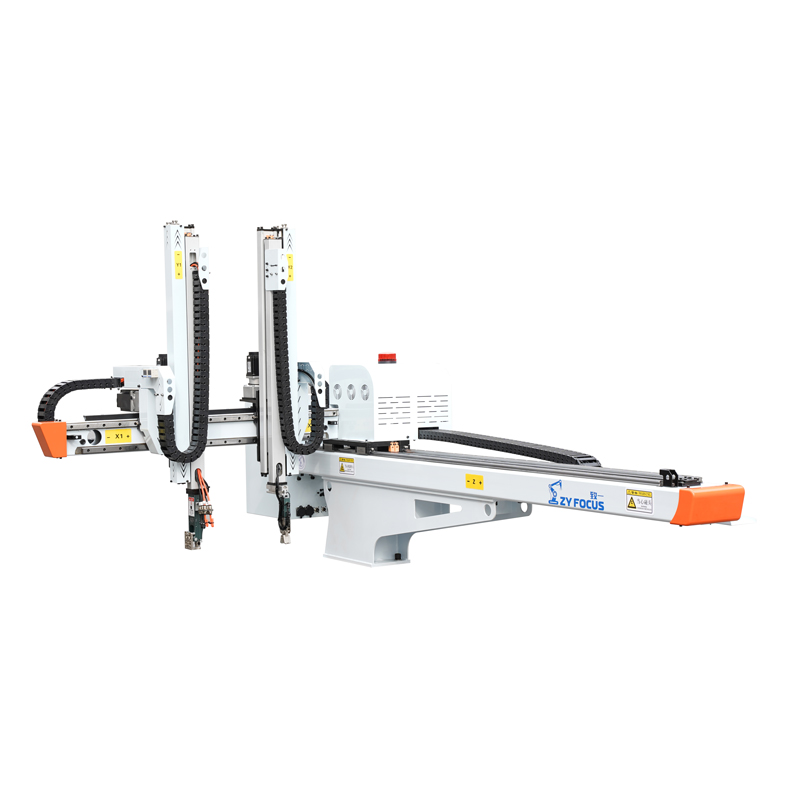
II. Factory Automation Applications: Covering All Scenarios from Precision Manufacturing to Hazardous Operations
Five-axis servo robots, leveraging their multi-axis linkage advantages and the precise controllability of servo systems, have achieved deep adaptation across multiple sectors of the global manufacturing industry, demonstrating irreplaceable capabilities, especially in high-demand scenarios:
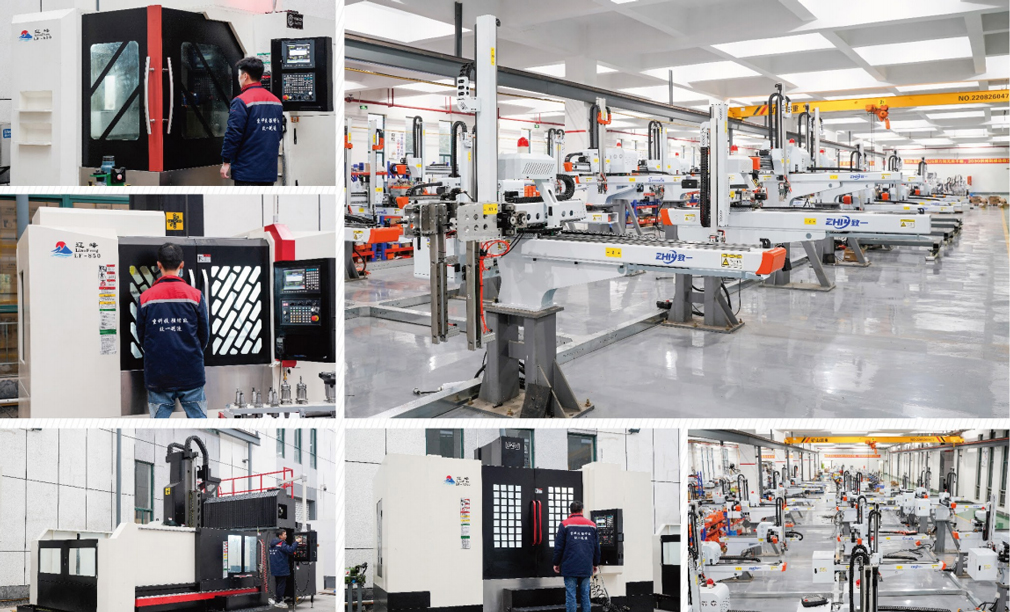
Injection Molding Automation:** Adapted to various horizontal Injection Molding Machines ranging from 50T to 800T, completing processes such as finished product and sprue removal, in-mold labeling, and insert insertion. A single unit can increase production capacity by 10%-30% while reducing defect rates caused by manual intervention.
Precision Component Assembly: In the production of automotive engines and aerospace components, rapid switching of end effectors enables smooth assembly of high-precision components such as pistons and blades. Force sensing technology prevents component damage, increasing the pass rate to over 99.9%.
Complex Welding Processes: Multi-axis rotation allows welding torches to operate at multiple angles and directions. Whether it's curved welds or spatially dissimilar welds, welding speed and angle can be precisely controlled, reducing defects such as porosity and cracks. Hazardous Environment Operations: In scenarios involving high temperatures, high pressures, and toxic gases, it replaces manual labor in tasks such as material handling and processing assistance, ensuring personnel safety and avoiding the impact of environmental factors on operational precision. Its adaptability hinges on its "flexible adjustment" capability—through program optimization and end effector customization, it can quickly switch production tasks to meet the demands of modern manufacturing with diverse product types and small batches.
III. Quantifiable Production Benefits: A Triple Logic of Efficiency, Cost, and Quality Improvement
The benefits that five-axis servo robots bring to factories are not abstract concepts, but quantifiable production transformations, primarily reflected in three dimensions: Efficiency Improvement: Multi-axis linkage and high-speed response shorten single-process cycles; for example, in the injection molding industry, removal time is reduced by more than 60% compared to manual labor. 24-hour uninterrupted operation avoids efficiency fluctuations caused by human fatigue, resulting in an overall production line output increase of 30%-50%. Cost Optimization: Directly reduces labor input, especially in labor-intensive industries where labor costs can be reduced by more than 50%; the "on-demand power supply" of the servo system and regenerative braking energy recovery technology reduce energy consumption by 25%-70% compared to traditional hydraulic and pneumatic systems; simplified structural design reduces maintenance costs, allowing for a payback period of 12-18 months.
Quality Assurance: A repeatability accuracy of ±0.05mm and stable motion trajectory control product dimensional errors to the micron level; avoiding the randomness of manual operation, the defect rate is reduced by an average of 40%-60%, with particularly significant effects in precision manufacturing. These quantifiable benefits have been validated in thousands of factories in the global automotive, electronics, and medical device industries, becoming a key lever for enterprises to enhance their market competitiveness.
IV. System Integration and Adaptability: Flexible Solutions Compatible with Global Industrial Standards
The widespread application of five-axis servo robots relies heavily on their high adaptability to global industrial systems, primarily reflected in three aspects: compatibility, ease of use, and scalability.
Multi-protocol Compatibility: Supports mainstream industrial communication protocols such as Profinet and EtherNet/IP, seamlessly integrating with PLC and MES systems from different brands, quickly consolidating into existing production networks without requiring large-scale modifications to factory infrastructure.
Easy Operation and Debugging: Equipped with a visual programming system (such as the Visual 3 control system), the graphical interface lowers the operational threshold, allowing operators to complete program settings without professional programming knowledge; supports remote debugging and fault diagnosis, reducing downtime for maintenance.
Modular Expansion: The integrated drive and control system boasts strong scalability, allowing for the addition of axes, load capacity, or end effector functions (such as vacuum suction, mechanical clamping, tightening tools, etc.) according to production needs; parameters such as horizontal and vertical travel can be flexibly customized (ranging from 1500mm to 9000mm), adapting to different factory spaces and equipment layouts. This "plug-and-play" integration allows manufacturing companies of all sizes worldwide to quickly upgrade to automation without incurring complex system modification costs.
V. Technological Evolution Trends: Functional Upgrade Directions for Future Smart Manufacturing
With the deepening development of Industry 4.0 and smart manufacturing, five-axis servo robots are iterating towards becoming "smarter, more efficient, and more environmentally friendly." Core upgrade paths include:
Intelligent Sensing Upgrade: Integrating AI visual recognition and force sensing technologies to achieve automatic component positioning, defect detection, and adaptive assembly, eliminating the need for pre-set precise coordinates and adapting to flexible production needs.
Deep Integration with the Internet of Things: Achieving real-time equipment status monitoring, energy consumption data analysis, and predictive maintenance through an Industrial Internet of Things (IIoT) platform, reducing downtime by more than 30%.
Energy Saving and Lightweight Optimization: Utilizing silicon carbide (SiC) power devices and permanent magnet synchronous motors to further improve energy conversion efficiency; optimizing mechanical structure design to reduce equipment weight while maintaining rigidity, thereby reducing energy consumption and installation space requirements. Enhanced collaborative operation capabilities: Supports collaborative work by multiple robotic arms and human-Robot Cooperation modes. Safety sensors enable automatic deceleration or stopping when personnel approach, expanding its application boundaries in mixed production scenarios. These technological upgrades will further unleash the application potential of five-axis servo robotic arms, making them a core component of future smart factories.
#5 Axis Servo Driven Robot#Single Axis Robot Arm#Double Axis Robot Arm#Robot Arm#Mechanical Arm#Robot Industrial#Cnc Robot Arm
Website:https://www.zhiyirobotics.com/
Email:sales@zhiyirobotics.com