
Leave Your Message
Five-axis servo manipulator: the key force to achieve production automation and flexibility
Five-axis Servo Manipulator: the key force to achieve production automation and flexibility
In today's rapidly developing industrial manufacturing field, automation and flexible production have become the core elements for enterprises to enhance their competitiveness and meet diversified market needs. As a highly advanced automation equipment, the five-axis servo manipulator is becoming a key force to promote production automation and flexibility with its excellent flexibility, high precision and intelligent control capabilities.
1. Definition and composition of five-axis servo manipulator
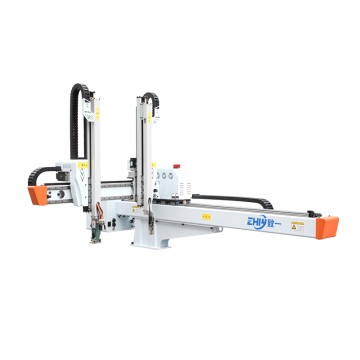
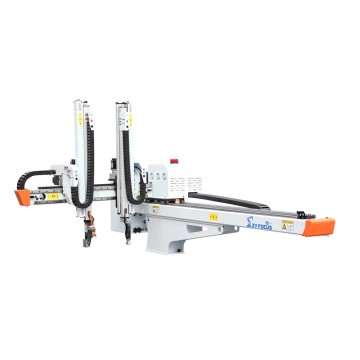
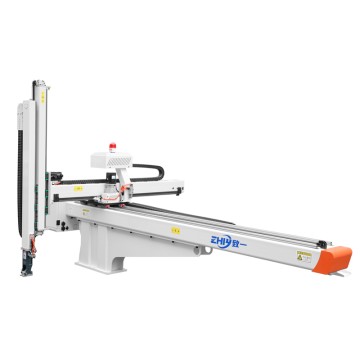
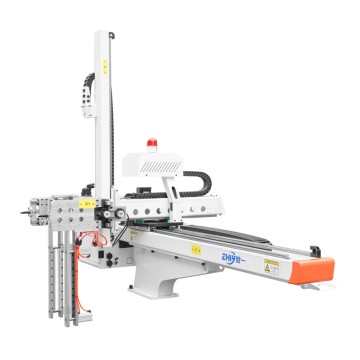
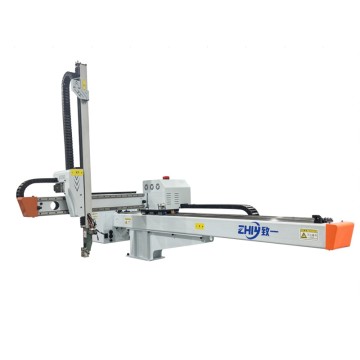
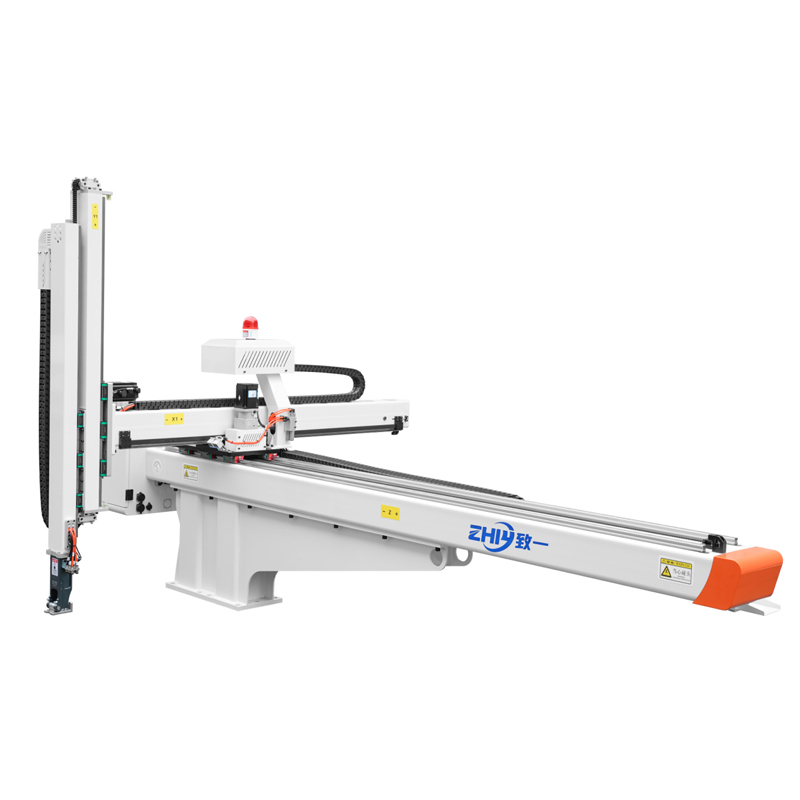
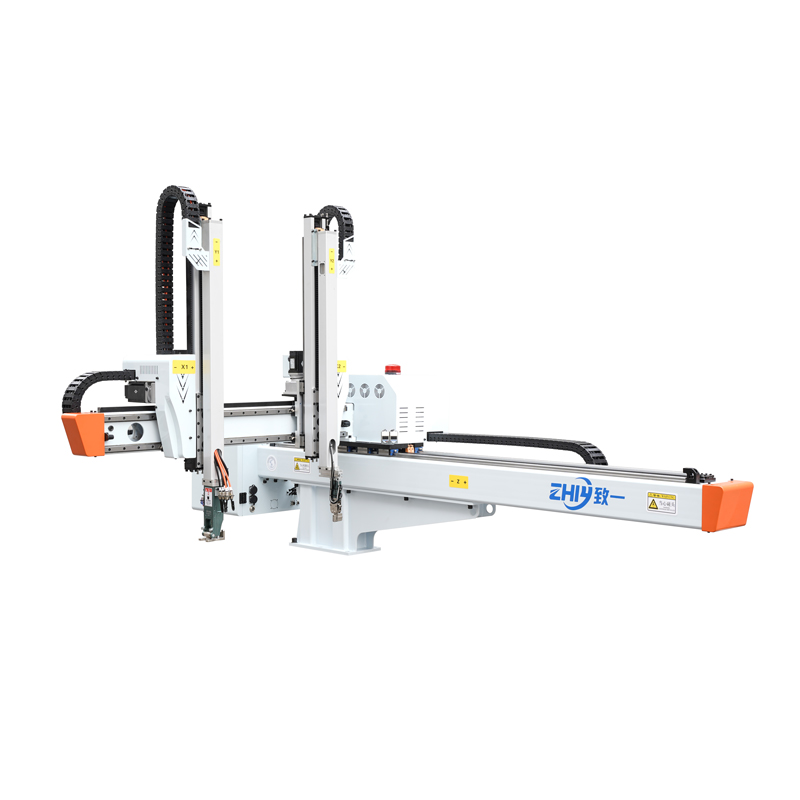
The five-axis servo manipulator is a multi-degree-of-freedom automation equipment, usually composed of five independent motion axes, including three linear axes (X, Y, Z axes) and two rotation axes (A axis and C axis). This multi-axis linkage design enables the manipulator to achieve complex motion trajectories and posture adjustments in three-dimensional space. Its main components include:
Mechanical structure: including arms, joints, end effectors and other components, which work together to ensure that the manipulator can move flexibly in three-dimensional space.
Drive system: usually driven by servo motors, which can accurately control the movement speed, position and strength of each axis.
Control system: including main controller, sensor, visual system, etc., through programming and real-time feedback adjustment, to achieve automation and intelligent operation.
2. Working principle of five-axis servo manipulator
The working principle of five-axis servo manipulator is based on multi-axis linkage control. Its five axes are responsible for different movement directions and posture adjustments:
X, Y, Z axis: realize the front and back, left and right, up and down movement of the manipulator in space.
A axis and C axis: responsible for the rotation and flipping of the end effector.
In practical applications, such as injection molding process, when the Injection Molding Machine completes one molding, the control system of the manipulator will receive the signal and start quickly. X, Y, and Z axes move first to move the robot arm above the mold, and A axis and C axis adjust the posture of the end effector according to the shape and removal requirements of the product to ensure stable grasping of the product. After grasping, the manipulator moves the product to the specified location according to the preset path, such as the cooling area, inspection area or packaging area.
3. Key factors for five-axis servo manipulator to achieve production automation
(I) High precision and high speed
The five-axis servo manipulator can achieve high-precision and high-speed movement through servo motors and precision control systems. This high-precision and high-speed feature enables the robot to complete complex operation tasks in a short time, thereby significantly improving production efficiency.
(II) Intelligent control
The five-axis servo robot is equipped with an advanced control system, including sensors, visual systems and intelligent algorithms. These systems can monitor the robot's motion status in real time and adjust it according to preset programs and real-time feedback. For example, during the grasping process, the sensor monitors the grasping force and position information in real time to ensure the stability and accuracy of the grasping action.
(III) Multi-tasking capability
The five-axis servo robot can perform multiple tasks at the same time, such as grasping, handling, and assembly. This multi-tasking capability enables the robot to complete multiple processes on a production line, reducing manual intervention and improving the continuity and stability of production.
4. Key factors for the five-axis servo robot to achieve production flexibility
(I) Multi-axis linkage and flexibility
The multi-axis linkage design of the five-axis servo robot enables it to flexibly cope with workpieces of different shapes, sizes and processing requirements. For example, during the welding process, the robot can achieve multi-angle welding of complex workpieces by adjusting the angles of the A-axis and C-axis. This flexibility enables the robot to quickly switch between different processing tasks to meet the production needs of small batches and multiple varieties.
(ii) Fast switching and adaptability
The five-axis servo robot can quickly switch between different working modes and processing paths through programming and control systems. For example, in the manufacture of automotive parts, the robot can quickly adjust the processing program and fixture according to different vehicle models and parts requirements. This fast switching capability enables the robot to achieve mixed-line production of multiple products on the same production line.
(iii) Personalized customization
The five-axis servo robot can be customized according to the personalized needs of customers. For example, in the manufacture of electronic products, the robot can adjust the gripping and assembly paths according to different product designs and process requirements. This personalized customization capability enables the robot to meet the strict requirements of product quality and diversity in the field of high-end manufacturing.