
Leave Your Message
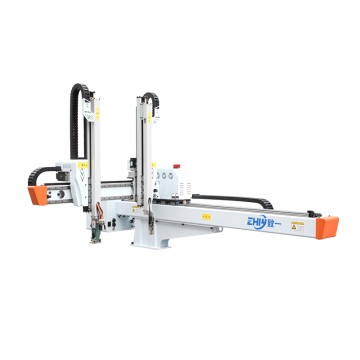
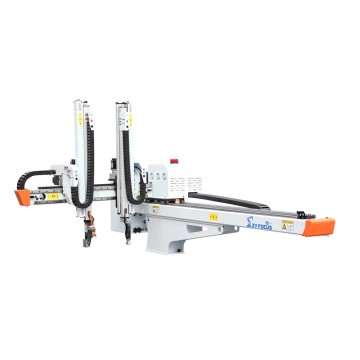
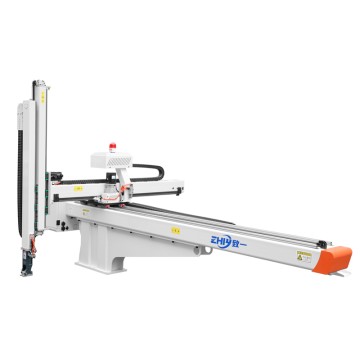
Five-Axis Injection Molding Robots: The Core Driving Force Reshaping the Toy Industry's Production Landscape
Five-Axis Injection Molding Robots: The Core Driving Force Reshaping the Toy Industry's Production Landscape
In today's rapidly evolving toy industry, consumers are demanding higher standards for toy appearance, precision, safety, and innovative design. Meanwhile, efficiency bottlenecks, quality fluctuations, and cost pressures in traditional production models are becoming increasingly prominent. The emergence of five-axis injection molding robots not only breaks through the traditional limitations of toy injection molding production but, with its flexible multi-dimensional operation, precise motion control, and efficient automation integration capabilities, has become a key piece of equipment for toy companies to reduce costs, increase efficiency, and enhance their core competitiveness. This article will deeply analyze the application logic, core scenarios, and technical value of five-axis injection molding robots in the toy industry, providing a reference for toy manufacturers to upgrade their automation.
First. Pain Points in Injection Molding Production in the Toy Industry: Why Do We Need Five-Axis Robots?
Toy injection molding production is characterized by a wide variety of product categories, large batch size fluctuations, and demanding precision. The traditional production model of manual labor combined with conventional three-axis/four-axis robots is increasingly struggling to adapt to the industry's evolving needs. Specific pain points are concentrated in the following four areas:
The difficulty of picking and placing complex toys: Today's increasingly complex toy designs, from multi-jointed dolls and transformable toys to educational building blocks with inserts, often require multi-directional material removal, angled demolding, and precise insert placement. Conventional robots have limited degrees of freedom and are unable to perform complex movements at multiple angles and postures, forcing them to rely on manual assistance. This is not only inefficient but also prone to scratches and deformation due to improper operation.
Quality stability and safety risks: Toys are directly related to child safety. Standards such as the EU CE and the US ASTM have strict requirements for burrs, flash, and insert strength. Manual operators are easily affected by fatigue and emotions, resulting in uneven material removal force and inaccurate demolding timing, leading to defective products. Furthermore, manual contact with hot molds and injection molded parts poses safety risks and does not meet the safety management requirements of modern factories. High-mix, low-batch production lacks flexibility: The toy industry is heavily influenced by market trends, with short product update cycles and frequent mold and production process changes. Conventional robots require complex trajectory adjustments and long changeover times of 1-2 hours, making them inadequate for the high-mix, low-batch production demands. This leads to high production line idle rates and significant capacity waste.
Rising labor costs and management pressures: As the demographic dividend fades, labor costs for toy manufacturers are increasing by an average of 10%-15% annually, and skilled injection molding operators are difficult to recruit and retain. Furthermore, the increasing hidden costs of manual scheduling, training, and safety management further squeeze companies' profit margins.
These pain points have driven five-axis injection molding robots from an "optional piece of equipment" to a "must-have" for automation upgrades in the toy industry. Their multiple degrees of freedom, high precision, and high flexibility precisely match the complex demands of toy injection molding production.
Second. Core Application Scenarios of Five-Axis Injection Molding Robots in the Toy Industry
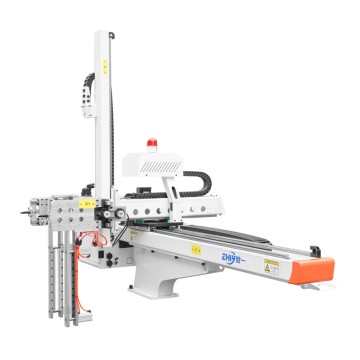
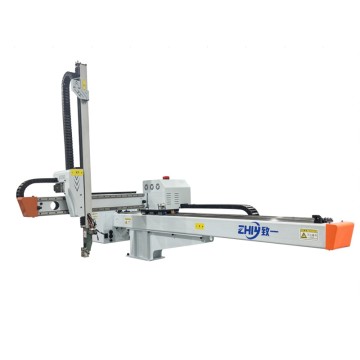
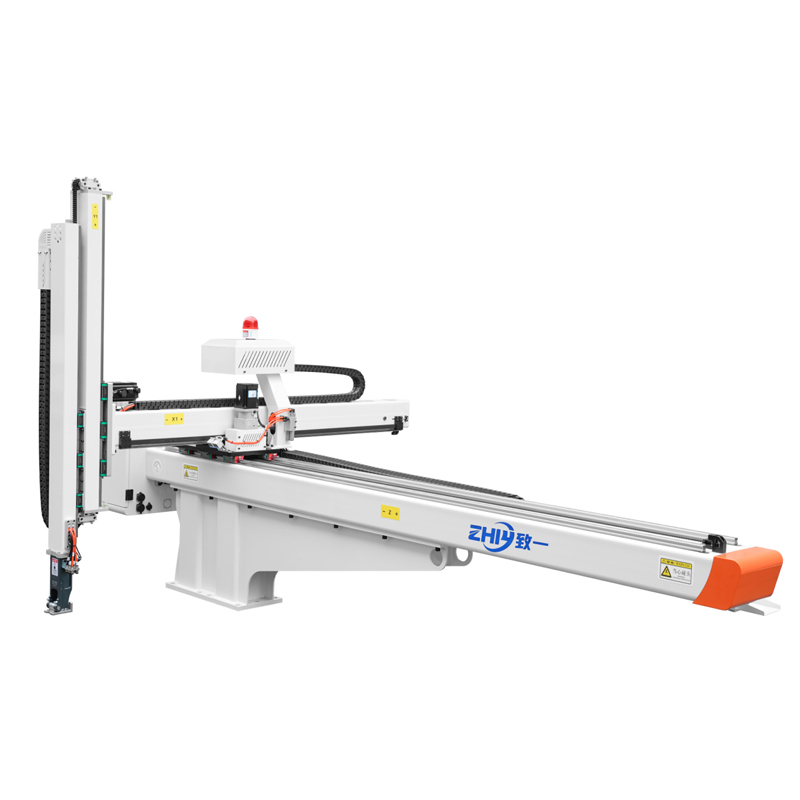
With its five-degree-of-freedom (DOF) structure of "X/Y/Z-axis translation + A/C-axis rotation" (some models also include B-axis oscillation), five-axis injection molding robot arms enable complex movements such as 360° rotation and multi-angle tilting. They demonstrate strong adaptability throughout the entire toy injection molding process: "material handling - processing - assembly - inspection." Core application scenarios include the following six categories:
1. Precise material handling and demolding of complex toys
For toys with curved surfaces, deep cavities, or oblique parting surfaces, such as cartoon doll shells, toy car bodies, and realistic animal models, five-axis robots can adjust the material handling angle through A/C-axis rotation, simulating manual "oblique extraction" movements and preventing interference between the product and the mold. For example, when producing the plastic skeletons of plush toys with ears, conventional robots can easily scratch the ears when picking up materials vertically. However, a five-axis robot can adjust the picking angle to 45°. Combined with the cushioning design of the flexible gripper, the picking defect rate is reduced from 5% for manual handling to below 0.3%. The picking speed is also increased to 3 seconds per time, far exceeding the 8-10 seconds per time required by manual handling.
2. Automated Insertion of Toy Inserts
Many functional toys (such as light-up toy guns, sound-generating dolls, and educational toys with gears) require the insertion of metal inserts (screws, nuts), electronic components (battery holders, wires), or plastic inserts (clip clips, connectors) during the injection molding process. The five-axis robot enables integrated operations from "insert removal - positioning - insertion - pressing" through rapid switching of the end effector. Vision systems identify insert position, A/C-axis rotation adjusts the insertion angle, and the Z-axis precisely controls the insertion depth, ensuring a perfect fit within the molded part to within 0.1mm. For example, in toy gearbox production, the pass rate for manual gear insert insertion is only 88%, while a five-axis robot can increase this to 99.5%. Simultaneously, the average daily production capacity of a single machine increases from 500 pieces to 1,200 pieces.
3. Integrated Assembly of Multi-Component Toys
For toys composed of multiple injection-molded parts (such as building blocks, puzzles, and detachable toy cars), a five-axis robot can be integrated with an assembly line to achieve automated assembly of these components. For example, when producing children's puzzles, a robot first removes puzzle bases, puzzle pieces, and other components from different injection molding machines. It adjusts the puzzle's orientation using A-axis rotation, then precisely presses down on the Z-axis to complete the assembly. Finally, the assembled puzzle is transferred to an inspection station. This integrated "injection molding + assembly" model reduces manual transfer steps, improving production efficiency by over 40% while also avoiding component misalignment and damage caused by manual assembly.
4. Automated Post-Processing of Toy Surfaces
Post-processing processes such as deburring, trimming, and painting on toy surfaces traditionally rely on manual labor, which is not only inefficient but also prone to dust pollution. A five-axis robot can be equipped with end-of-line tools such as a grinding head and a paint gun. It uses pre-set motion trajectories based on the toy's 3D model, achieving precise processing of curved surfaces and edges through multi-axis collaboration. For example, during the deburring process of toy car shells, a five-axis robot can adaptively adjust the grinding angle along the edge curve of the shell, achieving a burr removal accuracy of 0.05mm. The finished surface roughness Ra ≤ 1.6μm meets toy surface smoothness standards. Compared to manual grinding, this process is three times more efficient and eliminates the health risks of dust to operators.
5. Mass Production of Small Precision Toys
For small precision injection molded parts such as Lego-style building blocks, miniature toy parts, and toy figurine accessories, the five-axis robot's "high precision + high speed" advantage is particularly evident. Its repeatability reaches ±0.02mm, enabling precise grasping of micro-parts as small as 5mm. Furthermore, through the coordinated optimization of multi-axis motion, a single cycle time can be reduced to less than 2 seconds, allowing a single robot to produce 20,000 to 30,000 small toy parts per day. Furthermore, the robot can be used in conjunction with conveyor belts to automatically sort, count, and pack parts, reducing manual counting errors and improving warehouse logistics efficiency. 6. Automated Mold Cleaning and Maintenance
The frequency of cleaning toy injection molds directly impacts product quality. Traditional manual cleaning is not only time-consuming but also prone to damage to the mold cavity. A five-axis robot can be equipped with a high-pressure air gun, cleaning brush, or laser cleaning head. It uses pre-defined cleaning paths based on the mold's three-dimensional structure. Through multi-axis rotation, it comprehensively cleans the mold cavity, parting surfaces, ejector pin holes, and other areas. For example, a cartoon toy mold would take 30 minutes to clean manually, while a five-axis robot only takes 8 minutes. The cleaning is more thorough, effectively reducing product defects caused by residual mold impurities.
Third. The Core Value of Introducing Five-Axis Injection Molding Robots in Toy Companies
Based on actual application cases, toy companies have achieved significant improvements in efficiency, quality, cost, and safety after introducing five-axis injection molding robots. The specific benefits are reflected in the following aspects:
1. Production efficiency increased by 30%-60%, breaking capacity bottlenecks
Five-axis robots enable 24-hour continuous operation without rest, with stable movement speed and unaffected by human fatigue. For example, in a toy factory producing plastic building blocks, the introduction of a five-axis robot increased the average daily production capacity of a single injection molding machine from 8,000 pieces (with manual assistance) to 13,000 pieces, a 62.5% increase in efficiency. Furthermore, through the integrated linkage of multiple robots and injection molding machines, a production model of "one person managing five machines" has been achieved, significantly increasing per capita productivity.
2. Reduce product defect rates by 50%-80%, ensuring safety standards
The five-axis robot's repeatable positioning accuracy and stable motion effectively prevent problems such as manual manipulation and uneven force. Data from a children's doll manufacturer shows that after introducing a five-axis robot, the defect rate due to scratches during material removal and loose inserts dropped from 7.2% to 1.5%, reducing losses from defective products by 68%. Furthermore, the robot's standardized operation ensures product compliance with safety standards such as EU REACH and US CPSC, reducing compliance risks in export trade.
3. Reduce overall costs by 20%-30%, optimizing profit structure
On the one hand, a five-axis robot can replace two to three skilled operators. Based on an average monthly salary of 6,000 yuan, a single robot saves an average of 144,000 to 216,000 yuan in labor costs annually. Furthermore, factors such as reduced defect rates, optimized energy consumption (some robots use servo motors, which consume 15% less energy than manual operators), and reduced mold wear further reduce production costs. After introducing 10 five-axis robots, a medium-sized toy company saw its annual overall costs drop by 25%, with a payback period of just 1.5 years.
4. Enhanced flexible production capabilities to accommodate rapid market changes
Five-axis robots allow for rapid adjustment of motion trajectories and action parameters through programming, reducing changeover time from 1-2 hours for conventional robots to 15-30 minutes. For example, when market demand shifts from cartoon dolls to toy cars, the company simply imports a new program through the touchscreen, and the robot quickly adapts to the production requirements of the new mold. This significantly improves the production line's adaptability and helps the company seize market trends.
5. Improve the Work Environment and Reduce Safety Risks
Five-axis robots can replace manual labor in hazardous processes such as high-temperature material removal and mold cleaning, eliminating operator contact with hot molds, injection molded parts, and chemical cleaning agents, thereby reducing the incidence of workplace accidents. Furthermore, automated production reduces labor density in the workshop, improves the cleanliness and orderliness of the production environment, and helps enhance the company's employer brand.
Fourth. Key Considerations for Toy Companies Selecting a Five-Axis Injection Molding Robot
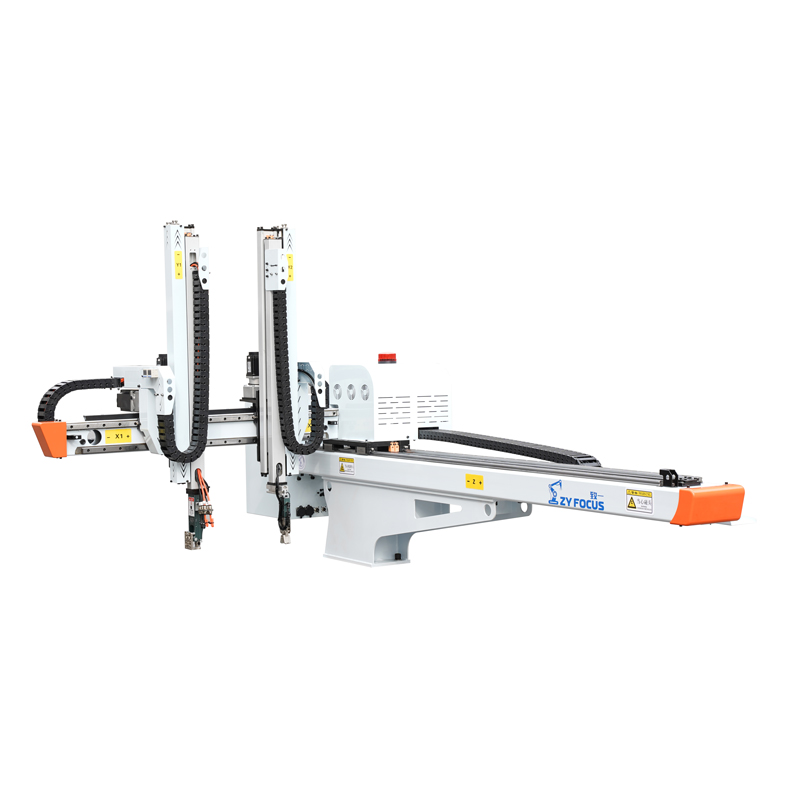
The selection of a five-axis injection molding robot directly impacts the application results. Toy companies should consider factors such as their product characteristics, production scale, and process requirements. Key considerations include the following six points:
1. Load Capacity: Matching the Toy Weight with the End-of-Line Tooling
Select an appropriate load capacity based on the weight of the molded part. Generally, toy parts weigh between 50g and 5kg, so a five-axis robot with a load capacity of 5kg to 10kg is recommended (allowing for weight margin for the end-of-line tooling). For example, a robot with a 5kg load capacity can be selected for producing small building blocks, while a robot with a load capacity of 10kg or more is required for producing large toy car shells.
2. Travel Range: Covering Mold and Production Line Dimensions
The robot's X/Y/Z axis travel must cover the mold size of the injection molding machine, the distance between the material removal location, and the workstations of subsequent processes (such as assembly and inspection). For small and medium-sized toy injection molding machines (clamping force 50-200 tons), we recommend models with X-axis travels of 800-1200mm, Y-axis travels of 500-800mm, and Z-axis travels of 600-1000mm. Large injection molding machines require corresponding lift ranges.
3. Precision and Speed: Balancing Quality and Efficiency
The precision of the toy determines the required accuracy of the robot arm: for ordinary toys, a model with a repeatability of ±0.05mm is suitable, while for toys with precision inserts, a high-precision model with ±0.02mm is required. Speed parameters should also be adjusted according to production cycle requirements to avoid blindly pursuing high speeds that may lead to unstable movements.
4. End-Effector Compatibility: Compatible with Various Toy Categories
Select a robot arm that supports quick-change end-effectors to accommodate different toy types. For gripping smooth shells, vacuum cups can be used; for gripping angular parts, mechanical grippers can be used; and for inserts, specialized positioning fixtures can be used. At the same time, the end effector must have a flexible cushioning function to avoid damaging the toy surface.
5. Control System and Usability: Lowering the Operational Barrier
Preferably, a robot arm equipped with a touchscreen human-machine interface and supporting graphical programming can be set up simply by dragging and clicking, without requiring specialized programming knowledge. Furthermore, the control system must support integration with injection molding machines, assembly lines, and visual inspection equipment to achieve full process automation.
6. After-Sales Service and Technical Support: Ensuring Stable Operation
Select a brand with a comprehensive after-sales service system to ensure prompt response in the event of equipment failure (recommended response time ≤ 24 hours). Furthermore, the manufacturer should provide technical support, such as operator training and program optimization, to help companies fully utilize the robot arm's performance.
Fifth. Future Trends: Deep Integration of Five-Axis Injection Molding Robots and the Toy Industry
With the development of Industry 4.0 and artificial intelligence technologies, the application of five-axis injection molding robots in the toy industry will move towards greater intelligence, flexibility, and integration:
Intelligent Upgrade: Five-axis robots equipped with AI vision systems can achieve "autonomous identification and adaptive adjustment." For example, they can automatically identify and classify toy defects or adjust material handling force in real time based on mold wear, further improving production precision and automation.
Flexible Production: Through the integration of "robots + AGVs + smart warehousing," the entire toy production process, from injection molding to assembly, packaging, and warehousing, is now flexible, meeting market demands for personalized customization and small batch sizes, such as custom-designed building block sets.
Green and Energy-Saving Optimization: Future five-axis robots will utilize more efficient servo motors, lightweight materials (such as carbon fiber), and energy recovery systems to further reduce energy consumption and help toy companies achieve carbon neutrality. Digital Twin Applications: By building a virtual model of the robot using digital twin technology, production processes can be simulated on a computer, enabling pre-emptive optimization of motion trajectories, troubleshooting of process issues, and reducing equipment commissioning time and trial-and-error costs.
Conclusion
Five-axis injection molding robots are not only a tool for automation upgrades in the toy industry but also a core driver of the industry's transformation from a labor-intensive to a technology-intensive industry. For toy companies, introducing five-axis robots is not simply a matter of replacing humans with machines, but rather a systematic transformation through equipment upgrades that improves efficiency, ensures quality, and optimizes costs. As the technology matures and costs decrease, five-axis injection molding robots will become standard equipment for more toy companies, helping the industry achieve high-quality development amidst fierce market competition.