
Leave Your Message
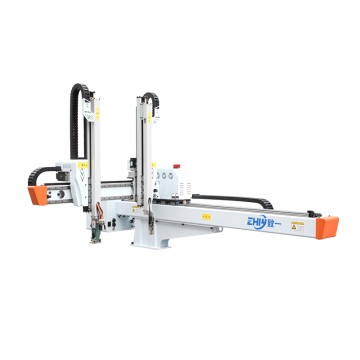
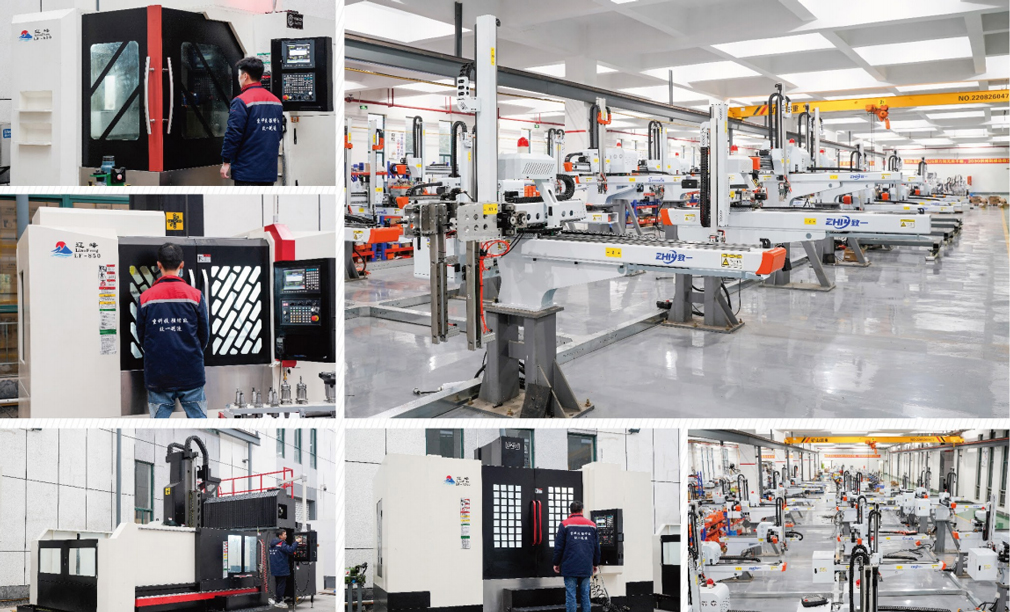
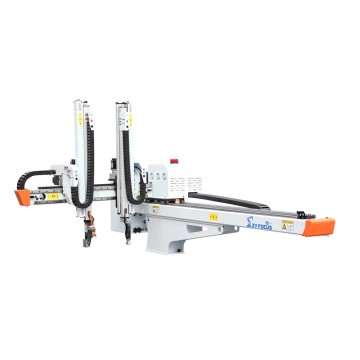
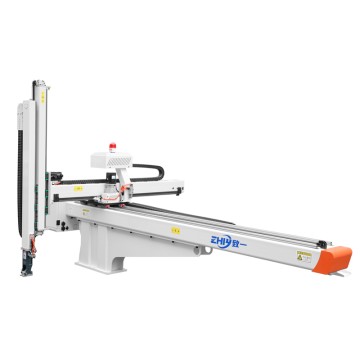
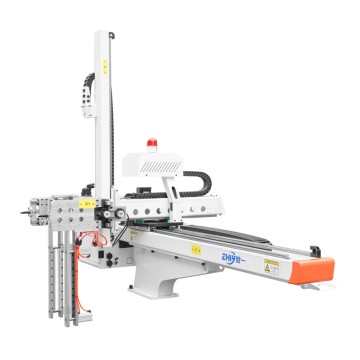
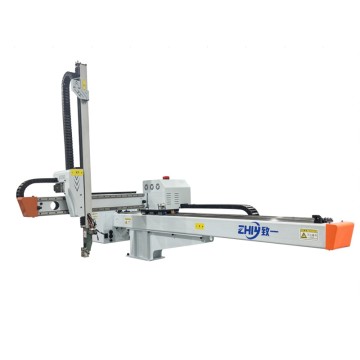
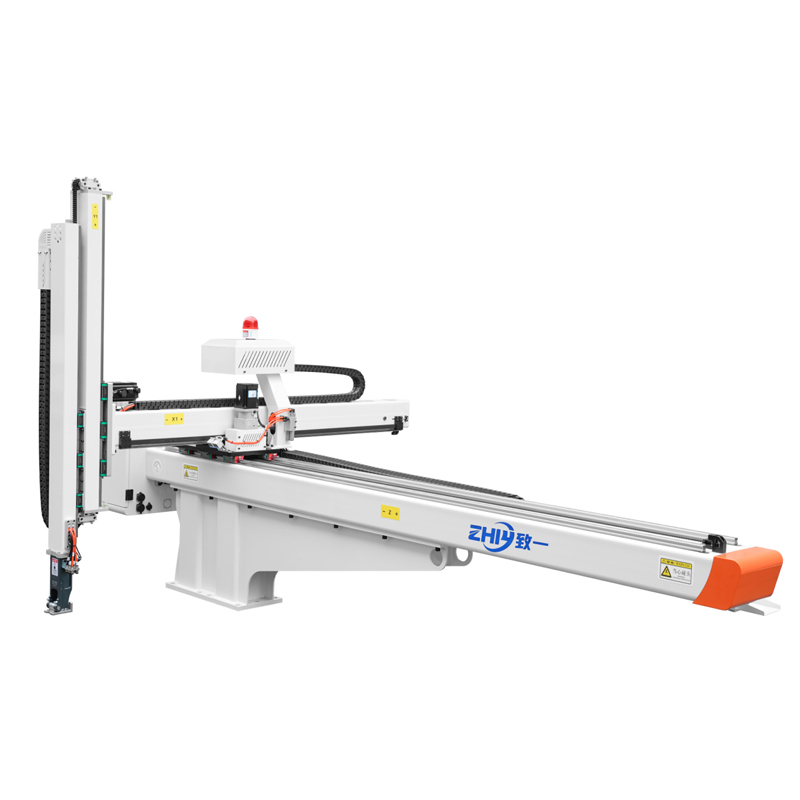
Five-Axis Injection Molding Robot Control System
Five-Axis Injection Molding Robot Control System: Technical Analysis and Application Practice
In today's injection molding industry, five-axis injection molding robots, with their high efficiency and precision, have become key equipment for improving production efficiency and product quality. Their control system, as the core brain, determines the robot's performance and application scope. This article will delve into the control system of a five-axis injection molding robot, from technical principles to practical applications.
1. Core Architecture of the Control System
The control system of a five-axis injection molding robot typically consists of the following key components:
Touchscreen: Serving as the human-machine interface, the operator can use the touchscreen to set and adjust the robot's operating parameters and monitor its operating status in real time.
I/O Control Board: This is the core of the control system, responsible for receiving touchscreen commands and converting them into specific control signals, which are then sent to the various servo motors.
Five-Axis Servo Control Slave Board: Each axis has an independent servo control slave board. These boards receive commands from the I/O control board and control the corresponding axis's servo motors.
Drive Unit: Typically a servo motor, these precisely actuate the robot's joints based on the control signals. Power supply: Provides stable power to the entire control system and drive unit.
Communication lines: Connect various control components, ensuring fast and accurate transmission of commands and data.
2. Control System Operating Principle
(I) Command Reception and Processing
The operator enters commands, such as the robot's motion trajectory, speed, and gripping force, through the touch screen. These commands are first received by the I/O control board and then processed according to the pre-set program logic.
(II) Signal Conversion and Transmission
The I/O control board converts the processed commands into control signals suitable for the servo motors and sends them to the five-axis servo control slave boards via the CAN bus or other communication methods. Each servo control slave board precisely controls the servo motor for the corresponding axis based on the received signals.
(III) Motor Drive and Feedback
After receiving the control signals, the servo motors drive the robot's joints according to the commands. Simultaneously, the motors' built-in encoders provide real-time feedback on the motor's operating status, such as position and speed. These feedback signals are returned to the I/O control board via the control slave boards, forming a closed-loop control system.
3. Functional Features of the Control System
(I) High-Precision Positioning
Adopting an advanced servo control system, each axis achieves high-precision positioning, ensuring the Robot Can accurately and flawlessly complete various operations in complex injection molding production environments.
(II) Fast Response
The control system can quickly respond to operational commands, reducing waiting time during the production process and improving production efficiency.
(III) Flexibility and Scalability
The control system supports multiple programming languages and communication protocols, allowing users to customize and expand it according to different production needs.
(IV) Safety Protection
Equipped with comprehensive safety protection mechanisms, such as emergency stop switches and collision detection, the robot can be stopped immediately in the event of an abnormal situation, protecting the equipment and operators.
4. Practical Application Cases
(I) Removal of Injection Molded Products
After the injection molding machine completes a single molding cycle, the robot can quickly and accurately remove the finished product from the mold, avoiding delays and product damage caused by manual operation. (2) In-Mold Insertion and Labeling
For complex products requiring inserting or labeling during the injection molding process, five-axis injection molding machine robots can achieve high-precision in-mold operations, improving product quality and consistency.
(3) Automated Production Process
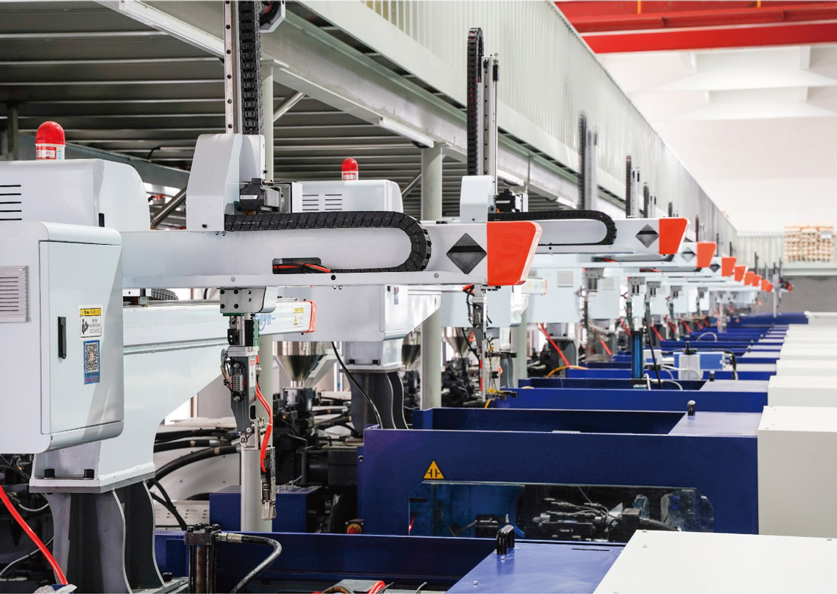
By working closely with the injection molding machine, five-axis injection molding machine robots can achieve a fully automated production process from raw material placement to finished product packaging, significantly reducing manual intervention and improving production efficiency and product quality.
5. Future Development Trends
(1) Intelligence and Automation
With the development of artificial intelligence and the Internet of Things (IoT) technologies, the control systems of five-axis injection molding machine robots will become more intelligent and automated. Through sensors and data analysis, the robots will be able to automatically adjust operating parameters, achieve self-optimization, and predict faults.
(2) High Precision and High Speed
Future control systems will continue to improve in precision and speed to meet the increasingly complex demands of injection molding production.
(3) Integration and Modularity
Control systems will become more integrated and modular, facilitating installation, maintenance, and upgrades. (IV) Environmental Protection and Energy Saving
Under the requirements of environmental protection and energy conservation, control systems will pay more attention to energy management, reduce energy consumption, and minimize the impact on the environment.