
Leave Your Message
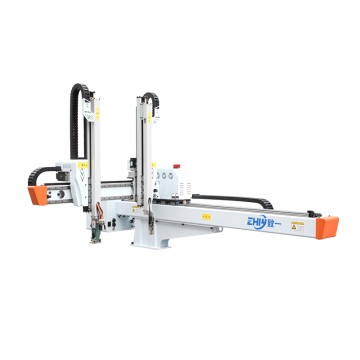
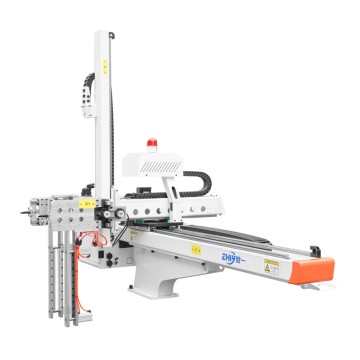
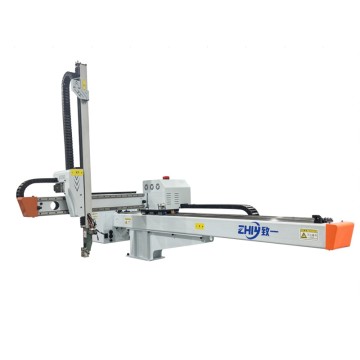
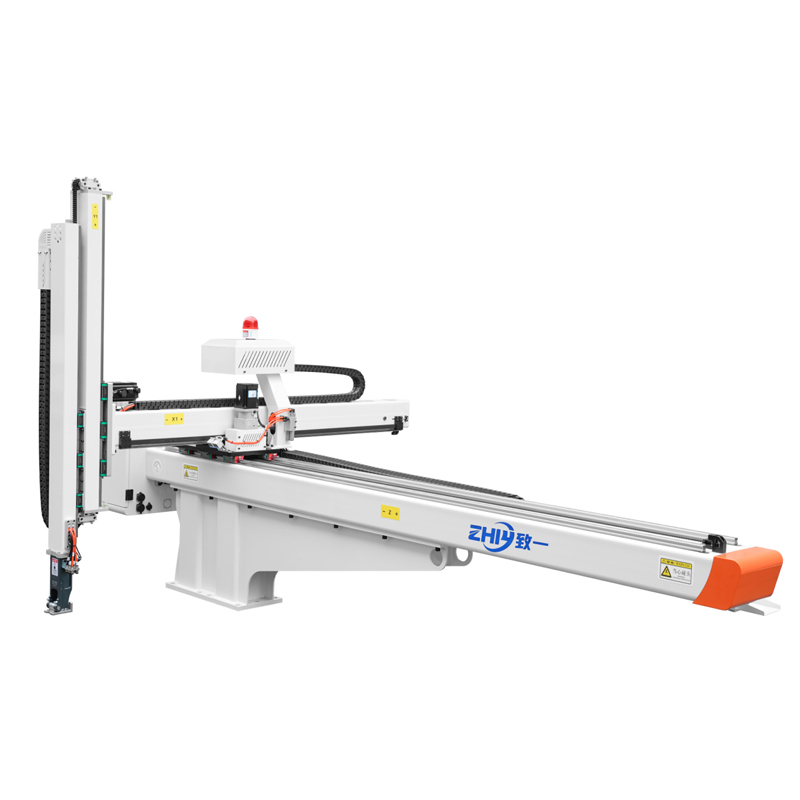
Five-axis injection molding robot axis-related parameter setting
Five-axis injection Molding Robot axis-related parameter setting: Helping international wholesale buyers achieve efficient production
Introduction
In the global manufacturing industry, Injection Molding Robots have become key equipment for improving production efficiency, reducing labor costs and improving product quality.Five-axis injection molding robots are favored by international wholesale buyers for their flexible movement capabilities and high-precision operations.
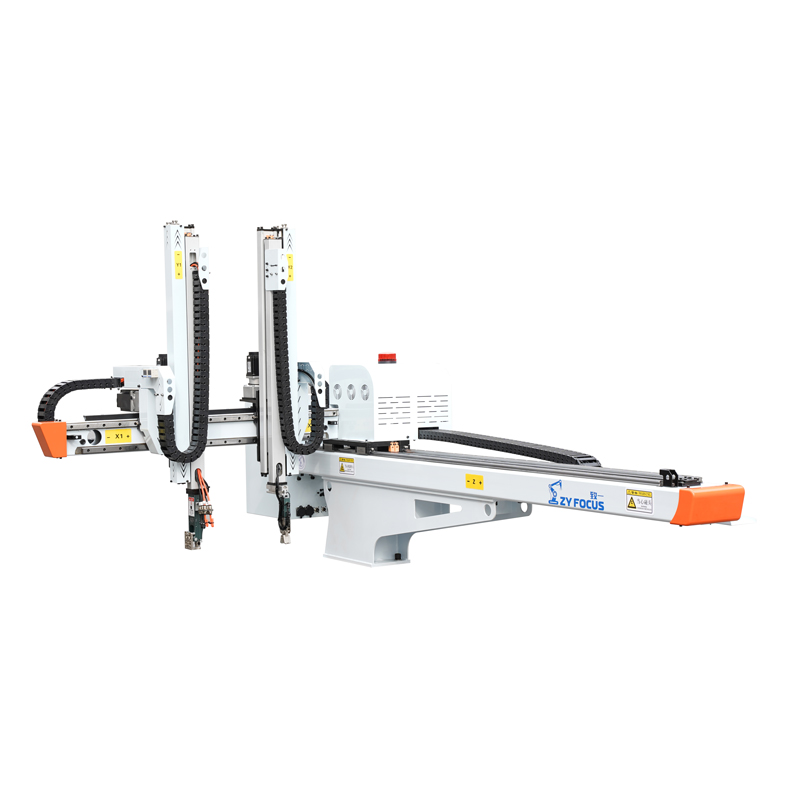
Axis definition of five-axis injection molding robot
The axis definition of five-axis injection molding robot is the basis for parameter setting. Usually, the axes of five-axis injection molding robots include:
Z axis: the horizontal entry and exit axis of the robot, responsible for the overall horizontal movement of the robot.
X1 axis: the forward and backward axis of the main arm, used for the horizontal movement of the main arm.
X2 axis: the forward and backward axis of the auxiliary arm, working with the main arm to achieve complex horizontal movement.
Y1 axis: the rising and falling axis of the main arm, controlling the vertical movement of the main arm.
Y2 axis: the rising and falling axis of the auxiliary arm, cooperating with the main arm to complete complex vertical movement.
C-axis: The horizontal and vertical axis of the main arm fixture, used for the rotation of the fixture to achieve multi-angle operation.
X1, X2 axis parameter setting
Motor reversal
By default, when the motor rotates counterclockwise, the axis moves away from the origin. If you need to change the direction, you can check the motor reversal option to make the motor move closer to the origin when it rotates counterclockwise.
Maximum movement
Set the maximum distance the X-axis moves to ensure that the robot operates within a safe range.
Origin offset
The origin offset function allows the robot to continue to move a certain distance after returning to the origin. When the offset value is positive, the robot moves away from the origin; when the offset value is negative, it moves toward the origin.
Minimum/maximum position of mold descent
When the Y axis descends into the mold, the minimum and maximum positions that the X axis can move. These parameters ensure that the robot does not exceed the safe range when operating in the mold.
Motor forward and reverse test
The motor forward and reverse test can confirm whether the direction of the motor is correct. Under normal circumstances, the motor forward test and feedback should both display 10000, the reverse test displays 10000, and the feedback displays -10000.
Distance per revolution
Set the distance that each servo axis motor runs per revolution. Ensure that the parameter settings are accurate by actually measuring the distance the axis moves when the motor rotates forward.
Y1, Y2 axis parameter setting
Maximum standby position
Set the maximum standby position of the Y1 axis to ensure that the robot does not exceed the safety range when on standby.
Departure origin position
Set the position of the Y1 axis's descending departure origin switch. If the setting value is too small, it may cause a system alarm.
Motor forward and reverse test
Similar to the X-axis, the Y-axis motor forward and reverse test is also an important step to ensure the correct direction of the motor.
Z-axis parameter setting
In-mold safety zone
Set the position of the in-mold object picking safety zone to ensure the safety of the robot when operating in the mold.
Out-mold safety zone
Set the position of the external object safety zone to prevent the robot from colliding when operating outside the mold.
C-axis parameter setting
Maximum rotation
The maximum rotation range of the C-axis is 360 degrees, which can be set according to actual needs.
Origin offset
The origin offset range of the C-axis is (-90, +90). When the offset value is positive, the robot moves toward the origin; when the offset value is negative, it moves in the opposite direction of the maximum displacement.
Horizontal safety range
During the horizontal movement, limit the safety angle of the fixture. For example, (0-20; 300-360) is the horizontal safety range of the C-axis.
Servo parameter adjustment
The servo parameter adjustment of the five-axis injection molding robot is the key to ensure the stable operation of the robot. Through the integrated drive and control system of Huacheng Industrial Control, users can set parameters on the machine parameters-structure-servo parameter adjustment page. The setting steps include:
Tap the emergency stop button to enter the servo parameter adjustment interface.
Enter the servo parameter number.
Enter the target value in the "Parameter Value" box and click the "Send" button.
Check whether the current parameter value is consistent with the target value to confirm that the parameter setting is successful.
After the parameters are set successfully, restart the servo and hand controller to make the new parameters effective.
Application Cases
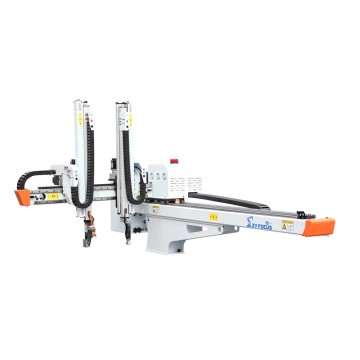
Dual-arm five-axis servo manipulator
Dual-arm five-axis servo manipulators are widely used in stack mold systems and three-plate mold injection molding systems. For example, the SW63 and SW67 series of dual-arm five-axis servo manipulators from Siweike have a load capacity of 3KG and 8KG or 15KG, respectively, and can be equipped with single-section or double-section arms according to the height of the plant. These manipulators perform well in product removal, assembly, and flipping.
Side-pickup dual-arm five-axis servo manipulator
In stack mold injection molding systems with high speed requirements, the side-pickup dual-arm five-axis servo manipulator is an ideal choice. For example, Siweike's SW8 series of side-pickup dual-arm five-axis servo manipulators are designed for high-speed applications such as thin-walled lunch box injection molding.
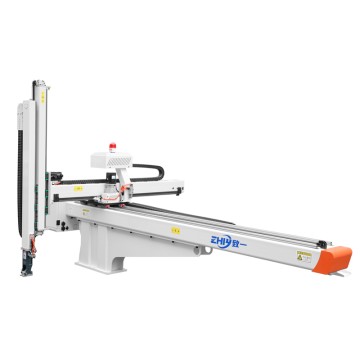
Single-arm five-axis servo manipulator
The single-arm five-axis servo manipulator can achieve arbitrary angle rotation of the fixture by adding A/C-axis servo. This type of robot is suitable for applications such as removing special-shaped products, labeling, nozzle shearing and inspection. For example, the SW67 single-arm five-axis servo robot can be used for automatic removal of car bumpers and labeling of fresh-keeping boxes.
System selection points
For users with high requirements for five-axis applications, it is recommended to give priority to high-performance servo systems. For example, Panasonic motors and servo systems are recommended for their high precision and stability. In addition, since the installation of servo axes will increase additional loads, the selection of robot arm motors needs to leave enough room.
Conclusion
The axis-related parameter setting of the five-axis injection molding robot is the key to ensuring efficient operation of the equipment and production quality. By reasonably setting the parameters of each axis, international wholesale buyers can give full play to the advantages of the five-axis injection molding robot, improve production efficiency, reduce labor costs, and improve product quality.