
Leave Your Message
Demand Trends for Three-Axis Servo Robots in the Global Manufacturing Recovery in 2025
Demand Trends for Three-Axis Servo Robots in the Global Manufacturing Recovery in 2025: The Rise of the Automation Cost-Effectiveness Revolution
The global manufacturing industry stands at a crossroads between recovery and transformation. The global manufacturing PMI reached 49.5% in June 2025, just shy of the boom-bust line. Two consecutive months of month-on-month increases signal a clear recovery. In this uneven recovery, Asia's manufacturing sector leads the expansion with a PMI of 50.7%, Europe has seen a six-month recovery, and the Americas are experiencing a sluggish recovery. This differentiated recovery is reshaping the automation equipment market, with three-axis servo robots in particular experiencing a surge in demand. This article will analyze the demand trends for three-axis servo robots in 2025 and the underlying industry logic from four perspectives: recovery characteristics, technological breakthroughs, regional markets, and application scenarios.
Cost-Sensitive Recovery: The Golden Age of Three-Axis Robots
The global manufacturing recovery in 2025 will exhibit distinct cost-sensitive characteristics. Interact Analysis data shows that global manufacturing output is projected to grow by 3.2% in 2025, an improvement from 2024 but still within historically moderate levels. This moderate recovery forces manufacturers to strike a delicate balance between expanding capacity and controlling costs, and three-axis servo robots offer an ideal solution for this balancing act.
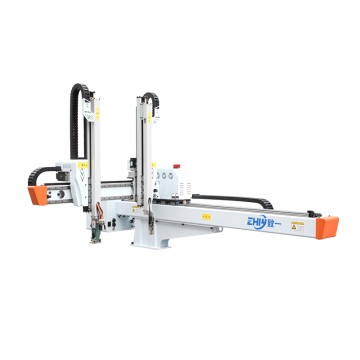
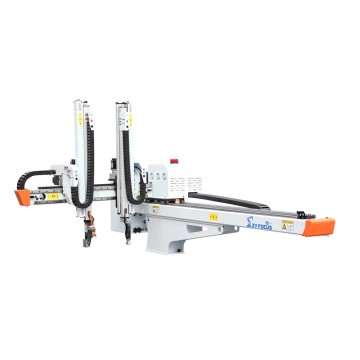
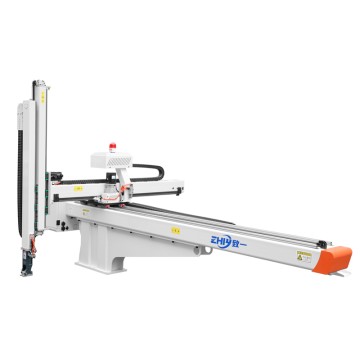
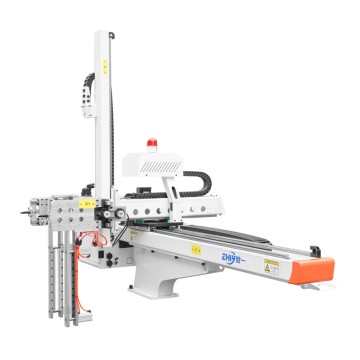
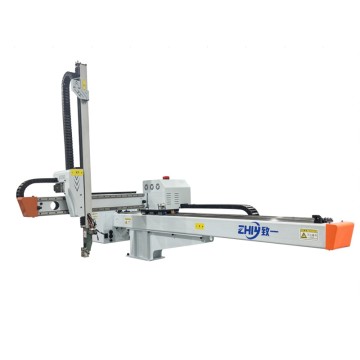
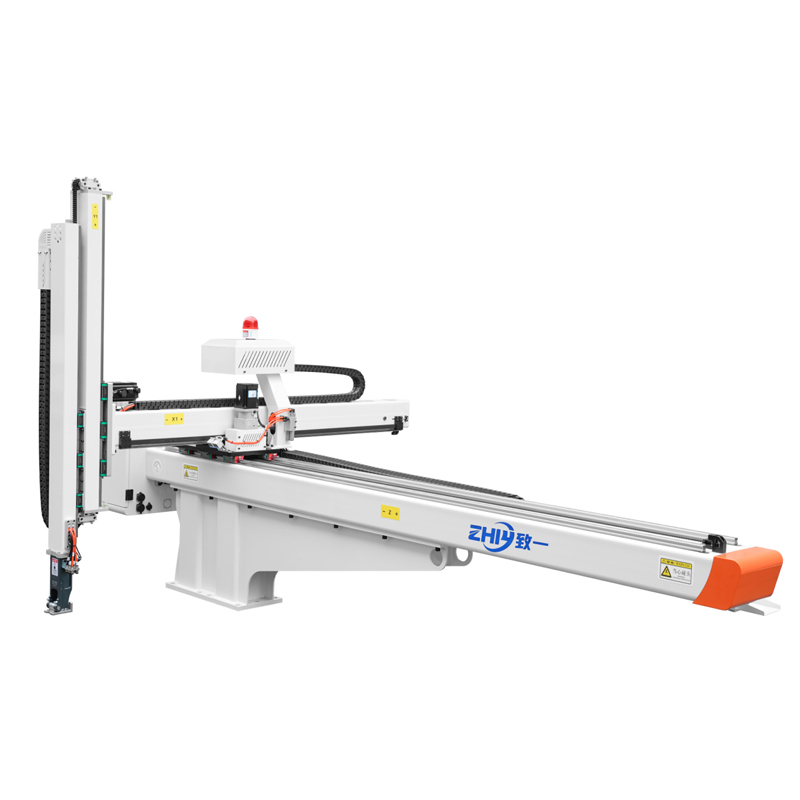
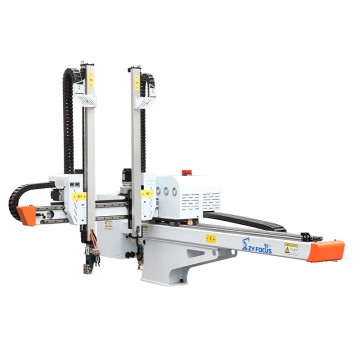
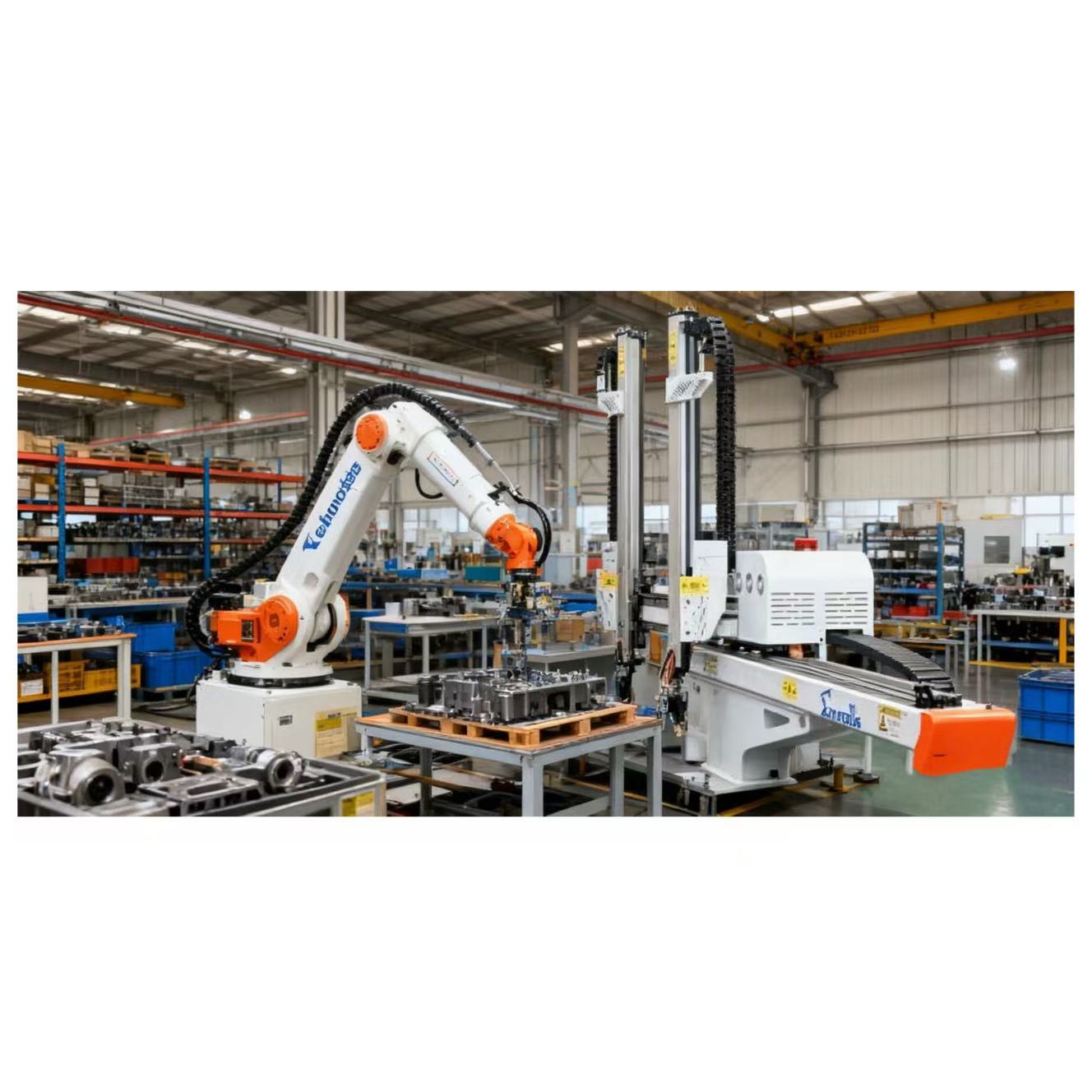
Three-axis servo robots demonstrate significant cost advantages in standardized production scenarios such as injection molding, packaging, and electronic assembly. Compared to five-axis equipment, three-axis systems offer 40-50% lower procurement costs and superior energy efficiency. Three-axis drive systems employing novel wide-bandgap semiconductor devices reduce energy consumption by up to 40% under typical operating conditions compared to traditional solutions. This cost-effectiveness is particularly crucial for manufacturers facing rising labor costs and recruitment difficulties. Data shows that three-axis robots can retrieve parts in just 1-2 seconds, significantly faster than the 3-5 seconds required by manual operators. They can also operate continuously and stably 24 hours a day, significantly improving overall production capacity.
Investment caution during the recovery period has further fueled demand for three-axis robots. With global economic growth projected at only 2.3%, companies are increasingly choosing automation solutions with short payback periods and manageable risks. A large appliance manufacturer, for example, introduced 20 three-axis servo robots in its injection molding workshop, reducing its defective product rate from 3.2% to 1.1% and achieving a 14-month payback period. This "low-cost, high-return" model is being widely replicated across the manufacturing industry.
Technological breakthroughs reshape performance boundaries: Three-axis is no longer a "low-end option."
Breakthroughs in robotics technology in 2025 are fundamentally changing the perception of three-axis servo robots. Recent advances presented at the World Robot Conference demonstrate that novel electroactive polymer (EAP) and improved pneumatic muscle (PAM) drive technologies increase the power density of three-axis robots by up to 35% compared to traditional motor drives. Flexible actuators weighing less than 500 grams can now stably grasp dynamic loads of 15 kg. These revolutionary innovations in materials and structures have significantly improved the performance of three-axis systems while maintaining cost advantages.
Advances in sensing technology have further unlocked the potential of three-axis Robotic Arms. A new tactile skin based on a hybrid of optical waveguide, capacitive, and piezoresistive principles has achieved a spatial resolution of over 1,000 effective sensing points per square centimeter. Combined with a high-frame-rate structured light camera, this system has for the first time achieved stable grasping of transparent and highly reflective objects with a success rate exceeding 98%. This enhanced sensing capability has enabled three-axis robotic arms to expand beyond simple repetitive operations into precision assembly.
Another key breakthrough is the intelligentization of control algorithms. A control system utilizing a multimodal large model enables the three-axis robotic arm to generalize to zero-shot and few-shot grasping. Without specific training, it achieves a one-time, reliable grasp planning success rate exceeding 85% for unfamiliar industrial parts. This "plug-and-play" intelligent feature significantly reduces the deployment difficulty and training costs of three-axis systems, making them particularly suitable for the automation upgrade needs of small and medium-sized manufacturing enterprises. The widespread adoption of modular design addresses the inflexibility of traditional three-axis systems. The new modular knuckles integrate motors, drivers, sensors, and control circuits, resulting in a size reduction of approximately 40% and over 70% reduction in cabling compared to the previous generation. An automotive parts supplier has demonstrated that adopting a modular three-axis system has reduced production line changeover time from 8 hours to 1.5 hours, increasing equipment utilization by 37%, and fundamentally changing the industry's perception of three-axis robots as "poorly adaptable."
Regional Market Divergence: Asia Leads, Global Breakthroughs
The regional unevenness of the global manufacturing recovery has created a differentiated landscape for demand for three-axis servo robots. Asia, the core engine of the manufacturing recovery, has maintained expansion for two consecutive months with a PMI of 50.7%, making it the largest market for three-axis robots. China's "14th Five-Year Plan" for robotics industry development continues to gain momentum, with a manufacturing robot density of 470 units per 10,000 employees by 2023. Strong growth in ASEAN countries such as India and Thailand has fueled strong demand for entry-level automation equipment. In the Asian market, cost sensitivity and policy drivers resonate. China's key intelligent robotics project has a 2024 budget update of approximately $45.2 million, including subsidies for automation upgrades for small and medium-sized enterprises, significantly boosting the adoption of three-axis robotic arms. Japan's "New Robotics Strategy," which promotes the decentralization of human-robot collaboration technology, and South Korea's "Fourth Basic Plan for Intelligent Robotics," which includes $128 million in industrial investment, have both promoted technological upgrades and expanded applications for three-axis systems at various levels.
The European market is showing unique demand driven by the "green recovery." Although the overall PMI remains in contractionary territory, strong performance in countries like Greece (53.1%) and Ireland (53.7%), along with Germany's $369.2 million investment in robotics research under its "High-Tech Strategy 2025," has driven the adoption of three-axis robotic arms in areas such as new energy and environmental protection equipment. A significant portion of the $183.5 million in robotics funding allocated by the EU's "Horizon Program" supports low-cost automation solutions, creating opportunities for the penetration of three-axis systems in industries like food processing and pharmaceuticals. The American market presents new opportunities brought about by supply chain restructuring. While the US manufacturing reshoring policy hasn't pushed the overall PMI above the boom-bust line, the continued expansion of Latin American countries like Colombia and the strengthening of nearshoring in the North American supply chain are driving demand for standardized automated equipment. The National Science Foundation's $70 million budget for basic robotics research complements the Department of Defense's $10.3 billion investment in automation. The perception technology innovations driven by the former are gradually being applied to three-axis systems, enhancing their competitiveness in areas such as automotive parts and warehousing and logistics.
Deepening Application Scenarios: From Labor Replacement to Process Optimization
The growth in demand for three-axis servo robots by 2025 will stem not only from simple "robot replacement" but also from their profound value in process optimization and quality improvement. The injection molding industry is a prime example of this practice. Seamless integration of three-axis systems with automatic nozzle shears, in-mold inserts, labeling machines, and robotic conveyor lines has achieved full automation from injection molding to post-processing. As a result, a large plastic parts manufacturer has increased production efficiency by 52% and reduced energy consumption by 28%.
The precision assembly field in the electronics manufacturing industry is emerging as a new blue ocean for three-axis robotic arms. With fiber Bragg grating (FBG) micro-displacement sensors increasing joint position feedback resolution to submicron levels (0.1-0.5μm), three-axis systems are now capable of performing precision operations such as polishing smartphone cases and inserting PCBs. Data from a consumer electronics OEM shows that the adoption of a new three-axis robotic arm has increased the yield rate of camera module assembly from 92% to 99.3%, reducing scrap costs by over $2 million annually.
Compliance-compliant production requirements in the food and pharmaceutical industries are also driving technological advancements in three-axis robotic arms. Three-axis end effectors using variable-stiffness materials can switch from rubber-level to metal-level stiffness in milliseconds (<50ms), effectively solving the gripping challenges of fragile foods like chocolate. FDA-compliant food-grade lubrication and sealing designs are expected to increase the adoption of three-axis systems in pharmaceutical packaging lines by 43% by 2024.
The explosive growth of logistics automation has opened up a new market for three-axis robotic arms. In the sorting process of e-commerce warehouses, three-axis systems integrating deep vision and tactile closed-loop control enable high-speed sorting of packages of varying sizes and materials, processing 800-1200 pieces per hour with an error rate below 0.05%. This "flexibility within standardization" makes them a core component of warehouse robotics solutions.
Competitive Dimensions Beyond Cost-Effectiveness
Looking ahead to the second half of 2025 and 2026, the demand growth curve for three-axis servo robotic arms will accelerate. Interact Analysis predicts that the global manufacturing output value growth rate will increase to 3.6% in 2026, with the machinery industry expected to outpace the end-use production sector. This structural growth will further drive demand for automation equipment. With the maturity of embodied intelligence models and bionic neural control technologies, three-axis robotic arms will penetrate more complex assembly tasks, gradually encroaching on application areas traditionally dominated by five-axis systems.
The competitive landscape in regional markets will become clearer. Asia will continue to maintain its largest market position, with a projected compound annual growth rate of 15-18%. The European market will leverage green manufacturing as a breakthrough point, generating unique demand for new energy vehicle parts production. The American market may experience a periodic surge due to the intensification of manufacturing reshoring policies. These regional differences require equipment suppliers to provide more locally tailored solutions.
It is worth noting that three-axis and five-axis servo robots are not simply substitutes, but rather are developing a complementary landscape. In standardized production, which seeks the ultimate cost-effectiveness, three-axis systems dominate due to their cost advantages. However, in high-end manufacturing, which requires complex trajectory control, five-axis systems will continue to maintain a technological barrier. Smart manufacturers are building a "three-axis-based, five-axis-supported" automation equipment portfolio to control costs while maintaining technological leadership.
The global manufacturing recovery in 2025 will not only involve the restoration of production capacity, but also the intelligent reorganization of production factors. The rapid growth in demand for three-axis servo robots reflects the manufacturing industry's realistic choice to strike a balance between cost pressure and technological advancement. With continuous breakthroughs in material innovation, sensor evolution, and intelligent control, three-axis systems are transforming from an economical option to a high-performance solution, injecting strong momentum into the manufacturing industry's recovery. For manufacturers, seizing the opportunities presented by this "cost-effective revolution" will be key to gaining a competitive advantage during the recovery cycle.