
Leave Your Message
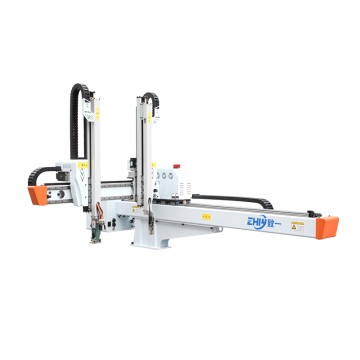
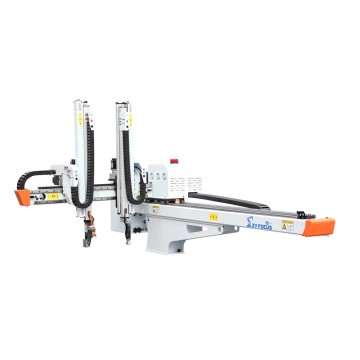
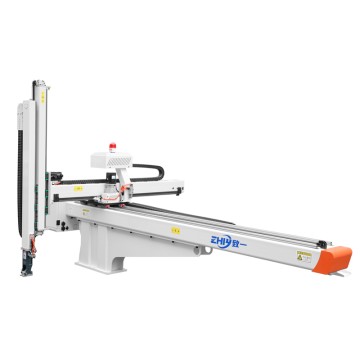
Comparison of traditional three-axis servo robotic arms and intelligent ones
Comparison of Traditional Three-Axis Servo Robots and Intelligent Robots
Technical Architecture Comparison: Fundamental Differences in Hardware Foundation and Control Core
Performance Comparison: Quantitative Differences in Accuracy, Speed, and Stability
Operation and Adaptability: Comparison of Programming Difficulty and Flexible Production Capability
Cost and ROI: Analysis of Initial Investment, Maintenance Costs, and Long-Term Returns
Application Scenarios and Future Expansion: Industry Adaptability and Technological Upgrade Potential
I. Technical Architecture Comparison: Fundamental Differences in Hardware Foundation and Control Core
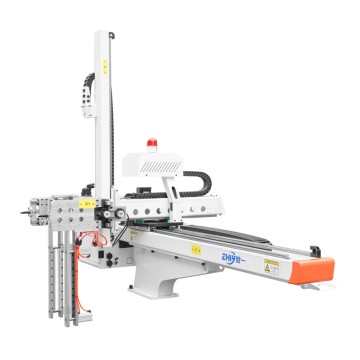
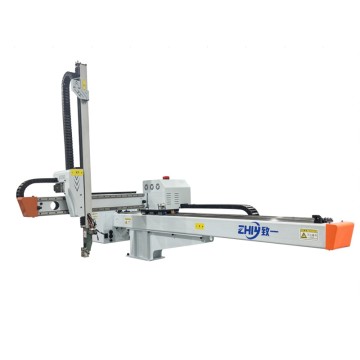
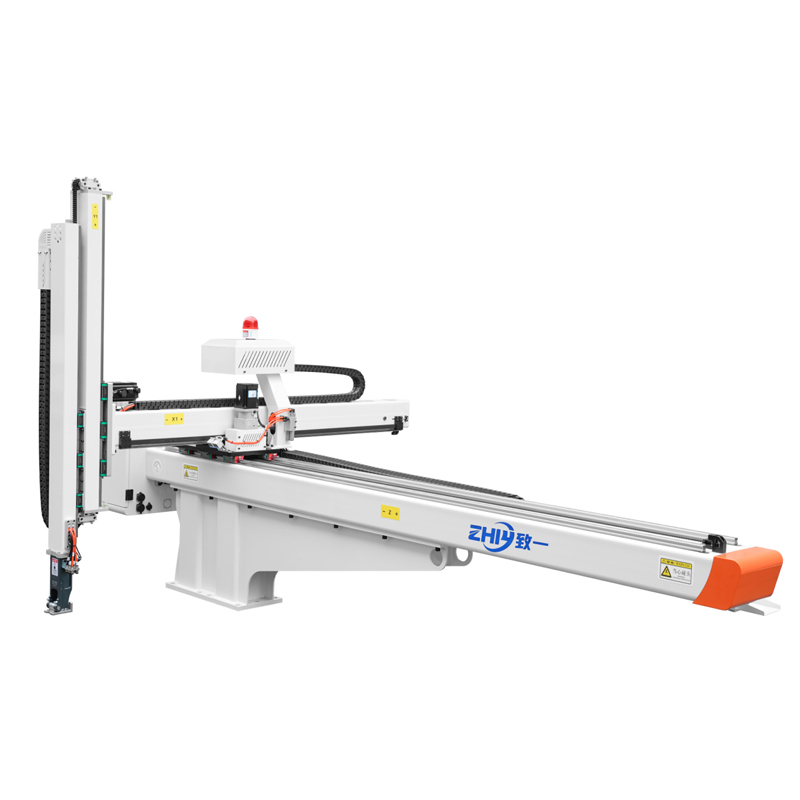
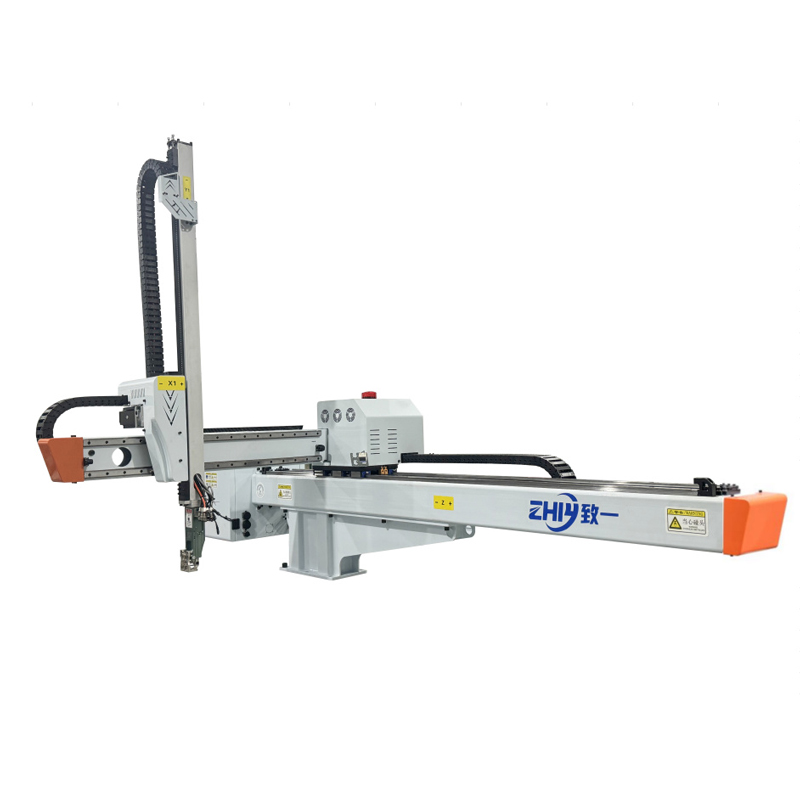
Traditional three-axis servo robotsare based on a "mechanical structure + PLC control" architecture, employing a fixed transmission mechanism (X/Y/Z three-axis linear modules). The control system relies on preset programs and can only execute single-path movements. Its hardware design emphasizes rigidity and stability, lacks an environmental perception module, and data interaction is limited to instruction transmission between the local PLC and servo motors, belonging to a "passive execution" architecture. The intelligent three-axis servo Robot Constructs a closed-loop system of "perception-decision-execution": Hardware-wise, it integrates multimodal sensors (vision camera, tactile array, force control module), employs a lightweight carbon fiber structure (40% weight reduction) and micro-drive units (diameter < 8mm); the software core incorporates AI algorithms and a large-scale embodied model, achieving real-time environmental perception through eye-in-hand visual positioning (accuracy ±0.3mm) and infrared positioning (±0.05mm), and dynamically adjusting motion strategies within 10ms using reinforcement learning algorithms. It also supports IoT access, enabling remote monitoring, fault warnings, and data synchronization to the cloud, becoming a key node in the industrial internet.
II. Performance Comparison: Quantitative Differences in Accuracy, Speed, and Stability
The core advantage of the intelligent robot lies in its "dynamic optimization capability": through vision-tactile-force closed-loop control, the success rate of transparent/reflective object recognition exceeds 98%, and it can autonomously correct deviations even with minor deviations in the production environment (such as material position shifts or workpiece size fluctuations). A case study from a home appliance company shows that after introducing intelligent equipment, production efficiency increased by 30%, and the yield rate jumped from 95% to 99.6%.
III. Operation and Adaptability: Comparison of Programming Difficulty and Flexible Production Capability
Traditional three-axis servo Robotic Arms rely on professional programmers, using G-code or ladder diagram programming. Modifying the program requires downtime for debugging, and adapting to new workpieces takes an average of 2-3 days. Their motion trajectories are fixed, only capable of handling large-volume production of a single product. When facing multi-variety, small-batch orders, the switchover efficiency is extremely low, resulting in weak flexible production capabilities.
Intelligent equipment drastically lowers the operational threshold: it supports drag-and-drop visual programming, coupled with a zero-shot generalization algorithm (success rate > 85%), allowing novices to complete new task configurations within 2 hours. Through generative path planning technology, it can autonomously generate collision-free trajectories without complex programming. Combined with a modular design, it allows for quick replacement of end effectors (suction cups, grippers, welding guns), adapting to various tasks such as welding, assembly, and sorting. For example, in the 3C electronics industry, intelligent systems can quickly switch the assembly process of mobile phone cameras and chips to meet customized production needs.
IV. Cost and ROI: Analysis of Initial Investment, Maintenance Costs, and Long-Term Returns
In terms of initial procurement costs, intelligent equipment is 20%-40% higher than traditional equipment, but its long-term overall cost advantages are significant:
Labor Costs: Traditional equipment requires dedicated programming and maintenance personnel. Intelligent equipment, through automated scheduling and remote maintenance, can reduce labor input by 60%, lowering annual labor costs by more than 40%;
Maintenance Costs: Intelligent equipment has predictive maintenance capabilities, issuing fault warnings 1-3 months in advance, reducing maintenance frequency by 50%, and reducing parts wear rate by 35%;
Energy Costs: Wide bandgap semiconductor technology reduces the energy consumption of intelligent equipment by 3%-5%/kg, saving approximately 3000-8000 yuan in electricity costs annually (based on 24-hour operation). From an ROI perspective, the investment recovery period for traditional equipment is approximately 2-3 years, while intelligent equipment, although requiring a higher initial investment, can recoup its costs in most scenarios within 1.5-2 years due to efficiency improvements and cost savings. The overall return over 3 years is 70%-100% higher than that of traditional equipment.
V. Application Scenarios and Future Expansion: Industry Adaptability and Technological Upgrade Potential
Traditional three-axis servo robots focus on simple, repetitive scenarios, such as Injection Molding Machine part handling, single material handling, and fixed-path assembly. They are mainly used in labor-intensive manufacturing industries (such as traditional home appliance and toy production), with limited room for technological upgrades, making it difficult to adapt to complex working conditions and emerging industry demands. The application boundaries of intelligent equipment have been comprehensively expanded: Precision Manufacturing: SMT assembly and chip packaging testing in the electronics industry (accuracy ±0.01mm); Flexible Production: Multi-size package sorting in e-commerce warehouses and high-speed palletizing in food packaging lines (dozens of times per minute); Extreme Environments: Radioactive waste cleanup in nuclear power plants and high-pressure operations at depths of 800 meters in the deep sea (pressure compensation design); Medical Research: Laboratory sample transfer and minimally invasive surgical assistance (force control accuracy ±0.1N). In the future, intelligent equipment will also integrate 5G and digital twin technologies to achieve multi-machine cluster cloud-based collaborative scheduling, shortening production line transformation cycles by 60% through virtual debugging. Traditional equipment, due to hardware architecture limitations, cannot access emerging technology ecosystems and faces the risk of being phased out.