
Leave Your Message
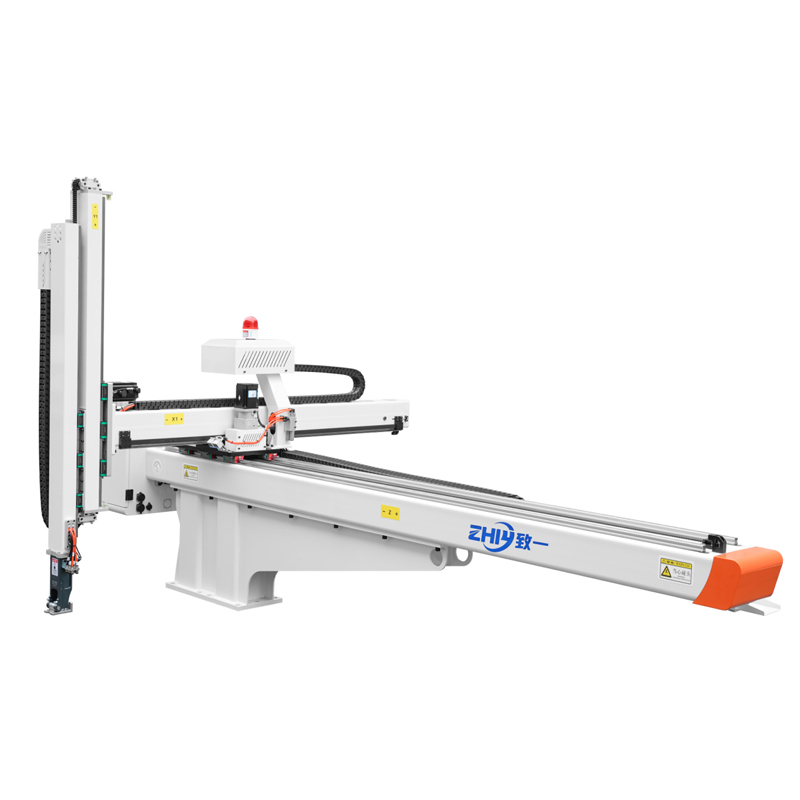
Comparison of investment costs between three-axis and five-axis servo robotic arms
Comparison of Investment Costs between Three-Axis and Five-Axis Servo Robots
In the field of automated production, making the right investment decisions regarding robots is crucial for enhancing competitiveness.
In industrial automation, both three-axis and five-axis servo robots are widely used automation equipment, but they differ significantly in investment costs, performance, and application scenarios.
For enterprises, correctly choosing the type of Robot Suitable for their production needs not only relates to the initial investment scale but also directly impacts long-term production cost-effectiveness and competitiveness.
This article will analyze in depth the various factors affecting the investment costs of three-axis and five-axis servo robots, providing you with comprehensive decision-making references.
I. Introduction to Robots: Basic Concepts Explained
The core difference between three-axis and five-axis servo robots lies in their degrees of freedom of motion and control systems, which directly determine their processing capabilities and price positioning.
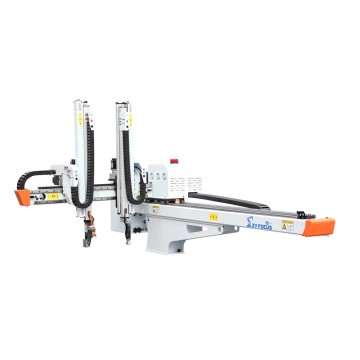
Three-axis servo robots operate on three linear coordinate axes (X, Y, Z), achieving linear motion in forward/backward, left/right, and up/down directions. This structure is relatively simple and suitable for manipulating workpieces with planar or simple geometric shapes.
Three-axis robotic arms are relatively simple to program and easy to operate, making them widely used in Injection Molding Machines for removing finished products and sprue marks.
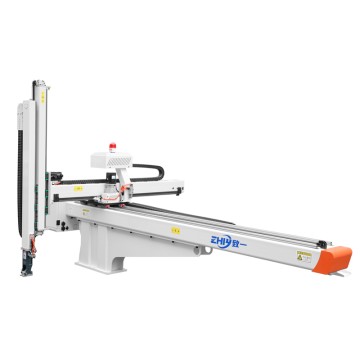
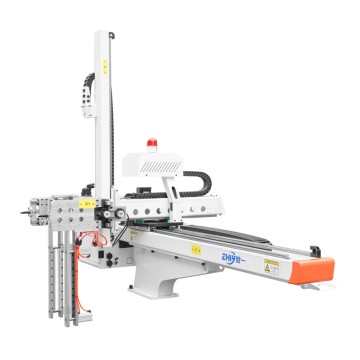
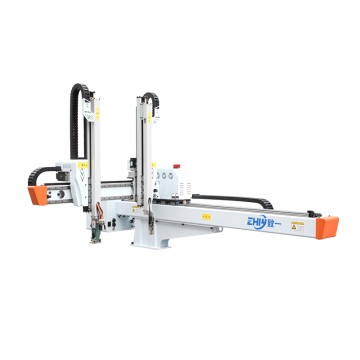
Five-axis servo robotic arms, on the other hand, add two rotary axes to the three linear axes, enabling the robotic arm to achieve multi-angle rotation and complex motion trajectories.
This structure allows five-axis robotic arms to complete multi-faceted operations on complex workpieces in a single clamping unit, greatly improving processing accuracy and applicability, especially suitable for the rapid removal of long or complex-shaped products such as automotive products and home appliances.
II. Price Tag Unveiled: Initial Investment Cost Comparison
Equipment purchase cost is the most direct factor in investment decisions, and there are significant differences between three-axis and five-axis servo robotic arms in this regard.
1. Equipment Price Range Three-axis servo robotic arms are relatively affordable, with market prices typically ranging from 22,000 to 68,000 yuan depending on configuration and specifications. Large, high-end three-axis servo robotic arms are slightly more expensive.
Five-axis servo robotic arms, due to their higher technical complexity and precision, are correspondingly more expensive, with market prices generally ranging from 28,000 to 48,000 yuan. More flexible six-axis articulated robotic arms are priced between 45,000 and 65,000 yuan.
2. Impact of Configuration on Price
The configuration of the robotic arm significantly impacts its price. Domestically produced robotic arms are relatively inexpensive, ranging from approximately 12,000 to 28,000 yuan.
Fully imported configurations (such as those using internationally branded servo motors and reducers) can cost as much as 16,000 to 38,000 yuan.
3. Price Comparison of Different Types of Robotic Arms
The slanted arm robotic arm is the simplest type and the cheapest, generally between 4,000 and 8,000 yuan.
Single-axis servo robotic arms are in the middle price range, approximately 12,000 to 18,000 yuan.
III. Hidden Bills: Operation and Maintenance Cost Analysis
Besides the initial purchase cost, companies also need to pay attention to the long-term operation and maintenance costs of the robotic arm. These "hidden" expenses significantly affect the overall return on investment.
1. Equipment Depreciation Costs
Equipment depreciation is a significant component of operating costs. Robotic arms typically follow a 7-10 year lifespan, during which their value steadily declines.
High-value equipment, such as five-axis robotic arms, can lose up to 50% of its value within the first 3 years, which is particularly significant in industries with rapid technological advancements.
2. Production Efficiency and Cost Allocation
Five-axis robotic arms significantly improve overall production efficiency by reducing the number of clamping operations and production steps. In practical machining cases, five-axis machine tools reduce the processing time per piece by nearly 5 minutes compared to three-axis machine tools.
Processing 100 workpieces can save nearly 8 hours of work time. The larger the production batch, the more pronounced this cost advantage from time savings becomes.
3. Energy and Consumable Costs
Five-axis robotic arms typically have higher power consumption and therefore relatively higher energy consumption. Industrial electricity prices are typically in the range of $0.10–$0.15/kWh (approximately 0.7-1 RMB/kWh).
Meanwhile, the cutting tools used by five-axis robots may be more specialized and expensive. In one comparison, three-axis machining actually saved $254 in tooling costs compared to five-axis.
4. Maintenance and Repair Costs
Five-axis robots have a complex structure, generally requiring more maintenance, more specialized technicians, and more expensive spare parts.
The skill level of maintenance personnel directly affects maintenance costs—highly skilled technicians can earn up to $40 per hour (approximately RMB 280), while specialized CNC programmers can earn as much as $30–$50 per hour (approximately RMB 210–350).
IV. Return on Investment Assessment: Long-Term Value and Scenario Adaptability
Investment decisions should not only focus on costs but also comprehensively assess the value creation capabilities of the equipment throughout its entire lifecycle.
1. Increased Productivity
Five-axis robots significantly improve productivity by reducing clamping operations and human intervention. Real-world examples show that five-axis robots can reduce workpiece clamping costs by $1,000 compared to three-axis robots.
1. Programming setup time for five-axis robots is approximately 50 minutes less than that of three-axis robots, correspondingly reducing labor costs.
2. Improved Precision and Quality: Five-axis robots offer higher machining accuracy, enabling multi-faceted machining of complex workpieces within a single clamping setup, reducing cumulative errors caused by multiple clamping operations.
Higher precision translates to lower product defect rates and less rework, directly improving product quality and production efficiency.
3. Applicable Scenarios and Return on Investment: Three-axis robots are suitable for applications with simple geometries, high-volume production, and cost-sensitive requirements, such as the removal and placement of standard parts.
Five-axis robots are better suited for machining complex curved surfaces, such as aerospace parts and complex molds—high-value-added products.
For small-batch production, three-axis robots typically offer better cost-effectiveness; however, as production volume increases, the high efficiency advantage of five-axis robots becomes increasingly apparent, providing shorter production cycles and lower unit costs in mass production.
V. Making the Wise Choice: How to Make an Investment Decision
Choosing between the two requires a systematic analysis of your own needs and long-term planning. The following are key decision-making considerations:
1. Decision Framework Based on Production Needs
Product Complexity: Three-axis is preferred for simple planar workpieces, while five-axis is necessary for complex curved surface workpieces.
Production Batch: Three-axis is more suitable for small-batch production, while five-axis can fully leverage its cost advantages for large-batch production.
Accuracy Requirements: Three-axis can meet ordinary accuracy (±0.1mm), while five-axis is required for high accuracy (±0.01mm).
Future Needs: Consider the possibility of product line expansion and reserve appropriate technical redundancy.
2. Industry Development Trend Considerations
In the industrial robot field, collaborative robots and SCARA robots are leading market growth and are expected to continue to dominate the industrial robot market over the next five years.
Meanwhile, the prices of robot components are showing a downward trend year by year, especially key components such as harmonic reducers, which may reduce the total cost of ownership of five-axis robotic arms.
3. Balancing Budget and Technology Needs
If the budget is limited but the product complexity is high, a hybrid strategy can be considered: first invest in a three-axis robot to meet basic needs, while simultaneously planning for future upgrades to a five-axis robot.
Additionally, evaluate the possibility of non-standard integrated robots, balancing cost and performance requirements through customized solutions.
4. Supplier Selection Recommendations
When selecting a supplier, consider not only the equipment price but also their technical support capabilities, after-sales service response speed, and spare parts supply capabilities.
For complex equipment like five-axis robots, the supplier's professional support is particularly important, directly impacting the equipment's uptime and lifespan.
There is no one-size-fits-all answer when choosing between a three-axis and a five-axis servo robot. Three-axis robots are suitable for simple, high-volume production environments with lower initial investment; while five-axis robots have higher initial costs, they offer significant advantages in handling complex workpieces and improving production efficiency, potentially leading to a higher return on investment in the long run.
#3 Axis Servo Robot#5 Axis Servo Robot#Threeaxis Servo Robot Arm#Five Axis Injection Molding Machine#5 Axis Robot#Three Axis Servo Driven Robot#Five-Axis Servo Driven Robot