Leave Your Message
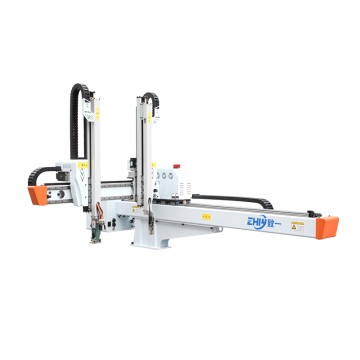
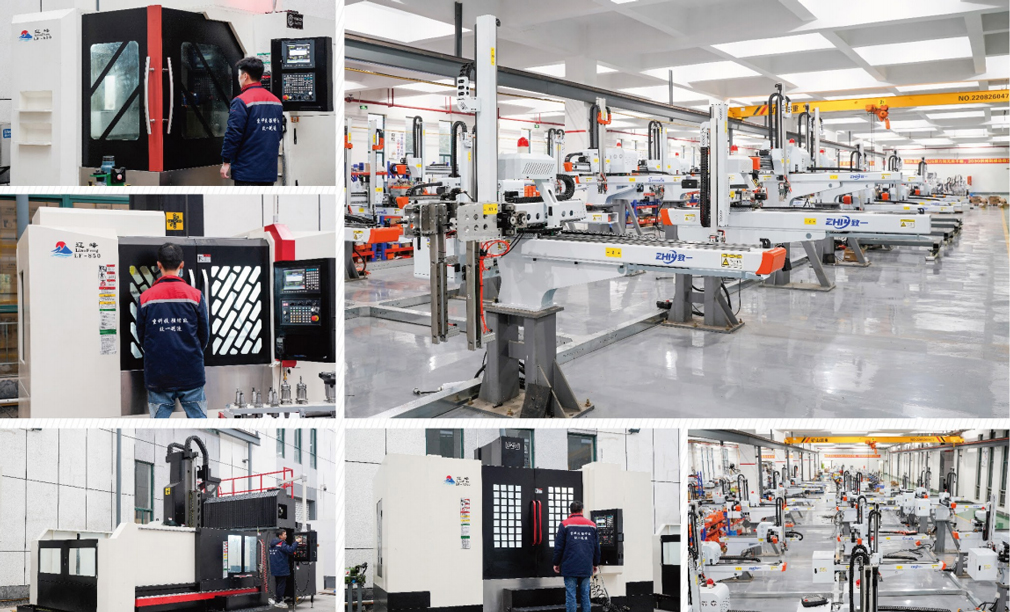
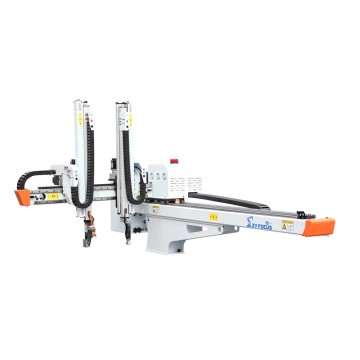
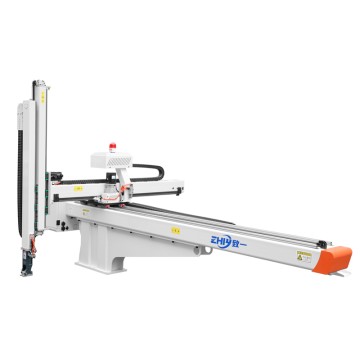
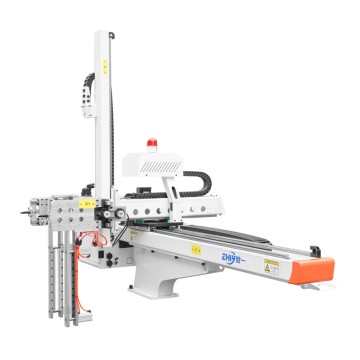
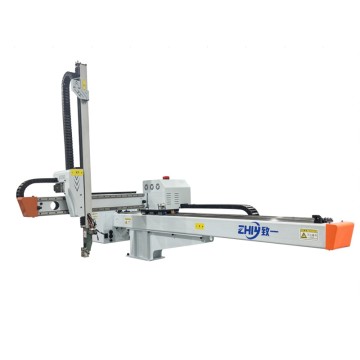
Changes in the market demand for three-axis servo robotic arms
Changes in the market demand for three-axis servo Robotic Arms
I. Changes in Global Market Size and Growth Rate
II. Differentiated Evolution of Regional Demand Patterns
III. Cross-Industry Application Demand Expansion
IV. Demand Iteration Driven by Technological Upgrades
V. Impact of Policy Environment on Market Demand
VI. Future Demand Trends and Market Opportunities
I. Changes in Global Market Size and Growth Rate
The global three-axis servo robot market is experiencing a period of accelerated growth, driven primarily by the rigid demand for automation upgrades in the manufacturing industry. According to data from the International Federation of Robotics (IFR), global industrial robot sales reached 385,000 units in 2023, a year-on-year increase of 17%. Among them, three-axis servo robots continued to increase their market share due to their compact structure and controllable costs. The global three-axis servo Robot Market size is projected to exceed US$5.2 billion by 2025, with a compound annual growth rate (CAGR) of 12.3% from 2020 to 2025. Global industrial robot installations reached a new high of 542,000 units in 2024, exceeding 500,000 units for the fourth consecutive year. Three-axis robots saw a significant increase in penetration in electronic manufacturing and logistics sorting, becoming the core driver of growth. This growth trend is driven by both the release of automation transformation demand from SMEs and the upgrading of flexible production lines by large manufacturing enterprises.
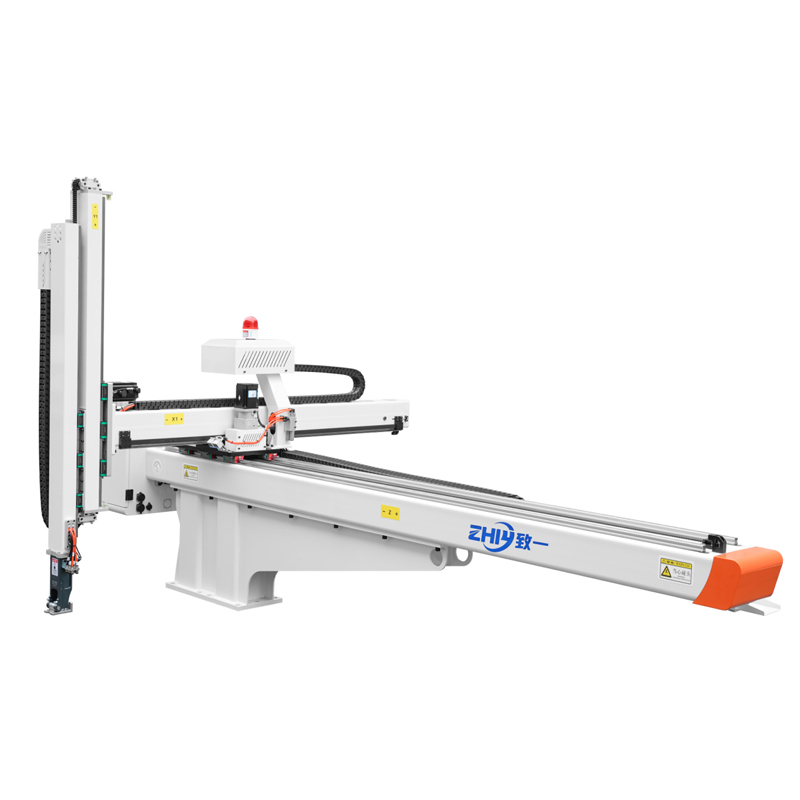
II. Differentiated Evolution of Regional Demand Patterns
The global market exhibits a pattern of "Asia-Pacific leading, Europe and the US adjusting, and emerging markets rising." The Asia-Pacific region dominates the global market with 74% of new installations. Southeast Asian countries benefited from manufacturing relocation, with demand for three-axis servo robots increasing by 35% year-on-year, making it one of the fastest-growing regions. Japan, as a technology powerhouse, has reached a penetration rate of 22%, focusing on high-precision applications in the electronics and medical fields; South Korea maintains high demand density in the automotive parts manufacturing sector. While the European market experienced a short-term adjustment (8% decline in installations in 2024), demand for high-end customized solutions remained strong in countries like Germany and Italy. In 2023, the German market for high-end three-axis robotic arms reached $2.5 billion, a year-on-year increase of 18%, primarily concentrated in precision manufacturing and the automotive Industry 4.0 upgrade scenario. The Americas market (10% decline in installations) presented structural opportunities. The US manufacturing reshoring policy promoted the automation of the domestic supply chain, leading to a gradual recovery in demand for high-reliability three-axis robotic arms.
III. Cross-industry Application Demand Expansion
Demand in traditional advantageous industries continued to deepen, while emerging fields became new growth engines. The automotive industry remained a core application scenario, with penetration rates in processes such as new energy vehicle battery packaging and assembly reaching 28%. Tesla's Gigafactory improved logistics efficiency by 40% through the collaboration of three-axis collaborative robots and AGVs. Driven by small-batch, multi-variety production models, the electronics industry saw a substitution rate as high as 42% in scenarios such as smartphone motherboard assembly, resulting in a surge in demand for high-precision (repeatability ±0.1 mm) three-axis models. The logistics and warehousing industry has benefited from the explosive growth of e-commerce, with parcel sorting scenarios seeing a 45% replacement rate. Amazon's Kiva robot's path optimization algorithm further validates the efficiency advantages of three-axis robotic arms. The healthcare sector has become a cross-industry highlight, with an aging population driving demand for scenarios such as surgical assistance and drug sorting. Three-axis models contribute approximately 25% of the global medical robot market, and the related market size is projected to reach $1.4 billion by 2025. Furthermore, demand from the food and beverage industry (with a 38% replacement rate in scenarios such as yogurt packaging) and the new energy industry (photovoltaic module assembly) is also rapidly rising, driving application scenarios from traditional industry to people's livelihoods.
IV. Demand Iteration Driven by Technological Upgrades
Technological breakthroughs are reshaping the market demand structure, with intelligence and flexibility becoming core requirements. Upgrades in motion control algorithms and sensor technology have significantly improved the operational accuracy and environmental adaptability of three-axis robotic arms. The ABB IRB series, through adaptive control technology, achieves a repeatability accuracy of ±0.1 mm, meeting the needs of precision assembly. The widespread adoption of collaborative robots has expanded human-machine collaboration scenarios. Global sales of collaborative robots increased by 41% year-on-year in 2023, with three-axis models achieving a 35% penetration rate in fields such as 3C manufacturing and medical equipment assembly. Modular design has broken down customization barriers, reducing procurement costs for SMEs by 18% and driving adoption to 45%. The integration of digital twins and 5G technology has spurred new demands. Through remote monitoring and predictive maintenance, overall equipment efficiency (OEE) has increased from the traditional 65% to 85%. According to IDC, the application scale of digital twin technology in the robotics field reached $2.125 billion in 2023, becoming a key driver of operational transformation.
V. Impact of Policy Environment on Market Demand
Global smart manufacturing policies provide continuous support for market demand. The EU's "Industry 4.0" strategy lists robotics technology as a key development area, and Germany and France support the research and development of highly flexible three-axis robotic arms through special funds. The implementation of the US Chip and Science Act and the Manufacturing Act has driven the automation upgrade of domestic manufacturing, indirectly boosting the import demand for high-end three-axis servo robotic arms. Southeast Asian countries are attracting manufacturing relocation through preferential foreign investment policies, leading to a simultaneous increase in demand for supporting automation equipment, creating a policy-driven demand hotspot. Global carbon neutrality goals are spurring green demand, with companies increasingly favoring energy-efficient equipment. KUKA's KR AGILUS series, using carbon fiber composite materials, reduces weight by 30% and energy consumption by 20%, becoming a mainstream choice in the market. Policy dividends not only reduce enterprise procurement costs but also guide demand towards high-efficiency, energy-saving, and intelligent high-end products.
VI. Future Demand Trends and Market Opportunities
After 2025, the global market will exhibit three core trends. First, the demand for lightweight and integrated systems will rise. Modular joint units, due to their reduced system complexity and maintenance costs, will become the mainstream technology, with a projected penetration rate of over 35% in three-axis robots by 2027. Secondly, the integration of intelligent technologies is accelerating. The application of artificial intelligence and VR will lower the operational threshold, and 5G remote collaboration and self-learning algorithms will enable equipment to adapt to more non-standard scenarios. In flexible manufacturing scenarios, the collaborative efficiency with AGVs is expected to increase by another 50%. Thirdly, the demand for green manufacturing is deepening. The application ratio of energy-saving motors and recyclable materials will continue to increase. Meanwhile, quantum computing and bio-inspired technologies may bring revolutionary breakthroughs. The biomimetic muscle material developed by the MIT lab has increased joint response speed by 5 times, injecting new vitality into the high-end market. From a market opportunity perspective, automation transformation of SMEs, upgrading of manufacturing in emerging markets, and expansion of cross-industry application scenarios (such as medical rehabilitation and new energy equipment) will become the core growth drivers in the next five years. The global market size is expected to exceed $7 billion by 2028.
#3 Robot#Articulated Manipulator3Rob Ot#Robot Efficiency#Single Robot#Function Of A Robot#Servo Motor Robo