
Leave Your Message
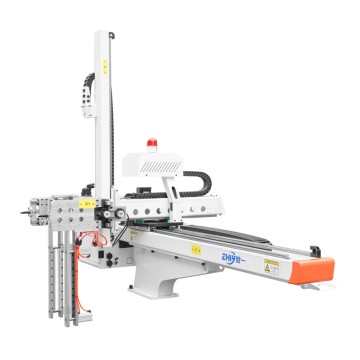
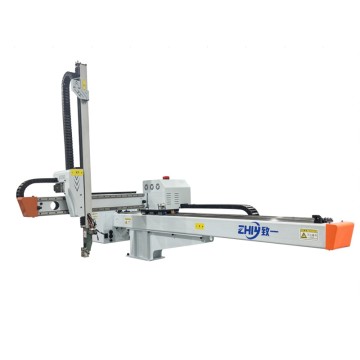
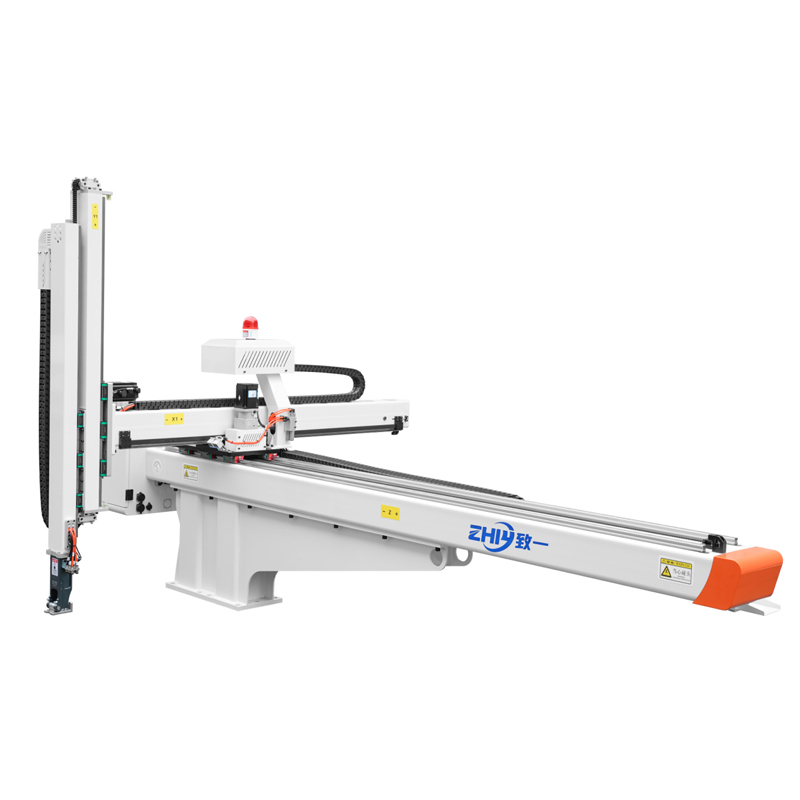
Changes in the automotive manufacturing industry: the trend of three-axis servo robots in vehicle production
Transformation in the Automotive Manufacturing Industry: The Trend of Three-Axis Servo Robots in Vehicle Production
I. Transformation in the Automotive Manufacturing Industry: Forcing an "Efficiency Revolution" on the Production Side
The automotive industry in 2025 is undergoing a profound, "marathon" transformation. A Roland Berger industry report reveals three core pressures facing automakers: continued pressure on profit margins (the overall profit margin for automakers was only 4.6% from January to September 2024, falling to 3.4% in September), cost pressures transmitted across the entire supply chain, and intensifying global competition. At the same time, trends such as the penetration rate of new energy vehicles exceeding 50% and the accelerated incorporation of intelligent technologies in vehicles are further demanding a transformation on the production side towards "higher precision, faster response, and lower costs."
In this transformation, vehicle production bears the brunt of the challenges: traditional manual operations struggle to meet the assembly requirements of precision components for new energy vehicles, while rising labor costs and recruitment difficulties further complicate matters for automakers. While high-end multi-Axis Robots offer powerful performance, their high procurement and maintenance costs conflict with automakers' need to reduce costs. This "precision-cost balance dilemma" creates an excellent market opportunity for three-axis servo robots.
II. Three-Axis Servo Robots: The "Precision and Efficiency Engine" of Vehicle Production
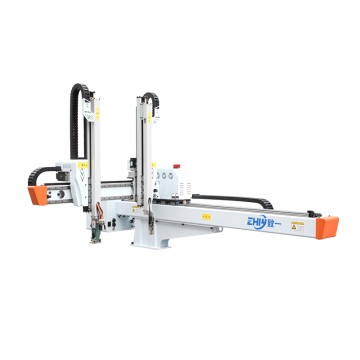
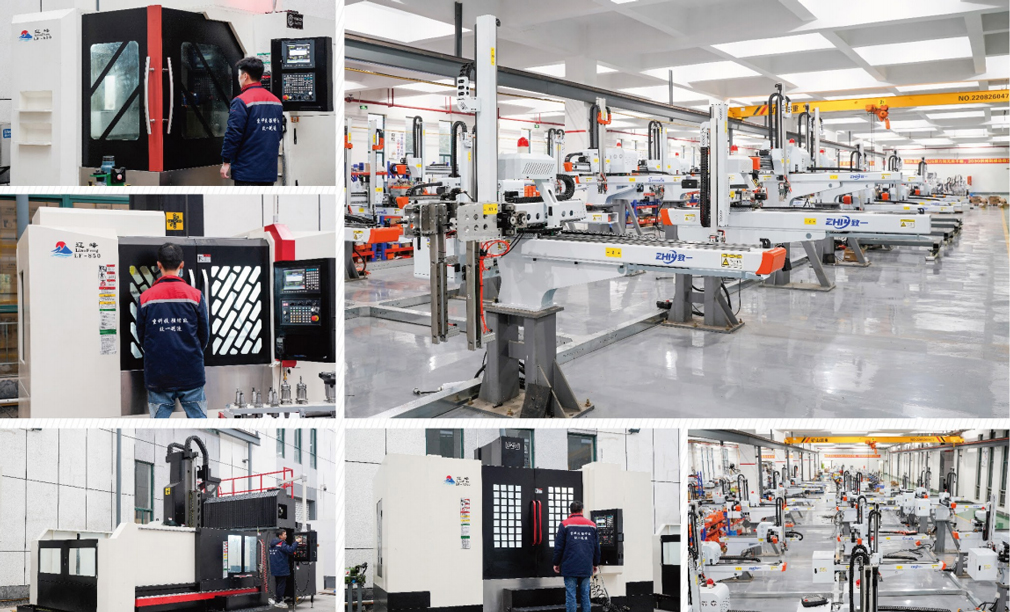
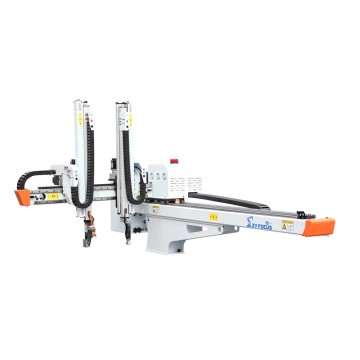
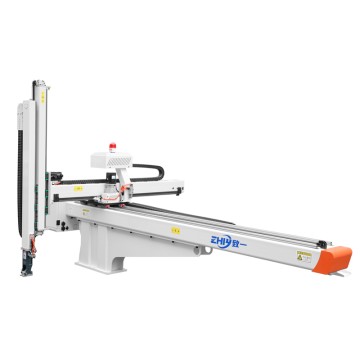
As automated equipment tailored to the needs of the automotive manufacturing industry, three-axis servo robots, with their modular design and superior performance, have become core support equipment for all stages of vehicle production. Their value is concentrated in three key scenarios:
1. Injection Molded Parts Production: High-Speed "Part Removal Experts"
In the production of injection-molded parts such as automotive interiors and connectors, the open extraction structure and three-axis linkage technology of three-axis servo robots offer unique advantages. They can simulate the human hand's ability to remove parts from irregular paths, such as barbs and bevels. This not only reduces the difficulty of jig production by over 40%, but also enables high-speed removal of parts in 1-2 seconds, more than three times the efficiency of manual operation. A new energy vehicle company has demonstrated that the introduction of this equipment has reduced the defective product rate in the injection molding workshop from 8% to 2.3%, while also reducing labor requirements by 60%.
2. Precision Assembly: A Stable and Reliable "Assembly Assistant"
The three-axis servo robot's high-rigidity linear guide design plays a key role in the precision assembly of automotive electronic components, motor end caps, and other applications. Its noise level is below 60 decibels, vibration amplitude is controlled to within 0.1mm, and repeatability of ±0.1mm ensures the consistency of every assembly movement. Importantly, its compatibility with SPI and EURO-MAP standards enables seamless integration with production equipment from major global brands, eliminating the need for additional production line modifications and significantly reducing adaptation costs for automakers.
3. Post-Processing: The "Connecting Hub" for Full-Process Automation
From product stacking and embedding to quality inspection, the three-axis servo Robot Can be integrated with equipment such as automatic nozzle shears and labelers to create a closed-loop automated production line. Sohu.com's industry research shows that the adoption of this type of equipment has increased production line utilization rates at automotive parts manufacturers from 75% to 92%, saving over 800,000 yuan in labor costs per line annually. This "full-process adaptability" perfectly addresses the core demand of automakers for "cost reduction and efficiency improvement."
III. Trends Beyond 2025: Three Evolutionary Directions for Three-Axis Servo Robots
As the automotive manufacturing industry evolves toward "digitalization, flexibility, and globalization," the application of three-axis servo robots in vehicle production will present a clearer development trajectory:
1. Intelligent Upgrade: From "Execution Tool" to "Data Node"
Future three-axis servo robots will no longer be limited to mechanical execution but will be integrated into the digital ecosystem of automakers. Drawing on the intelligent experience of 12-axis full-servo robots, they will gradually be equipped with remote diagnostics and production information management capabilities, enabling real-time monitoring of equipment status through a color human-machine interface, helping overseas automakers achieve "remote production line management." This feature is particularly critical for automakers with global factories.
2. Flexible Adaptability: Meeting the Demands of Multi-Model Production
To meet the automotive industry's shift to "multi-category, small-batch" production, the modular design of three-axis servo robots will be further upgraded. Through rapid fixture replacement and parameter tuning, cross-category production adaptation, from fuel vehicle components to new energy battery pack casings, is possible, resolving the pain points of traditional equipment, such as long changeover cycles and high debugging costs. This aligns closely with Roland Berger's trend of "parts manufacturers needing to improve their ability to quickly respond to the needs of major customers."
3. Cost Optimization: A Cost-Effective "Global Choice"
As global automakers tighten their budgets, the cost advantage of three-axis servo robots will become even more pronounced. Compared to high-end equipment like five- and twelve-axis systems, their procurement costs are 30%-50% lower. Furthermore, the ease of maintenance offered by modular production keeps annual maintenance costs to less than 5% of the total equipment price. This precise matching of needs without excessive performance redundancy makes them the optimal solution for small and medium-sized automakers in Europe and the United States, as well as those in emerging markets.
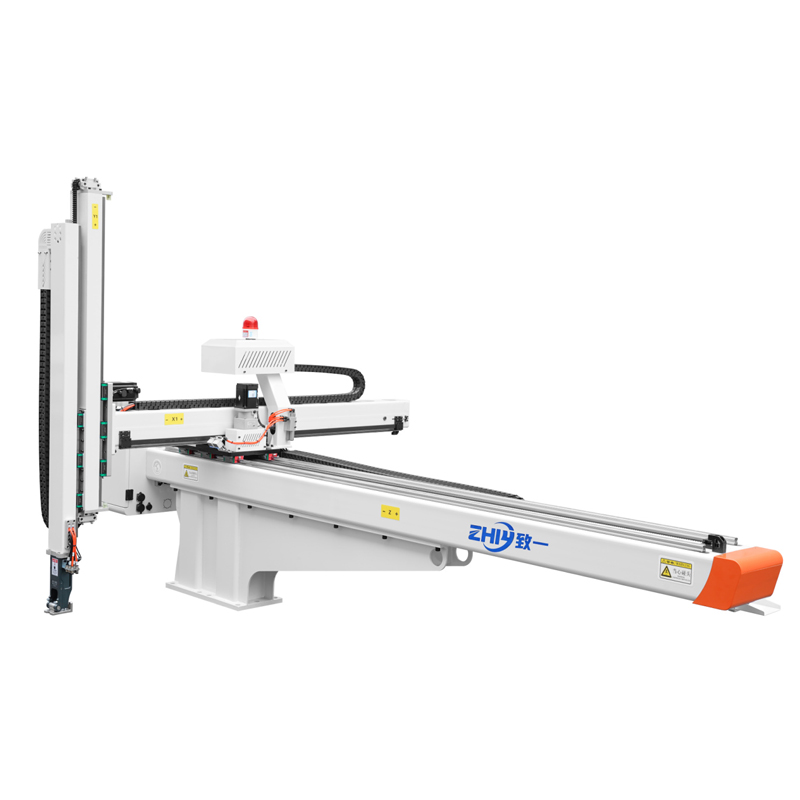
IV. Conclusion: Choosing a three-axis servo Robot Means choosing "competitiveness in a changing landscape."
Transformation in the automotive manufacturing industry is not a sprint, but a marathon that tests endurance and ingenuity. Faced with the triple challenges of profit margin pressure, high costs, and volatile demand, three-axis servo robots, with their core advantages of "fast response, precise stability, and high cost-effectiveness," have become the "efficiency fulcrum" of vehicle production.
For automakers targeting the global market, choosing three-axis servo robots that meet international standards and adapt to diverse scenarios not only enables rapid automation upgrades to production lines but also gives them the upper hand in the battle between price wars and value competition. This is perhaps why more and more automakers consider them "essential equipment for coping with change"—because they address not only current production challenges but also future competitiveness.