
Leave Your Message
0102030405
Central and Eastern European Injection Molding Market: An Analysis of the Penetration Rate of 3-Axis Manipulators
2026-03-24
Central and Eastern European Injection Molding Market: An Analysis of the Penetration Rate of 3-Axis Manipulators
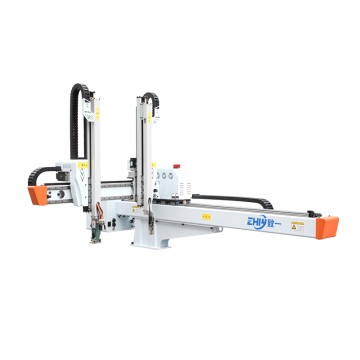
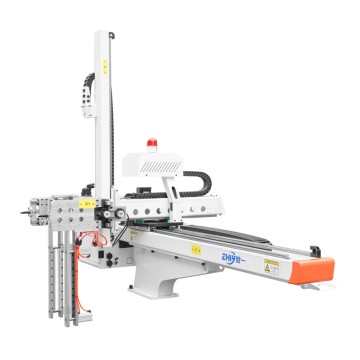
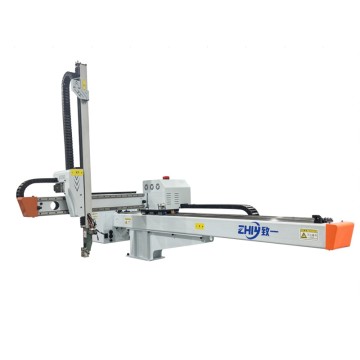
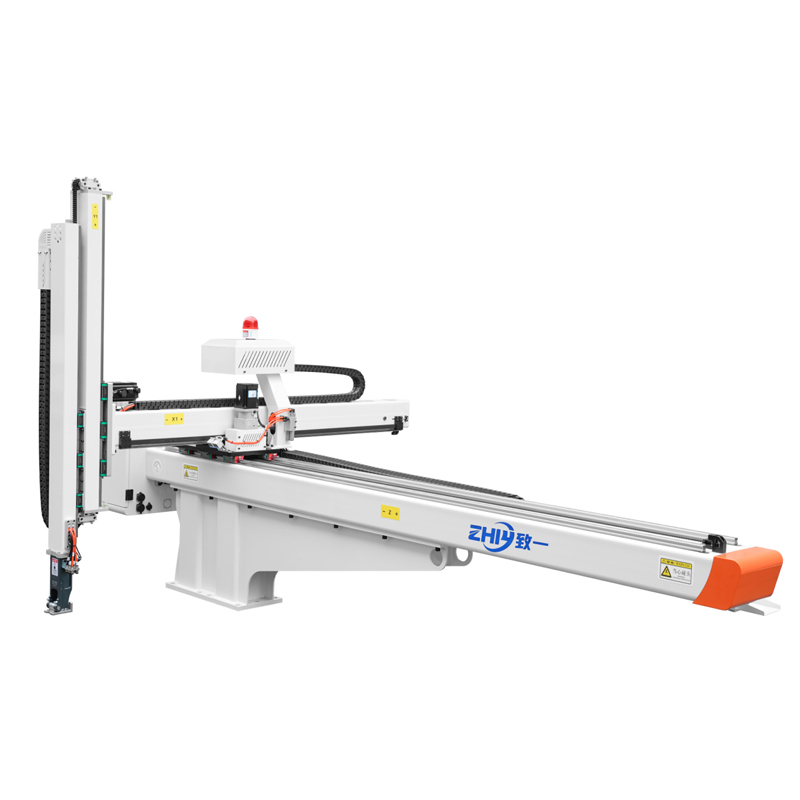
Amid the global wave of intelligent and automated transformation in the manufacturing industry, the injection molding sector, as a core supporting industry for automotive, electronics, packaging, medical and other fields, its automation upgrading process directly determines the core competitiveness of regional manufacturing. Relying on its geographical advantages, policy support and cost dividends, Central and Eastern Europe has become a core growth plate of the European injection molding market. As the basic core equipment for the automation of injection molding production lines, the change in the market penetration rate of 3-axis Servo Manipulatorsnot only reflects the pace of regional industrial upgrading, but also serves as an important reference for wholesale purchasers to layout the market. This article will analyze the development pattern of 3-axis manipulators in the Central and Eastern European injection molding market from four dimensions: market status, core influencing factors of penetration rate, regional distribution characteristics and future growth potential, so as to provide data and trend support for industry procurement decisions.
I. The Development Background of the Central and Eastern European Injection Molding Market: Automated Upgrading Becomes a Core Rigid Demand
The rise of the Central and Eastern European injection molding market relies on the overall upgrading of regional manufacturing and the rearrangement of the global industrial chain, laying a solid market foundation for the application of 3-axis manipulators. In terms of market scale, the European injection molding market is estimated to be worth 25.251 trillion US dollars in 2025 and is expected to climb to 37.738 trillion US dollars by 2035. As a growth pole of the European market, core countries in Central and Eastern Europe such as Poland, the Czech Republic and Hungary have become important undertakers of the global transfer of the injection molding industry by virtue of lower labor and land costs and the geographical dividends of the EU customs union. The Poznan Chemical Park in Poland has become the plastic manufacturing center of Central and Eastern Europe, with an output of 650,000 tons in 2024. The Czech Republic and Hungary have formed industrial agglomeration in the field of automotive parts injection molding, directly driving the market demand for automated equipment.
In terms of industrial demand, the injection molding industry in Central and Eastern Europe is experiencing a transformation from "labor-intensive" to "technology-intensive", and the automation transformation of injection molding production lines has become the core choice for enterprises to reduce costs and increase efficiency. On the one hand, the problem of labor shortage in the region has become increasingly prominent, and the traditional manual production mode is difficult to meet the high standards of product precision and production efficiency required by the automotive, electronics and other industries. On the other hand, the advancement of EU strategies such as the "European Green Deal" and the "Digital Single Market", as well as the support of local policies such as the Czech Republic's "Intelligent Manufacturing 2025" and Romania's R&D fund subsidies, have provided dual financial and policy incentives for enterprises to introduce automated equipment. The Czech Republic alone has invested more than 5 billion euros to support the upgrading of enterprise production lines.
At the same time, the demand structure of the Central and Eastern European injection molding market presents obvious characteristics: small and medium-sized enterprises (SMEs) occupy the main body of the market. The demand of such enterprises for automated equipment focuses on high cost performance, easy operation and strong adaptability. With the characteristics of simple structure, stable operation and moderate investment cost, 3-axis servo manipulators exactly match the automation transformation needs of SMEs in Central and Eastern Europe, and have become the "basic standard configuration" for the upgrading of regional injection molding production lines.
II. Penetration Rate of 3-Axis Manipulators in Central and Eastern Europe: Low Current Status with Significant Growth Space
As the core equipment for injection molding automation, the penetration rate of 3-axis manipulators in the global market is steadily increasing. According to the 2024 data from the International Federation of Robotics (IFR), the global penetration rate of injection molding manipulators in the plastic processing field has risen from 38.7% in 2019 to 52.3%, and is expected to exceed 60% by 2026. However, affected by industrial foundation, digital awareness, capital investment and other factors, the penetration rate of 3-axis manipulators in the Central and Eastern European market is significantly lower than the European average, showing the characteristics of "generally low, regional differentiation and huge potential".
In terms of overall penetration rate, the penetration rate of 3-axis manipulators in the Central and Eastern European injection molding market is currently in the range of 20%-30%, far lower than the level of more than 50% in Western European countries such as Germany and Italy. The core reason for this gap is that the proportion of digital investment in manufacturing output value in Central and Eastern Europe is only 4.5%, much lower than the European average of 8.2%. Among about 120,000 manufacturing enterprises in the region, less than 25% have launched digital transformation, and most enterprises still stay in the traditional production mode with insufficient awareness and investment in automated equipment. At the same time, as the main body of the market, SMEs are highly sensitive to transformation costs, and the imbalance between early capital investment and output return rate makes some enterprises hold a wait-and-see attitude towards the introduction of 3-axis manipulators.
In terms of regional differentiation, the penetration rate of 3-axis manipulators is highly correlated with the development level of manufacturing in each country: as core manufacturing countries in Central and Eastern Europe, Poland, the Czech Republic and Hungary have a penetration rate of about 30% for 3-axis manipulators by virtue of the industrial agglomeration of auto parts and electronic injection molding and the key support of EU funds, becoming the "high-penetration plate" in the region; while countries in the Balkan Peninsula and some surrounding CIS countries have a weak industrial foundation and lagging digital awareness, with a penetration rate of less than 20%, belonging to the "potential to be developed plate". Notably, with the landing of Haitian Group's Ruma factory, Serbia has become a hub for the localized production of injection molding equipment in Central and Eastern Europe, and its radiation effect on the surrounding market is gradually releasing, driving the demand growth of supporting automated equipment such as 3-axis manipulators.
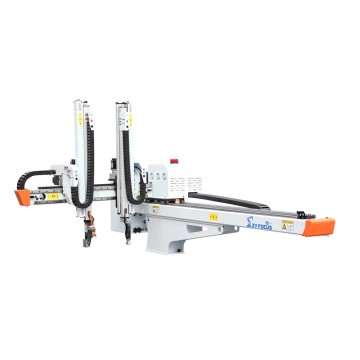
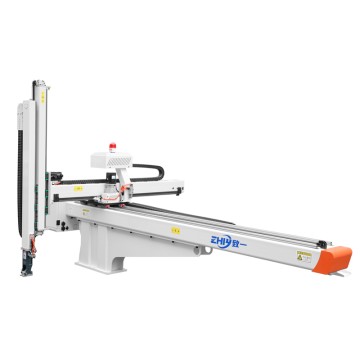
In terms of equipment types, 3-axis servo manipulators dedicated to Injection Molding Machines have become the mainstream market demand. Compared with single-axis manipulators, 3-axis manipulators have stronger adaptability in processes such as pick-up, placement and in-mold inserts. Compared with 5-axis and multi-joint manipulators, their investment cost is reduced by 40%-50%, which is more in line with the automation transformation budget of SMEs in Central and Eastern Europe. Among them, high-load 3-axis manipulators (such as a maximum load of 50kg) have a significantly higher penetration rate growth rate in the field of auto parts injection molding than ordinary models because they can meet the pick-up needs of complex molds and large products.
III. Core Factors Driving the Increase in Penetration Rate: Triple Empowerment of Policy, Industry and Supply Chain
The increase in the penetration rate of 3-axis manipulators in the Central and Eastern European market is not driven by a single factor, but by the joint action of three core forces: policy support, industrial upgrading and supply chain optimization. This driving effect is continuously strengthened with the development of regional manufacturing, becoming the core logic of market growth.
1. Policy Side: Dual Orientation of Green and Digitalization, Reducing the Cost of Equipment Introduction
Policies from the governments of Central and Eastern European countries and the EU level have provided direct financial and tax incentives for the application of 3-axis manipulators, becoming a "catalyst" for the increase in penetration rate. At the EU level, the "European Green Deal" has included low-carbon intelligent manufacturing equipment in the key support scope, promoting injection molding enterprises to achieve energy conservation and emission reduction through automation transformation; at the local level, the Czech Republic's 2026 mechanical manufacturing tariff adjustment plan clearly stipulates that the import tariff on core components of low-carbon Industrial Robots will be reduced from 11.8% to 3.7%, and enterprises can enjoy an additional 5% tax credit with technical transformation filing certificates, directly reducing the import cost of 3-axis manipulators. Lithuania has set up a digital transformation fund to provide enterprises with up to 50% financial support for equipment introduction, and Romania has encouraged foreign investment in the field of injection molding automation by reducing the corporate income tax rate. These policies solve the transformation concerns of SMEs from the "cost side" and directly drive the market demand for 3-axis manipulators.
2. Industrial Side: Upgraded Demand for Automotive and Electronic Injection Molding, Forcing Automation Transformation
The development trends of automotive lightweighting and electronic miniaturization have become the core development trends of the injection molding industry in Central and Eastern Europe, with significantly higher requirements for product precision and production efficiency. Traditional manual operations can no longer meet the industry needs, forcing enterprises to introduce 3-axis manipulators. As important production bases for European auto parts, Poland and the Czech Republic have local supporting factories of BMW, Volkswagen and other car companies that require the precision error of injection molded parts to be controlled within 0.01mm. With the characteristics of high precision and stable operation, 3-axis servo manipulators can realize the automated and accurate pick-up and placement of injection molded parts, effectively improving product consistency. At the same time, the fast-paced production demand in the electronic injection molding field requires the equipment to run 24 hours a day. The fatigue-free operation advantage of 3-axis manipulators has become the core choice for enterprises to increase production capacity, and this industrial demand has become the "core endogenous driving force" for the increase in penetration rate.
3. Supply Chain Side: Accelerated Local Layout, Improving Equipment Accessibility
Previously, the supply of injection molding automation equipment in Central and Eastern Europe mainly relied on Western European and Japanese enterprises. Cross-border logistics led to long equipment delivery cycles and slow spare parts supply, which became an important factor restricting the increase in penetration rate. In recent years, however, enterprises represented by China's Haitian Group have set up production bases in Serbia to realize the localized production of injection molding machines, and at the same time build a supply chain system of "local production + local spare parts". Relying on Serbia's main spare parts warehouse, German headquarters warehouse and decentralized storage points, it has realized the "hour-level" response of core components. This trend of supply chain optimization also extends to the field of 3-axis manipulators: equipment suppliers have begun to set up regional service centers in Poland and the Czech Republic, shortening the equipment delivery and after-sales maintenance cycle and improving the market accessibility of equipment. At the same time, the improvement of regional logistics hubs (such as Poland radiating 12 Central and Eastern European countries with a logistics time limit of 3-7 days) has further reduced the circulation cost of equipment and provided supply chain support for the increase in penetration rate.
IV. Market Opportunities Under Regional Penetration Rate Differences: Segmented Scenarios and Low-Penetration Regions Become the Core Blue Ocean
The characteristics of "generally low and regional differentiation" in the penetration rate of 3-axis manipulators in the Central and Eastern European market exactly mean huge market growth space. For global wholesale purchasers, grasping the demand characteristics of segmented application scenarios and low-penetration regions is the key to laying out the market.
From the perspective of segmented application scenarios, the three major fields of automotive parts injection molding, packaging injection molding and medical injection molding have become the core blue ocean for the increase in the penetration rate of 3-axis manipulators. In the field of automotive parts injection molding, high-load 3-axis manipulators (load 30-50kg) are adapted to the pick-up needs of large injection molded parts such as bumpers and instrument panels, and are the core growth point of the current market; in the field of packaging injection molding, high-speed 3-axis manipulators have a significant demand growth rate because they can match the fast-paced production of beverage bottles and food packaging boxes; in the field of medical injection molding, subject to the high cleanliness standards of EU medical products, the automated and non-manual contact production mode has become a rigid demand, and the application of 3-axis manipulators in the injection molding of medical consumables has been gradually popularized.
From the perspective of the regional market, low-penetration regions such as Balkan countries, Slovakia and Slovenia have become the core growth markets in the next 3-5 years. These countries are gradually developing the injection molding industry by virtue of the industrial transfer dividends of Central and Eastern Europe, and the local government has increased its support for manufacturing upgrading. The automation transformation demand of enterprises is transforming from "potential demand" to "actual demand". In high-penetration regions such as Poland, the Czech Republic and Hungary, the market demand is shifting from "equipment introduction" to "equipment upgrading and replacement". High-precision and energy-saving 3-axis servo manipulators have become the market mainstream. Purchasers can focus on the technological upgrading and customized services of equipment to tap the potential of the stock market.
At the same time, the demand characteristics of SMEs in Central and Eastern Europe require suppliers of 3-axis manipulators to pay attention to the adaptability and cost performance of equipment: on the one hand, provide customized adaptation schemes for different injection molding machine models to meet the transformation needs of SMEs' production lines; on the other hand, simplify the equipment operation process and support localized technical training and after-sales support to solve the pain point of "easy introduction and difficult operation" for enterprises.
V. Forecast of Future Penetration Rate Growth: Expected to Exceed 45% by 2030 and Become the Mainstream Market Configuration
Combined with the development pace of manufacturing in Central and Eastern Europe, the intensity of policy support and the trend of industrial demand upgrading, it is expected that the penetration rate of 3-axis manipulators in the Central and Eastern European injection molding market will maintain an average annual growth rate of 5%-6%, and is expected to exceed 45% by 2030, becoming the mainstream automated configuration of regional injection molding production lines. Among them, the penetration rate of core countries (Poland, the Czech Republic and Hungary) will be close to 60%, in line with the Western European market.
The core basis for this growth forecast is as follows: First, the digital transformation policies of the EU and Central and Eastern European countries will continue to increase. It is expected that the cumulative investment in manufacturing digital transformation in the region from 2026 to 2030 will exceed 30 billion euros, among which the injection molding industry, as a key field, will receive more financial support; Second, the transfer of the global industrial chain to Central and Eastern Europe will continue, and the local supporting demand of core industries such as automotive and electronics will further drive the expansion of injection molding capacity, directly increasing the market demand for 3-axis manipulators; Third, the localized supply system of automated equipment will be gradually improved, the equipment cost and circulation cost will be further reduced, and the transformation threshold of SMEs will continue to decline.
At the same time, the technological upgrading of 3-axis manipulators will become an important support for the increase in penetration rate: energy conservation (adapting to EU low-carbon standards), intelligence (accessing the industrial internet to realize remote monitoring) and modularization (can quickly connect with 5-axis manipulators to form a composite production line) will become the core development directions in the future. The upgraded 3-axis manipulators will further match the upgrading needs of the injection molding industry in Central and Eastern Europe and promote the increase in their penetration rate in the mid-to-high-end market.
Conclusion
The market penetration rate of 3-axis manipulators in the Central and Eastern European injection molding market is both a "barometer" of the automated upgrading of regional manufacturing and an "opportunity vane" for global wholesale purchasers. The current low penetration rate of the market is behind huge growth potential, and the triple empowerment of policy, industry and supply chain is promoting the gradual release of this potential. For purchasers, grasping the penetration rate differences in different regions of Central and Eastern Europe, focusing on core segmented scenarios such as automotive, packaging and medical care, and matching the demand of SMEs for high-cost performance and high-adaptability equipment will become the core strategy for laying out the market.
Website:https://www.zhiyirobotics.com/
Email:sales@zhiyirobotics.com
#CEEInjectionMoldingMarket #3AxisManipulators #MarketPenetrationRate #InjectionMoldingMachineServoManipulators
#CEE3AxisServoManipulatorPenetration #DedicatedInjectionMolding3AxisManipulators #CEEInjectionMoldingAutomationUpgrades #CEEAutoPartsInjectionMoldingManipulators #HighPayload3AxisManipulatorMarketDemand
#CEE3AxisServoManipulatorPenetration #DedicatedInjectionMolding3AxisManipulators #CEEInjectionMoldingAutomationUpgrades #CEEAutoPartsInjectionMoldingManipulators #HighPayload3AxisManipulatorMarketDemand