
Leave Your Message
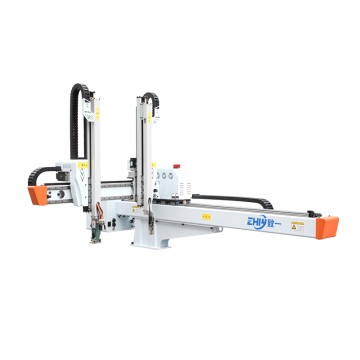
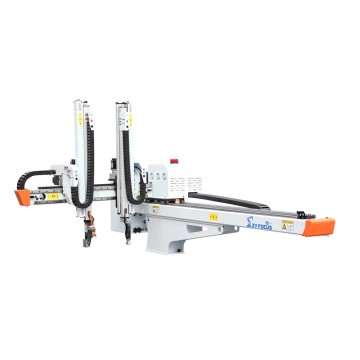
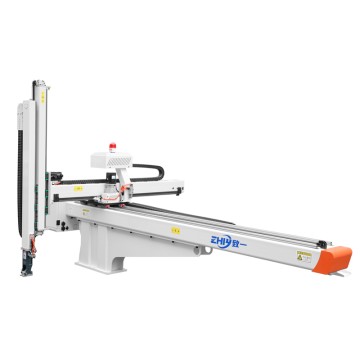
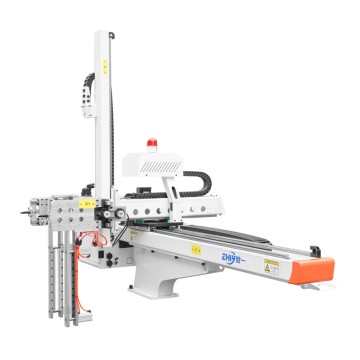
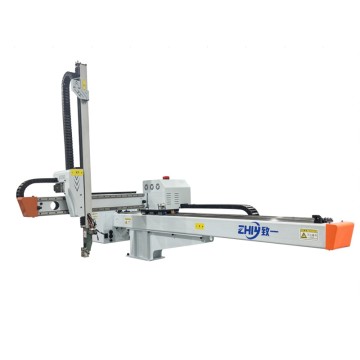
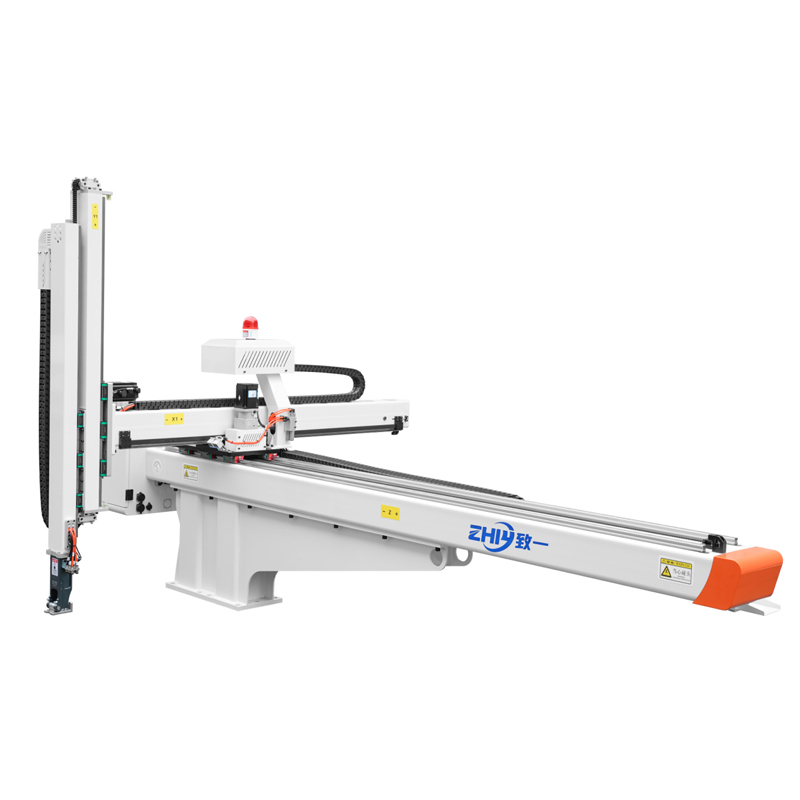
Application of Three-Axis Servo Robots in the New Energy Photovoltaic Industry
Application of Three-Axis Servo Robots in the New Energy Photovoltaic Industry
Against the backdrop of accelerated global energy transition, the photovoltaic industry is expanding at an average annual growth rate of double digits. Industry reports indicate that the global market size for solar farm automation reached $7.8 billion in 2023 and is projected to exceed $18 billion by 2030. Behind this explosive growth lies the photovoltaic manufacturing industry's relentless pursuit of precision, efficiency, and stability. Three-axis servo robots, with their unique technological advantages, are becoming key automation equipment connecting the entire photovoltaic industry chain.
Precision and Efficiency: The Core Demands of the Photovoltaic Industry for Robots
The production process of photovoltaic products spans from silicon material processing, cell manufacturing, module packaging to power plant operation and maintenance. Each stage places stringent demands on automation equipment. Silicon wafer thickness has decreased from the traditional 160μm to below 100μm; this paper-thin material is easily damaged by even slight bumps. Every 0.1% increase in cell conversion efficiency requires micron-level control in the manufacturing process. The consistency of module packaging directly determines the power generation stability of a power plant over its 25-year lifespan.
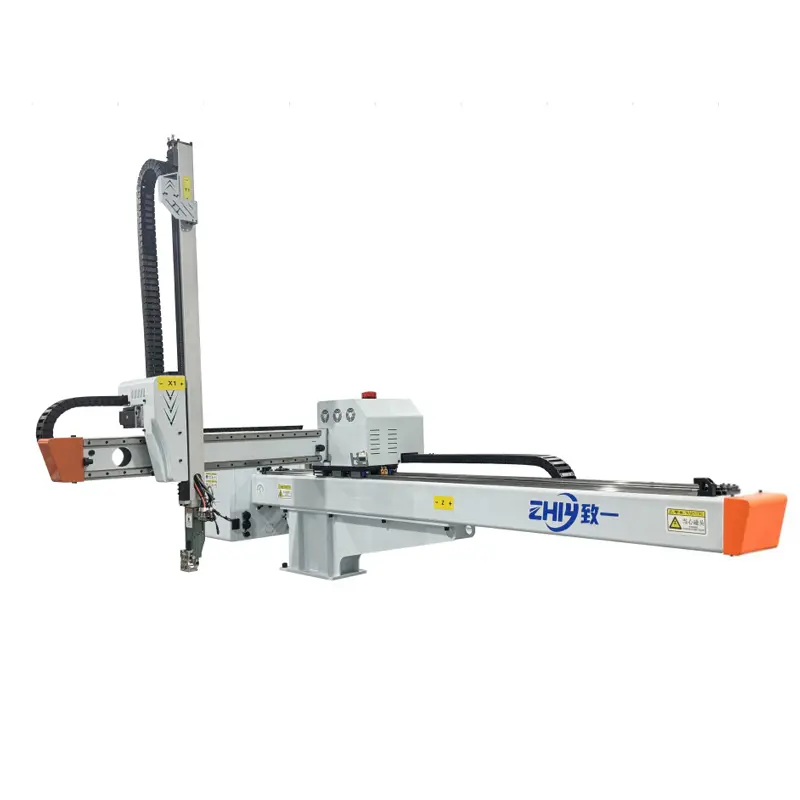
Three-axis servo robots, through precise coordination in the X, Y, and Z dimensions and closed-loop control of a servo system, perfectly meet these requirements. Compared to traditional pneumatic or stepper-driven equipment, their repeatability reaches ±0.02mm, with a minimum pick-up time of only 1.4 seconds. While achieving high-speed operation, they control the silicon wafer handling breakage rate to below 0.03%, far lower than the 1.2% of manual operation. This dual advantage of "high precision + high speed" makes them a core component of photovoltaic automated production lines.
Full Process Penetration: Three Core Application Scenarios of Three-Axis Servo Robots
1. Silicon Wafer Manufacturing: Precision Protection from Silicon Rods to Wafers
In the silicon wafer production process, from polycrystalline silicon ingot cutting to monocrystalline silicon rod slicing, and then to pre-processing processes such as cleaning and texturing, three-axis servo robots play a crucial role in material transfer. Utilizing a PLC-controlled stepper motor drive system, the Robot Can adaptively adjust in three-dimensional space. Combined with a customized vacuum suction cup end effector, it can smoothly grasp silicon wafers of different specifications.
In First Solar's thin silicon wafer production line in the US, a three-axis servo robot works in conjunction with laser cutting equipment to achieve immediate transfer and sorting of silicon wafers after cutting. This improves the processing efficiency of this process by 40% and reduces the edge chipping rate of silicon wafers by 65%. This highly efficient collaboration not only reduces intermediate buffer steps but also reduces the risk of contamination through a completely contactless process, laying a solid foundation for subsequent cell manufacturing.
2. Cell Manufacturing: Micron-Level Operation Ensures Conversion Efficiency
Cell manufacturing is the core of photovoltaic production. Especially with the widespread adoption of high-efficiency cell technologies such as HJT and TOPCon, higher demands are placed on the automation levels of processes such as electrode printing, coating, and laser doping. The application of three-axis servo robots in this process is mainly reflected in the precise docking and parameter coordination between process equipment.
In the plate-type PECVD coating process of HJT cells, the robot needs to accurately transport the silicon wafer into the coating chamber. Its positioning error directly affects the uniformity of the film layer. In a European equipment manufacturer's solution, a three-axis servo robot, through real-time communication with the equipment's main control system, controls silicon wafer placement accuracy within ±0.05mm, helping HJT cell mass production achieve an average conversion efficiency exceeding 25%. In the electrode printing process, the robot, in conjunction with a vision recognition system, enables high-speed flipping and positioning of the cells, increasing printing capacity by 30%.
3. Module Packaging and Power Plant Operation & Maintenance: Full Lifecycle Empowerment
In the module packaging process, the three-axis servo robot is responsible for the automated stacking of materials such as photovoltaic glass, EVA film, cell strings, and backsheets, as well as the assembly and gluing of the frames. Its multi-degree-of-freedom collaborative capabilities can adapt to the production needs of modules of different sizes, from standard 166mm modules to ultra-large 210mm modules, requiring only program adjustments for rapid switching, significantly reducing production line modification costs.
In the field of power plant operation and maintenance, cleaning and inspection robots equipped with three-axis servo systems are gradually replacing manual labor. These Robotic Arms can move flexibly on photovoltaic arrays, working with high-pressure water guns or brushes to clean the modules, while simultaneously identifying hot spot defects through end-effector detection modules. Data shows that automated cleaning systems can increase module power generation by 5%-8%, while reducing maintenance costs by 42% compared to manual cleaning. In the fully automated deployment of the 600MW Sudair photovoltaic power plant in Saudi Arabia, the application of such robotic arms reduced the plant's annual power generation loss by 37%.
Technological Integration: The Future Development Direction of Photovoltaic Robotic Arms
As the photovoltaic industry transforms towards "high efficiency, thinner wafers, and intelligence," three-axis servo robotic arms are evolving in three directions: First, integrating with digital twin technology to optimize motion trajectories through virtual simulation, reducing equipment debugging time by 50%; second, integrating AI vision systems to achieve real-time detection and classification of silicon wafer surface defects, improving process yield; and third, developing models with stronger weather resistance to adapt to the maintenance needs of power plants in extreme environments such as deserts and plateaus, with operating temperature ranges extended to -40℃ to 85℃.
The International Electrotechnical Commission (IEC) is developing a photovoltaic automation communication protocol that will further promote the interconnection between three-axis servo robots and photovoltaic production systems. In the future, these automated equipment will not only be single execution units, but will also become core nodes in the digital transformation of the photovoltaic industry, providing solid support for global clean energy goals.
Single Robot#Function Of A Robot#Servo Motor Robo#Four Axis Robot#Servo Standard#Robot M#An Industrial Robot
Website:https://www.zhiyirobotics.com/
Email:sales@zhiyirobotics.com