
Leave Your Message
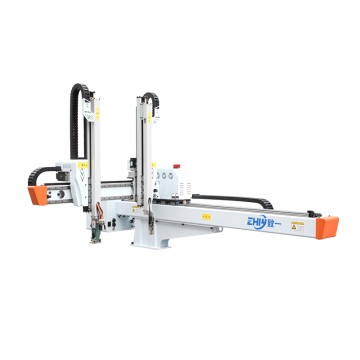
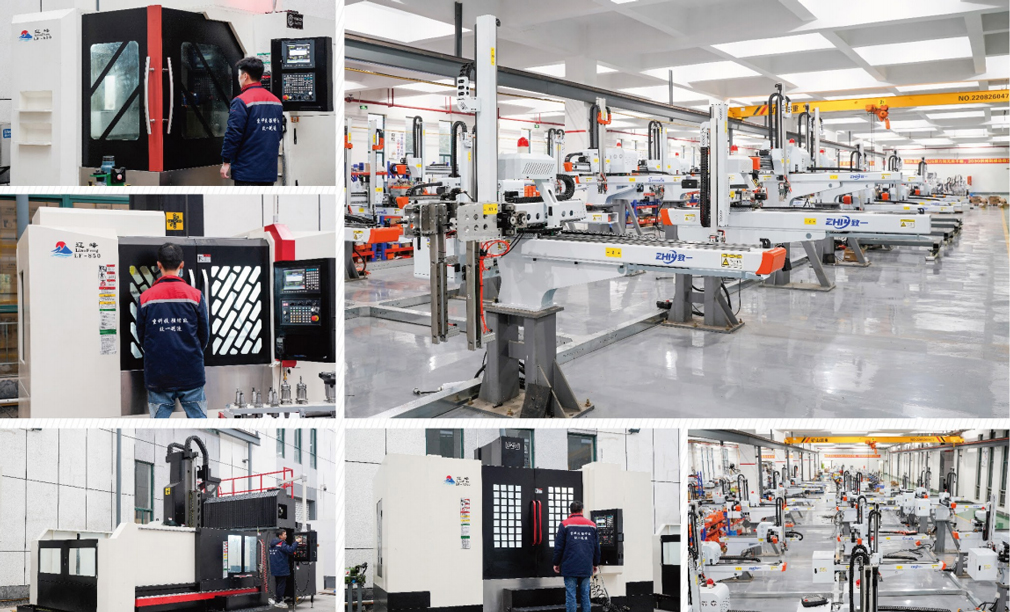
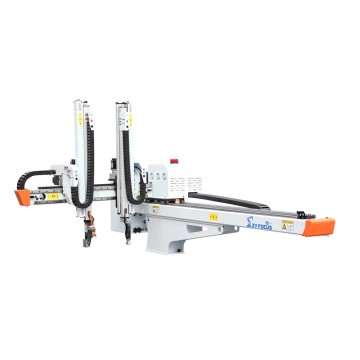
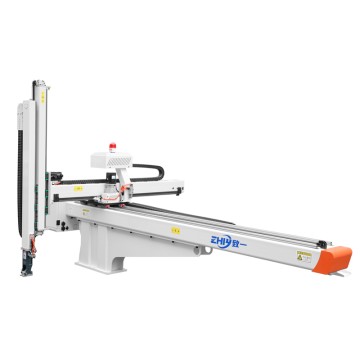
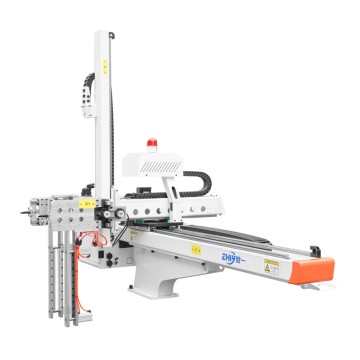
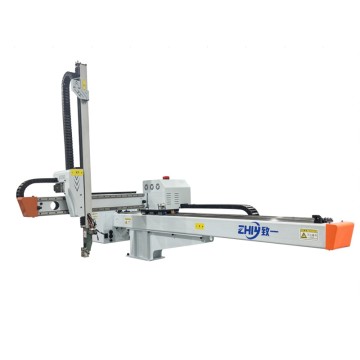
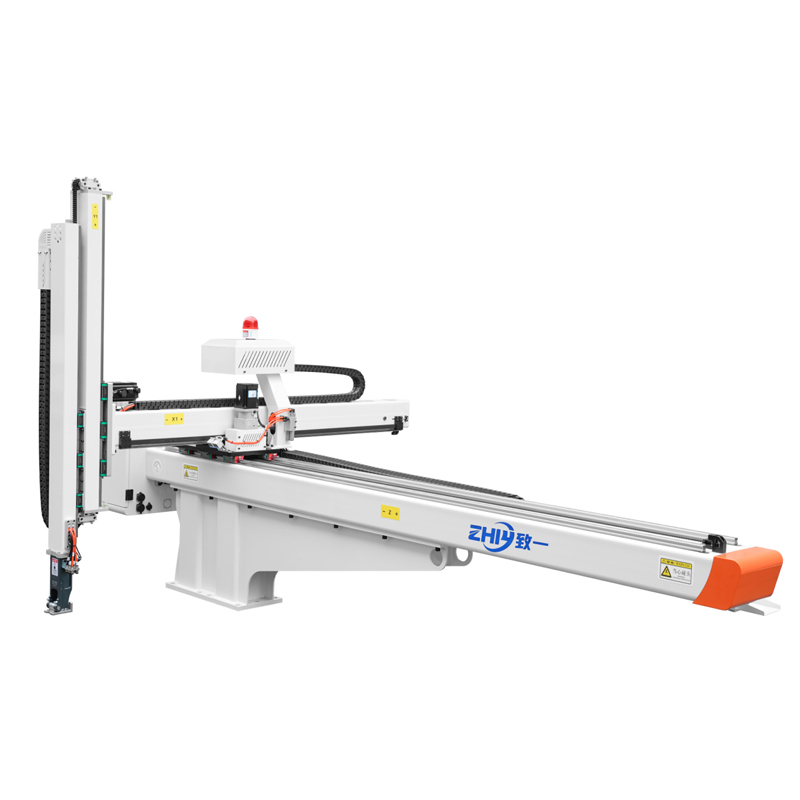
Application of five-axis servo robots in optical lens injection molding
Application of Five-Axis Servo Robots in Optical Lens Injection Molding
1. Core Process Requirements and Technical Challenges of Optical Lens Injection Molding
2. Technical Adaptability of Five-Axis Servo Robots: Comprehensive Matching from Precision to Flexibility
3. Key Application Scenarios: Intelligent Solutions Covering the Entire Injection Molding Process
4. Quantitative Benefits: Realizing the Dual Value of Precision Improvement and Cost Optimization
5. Global Technology Evolution Trends: Future Application Directions of Five-Axis Servo Robots
I. Core Process Requirements and Technical Challenges of Optical Lens Injection Molding
As a core component of precision optical systems, the injection molding process for optical lenses places almost stringent requirements on equipment. Firstly, micron-level precision control is crucial. Conventional precision injection molding requires dimensional errors to be controlled within ±0.01mm to ±0.05mm, while high-end products such as freeform lenses require sub-micron-level surface shape accuracy. Secondly, extremely high cleanliness is required. The presence of particulate impurities larger than 0.3μm on the lens surface directly affects optical performance, necessitating strict requirements for dust-free operation during handling. Furthermore, the complexities of the manufacturing process due to material properties (such as controlling the low shrinkage rate of optical materials like PC and MR-8), the need for synchronization in multi-cavity mold production, and the assurance of consistency in mass production all constitute the core technological challenges of optical lens injection molding. Traditional manual labor or low-degree-of-freedom robotic arms often face problems such as insufficient precision, low efficiency, or contamination risks when addressing these challenges.
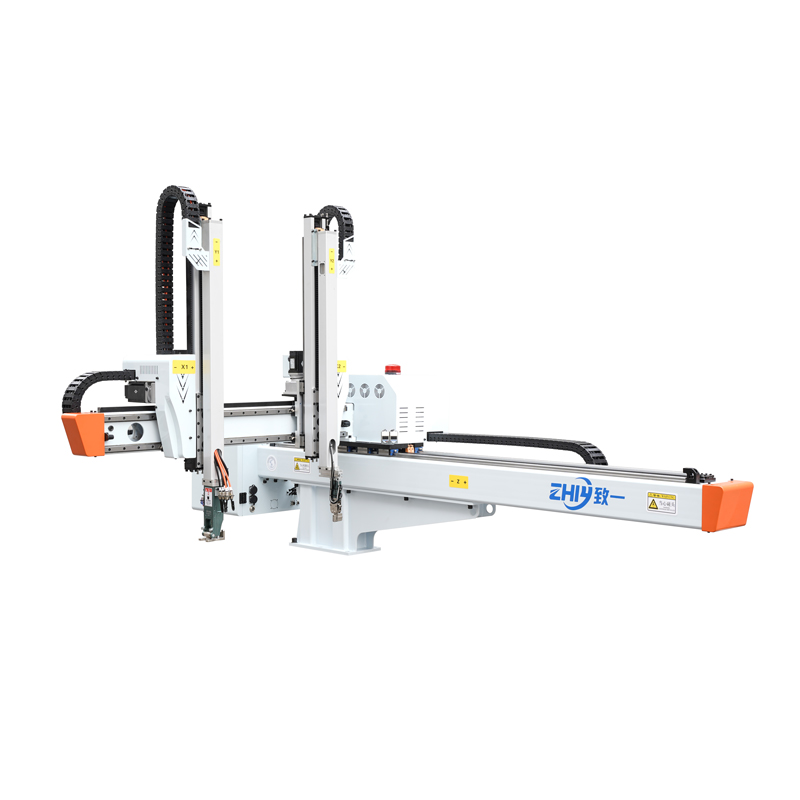
II. Technical Adaptability of Five-Axis Servo Robots: Comprehensive Matching from Precision to Flexibility
Five-axis servo robots achieve deep adaptation to the optical injection molding process through technological innovation:
* Ultra-high precision positioning: Utilizing an integrated drive and control design and servo motor drive, the repeatability of positioning can reach ±0.05mm, with some high-end models even exceeding ±0.02mm, perfectly matching the precision molding requirements of optical lenses.
* Multi-dimensional motion coordination: The A/C dual-axis 360°+180° free rotation structure enables seamless part handling at complex angles deep within the mold, especially suitable for grasping the irregular structures of free-form surface lenses. Modularization and Stability: The card-type splicing structure reduces signal lines by 60%, and the common DC bus design improves overload capacity. Combined with IP54 protection, it can operate stably in cleanrooms and humid environments.
Rapid Response: The fastest in-mold removal time is as low as 1.3 seconds, and the empty cycle time is controlled within 5.2~6.3 seconds, significantly reducing the molding cycle. These technical characteristics enable the five-axis servo robot to precisely meet the core requirements of high precision, high stability, and high cleanliness in optical injection molding.
III. Key Application Scenarios: Intelligent Solutions Covering the Entire Injection Molding Process
In the entire optical lens injection molding process, the five-axis servo robot has achieved in-depth application in multiple stages: Precision Pickup and Transfer: For two-plate molds, three-plate molds, and hot runner molds, customized suction cups and fixing devices enable the simultaneous removal of finished lenses and sprue material, avoiding scratches and contamination caused by manual contact, with a part removal success rate of over 99.9%. Online Inspection Integration: Equipped with a vision inspection system, it performs micron-level detection of lens size deviations and surface defects in real time after part picking. Defective products are immediately sorted, improving inspection efficiency by 40% compared to traditional offline inspection.
Secondary Processing Integration: Through multi-axis coordinated motion, injection-molded lenses are precisely transferred to subsequent processes such as nano-vacuum coating and hardening treatment. Positioning errors are controlled within ±1μm, ensuring secondary processing accuracy.
Flexible Production Changeover Adaptation: Built-in eight programmable programs support production switchover for different lens models within 5 minutes, adapting to the diverse production needs from eyeglass lenses to automotive optics.
IV. Quantitative Benefits: Achieving Dual Value of Improved Precision and Cost Optimization
The application of five-axis servo robots brings significant quantitative benefits to optical lens production: Improved Product Yield: By reducing human error and contamination risks, the lens defect rate has decreased from 3%~5% in traditional production to below 0.5%, with some companies achieving ultra-high quality control of 0.1%. Leap in Production Efficiency: A single machine can achieve a 10%~30% increase in capacity. Combined with 24-hour continuous operation capability, daily production capacity can exceed 21,000 lenses, far surpassing traditional manual production lines.
Reduced Overall Costs: Labor dependence is reduced by 70%, maintenance costs are reduced by 40%, and through optimized material utilization (reduced waste), the average production cost per lens is reduced by 15%~20%. Shorter Delivery Cycles: Combining molding cycle compression with process automation shortens the average product delivery cycle by 25%, enhancing the company's ability to respond quickly to market demands. These benefits have been validated by numerous optical manufacturing companies worldwide, becoming a core competitive advantage for the mass production of high-end lenses.
V. Global Technological Evolution Trends: Future Applications of Five-Axis Servo Robots
As optical manufacturing transforms towards ultra-precision, intelligence, and green manufacturing, five-axis servo robots are exhibiting three major development trends:
**Breakthrough in Precision Limits:** Integrating air bearing technology and nanoscale detection systems, future ultra-precision positioning of ±0.005mm will be achieved, meeting the needs of high-end fields such as aerospace remote sensing and medical optics.
**Deepening Intelligent Integration:** Through AI visual guidance and digital twin technology, autonomous workpiece posture recognition, dynamic path planning, and real-time monitoring of production line status will be achieved, further reducing manual intervention.
**Green Manufacturing Adaptation:** Optimizing drive system energy consumption and combining energy-saving vacuum adsorption technology reduces equipment operating power consumption by 30%, meeting the low-carbon development needs of the global optical industry.
**Global Standard Compatibility:** Supporting internationally recognized interfaces such as Euromap12/67, adapting to Injection Molding Machine and production line layouts in different regions, and helping companies achieve global production layouts. From Zeiss's high-end lens production lines in Germany to optical component manufacturing bases in Southeast Asia, five-axis servo robots are driving quality upgrades and efficiency revolutions in the global optical injection molding industry with their irreplaceable technological advantages.
#Robot Cnc Machine#Robots In Industrial Automation#Robotic Arm#Articulated Robot Arm#Robot Arm Servo#Robot 5 Axis#Single Axis Robot